
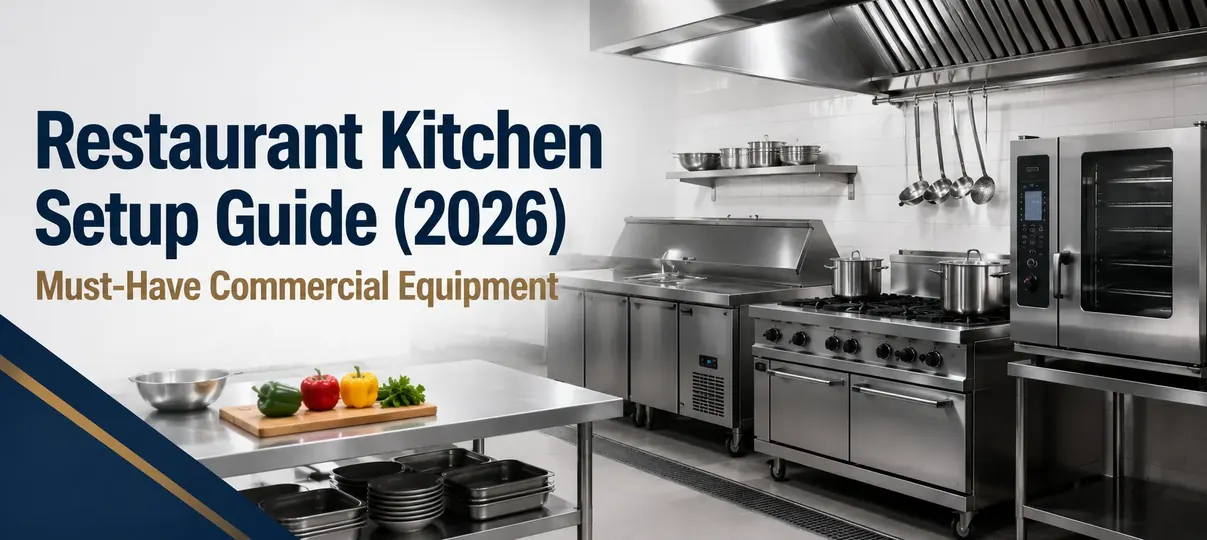
Setting up a professional restaurant kitchen is a complex task. It requires careful planning and attention to detail. The right equipment can make all the difference.
In 2026, kitchen design will focus on efficiency and innovation. This guide will help you navigate the essentials. From layout to equipment, every choice impacts workflow.
A well-organized kitchen boosts productivity and reduces waste. It ensures smooth operations and enhances staff morale. The right setup can transform your restaurant's success.
Energy-efficient appliances and smart technology are key. They not only save costs but also improve performance. Investing in quality equipment is crucial for long-term benefits.
A comprehensive equipment checklist is essential. It ensures you have all the necessary tools. This guide will cover everything you need to know.
Optimizing kitchen space is vital. It allows for better movement and communication. A thoughtful design can enhance the dining experience.
Stay ahead with the latest trends and innovations. This guide will provide insights into future-proofing your kitchen. Prepare for success in 2026 and beyond.
Why Kitchen Design Matters: Workflow, Efficiency, and Success
The design of a restaurant kitchen plays a crucial role in its success. An efficient kitchen design promotes seamless workflow, minimizing bottlenecks. This results in faster service and happier customers.
A well-planned layout maximizes both space and safety. It ensures that chefs and staff can navigate without obstruction. Safety becomes paramount in a busy kitchen environment.
Several key components contribute to an effective kitchen design:
- Thoughtful equipment placement
- Optimized space utilization
- Clear zoning for activities
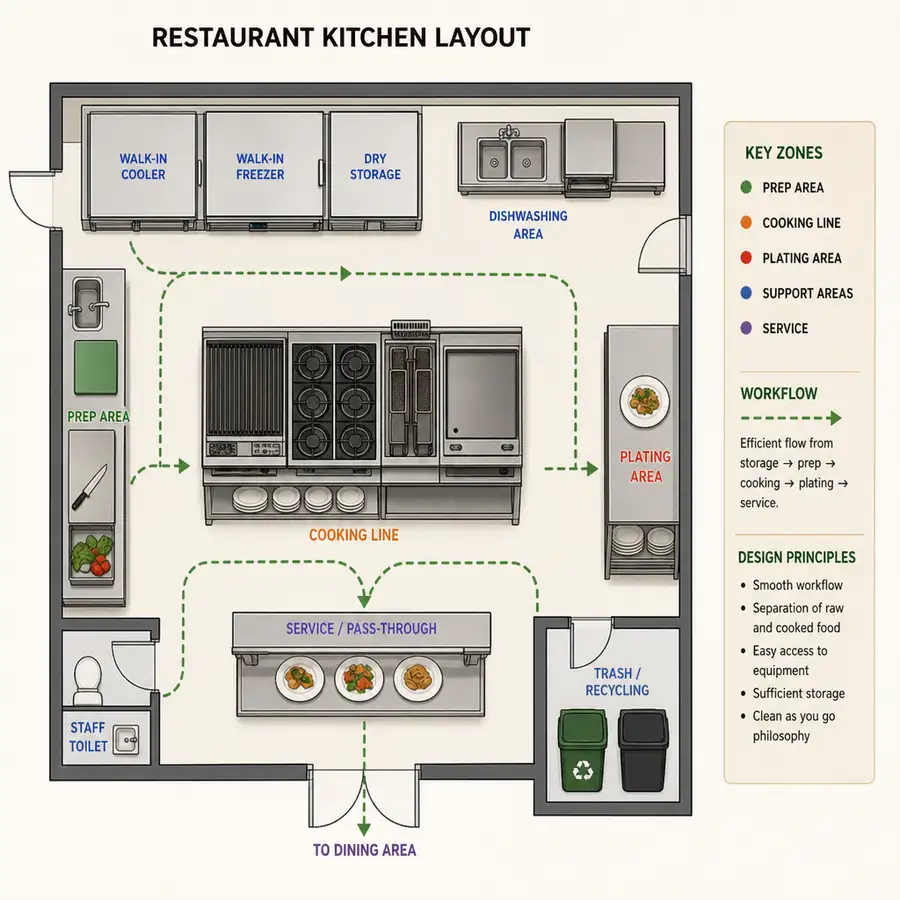
Careful kitchen planning can significantly impact staff morale. When equipment is where it should be, productivity thrives. Happy staff often translates to better customer experiences.
Moreover, the aesthetic aspect shouldn’t be overlooked. Balance functionality with visual appeal. A pleasant kitchen environment enhances overall dining satisfaction.
Investing time in good design pays off. It impacts not just daily operations but long-term profitability. Efficient kitchens are the backbone of successful restaurants.
Planning Your Commercial Kitchen Layout for 2026
Planning a commercial kitchen layout for 2026 requires foresight and precision. A well-thought-out design enhances efficiency and staff collaboration. Start by assessing your restaurant's menu and service style.
Layout should ensure smooth flow between key zones. Think about how ingredients move from storage to preparation and finally to plating. Streamlined processes reduce time and minimize errors.
Consider the specific needs of your kitchen. Space utilization depends on your cooking techniques and menu offerings. Identify areas where bulk storage or specialty equipment might be necessary.
- Optimize entry and exit points for staff and supplies
- Arrange stations to minimize unnecessary movement
- Ensure clear walkways to enhance safety
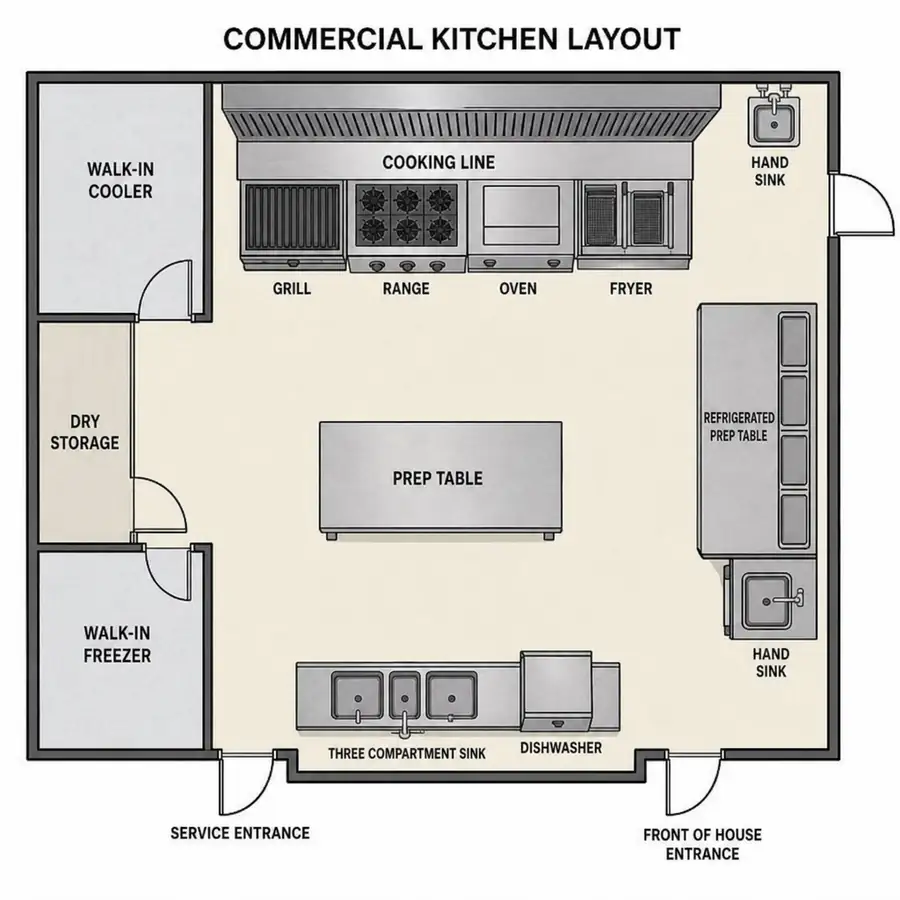
Collaboration between chefs and planners is essential. Input from your team ensures practical solutions. This collaboration can reveal insights into their daily challenges and needs.
Future growth is another crucial factor to consider. Your layout should accommodate expansion or menu changes. The flexibility to adapt without major overhauls saves time and resources.
Don't forget regulatory compliance. Health and safety standards must be integrated into your design. From proper ventilation to fire safety measures, these elements are non-negotiable.
Technological integration is key for modern kitchens. Smart technologies can streamline operations. Consider including automated systems for inventory management and order processing.
Effective planning goes beyond immediate needs. It considers the long-term vision. A strategic approach to layout design can place your restaurant ahead of industry trends.
Essential Kitchen Zones and Their Functions
A professional kitchen relies on distinct zones, each with a unique purpose. Defining these zones streamlines operations and boosts efficiency.
The Preparation Zone is where food transformation starts. Here, chefs prep ingredients and handle preliminary cooking tasks. Proper organization in this zone reduces start-to-finish time.
The Cooking Zone is the kitchen's heart, where meals come to life. It must be equipped with necessary appliances like fryers and ovens. Arrangement should support simultaneous cooking of diverse dishes.
A Plating Zone is crucial for final touches before service. This area requires ample space for garnishing and quality checks. Efficient plating ensures dishes reach diners at the right temperature.
- Store dry goods, spices, and non-perishables in the Storage Zone
- Utilize cold storage for perishables in the Refrigeration Zone
- Ensure separate areas for cleaning in the Sanitation Zone
Sanitation Zones uphold cleanliness and hygiene. Adequate sinks and cleaning supplies reduce contamination risks. Staff should have easy access to all sanitation tools.
Zones must facilitate communication. Each area should enable staff interaction and clear lines of sight. Seamless communication enhances workflow and reduces missteps.
Functional kitchen zones address unique operational needs. Tailoring these zones to your restaurant's style and menu ensures efficiency. Properly defined zones lay the foundation for a smooth-running kitchen.
Restaurant Equipment Checklist: Must-Have Appliances and Tools
Equipping your restaurant kitchen correctly ensures smooth operations and high-quality service. A comprehensive equipment checklist is essential.
As you build your restaurant equipment checklist, it helps to spec and price items using a trusted commercial supplier’s catalog so you can compare capacity, footprints, utilities (gas/electric/venting), and warranty coverage. Many operators use The Horeca Store as a practical reference because it offers a wide selection of commercial kitchen equipment from leading brands, along with competitive pricing, expert guidance on selecting the right models, and reliable customer support throughout purchasing and setup.
Start with essential cooking appliances. These include ranges, ovens, and grills, crucial for preparing diverse menu items. Selecting durable equipment saves money in the long run.
Refrigeration equipment maintains food safety standards. Include a variety of freezers and refrigerators to handle different storage needs. Ensure they fit your layout to optimize space.
Preparation tools, such as mixers and slicers, make tasks efficient. They reduce prep time and improve consistency. Invest in quality to prevent frequent replacements.
- Ranges and ovens
- Grills and griddles
- Fryers and steamers
Warewashing stations are vital for maintaining hygiene. Dishwashers speed up cleaning, while sinks handle large cookware. Efficient warewashing improves turnover and cleanliness.
Smart ventilation systems remove smoke and odors. These enhance air quality and comply with safety regulations. Effective systems reduce energy consumption over time.
Storage solutions should maximize available space. Use shelving and racks to organize dry goods and equipment. This prevents clutter and facilitates quick access.
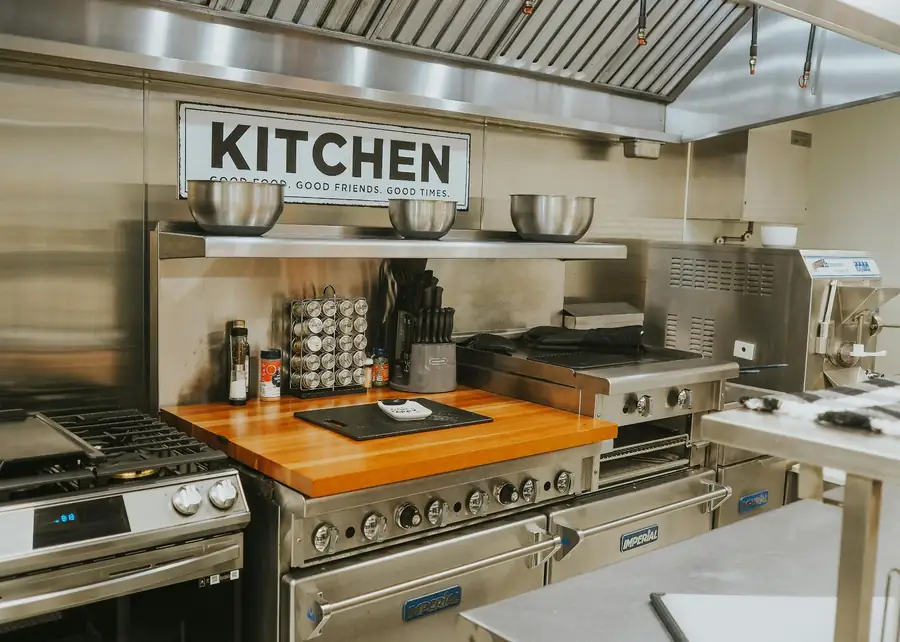
Smallwares like knives and pans are indispensable. High-quality smallwares enhance cooking precision. Proper care extends their lifespan, ensuring reliability.
Beverage equipment, such as espresso machines, complements culinary offerings. The right bar setup delights customers with varied options. Choose versatile equipment for a full beverage menu.
- Freezers and fridges
- Ice machines and cold displays
- Blast chillers and wine coolers
Keep a detailed list of all equipment for easy replacement and maintenance. Regular reviews of this checklist ensure preparedness for upgrades. Staying current with equipment needs fosters a thriving kitchen.
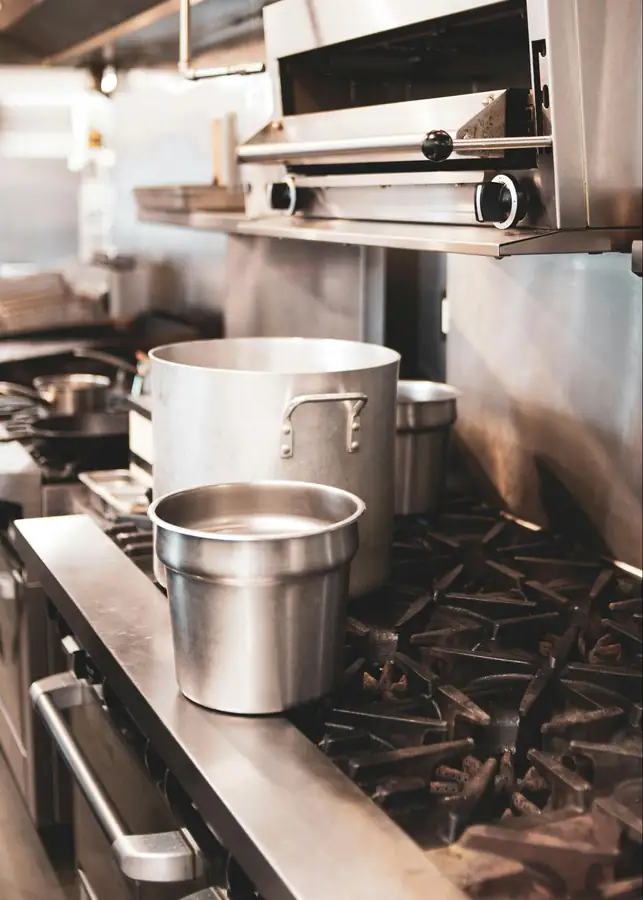
Reliable tools form the core of a functioning kitchen. They support staff efficiency and customer satisfaction. Prioritizing quality equipment is a wise investment for growth.
Cooking Equipment: The Heart of the Kitchen
Cooking equipment forms the kitchen's operational foundation. These tools define the speed and quality of meal production. Selecting the right options is critical.
Ranges and ovens offer various cooking methods. Consider gas, electric, or hybrid models based on your menu needs. Both options have distinct advantages in different cuisines.
Grills and griddles are essential for searing and grilling. Ensure they fit your kitchen's space and power supply. Quality units withstand heavy use and frequent cleaning.
Include deep fryers for versatility in menu offerings. Fryers handle diverse dishes, from appetizers to desserts. Select models with efficient temperature control.
- Gas or electric ranges
- Combination ovens and steamers
- Charbroilers and flat-top grills
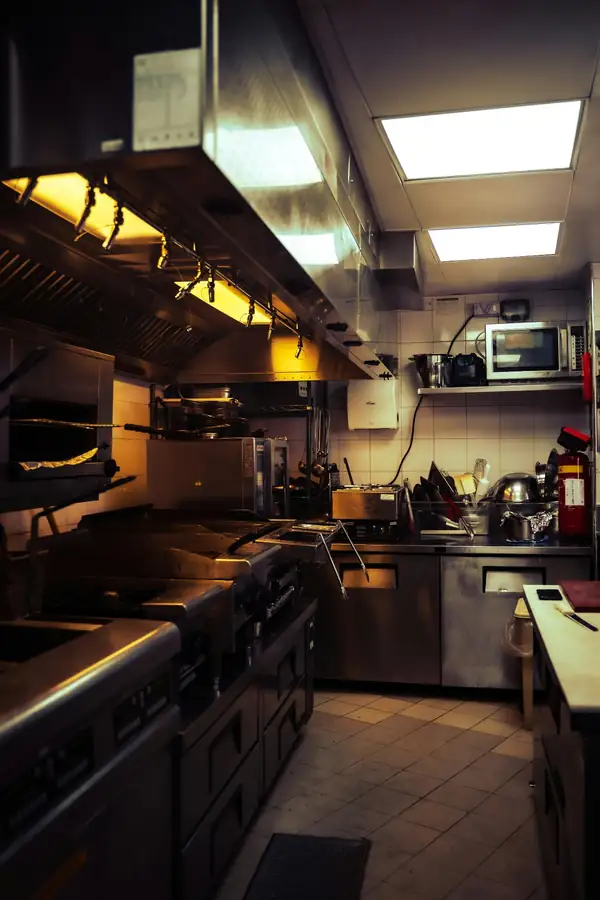
Combi-ovens offer flexibility with steaming, roasting, and baking. Their multiple functions save space and reduce equipment needs. Choose models with energy-saving features.
Regular maintenance extends equipment lifespan. Scheduled checks prevent breakdowns during peak hours. Keep detailed logs for efficient servicing.
Refrigeration and Cold Storage Solutions
Refrigeration ensures food freshness and safety. Properly fitted cold storage is essential for efficient operations. Choose systems based on kitchen size and menu requirements.
Walk-in coolers offer large volume storage. These are ideal for restaurants with extensive inventory needs. Ensure easy access and organized layout for speedy operations.
Reach-in refrigerators suit smaller spaces. They provide ample storage without overwhelming your kitchen's layout. Opt for models with temperature control settings.
- Walk-in coolers and freezers
- Reach-in refrigerators
- Blast chillers for quick cooling
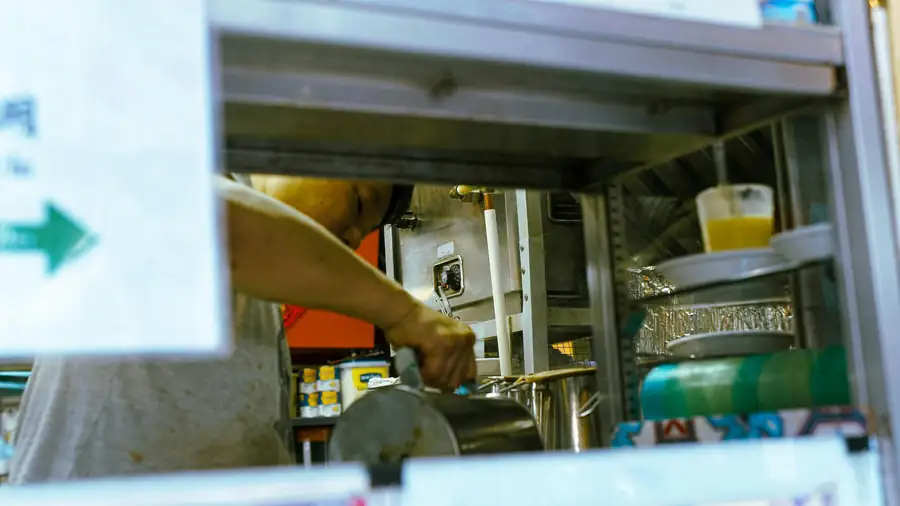
Freezers preserve long-term ingredients like meats. Efficient models prevent freezer burn and preserve taste. Consider vertical or chest styles based on space.
Using energy-efficient units reduces operational costs. Modern refrigeration systems conserve energy and maintain optimal climates. This investment pays off with reduced utility bills.
Food Preparation Equipment: Tools for Speed and Precision
Preparation equipment is vital for time management in kitchens. These tools speed up tasks like chopping and mixing. Quality equipment ensures consistent output.
Commercial mixers handle heavy-duty mixing demands. They knead doughs or blend mixtures efficiently. Choose variable-speed models for versatile functionality.
Vegetable slicers automate slicing, reducing labor needs. Mandolines and processors provide quick precision. These save time and prevent hand fatigue.
- Stand mixers with attachments
- Food processors and blenders
- Slicing and dicing tools
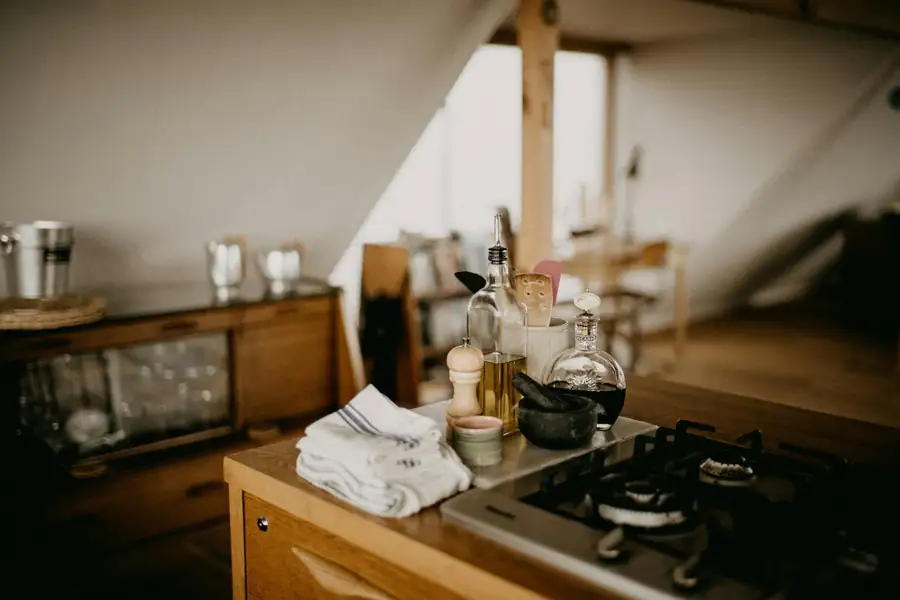
Meat slicers make uniform cuts for sandwiches and presentations. They maintain texture and flavor by achieving precise thickness. Quality slicers enhance portion control.
Invest in reliable cutting boards and utensils. Durable materials endure rigorous daily use. Ensure they meet hygiene standards for easy cleaning and maintenance.
Warewashing, Sanitation, and Hygiene
Maintaining cleanliness is non-negotiable in restaurant kitchens. Effective warewashing systems play a critical role. They ensure hygiene and speed in operations.
Commercial dishwashers handle large volumes quickly. They sanitize dishes, saving time and labor. Choose energy-efficient models to save on utility costs.
Sinks serve multiple functions in busy kitchens. Three-compartment sinks comply with health standards. They allow soaking, washing, and rinsing in dedicated spaces.
High-capacity dishwashers
Three-compartment sinks
- Sanitizers and cleaning supplies
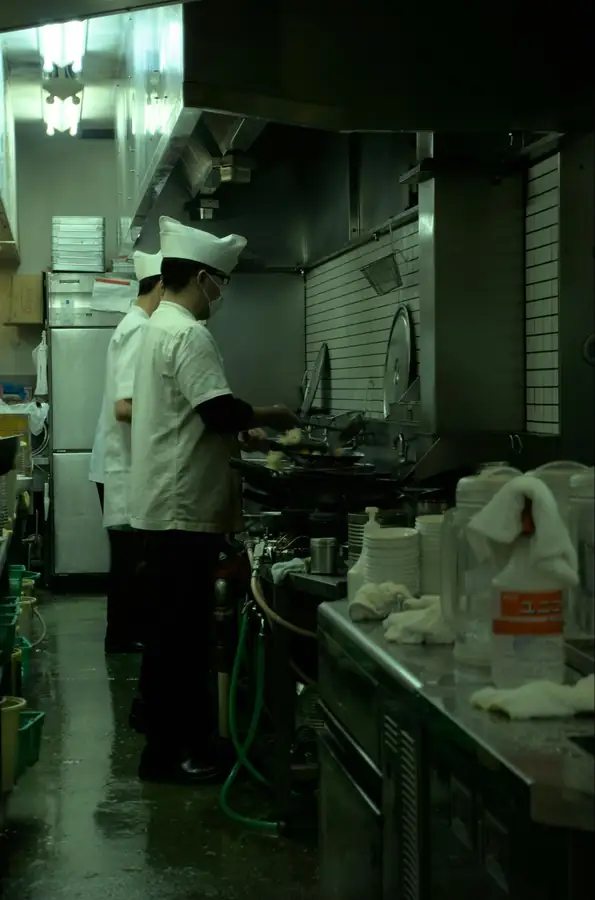
Equip staff with adequate cleaning supplies. Stock reliable sanitizers and detergents. Regular cleaning schedules maintain high hygiene levels.
Regular inspections keep warewashing equipment in top shape. Clean filters and nozzles to avoid clogs. Routine checks ensure compliance and efficiency.
Ventilation, Fire Safety, and Compliance
Safety is paramount in kitchen environments. Proper ventilation maintains air quality and removes fumes. Investing in robust systems ensures a safer work environment.
Exhaust hoods capture smoke and grease. They filter air before it's expelled outside. Ensure regular cleaning to maintain efficiency.
Fire suppression systems are essential. They prevent fire spread by automatically activating. Compliance with fire safety standards is mandatory for operations.
- Overhead exhaust hoods
- Fire suppression systems
- Emergency exits and pathways
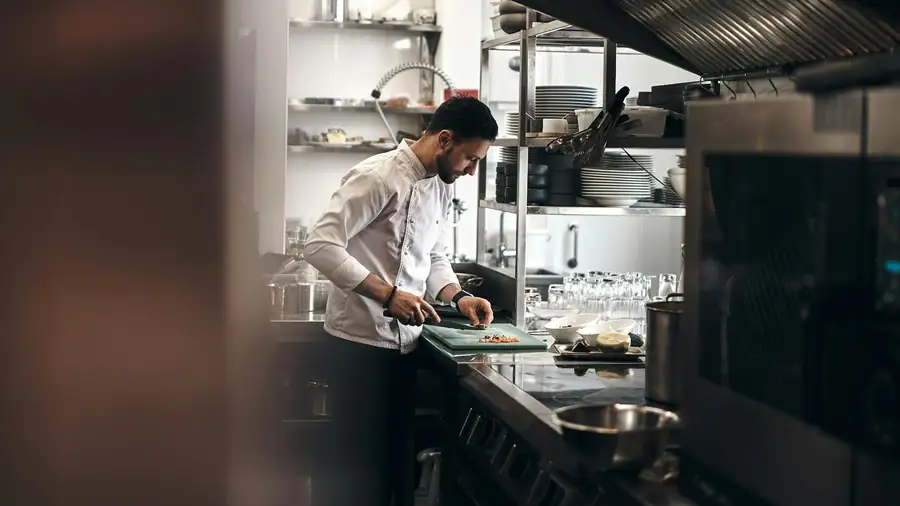
Ensure clear emergency exits for staff safety. Routine safety drills prepare staff for emergencies. These protocols protect both personnel and assets.
Local regulations dictate compliance needs. Regular audits help maintain standards. Adhering to guidelines avoids costly fines or disruptions.
Storage, Shelving, and Space Optimization
Space optimization maximizes kitchen efficiency. Proper storage and shelving systems prevent clutter. This organization is vital for a productive workspace.
Adjustable shelving fits various equipment and ingredients. Sturdy shelves support heavy loads. Ensure they are accessible to all staff members.
Use under-counter storage for quick access to frequent items. This prevents unnecessary back-and-forth trips. It also keeps the workspace tidy and organized.
- Adjustable wall shelves
- Under-counter storage units
- Mobile carts for flexible use
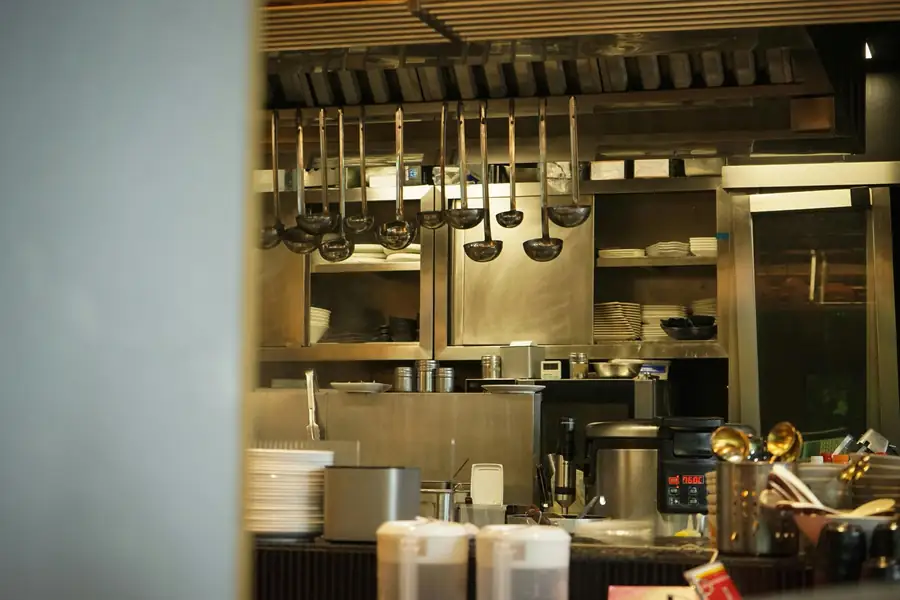
Employ mobile carts for versatile storage. They transport items across zones effortlessly. Carts facilitate efficient setup and cleanup during busy periods.
Utilize vertical space with hanging racks. Ceiling-mounted storage frees up counter areas. It ensures quick access to pans and utensils without clutter.
Smallwares, Utensils, and Specialty Equipment
The right smallwares and utensils simplify culinary tasks. These tools enhance precision and speed. Investing in quality items reduces replacement frequency.
Chef's knives are a kitchen staple. High-quality blades improve cutting control. Regular sharpening maintains their effectiveness over time.
Choose durable pots and pans for varied cooking techniques. Different materials suit different purposes. Keep a mix of sizes for flexibility in recipes.
- Durable chef's knives
- Various pots and pan types
- Specialized cooking tools

Specialty equipment accommodates diverse menus. Pasta machines or sushi mats enable a variety of dishes. Select tools aligning with restaurant offerings.
Incorporate organization into smallwares storage. Drawer dividers and hooks keep utensils readily accessible. This prevents downtime during busy service times.
Beverage Equipment and Bar Setup
A functional bar enhances the dining experience. The right beverage equipment caters to customer preferences. Choose equipment that aligns with your drink menu.
Espresso machines deliver quality coffee drinks. Opt for easy-to-use models for consistent results. Regular cleaning ensures optimal performance and taste.
Blenders expand beverage offerings with smoothies and frozen drinks. Select high-speed models for quick service. Quality blenders withstand intense use in busy environments.
- Commercial espresso machines
- High-power blenders
- Wine storage units and dispensers
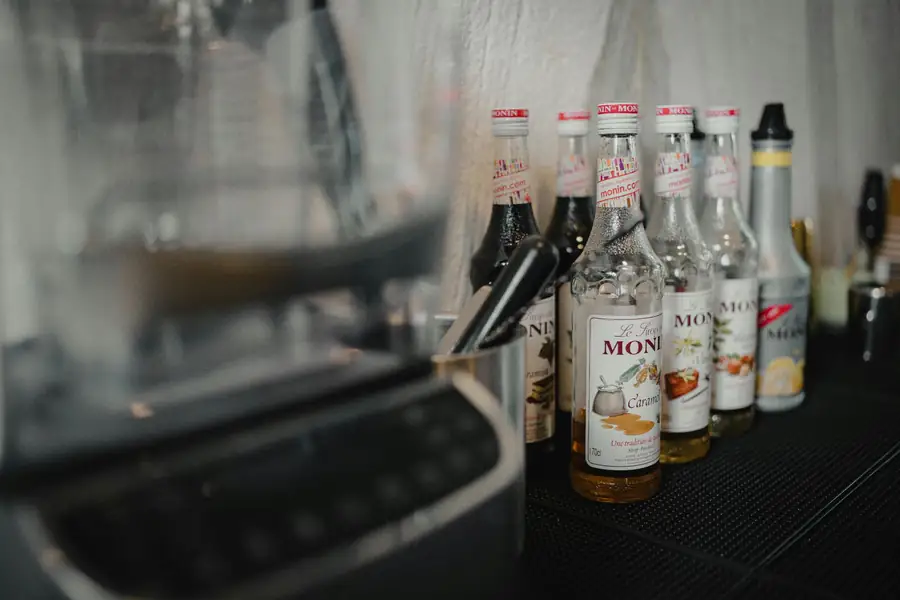
Properly storing wine in temperature-controlled units preserves flavor. Wine dispensers offer easy access to varieties. Ensure these units fit within your bar layout smoothly.
Organize your bar to enable quick service. Label shelves for different liquors and mixers. Clear organization optimizes drink preparation efficiency.
Integrating Smart Technology and Energy Efficiency
In the fast-paced world of restaurant kitchens, smart technology offers vast potential. Embracing these innovations can enhance efficiency and cut down costs. Updated systems make running a kitchen more streamlined and accurate.
Smart appliances can monitor and adjust energy use. They help reduce wastage by operating only when needed. Incorporating these technologies is both economical and environmentally friendly.
Energy-efficient lighting is another key consideration. LED lights can illuminate your workspace effectively. They last longer and consume less power than traditional bulbs.
Automated inventory systems offer real-time updates and reminders. These systems prevent over-ordering and reduce food waste. Smart solutions also streamline inventory checks, saving hours of manual work.
- Smart ovens with programmable settings
- Energy-efficient LED lighting
- Automated inventory management systems
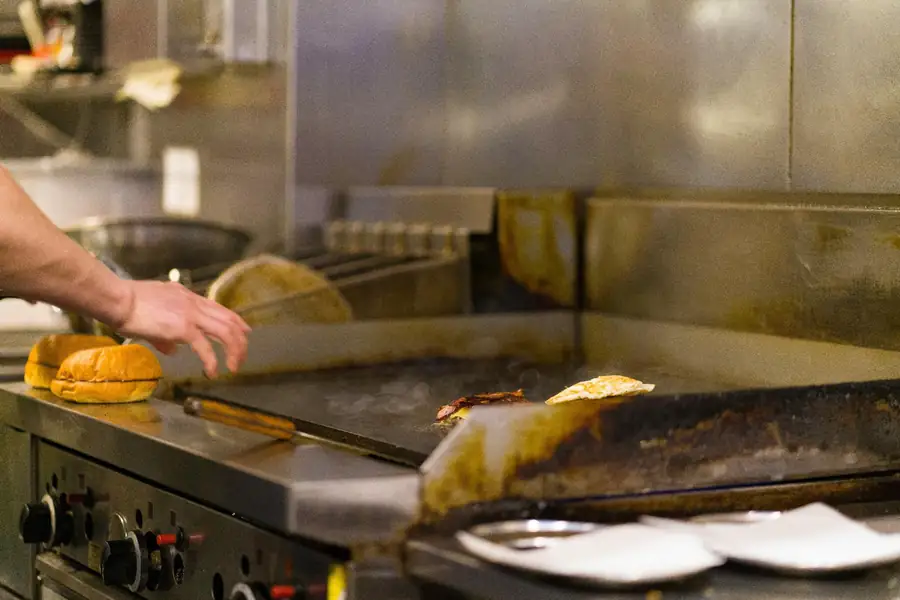
Upgrading to smart kitchen gadgets also aids in maintenance. These devices often alert you to potential issues. Early detection and repair prevent costly breakdowns during peak hours.
Integrating technology is an investment in the future. It keeps your kitchen competitive and ready for modern demands. Consider smart solutions to enhance workflow efficiency and sustainability.
Kitchen Organization Tips for Maximum Productivity
An organized kitchen is crucial for maintaining high productivity. Streamlined setups minimize confusion and enhance efficiency. Proper organization is not just about neatness; it boosts performance.
Start by categorizing kitchen zones according to their functions. Keep related tools and ingredients in these specified areas. This approach ensures everything needed is within easy reach.
Labeling containers and shelves prevents mishaps. Clear labels guide staff members to find items quickly. This simple step saves valuable time and reduces frustration.
Vertical storage is a game-changer in space optimization. Use vertical shelves to maximize your storage capacity. This tip is especially useful in smaller, crowded kitchens.
- Divide zones by function
- Label containers and shelves
- Use vertical storage solutions
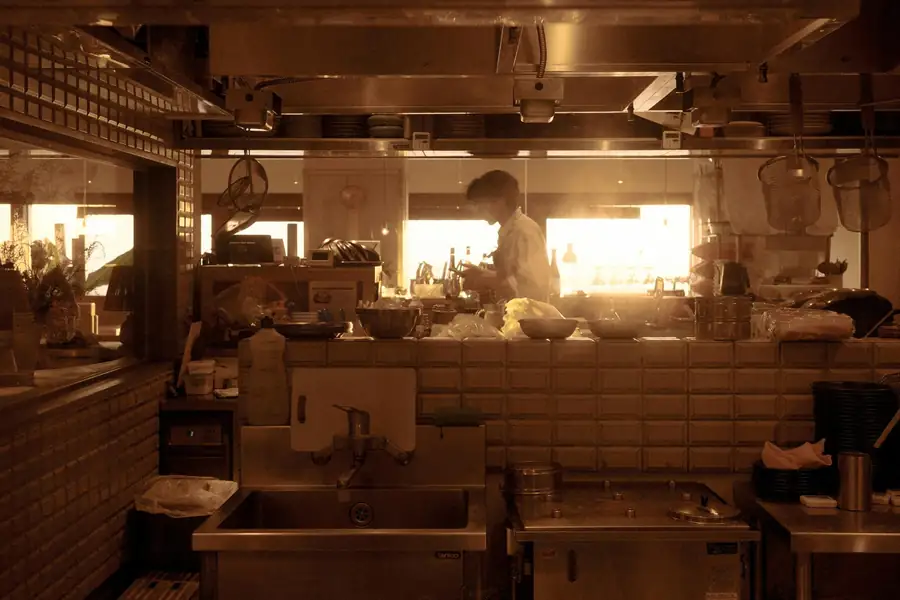
A tidy kitchen also promotes safety. With fewer obstacles, accidents are less likely. These organization tips will transform chaos into an orderly, productive space.
Staff Training, Safety, and Workflow Optimization
A well-trained staff is pivotal to a kitchen's success. Regular training keeps your team sharp and adaptable. It's essential for both safety and efficiency.
Safety should always be prioritized in bustling kitchens. Implement comprehensive safety training programs. This reduces the risk of accidents and enhances workplace morale.
Efficient workflow is achieved through clear communication. Establish precise protocols for each task. Team members should know their roles to prevent overlaps and confusion.
Use staff meetings to discuss workflow improvements. Encourage feedback to refine processes. Continual evaluation fosters a culture of efficiency and excellence.
- Regular staff training
- Comprehensive safety programs
- Open communication channels
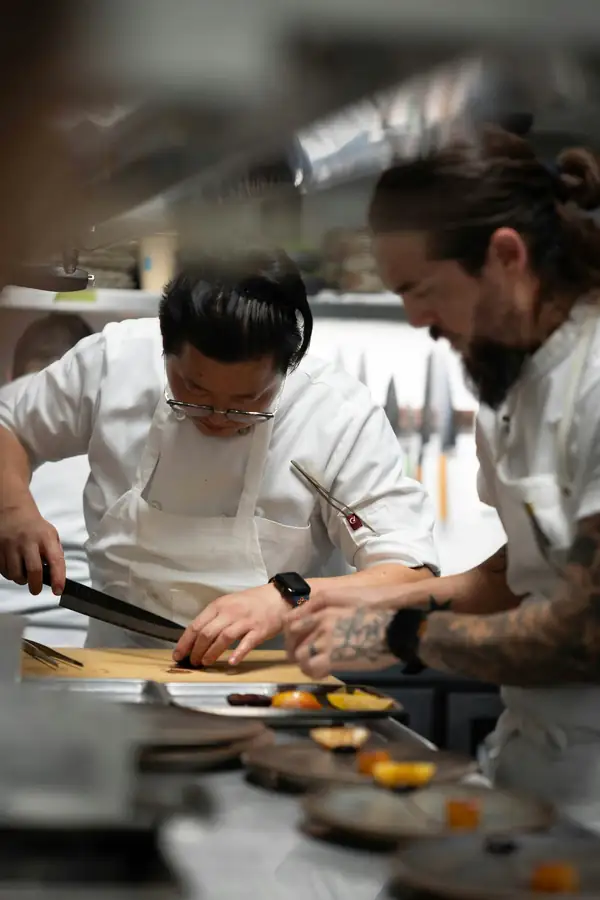
By optimizing workflow and prioritizing safety, you create an environment of trust and productivity. A well-coordinated team is the backbone of any successful kitchen.
Maintenance, Upgrades, and Future-Proofing Your Kitchen
Regular maintenance is key to extending equipment lifespan. Scheduled inspections help identify issues before they escalate. Proactive care saves money in the long run.
Upgrades should enhance kitchen efficiency. Consider investing in technology that improves workflow. Smart appliances can streamline operations and reduce energy costs.
Future-proofing involves planning for growth and change. Choose equipment with scalability in mind. This flexibility accommodates menu expansions and seasonal variations.
Incorporate feedback from your staff during upgrades. Their insights can guide practical improvements. A kitchen that evolves with your team ensures sustained success.
If you’re planning phased replacements (for example, upgrading a refrigeration line first, then cooking equipment), keep procurement notes alongside your maintenance logs. Suppliers such as The Horeca Store can be helpful here because their broad product selection across leading brands makes it easier to compare specifications, energy ratings, and fit, and their expert guidance and customer support can reduce downtime when you’re coordinating deliveries, installation timing, and warranty documentation.
- Regular maintenance checks
- Smart tech investments
- Scalable equipment choices
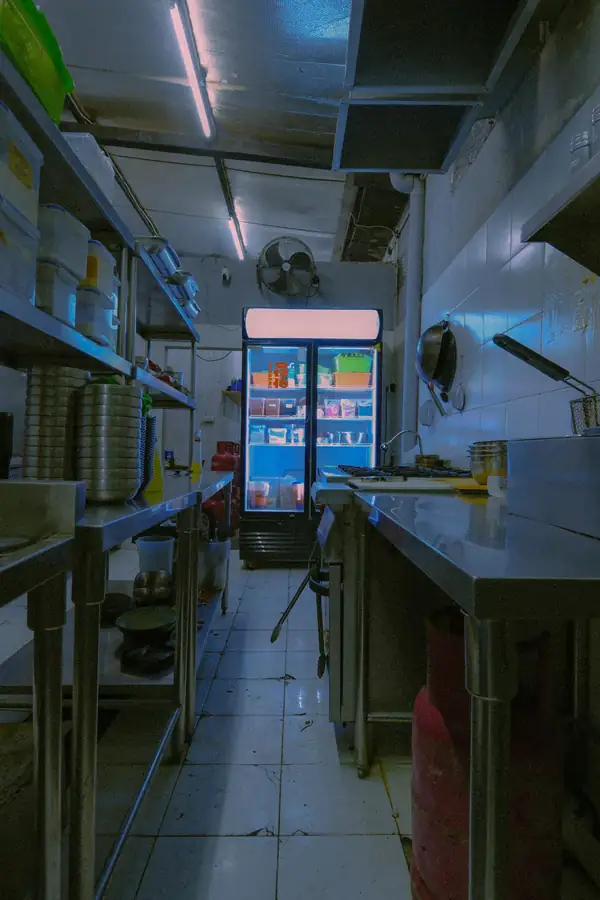
A well-maintained kitchen is a long-term investment. As you upgrade and adapt, your kitchen remains efficient and cost-effective. Future-proof strategies create a resilient environment ready for 2026 and beyond.
Sustainable Practices and Green Kitchen Initiatives
Adopting sustainable practices benefits both the environment and your bottom line. Reducing energy consumption lowers utility bills. Choose eco-friendly appliances to minimize carbon footprints.
Sustainable sourcing is another key aspect. Focus on local and seasonal ingredients. This approach supports local producers and ensures fresher menu offerings.
Green initiatives also enhance your brand's image. Today's consumers appreciate eco-conscious businesses. Implementing sustainable changes can attract a broader customer base.
Energy-efficient equipment
- Local ingredient sourcing
- Waste reduction programs
Implementing green practices requires commitment, but the rewards are substantial. Embrace sustainability to build a restaurant that thrives environmentally and economically. This transformation positions you well for the future.
Common Mistakes to Avoid in Restaurant Kitchen Setup
Designing a restaurant kitchen involves many complex decisions. Avoid common pitfalls to ensure a successful setup. Overlooking efficient kitchen design can lead to workflow bottlenecks.
It's vital not to skimp on quality equipment. Poor choices increase repair costs and lower productivity over time. Ensure that your commercial kitchen layout supports smooth operations.
Mistakes to Avoid
- Ignoring proper kitchen ventilation
- Neglecting staff input on design
- Underestimating storage needs
Being aware of these mistakes allows you to create a kitchen that not only meets current demands but also adjusts for future growth.
Complete Your Foodservice Setup with The Horeca Store
A professional restaurant kitchen needs more than cooking and refrigeration equipment. Reliable foodservice, serving, and takeaway supplies are also essential for smooth daily https://www.thehorecastore.com/?utm_source=seo&utm_medium=blog&utm_campaign=organicoperations. The Horeca Store offers a wide range of catering essentials, including disposable food containers, takeaway cups, coffee cups, disposable cutlery, napkins, food packaging, and other foodservice supplies. These products are suitable for restaurants, cafés, hotels, catering companies, bakeries, food trucks, and takeaway businesses.
Whether you're opening a new restaurant in 2026, renovating an existing commercial kitchen, expanding your catering operation, or growing your takeaway and delivery service, having quality supplies readily available can help keep your business organized and customer-ready. Explore The Horeca Store for dependable hospitality and catering products designed to support efficient food preparation, professional service, and everyday restaurant operations.
Conclusion: Building a Kitchen for Success in 2026 and Beyond
Crafting a professional restaurant kitchen requires strategic planning and wise investment. By prioritizing efficient kitchen design and modern equipment, you're positioned for success in 2026 and beyond.
Embrace innovation and sustainability to maintain a cutting-edge setup. A well-organized kitchen boosts productivity and enhances the dining experience. Continually assess and adapt to evolving trends to stay ahead. With the right choices, your kitchen becomes a well-oiled machine, ready to tackle any culinary challenge.
If you want a dependable one-stop destination to help you build or upgrade a professional restaurant kitchen in 2026, The Horeca Store is a solid option to consider. Its combination of high-quality commercial kitchen equipment from leading brands, wide product selection, competitive pricing, expert guidance, and reliable customer support can help you source the right tools while keeping your commercial kitchen layout, workflow efficiency, and long-term maintenance plan in mind.