
Walking into a showroom to pick your first multi-group espresso machine feels a lot like buying a high-performance fleet vehicle. You are not just purchasing an attractive piece of stainless steel; you are investing in a commercial engine that must generate revenue every single morning without fail. Imagine it is 8:00 AM, a dozen commuters are in line, and your primary equipment suddenly stalls. Because this central machine acts as the absolute heartbeat of a cafe's income, choosing the wrong hardware can quietly suffocate a growing business before it ever scales.
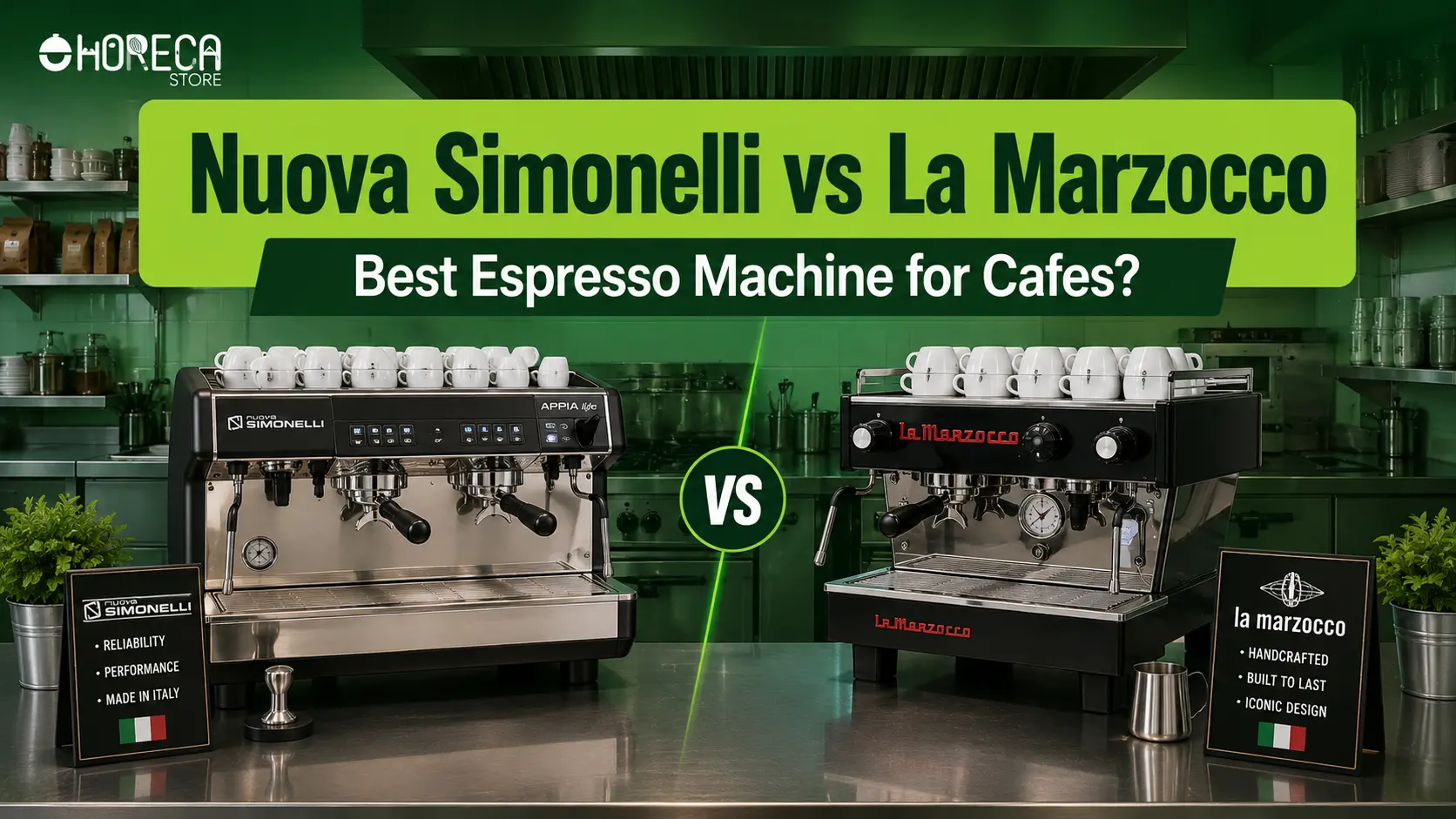
For decades, two Italian titans have dominated coffee counters worldwide, leading many owners to search for Nuova Simonelli vs La Marzocco: Which Espresso Machine Brand Is Best for Growing Cafes? On one side sits La Marzocco, easily recognized by its iconic lion logo, offering the hand-built prestige and heritage of a luxury sedan. Across the aisle is Nuova Simonelli, functioning more like a rally car equipped with advanced driver-assist features designed for pure ergonomic efficiency. According to general industry consensus, both brands make some of the best espresso machines available, yet their distinct engineering philosophies cater to completely different business models.
Evaluating your total cost of ownership requires stripping away complex coffee-pro jargon to examine what actually drives your return on investment: daily workflow, long-term reliability, and maintenance. Beyond generic coffee machine reviews, the decision comes down to whether you are paying for prestige counter appeal or the raw, relentless steam power required to grow your enterprise.
Why Temperature Stability is Your Cafe’s Secret Weapon
When the morning rush hits, a line out the door can quickly turn into a nightmare if your espresso suddenly starts tasting terribly sour. This issue usually stems from poor temperature stability, meaning the machine cannot keep its water consistently hot during a heavy rush. When comparing a dual boiler vs heat exchanger for busy cafes, the difference is essentially multitasking. Heat exchangers share one water tank for brewing coffee and steaming milk, which frequently causes heat drops under pressure. Dual boilers fix this by dedicating separate, independent tanks for each task, ensuring the first latte tastes just as perfect as the hundredth.
Maintaining that exact heat right up until the water hits the coffee is where premium machines truly earn their price tag. They achieve this using a saturated group head—meaning the protruding metal part where the barista actually locks in the coffee is directly flooded with hot boiler water. When evaluating saturated group heads vs thermosyphon systems (which rely on external piping to transfer heat), the saturated method acts like a perfectly insulated tunnel. It prevents the water from prematurely cooling down, locking in the sweet, balanced flavor profiles that keep customers coming back.
Your equipment should handle this invisible heavy lifting so your staff can focus entirely on speed and hospitality. Securing perfectly consistent heat handles the internal science; the next challenge is making the actual pouring process just as foolproof on the outside.
Volumetrics vs. Manual Shots: Which Interface Prevents the Morning Rush Meltdown?
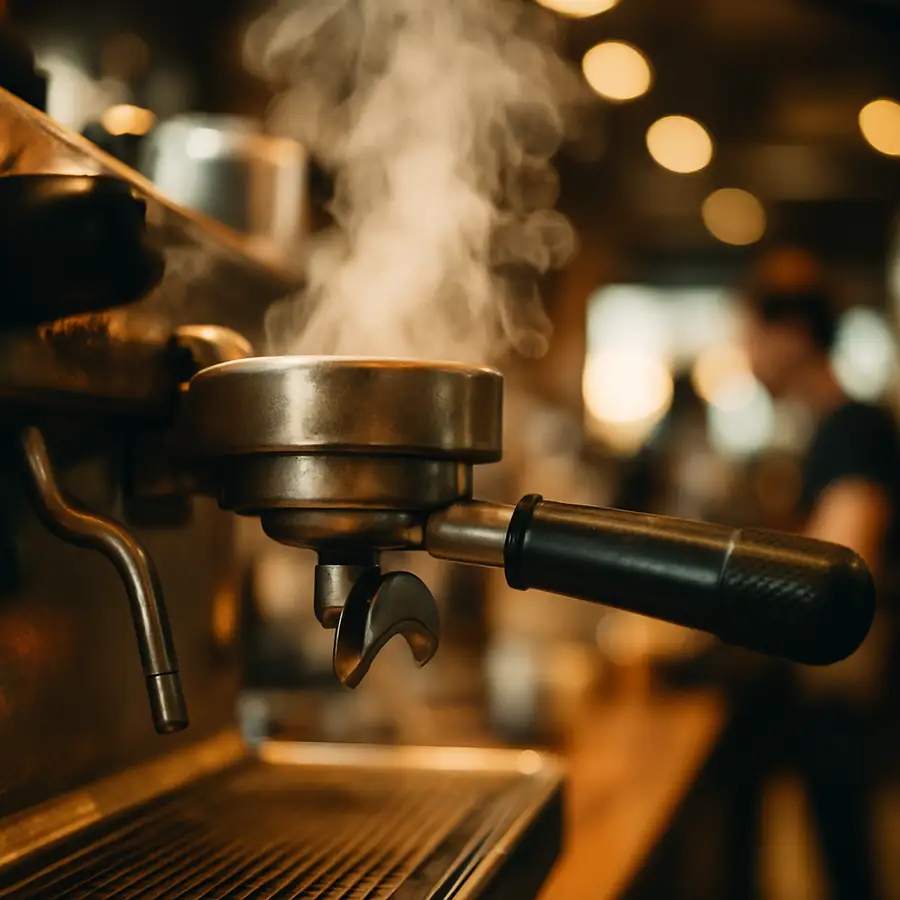
Staring at a pouring espresso shot during a morning rush pulls a barista's vital attention away from the customer. When evaluating volumetric vs manual extraction for consistent workflow, the core difference is simply how much focus the equipment demands. Manual machines force baristas to physically start and stop the water flow every single time, keeping their eyes glued to the espresso cup rather than scanning the cafe.
To solve this bottleneck, manufacturers introduced volumetrics, which acts as a reliable cruise control for your coffee. By memorizing the exact water volume needed for a recipe, the machine shuts itself off automatically once that target is hit. This automated extraction control prevents overflowing cups, drastically reduces milk waste, and ensures that a brand-new hire pours the exact same quality drink as your seasoned manager.
Choosing the right interface depends heavily on your daily customer volume and long-term hiring strategy:
- 'Cruise Control' (Volumetric): Essential for scaling cafe production with programmable dose settings, freeing up a barista's hands to steam milk and multitask during heavy rushes.
- 'Artisanal Driving' (Manual): Excellent for slower boutique cafes, though it requires highly skilled, expensive labor to maintain consistency without causing line delays.
Automation ultimately protects your profit margins by minimizing human error during chaos. Combining volumetric reliability with advanced multi-boiler thermal systems—like Nuova Simonelli's highly stable T3 Technology—creates a remarkably efficient drink station. The way these interfaces operate drastically impacts your staff's physical stamina and overall speed.
The 'Lion' vs. The 'Rally Car': Decoding the Workflow of La Marzocco and Nuova Simonelli
Surviving the morning rush is a marathon of physical endurance. Making coffee demands constant repetitive motion, meaning commercial espresso machine ergonomics directly dictate your staff's stamina over an eight-hour shift. Every awkward twist or reach drains energy, turning a minor inconvenience at 7:00 AM into a painful physical bottleneck by noon. To protect your profit margins and your employees, your equipment’s interface must work seamlessly with the human body.
Operating a La Marzocco often feels like driving a beautifully crafted luxury car. This heritage brand leans into a tactile experience, famously utilizing traditional turn-knobs to release high-pressure steam for milk. Any honest la marzocco comparison highlights this deeply satisfying mechanical feel that coffee purists love. However, physically gripping and twisting a knob hundreds of times a day can accelerate wrist fatigue. The 'Lion' keeps the barista intimately connected to the craft, creating beautiful cafe theater while demanding deliberate physical effort.
Conversely, Nuova Simonelli approaches ease of use like a modern rally car engineered for pure speed. Instead of twisting, they champion the 'Push & Pull' steam lever, allowing baristas to simply tap a handle up or down to instantly activate steam power. This dramatically reduces repetitive strain, protecting wrists from injury while shaving seconds off every single latte. These contrasting ergonomic philosophies shape daily operations and ultimately influence which machine physically fits into your cafe's layout.
La Marzocco Linea Classic vs. Nuova Simonelli Aurelia Wave: The Battle for the Countertop
Stepping up to any busy coffee shop counter, you will likely spot one of two dominant silhouettes. The La Marzocco Linea Classic offers a timeless, boxy stainless-steel aesthetic that quietly signals 'artisanal craft' to your customers. Conversely, the Nuova Simonelli Aurelia Wave boasts swooping, modern curves, telling guests your shop values high-tech precision. Both rank among the best multi-group espresso machines for high volume, but they project entirely different brand identities.
Beyond looks, the physical space these machines demand dictates your entire workflow layout. Counter real estate is incredibly expensive, and cramming a massive unit into a small space creates stressful bottlenecks. When evaluating a La Marzocco Linea Classic vs Nuova Simonelli Aurelia Wave setup, consider these physical realities:
- Footprint: The Linea is famously compact for tight boutique spaces, whereas the Aurelia requires a significantly wider, deeper counter.
- Customer Interaction: The Linea sits low so baristas can easily chat over it, while the taller Aurelia acts as a striking visual centerpiece.
Under the hood, both systems require dedicated 220-volt power lines, meaning neither is a standard wall-plug appliance. The Linea’s smaller frame hides beautifully simple internals, while the Aurelia’s larger chassis houses advanced workflow sensors. Deciding between a space-saving classic and a high-tech focal point dictates your cafe's aesthetic, but the physical layout becomes secondary the moment a machine requires service.
Avoiding the 'Out of Order' Sign: Reliability and Ease of Sourcing Spare Parts
Imagine a busy Saturday morning where your machine suddenly stops steaming milk; every offline minute costs you revenue and frustrates loyal customers. In any commercial espresso machine reliability comparison, the real winner isn't the unit with the fanciest touchscreens, but the one you can get fixed immediately. Therefore, 'technician proximity'—having a qualified repair person within a quick drive of your cafe—matters far more than the initial sticker price of the equipment itself.
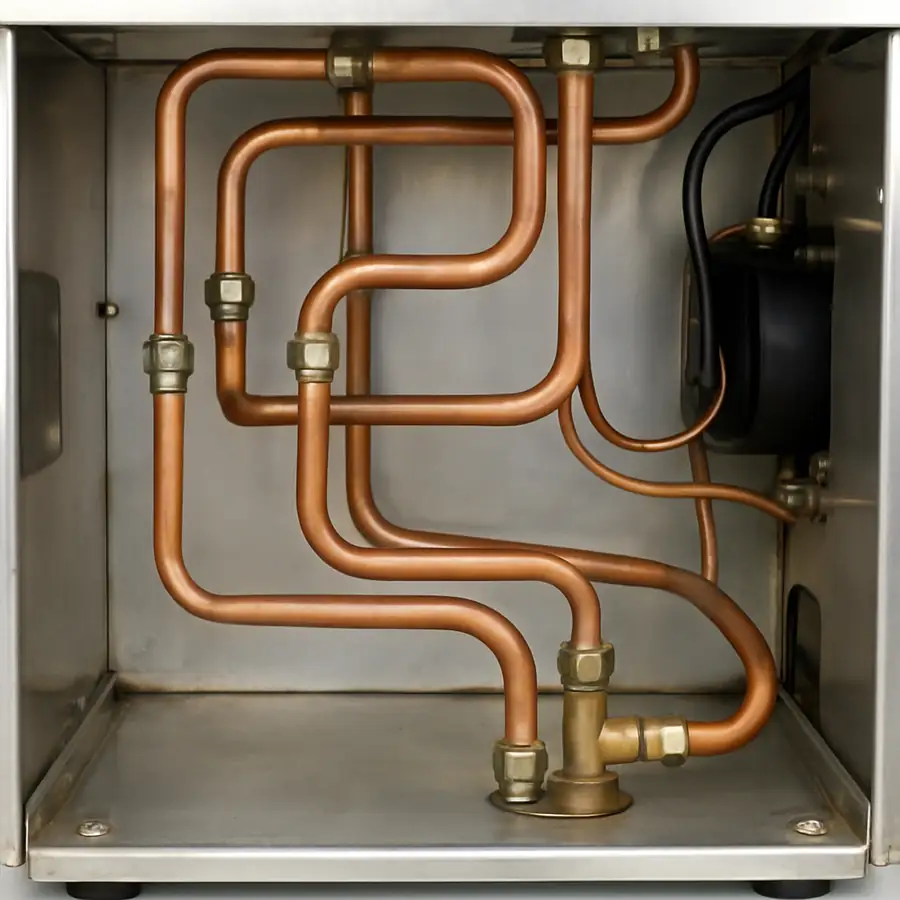
Sticking with dominant legacy brands like La Marzocco or Nuova Simonelli acts like a built-in insurance policy. Because these machines are universally recognized, local repair shops stock their components heavily, ensuring the ease of sourcing spare parts for Italian espresso machines is never a multi-week bottleneck. Think of it like owning a popular commercial fleet vehicle; if a pump fails, your mechanic already has the replacement sitting on the shelf.
Before buying, call local service companies to verify which brands their technicians are actually certified to repair and check their emergency response times. A guaranteed 24-hour turnaround is the ultimate secret to minimizing coffee shop equipment downtime. Securing this reliable safety net for maintenance allows you to accurately calculate your total cost of ownership and project long-term returns.
Calculating Total Cost of Ownership: Resale Value and ROI for Growing Startups
Looking at the initial price tag of a commercial espresso machine often induces sticker shock. However, that upfront number only tells half the story. To make a smart financial decision, you must calculate the total cost of ownership for commercial coffee equipment. This metric looks beyond the simple purchase price, factoring in how much cash you will actually recover when you eventually sell the unit to upgrade.
Projecting three years into the future is the easiest method for how to calculate espresso machine ROI for startups. When comparing these two Italian giants, a 3-Year Cost Comparison Breakdown reveals distinctly different financial strategies:
- Initial Cost: Nuova Simonelli requires less upfront cash, preserving vital capital for startups needing funds for marketing or renovations.
- Depreciation: La Marzocco acts like a luxury vehicle; intense brand prestige heavily protects it from steep drops in value.
- Long-Term ROI: Because the resale value of specialty coffee machines carrying the La Marzocco name is exceptionally high, you can often recover 70% of your initial investment, making it a highly 'safe' asset.
Your choice depends on immediate cash flow versus long-term capital strategy. Nuova Simonelli gets your doors open faster with lower upfront risk, while La Marzocco parks a financially secure asset on your counter. Beyond the financial math, your equipment must actively support staff operation and scale with your hiring needs.
Training Your Baristas Without the Headache: Which Interface Scales Better?
Hiring new staff is an ongoing reality, meaning your equipment must actively shorten the learning curve. When training baristas on different espresso machine interfaces, La Marzocco’s classic manual toggles demand heavily developed muscle memory to master. Conversely, Nuova Simonelli champions programmable buttons that act like cruise control for coffee. This creates immediate ease of use for staff, allowing nervous beginners to focus on smiling at customers rather than guessing the correct water volume during a morning rush.
Internal mechanics can also quietly compensate for beginner mistakes behind the scenes. Nuova Simonelli utilizes a Soft Infusion System (SIS), which gently soaks the coffee grounds with low-pressure water before applying full extraction force. If a frantic new hire packs the espresso unevenly, this pre-soak acts as a buffer to force the water through evenly anyway. Fewer sour or bitter drinks reach your customers, making scaling cafe production far less stressful for management.
Achieving true operational consistency means your newest employee's espresso must taste identical to your manager's. While manual setups offer authentic craft, programmable interfaces build a safety net protecting your quality control. Balancing these financial and operational realities forms the foundation of your final equipment decision.
Your Growth Roadmap: A 3-Step Framework for Choosing Your Perfect Espresso Partner
You no longer just see shiny metal; you understand the engines powering your operations. Comparing La Marzocco vs Nuova Simonelli highlights the ultimate trade-off between classic prestige and modern efficiency. La Marzocco remains the hand-built luxury sedan with legendary heritage, while Nuova Simonelli acts as the high-performance rally car, utilizing ergonomic technology to accelerate your workflow.
To find the best espresso machine for your growing cafe, apply this final decision checklist:
- Volume: Pick Simonelli if shaving seconds off your morning drive-thru rush is crucial.
- Budget: Pick La Marzocco for guaranteed long-term resale value, or Simonelli for accessible, high-tech features.
- Staff Skill: Pick Simonelli’s intuitive automation for training new hires, or La Marzocco’s classic tactile feel for seasoned professionals.
You now possess the insight to choose confidently. The most effective next step is to visit a local showroom and physically test the workflow on both machines. Because both brands represent world-class engineering, there is no wrong answer—only the ideal engine for your specific cafe.
Buy Commercial Espresso Machines from The Horeca Store
Whether you're opening your first café or expanding an established coffee business, The Horeca Store offers a wide selection of premium commercial espresso machines and café equipment to suit every requirement. From professional espresso machines and coffee grinders to blenders, refrigeration units, beverage preparation equipment, and café essentials, we provide reliable solutions designed for demanding commercial environments.
At The Horeca Store, we are committed to helping cafés, restaurants, hotels, and coffee businesses invest in high-quality equipment that delivers consistent performance and long-term value. With competitive pricing, trusted commercial brands, and dedicated customer support, The Horeca Store is your trusted partner for building a successful and efficient coffee business.