
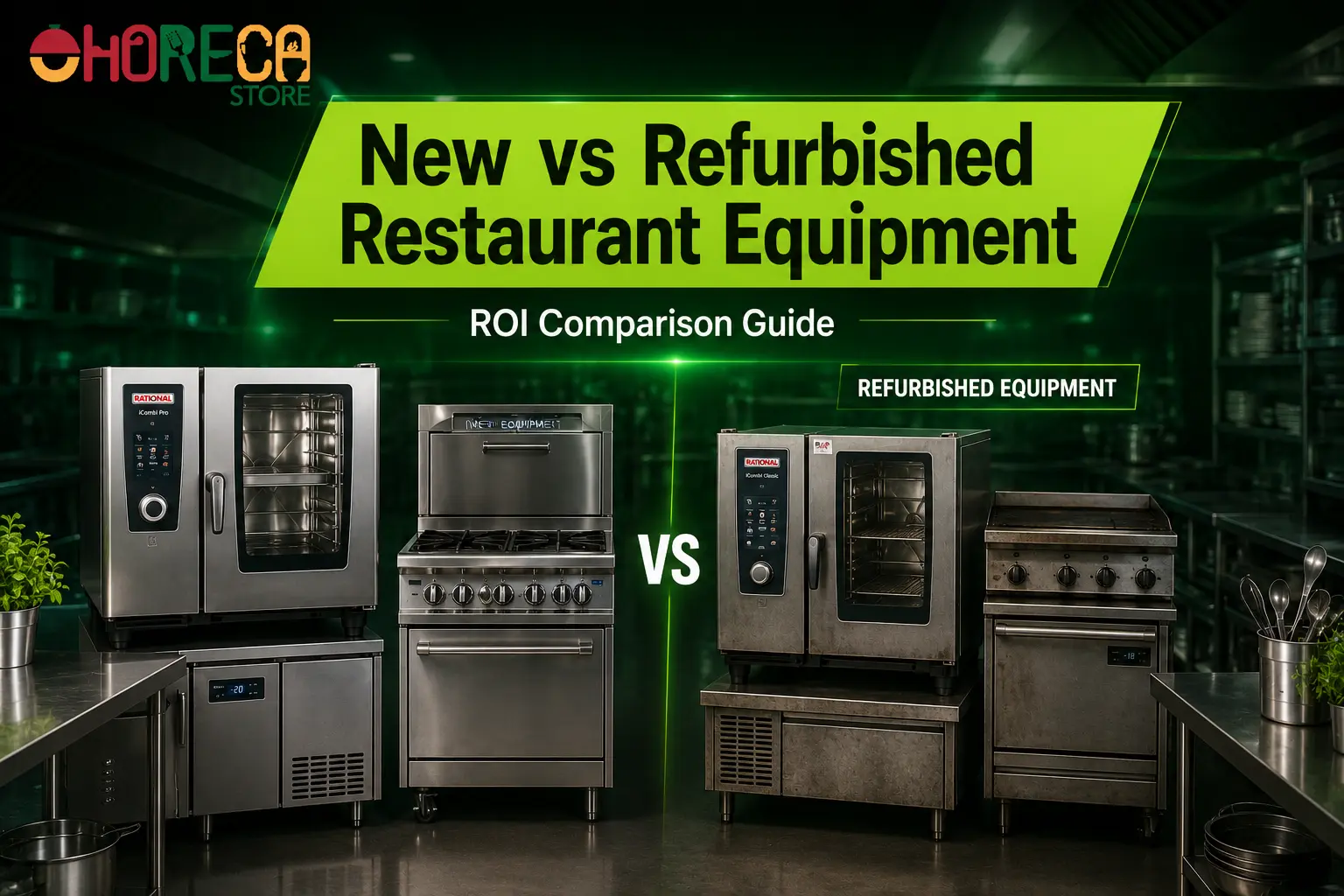
It’s 7:00 PM on a Friday, ticket times are climbing, and your lead cook just announced the main walk-in cooler is sweating. Panic sets in as you calculate impending food spoilage, bringing the "headache factor" of unexpected downtime into brutal focus. Suddenly, the thousands of dollars you saved upfront on that discount chiller feels like a massive miscalculation.
According to industry averages, an appliance's sticker price represents only a fraction of its true financial burden. Smart buyers evaluate the Total Cost of Ownership (TCO)—the initial purchase price plus those inevitable repair bills—by looking for the "Hidden Leak." Every extra dollar drained by energy inefficiencies or emergency weekend service calls acts as a quiet leak in your profit bucket, proving that maximizing your new vs refurbished restaurant equipment roi is fundamentally about risk management.
Consider two restaurant operators firing up their completely different cooking lines. Whether you uncrate a pristine six-burner range or install a certified refurbished combi-oven, the first forty-eight hours of ownership dictate your trajectory. This critical window stress-tests the unit, revealing if the machine can handle relentless dinner rushes or if masked mechanical flaws will immediately sabotage your cash flow.
Navigating these high-stakes decisions shouldn't require an accounting degree. Systematically breaking down actual kitchen equipment maintenance costs provides a practical method to ensure capital purchases keep money securely in the bank account.
Beyond the Price Tag: Deciphering 'Refurbished' vs. 'Used' to Protect Your Cash Flow
Owner A buys a six-burner range from a local classified ad to save a quick grand. Owner B buys the exact same model through a reputable dealer. Six months later, Owner A pays a technician double those initial savings just to keep the pilot lit during a Saturday dinner rush. That is the fundamental gamble of buying second hand kitchen equipment without knowing exactly what you are getting.
Terminology traps catch restaurant operators every day, which is why understanding refurbished vs reconditioned vs used definitions protects your cash flow. "Used" simply means previously owned and sold exactly as-is. In contrast, a certified refurbishment requires rigorous component-level testing. Technicians do not just check if a compressor turns on; they measure electrical draw, inspect wire harnesses, and verify that internal mechanisms perform to factory specifications.
Legitimate refurbished kitchen equipment must survive a comprehensive overhaul before ever hitting your loading dock. This professional standard always relies on a strict four-step reconditioning checklist:
- Cleaning: Stripping away years of structural grease and carbon buildup.
- Part Replacement: Swapping worn gaskets, belts, and elements for fresh OEM parts.
- Testing: Running the unit through simulated high-volume operational stress cycles.
- Warranty Assignment: Backing the labor and parts with a genuine guarantee.
The Tax Man’s Secret Gift: Leveraging Section 179 and Depreciation for New Equipment
Looking at a $10,000 sticker price for a pristine combi-oven can make any operator sweat, especially when a second-hand unit sits online for half the cost. However, the IRS offers a massive cash flow shield that fundamentally changes this math. By leveraging the section 179 tax deduction for restaurant equipment, you can deduct the entire purchase price of qualifying gear from your gross income in the very first year instead of waiting years to recoup that value.
Let's compare the first-year write-off potential for a $10,000 new oven vs a $5,000 used oven (assuming a standard 21% corporate tax bracket):
- The $10,000 New Option: You write off the full amount immediately, keeping $2,100 from going to the IRS. Your true net cost drops to $7,900.
- The $5,000 Used Option: Writing off the lower price saves you just $1,050. Your net cost drops to $3,950, but you inherit completely unknown wear and tear.
Traditionally, the standard kitchen equipment depreciation schedule for taxes forced businesses to spread those deductions over seven long years. That sluggish pace left operators cash-poor during critical growth phases while waiting for tax benefits to slowly trickle in. Accelerated depreciation flips that script entirely for new restaurant equipment. By taking the write-off upfront, you drastically lower your taxable income exactly when your bank account feels the sharpest sting from outfitting the kitchen.
Smart owners never look at just the retail price tag; they calculate this final net cost before making a decision. While taking the tax break narrows the upfront price gap between shiny and second-hand gear, your daily operational expenses are just beginning. Once that unit is plugged in and surviving weekend rushes, the financial reality shifts toward daily operational expenses.
The Hidden Leaks: How Energy Bills and Repair Calls Quietly Kill 'Savings'
Equipment failure during a peak service window transforms an upfront discount into an operational crisis. The $2,000 you saved buying a five-year-old refurbished unit evaporates the moment you are forced to eighty-six half your menu and turn away a dining room full of paying customers.
Calculating the total cost of ownership commercial kitchen equipment requires factoring in these catastrophic moments. A $300 emergency service call is only a fraction of the true penalty; the real hit comes from hundreds of dollars in spoiled prep and lost revenue. Proactively minimizing downtime with reliable kitchen appliances isn't just a luxury, it is a defensive strategy to protect your hard-earned weekend margins.
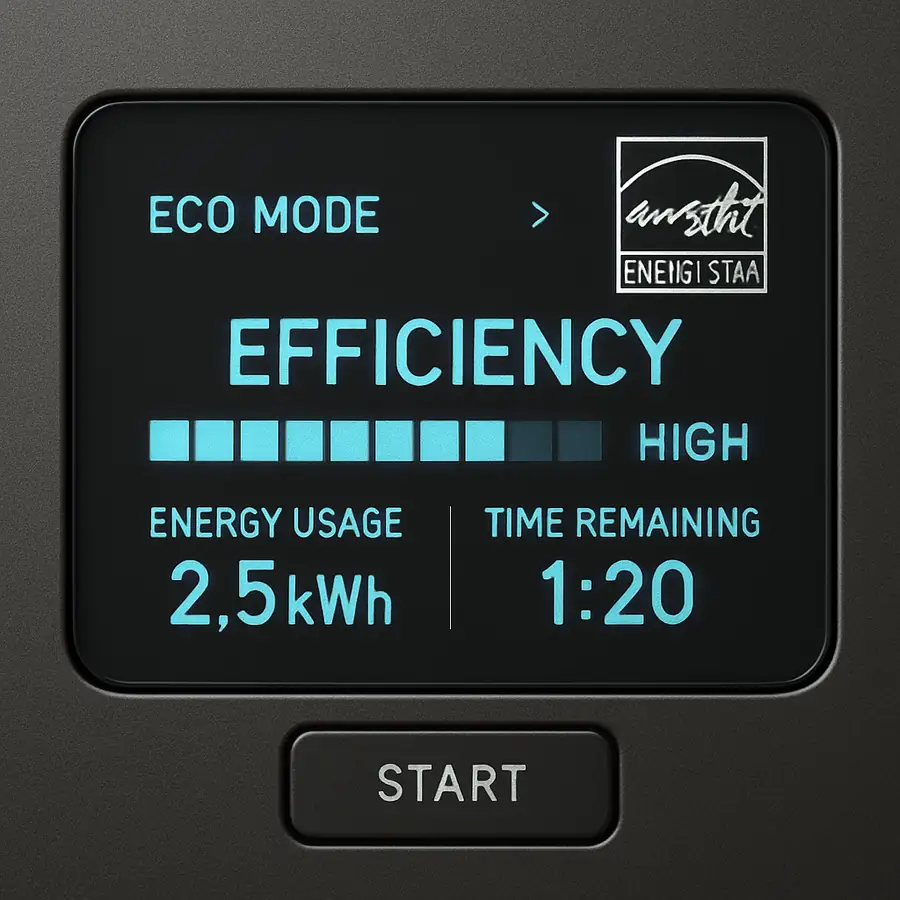
Beyond dramatic breakdowns, older equipment quietly bleeds your cash flow every single month through your utility bill. Looking closely at energy star rating savings new vs used models reveals a staggering gap in daily operational costs. A ten-year-old refurbished ice machine or oven might pull 20% to 30% more electricity than a modern equivalent, acting as a permanent hidden leak in your operating budget.
Then comes the inevitable maintenance cliff that typically hits during years three through five of a refurbished unit's second life. While a shiny new combi-oven hums along under a comprehensive factory warranty, older gear starts demanding replacement compressors, worn gaskets, and new thermostats. Those parts and labor invoices steadily drain your bank account, completely erasing the initial price gap secured at purchase.
Keeping the doors open and utilities low matters far more than scoring a cheap sticker price. Once these hidden leaks of energy waste and unplanned downtime are plugged, long-term asset value becomes the primary focus.
Reliability vs. Resale: Why High-End Brands Hold Their Value Better Than Budget Gear
An operator who buys a brand-new economy refrigerator for $2,000 faces a vastly different future than one who spends that exact same budget on a refurbished premium unit. Five years later, the smarter investment reveals itself through engineering. Budget manufacturers rely on cheaper compressors and thinner insulation to hit a low sticker price. Conversely, the long-term reliability of commercial refrigeration brands built for heavy volume ensures premium units hold temperature even under duress.
This stark physical difference explains why seeing refurbished catering equipment last through decades of abuse is entirely common. Top-tier brands engineer their assets to survive, meaning a certified refurbished premium oven usually has more usable life remaining than a brand-new economy model. You are actively acquiring the remaining brand equity of a machine built to a superior standard. You buy it once, rather than replacing cheap, sagging doors and blown thermostats every four years.
Just like a trusted commercial truck retains its trade-in price, premium kitchen assets maintain a tangible residual value. If you upgrade or sell your restaurant down the road, secondary buyers will pay real cash for recognizable nameplates. The resale value of high-end kitchen brands remains remarkably stable because the used market inherently trusts their track record. That budget cooler, however, will likely just cost you a haul-away fee when it dies.
Ultimately, purchasing established gear transforms a depreciating expense into a working, long-term asset. You secure better daily performance today, and you capture a cash return when you finally sell it. Figuring out exactly when that premium investment pays for itself requires running practical numbers based on daily operations.
The 'Napkin Math' ROI Formula: Calculating Your Break-Even Point
Sitting across from a loan officer or business partner with a massive equipment quote demands hard numbers to prove exactly when an $8,000 combi-oven actually pays for itself. This is your "Payback Period." Instead of getting tangled in complex accounting spreadsheets, you calculate the Break-Even Threshold—the exact month where the machine's labor savings, energy efficiency, or increased output finally covers its initial sticker price. By figuring out how many shifts it takes to offset the cash outlay, you turn a terrifying expense into a justifiable investment.
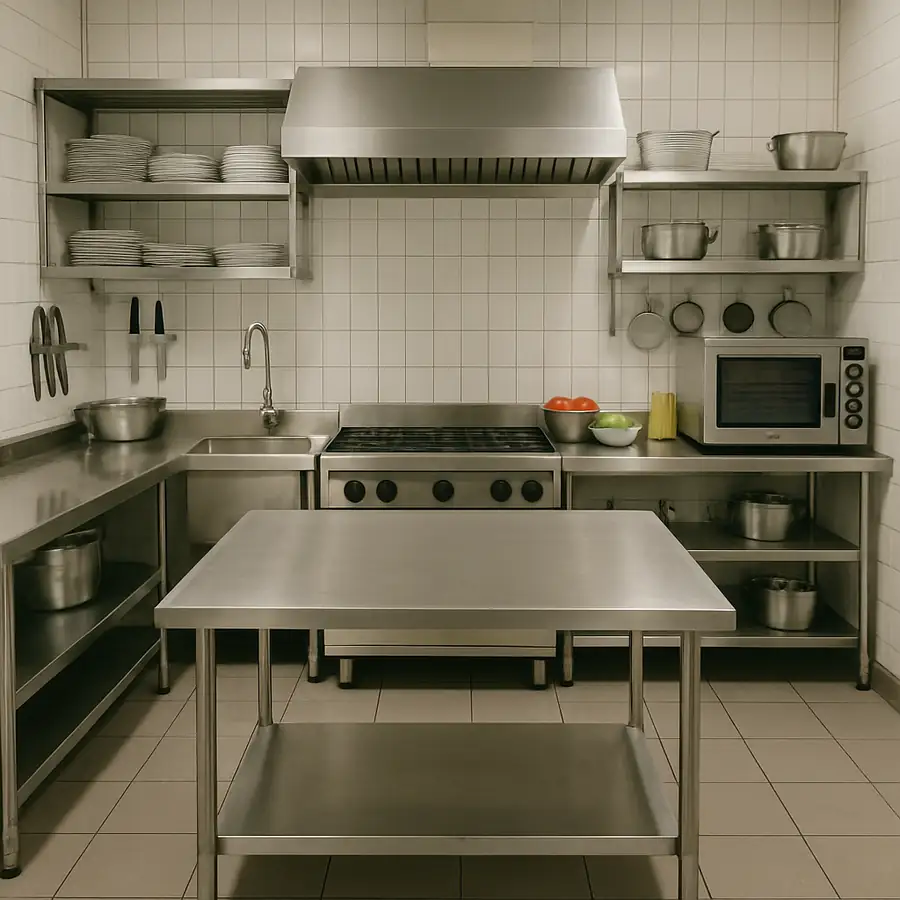
To master calculating break-even point for kitchen upgrades, utilize a reliable framework that accounts for the hidden leaks in profit margins. A comprehensive roi analysis comparing new vs refurbished restaurant equipment comes down to a simple 3-step "Napkin Math" formula:
- Step 1: The Initial Purchase Price: The out-of-pocket cash you spend today, including freight and installation.
- Step 2: Add 5-Year Ops Cost: Estimate utility bills, routine maintenance, and expected service calls over a five-year lifespan.
- Step 3: Subtract Resale Value: Deduct the realistic cash amount you can sell the unit for when upgrading later.
Running this practical comparison reveals your gear's true Total Cost of Ownership (TCO).
Usage volume ultimately dictates which path makes the most financial sense for your specific operation. High-volume, 24/7 diners justify the premium price of a brand-new unit to secure maximum warranty coverage, while a neighborhood cafe running single shifts will hit their payback period much faster with a certified refurbished model.
Your 5-Year Action Plan: The Operator’s Checklist for Smarter Equipment Buying
Balancing immediate cash flow needs with long-term profitability requires treating every appliance as a calculable investment rather than a kitchen gamble. The goal is finding the exact intersection between preserving upfront capital and ensuring absolute reliability during a busy service.
Implement a standardized vetting process for every vendor and piece of machinery. Bring this certified refurbished commercial appliances checklist to your next dealer meeting:
- Warranty check: Secure a robust commercial kitchen equipment warranty covering both parts and labor.
- Energy Star check: Calculate expected long-term utility savings against standard models.
- Service history: Request specific documentation on all replaced components for refurbished units.
- Tax status: Verify your Section 179 depreciation eligibility to capture immediate write-offs.
- Brand reliability: Stick to proven, high-performing industry workhorses with established residual value.
- Parts availability: Ensure local repair technicians carry necessary components for your chosen brand.
By evaluating equipment through the lens of total ownership costs, you eliminate the guesswork from capital purchases and build a resilient kitchen capable of supporting long-term business growth.
Don't Forget Your Restaurant's Everyday Supplies
Restaurant equipment is only one part of your overall investment. Once your kitchen is operational, you also need reliable everyday supplies for serving, takeaway, and food packaging. The Horeca Store offers a wide selection of foodservice essentials, including disposable food containers, takeaway cups, coffee cups, napkins, cutlery, and other catering supplies.
By choosing the right combination of equipment and consumable supplies, restaurant owners can control costs, improve operational efficiency, and create a professional experience for their customers. Explore The Horeca Store for quality hospitality and foodservice products designed to support restaurants, cafés, catering businesses, and other foodservice operations.