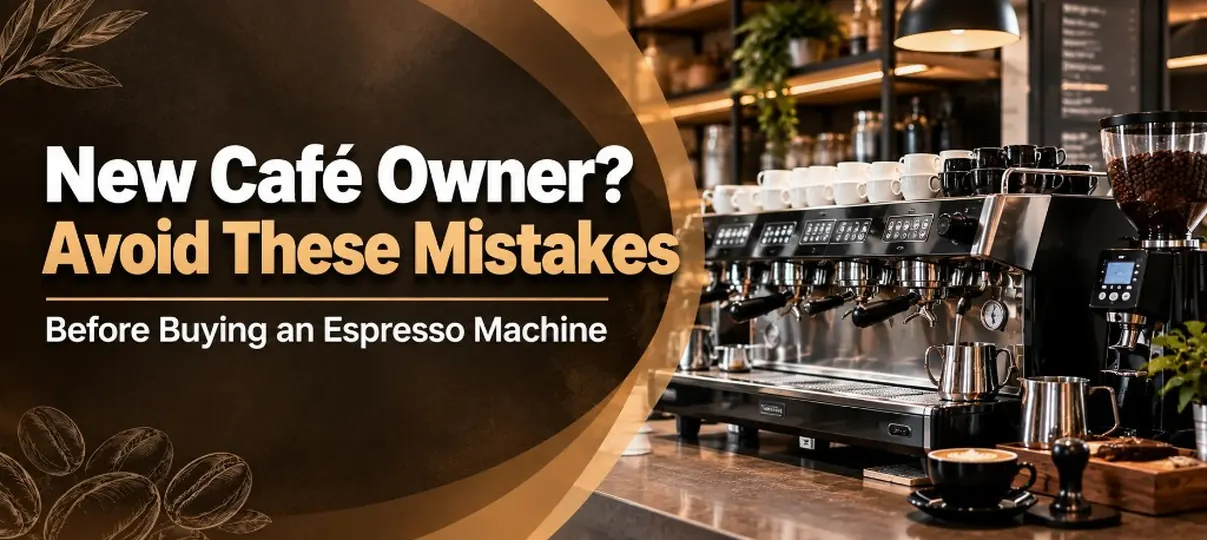
Opening a cafe is exciting, but choosing the wrong espresso setup can make daily service harder than it needs to be. A commercial espresso machine is not just another appliance; it shapes drink quality, workflow, staff training, maintenance routines, and customer wait times. This espresso machine guide walks new cafe owners through the most common buying mistakes so you can choose equipment that fits your menu, space, budget, and long-term plans. The Horeca Store can match the espresso setup to your menu before you compare machines.
Why does the right commercial espresso machine matter so much?
A coffee urn and a satellite coffee brewer cover batch coffee, not espresso.
The right machine helps your team make consistent drinks quickly, especially during morning rushes when every extra movement matters. The wrong one can slow service, create inconsistent espresso, strain your staff, and lead to expensive repairs that could have been avoided with better planning. For a new cafe owner, the goal is not to buy the biggest or most impressive machine; it is to buy the machine that supports your actual service model.
Think of the espresso machine as part of a system. It works alongside the grinder, water filtration, bar layout, trained baristas, cleaning schedule, and coffee program. If one part is overlooked, the whole system suffers. A well-matched machine gives you more control, smoother operations, and fewer unpleasant surprises after opening day.
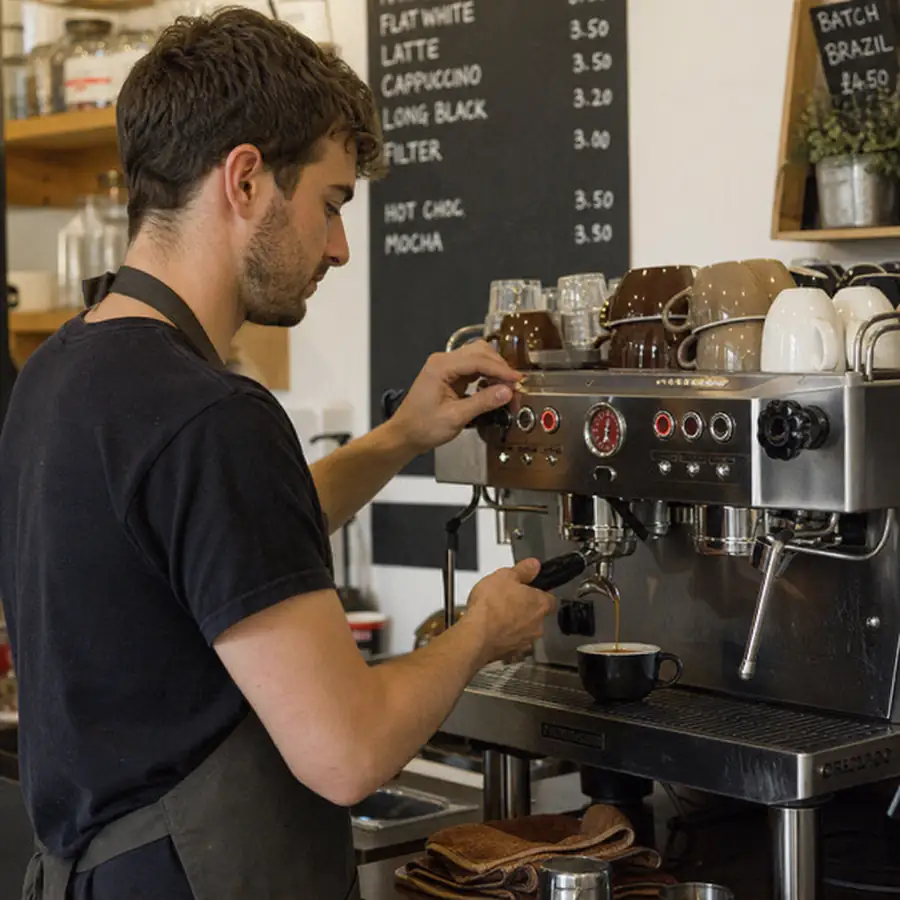
Mistake 1: Buying for appearance instead of daily volume
An iced-latte rush still needs an ice machine nearby.
A beautiful machine can help define the look of your bar, but design should never be the first decision point. Many new owners are drawn to polished finishes, stylish panels, or a brand they have seen in popular cafes. Looks matter, especially if the machine is customer-facing, but performance under your expected workload matters more.
Start by estimating how many espresso-based drinks you expect to sell on a normal day and during your busiest hour. A small cafe with light traffic may not need the same group count or boiler capacity as a high-volume shop near offices, schools, or transit. If your machine is undersized, your staff may struggle to keep up, steam milk slowly, or wait between shots. If it is oversized, you may spend more than necessary on equipment, energy use, installation, and service.
Consider these volume-related questions before you shop:
- How many espresso drinks do you expect to sell per day?
- What are your busiest service windows?
- Will you serve mostly milk drinks, straight espresso, iced drinks, or a balanced mix?
- How many baristas will work on bar at one time?
- Do you plan to expand your menu or open longer hours later?
These answers will help you compare machines based on real use instead of showroom appeal.
Mistake 2: Ignoring workflow and counter space
Leave room for an undercounter refrigerator beside the milk storage.
A commercial espresso machine can be technically excellent and still be wrong for your cafe if it does not fit your workflow. The bar area should let staff move naturally from grinding to dosing, tamping, brewing, steaming, serving, and cleaning. If the machine is too wide, too deep, too tall, or positioned awkwardly, even skilled baristas will lose time and energy.
Measure your counter carefully before making a decision. Include the grinder, knock box, tamping area, milk fridge, pitcher rinser, water access, cups, lids, syrups, and cleaning tools. A common mistake is planning space for the espresso machine alone, then realizing later that the supporting tools have nowhere convenient to go.
Good workflow is about reducing unnecessary steps. Your barista should not have to cross the bar to reach milk, twist around to discard pucks, or block another team member while steaming. Before buying, sketch the bar layout or tape equipment dimensions onto the counter. This simple exercise can reveal problems that are hard to see on a spec sheet.
What should you check before comparing machine models?
A commercial refrigerator can hold milk backup when the bar fridge is full.
Before comparing models, define your menu, traffic expectations, space limits, utilities, maintenance capacity, and budget. These practical details matter more than a long list of features because they determine whether the machine can support your cafe every day. A clear buying brief also helps suppliers or technicians recommend options that match your needs instead of steering you toward equipment that is too much or too little.
Use this checklist before requesting quotes:
- Menu plan List every drink you expect to serve, including espresso, cappuccino, latte, flat white, mocha, iced latte, and seasonal drinks. A milk-heavy menu usually requires strong steaming performance.
- Peak-hour demand Estimate your busiest hour, not just your daily total. A machine that handles a quiet afternoon may still fail during the morning rush.
- Bar layout Confirm dimensions, clearance, customer sightlines, and staff movement. Remember to include space for grinders and accessories.
- Utility requirements Check electrical, plumbing, drainage, and water filtration needs before purchase. Installation surprises can delay opening or increase costs.
- Service access Find out who can repair the machine locally and how easy it is to get parts. A great machine is less useful if service support is difficult to access.
- Training needs Consider how much barista skill the machine requires. Some machines reward experienced staff, while others offer automation that supports consistency.
Mistake 3: Treating the grinder as an afterthought
Add a coffee bean grinder only when you run a second coffee.
New cafe owners often spend most of their attention on the espresso machine and leave the grinder decision until the end. That is a serious mistake. The grinder has a direct effect on espresso quality, consistency, speed, and waste. Even a high-end machine cannot fix poorly ground coffee.
A commercial grinder should be selected to match your coffee volume and drink style. You may need one grinder for your main espresso blend and another for decaf or a rotating single-origin option. If your grinder is slow, inconsistent, difficult to adjust, or not built for your volume, your baristas will fight with extraction all day.
Budget for the grinder as part of the espresso system, not as an accessory. The machine provides pressure and temperature; the grinder controls particle size, dosing consistency, and much of the extraction behavior. When these two pieces of equipment work well together, your drinks become easier to dial in and repeat.
Mistake 4: Forgetting water quality
Cold milk still needs a reach-in refrigerator or a milk cooler when the bar fridge is small.
Water quality affects taste, equipment life, and coffee machine maintenance. Espresso machines heat and move water constantly, so minerals, scale, sediment, or poor filtration can create problems over time. New owners sometimes assume that if the water tastes fine from the tap, it is fine for espresso equipment. That assumption can be costly.
Water that is too hard can contribute to scale buildup inside boilers and lines. Water that is poorly balanced can also affect flavor and extraction. The right filtration or treatment setup depends on your local water, your machine, and your service volume.
Before installation, have your water tested or ask your equipment supplier or technician what they recommend for your area. Build water filtration into your opening budget. It is not the most glamorous purchase, but it can protect your machine, support better-tasting espresso, and reduce avoidable service issues.
Mistake 5: Underestimating espresso machine care
Espresso machine care begins the first day the machine is used. It is not something to think about only when performance drops. Daily cleaning protects flavor, keeps equipment working properly, and helps staff notice small issues before they become bigger problems.
A basic care routine should include backflushing as recommended for the machine, cleaning group heads, wiping steam wands after each use, purging steam wands before and after steaming, emptying and cleaning drip trays, and washing removable parts. Portafilters, baskets, and screens also need regular attention because coffee oils build up quickly.
Make cleaning part of the shift rhythm rather than an end-of-night scramble. When staff understand why cleaning matters, they are more likely to do it correctly. Dirty equipment can create bitter flavors, weak steam performance, clogged parts, and inconsistent shots. Clean tools make consistency easier.
A practical maintenance rhythm for new cafes
Check the espresso grinder on the same weekly list.
Coffee machine maintenance works best when it is scheduled, visible, and assigned. Do not rely on memory or assume "someone" will handle it. Build a simple checklist, train every barista on it, and keep records of recurring tasks.
Here is a starter rhythm to adapt to your machine and technician's recommendations:
- During service: Wipe and purge steam wands, keep the drip area clear, rinse pitchers, and remove grounds from the workspace.
- End of each shift: Clean baskets and portafilters, flush groups as appropriate, wipe the machine exterior, and empty waste areas.
- Daily close: Complete the recommended cleaning cycle, clean the drip tray, soak removable coffee-contact parts if appropriate, and reset the bar for the next day.
- Weekly: Inspect gaskets, screens, pitcher rinsers, drain flow, grinder burr area, and water filter condition where visible.
- Scheduled service: Arrange professional inspection and preventive maintenance based on usage and manufacturer guidance.
This routine should be written down and placed where staff can see it. Over time, it becomes part of your cafe culture, not a chore that gets skipped when the shop is busy.
Mistake 6: Choosing features you do not actually need
A commercial blender is for smoothies, not for espresso drinks.
Commercial espresso machines can include many useful features, from volumetric dosing and programmable settings to advanced temperature control and automated milk systems. These features can improve consistency and speed when they match your operation. They can also add cost and complexity if your team does not need them.
Before paying for more features, ask what problem each feature solves. If you will employ experienced baristas and focus on craft espresso, you may prioritize manual control, temperature stability, and tactile workflow. If you expect frequent staff turnover or high-volume takeaway service, consistency-focused automation may be more valuable.
There is no single "best" setup for every cafe. The best machine is the one that fits your drinks, people, and pace. Avoid buying features for bragging rights. Buy the functions that make service smoother and drinks more consistent.
Mistake 7: Overlooking installation requirements
Measure the working space the way you would for a prep table.
Installation is where many hidden costs appear. A commercial machine may require specific electrical service, plumbing, filtration, drainage, counter support, ventilation clearance, or technician setup. If these needs are discovered late, you may face delays or expensive last-minute changes.
Talk with your electrician, plumber, equipment supplier, and landlord before purchasing. Confirm what is already available in the space and what must be added. If you are leasing a former cafe, do not assume the existing setup is suitable for your chosen machine. Older plumbing, limited power, or poor drainage can still create problems.
It is also wise to plan technician access. Machines need room for servicing. If the unit is squeezed tightly into a custom counter with no access points, routine repairs can become more difficult than necessary.
How do you balance budget with long-term value?
A used coffee machine can look cheap until installation and parts are added.
Balance budget with long-term value by looking beyond the purchase price and considering installation, training, maintenance, repairs, energy use, downtime risk, and expected lifespan. A cheaper machine can become expensive if it slows service, breaks often, or lacks local support. A more expensive machine may be worthwhile if it improves consistency, handles your volume, and can be serviced easily.
Create a total ownership budget that includes:
- Machine purchase or lease cost
- Grinder or grinders
- Water filtration or treatment
- Installation labor and required utility upgrades
- Barista tools and cleaning supplies
- Preventive maintenance and service calls
- Staff training time
- Potential downtime planning
This approach helps you make a business decision, not just a shopping decision. It also prevents the common problem of spending the full budget on the machine itself and leaving too little for the essentials that make it work properly.
Mistake 8: Buying without local service support
Ask whether coffee servers and warmers are stocked with the machine parts.
A commercial espresso machine is a working piece of equipment, and eventually it will need service. Before buying, find out who services the brand in your area, how quickly they can respond, and whether parts are readily available. This is especially important for new cafes that cannot afford long downtime.
Ask suppliers direct questions. Do they offer installation? Do they train your staff? Do they stock common parts? Can they recommend a preventive maintenance schedule? If the machine is imported, specialized, or uncommon in your region, service may be more complicated.
Local support is not just for emergencies. A good technician can help with setup, water treatment, pressure checks, gasket replacement, and early troubleshooting. That support can make ownership far less stressful.
Mistake 9: Skipping staff training
Training should include the commercial coffee machine routine if you also serve drip coffee.
Even excellent equipment performs poorly in untrained hands. New cafe owners sometimes assume baristas will "figure it out," especially if the machine has automated features. But espresso requires attention to grind size, dose, yield, time, milk texture, cleanliness, and sensory feedback.
Training should cover both drink preparation and equipment care. Staff need to know how to dial in espresso, steam milk consistently, clean the machine, recognize warning signs, and communicate issues. If only one person knows how to use the machine properly, your cafe becomes vulnerable when that person is off shift.
Document your recipes and routines. Clear standards help new staff learn faster and help experienced staff stay consistent. Training also reduces waste because baristas make fewer avoidable errors while adjusting shots or preparing drinks.
A smarter way to make the final decision
Keep coffee carafes and coffee warmers for batch coffee, not on the espresso bar.
Once you have narrowed your options, compare machines in the context of your actual cafe rather than relying only on specs. If possible, test machines, watch them in use, or speak with operators who run similar service models. Pay attention to how the machine feels during repeated drinks, not just how it performs for one shot.
Use a simple decision framework:
- Fit: Does it match your volume, menu, counter space, and utilities?
- Consistency: Can your team produce repeatable drinks with it?
- Speed: Will it keep up during your busiest periods?
- Care: Are cleaning and daily espresso machine care realistic for your staff?
- Support: Is reliable service available locally?
- Value: Does the total cost make sense for your business plan?
If a machine performs well across these areas, it is probably a stronger choice than one that simply looks impressive or has the most features.
Final takeaway
Commercial automatic coffee machines and a liquid coffee dispenser cover drip and batch drinks, not espresso. A bottle cooler and a back bar cooler are separate from the espresso bar.
Buying a commercial espresso machine is one of the most important equipment decisions a new cafe owner will make. Avoid rushing the process, and do not choose based on looks, price, or brand reputation alone. Match the machine to your menu, workflow, water quality, staffing, maintenance plan, and service support.
The smartest purchase is the one that helps your cafe serve better drinks with less friction every day. With a clear plan for coffee machine maintenance, staff training, and espresso machine care, your equipment becomes a reliable foundation for the cafe you are working hard to build.