
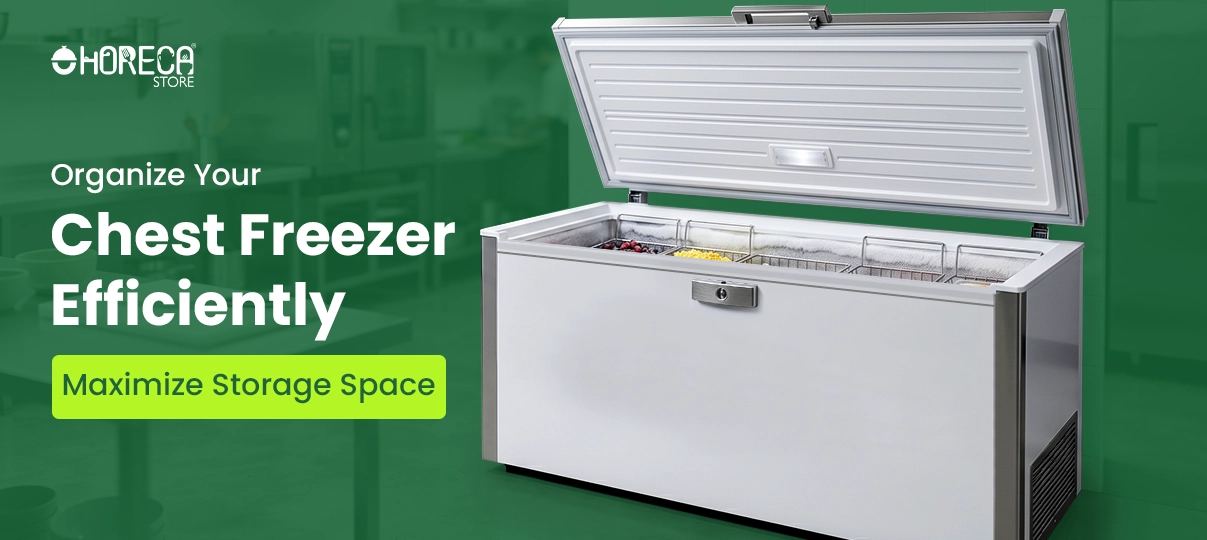
You’ve found the perfect sale on bulk chicken, but your kitchen fridge is already jammed, leaving you playing a desperate game of freezer Tetris. Upgrading to a chest freezer solves this crisis instantly, offering a massive footprint for food preservation for bulk buying. Yet, looking down into that vast, empty box can still feel a bit intimidating.
Think of cold air like water in a swimming pool. Open the door of a standard upright freezer, and all that heavy, frigid air pours out onto your feet like a waterfall. Because horizontal models open from the top, the cold air stays safely settled right at the bottom of the unit. According to appliance energy standards, this simple design difference makes them 10 to 25 percent more energy-efficient than vertical models.
Unfortunately, this incredible efficiency comes with a unique storage challenge known as the "Black Hole" effect. Tossing items haphazardly into a deep well practically guarantees that a lone bag of frozen peas will be crushed and forgotten at the very bottom. Without a solid structural strategy, what was supposed to be a money-saving tool quickly turns into a hidden graveyard of freezer-burned food waste.
Escaping this trap requires adopting a true pantry mindset. By treating the appliance like a highly organized basement pantry rather than a permanent storage locker, you create an active rotation system for your family's meals. Mastering these deep freeze organization tips transforms your appliance from a daunting abyss into a highly accessible, money-saving extension of your daily kitchen.
Sizing Your Savings: Why the 7 Cu Ft Garage Ready Model Fits Most Families
Buying the right freezer means finding the sweet spot between storing bulk groceries and losing precious floor space. A reliable rule of thumb is planning for 1.5 cubic feet per person in your household. For a typical family of four, a chest freezer 7 cu ft model hits this target perfectly. It takes up about the same footprint as a small desk, easily tucking into a corner while still offering massive storage volume.
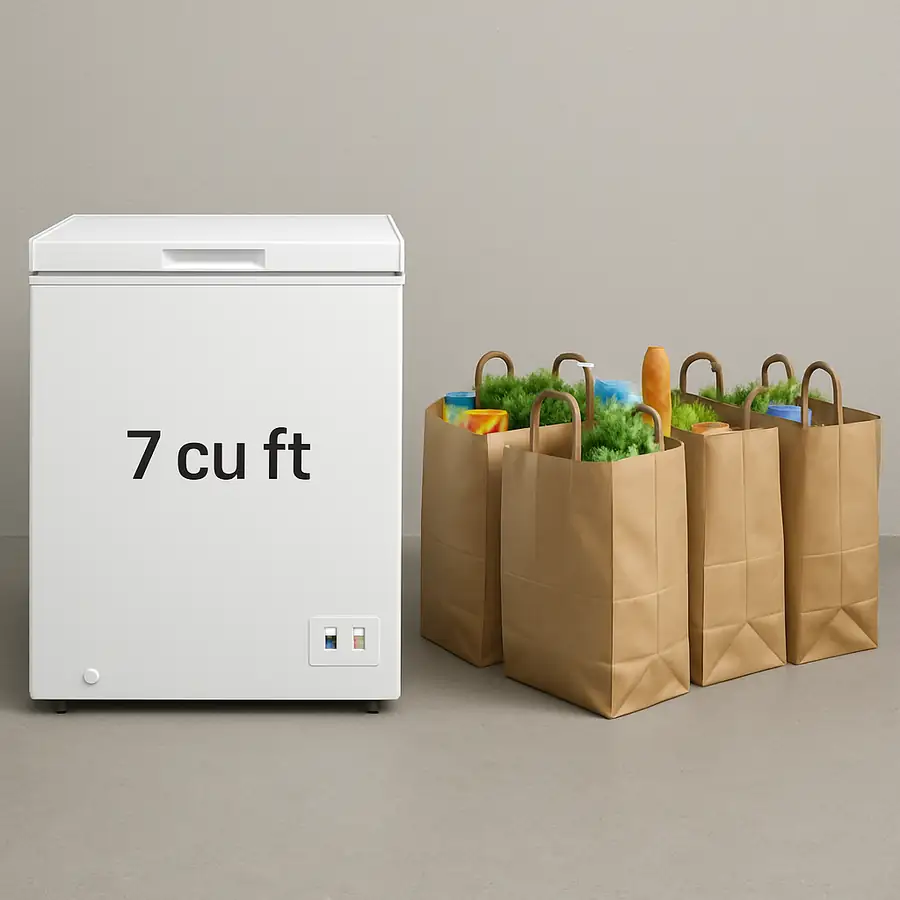
Translating an empty white box into dinner plans is much easier when you convert capacity into actual meals:
- 5 cu ft: Holds roughly 175 lbs (about 150 meals), perfect for couples stocking up on meat sales.
- 7 cu ft: Fits around 245 lbs (over 200 meals), the ideal middle ground for standard family grocery hauls.
- 10 cu ft: Packs in 350 lbs (about 300 meals), designed for large households meal-prepping months ahead.
Because these appliances often live outside the main kitchen, buying a garage ready chest freezer is absolutely critical for external placement. Standard units actually stop running when room temperatures drop too low in winter, causing your frozen food to thaw. Models equipped with specialized garage ready cooling systems use upgraded compressors that won't fail during extreme temperature swings, ensuring safe cold weather performance in unheated spaces. Now that your bulk buys are safely frozen in the right environment, implementing a structural layout ensures you can actually find those ingredients when it's time to cook.
The Zone Defense: How to Organize Layers to Prevent the 'Bottom-of-the-Freezer' Mystery
We have all played the frustrating game of freezer excavation, where that pricey beef roast gets hopelessly buried under a mountain of frozen peas. Excellent food preservation for bulk buying relies on the "FIFO" method: First In, First Out. By deliberately moving older groceries to the top whenever you put away a fresh grocery haul, you guarantee that nothing accidentally expires in the dark corners of your deep well.
Solving this everyday headache requires a practical strategy known as stratified storage, which means organizing your food into distinct layers based on weight and daily use. Securing heavy, dense items at the very base creates a foundation of "thermal mass," meaning these large frozen blocks act like giant ice cubes to keep the whole appliance colder and lower your energy bill. Beyond efficiency, the golden rule that "heavy stays low" is essential for your physical safety, saving your lower back from awkward lifting when reaching deep inside.
Dividing your appliance into a distinct three-story house drastically cuts down the time the door stays open while you hunt for ingredients.
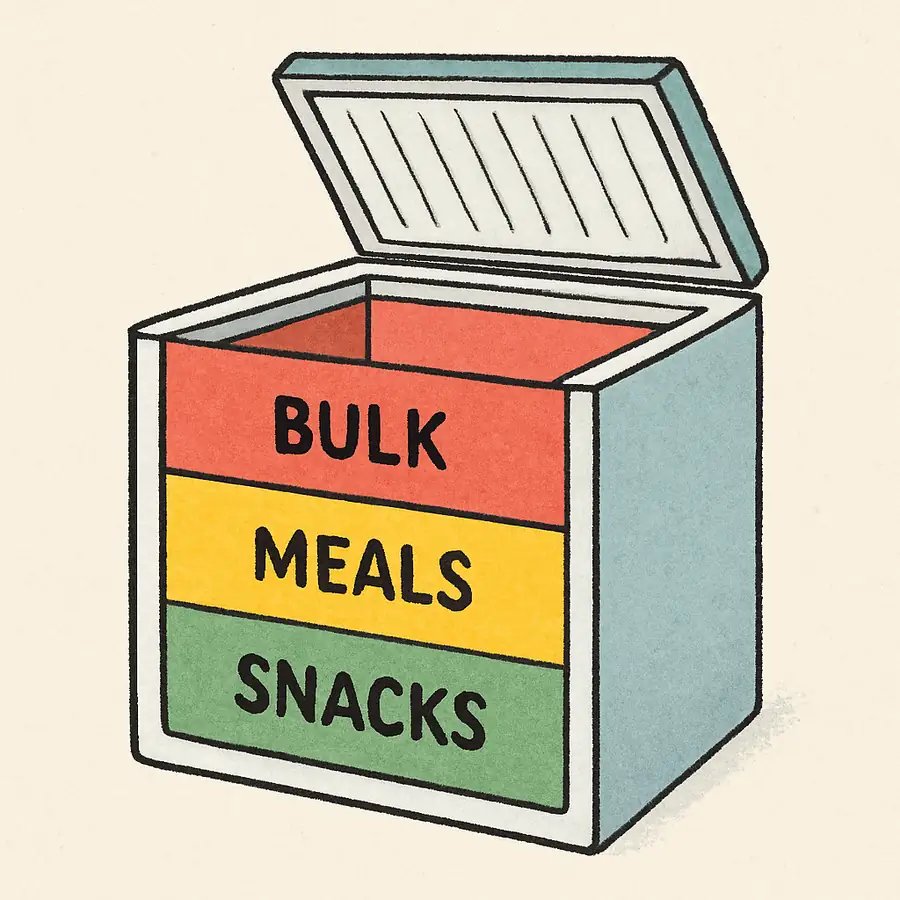
- Bottom Tier: Reserve this for heavy bulk meats, whole turkeys, and seasonal items you won't touch for months.
- Middle Tier: Stack your batched prepared meals, bagged vegetables, and standard dinner ingredients here.
- Top Tier: Keep daily snacks easily accessible, maximizing interior capacity with hanging baskets that slide smoothly across the upper rim.
Armed with these foundational deep freeze organization tips, you will never again have to dig blindly with freezing fingertips just to find Tuesday's dinner. Keeping the layout strictly predictable protects your grocery investment while speeding up your evening routines. You can easily elevate this layout and double your usable space using affordable household staples instead of expensive custom shelving.
Milk Crates and Color Codes: Low-Cost Tools to Double Your Usable Storage
Knowing where your food belongs is only half the battle; actually reaching it is the real challenge. If you simply stack frozen bags on top of each other, accessing that bottom layer of bulk meat still requires unloading everything above it by hand. The secret to a truly functional deep freeze relies on vertical modular storage—turning a giant, empty box into a system of easily liftable compartments.
Rather than buying expensive, custom-made wire racks, you can transform your appliance using affordable household staples. An essential DIY organization toolkit requires just three basic components:
- Sturdy plastic crates to act as stackable, removable "drawers" for the deep well.
- Multi-colored handled bins for grouping similar ingredients together.
- Dry-erase labels for tracking your grocery inventory on the exterior lid.
Implementing this setup takes only minutes but saves hours of future frustration. Start by assigning specific meat types or meal categories to different colored bins, introducing color-coded categorization that lets you spot exactly what you need at a glance. Because they have handles, you can effortlessly lift an entire milk crate of yellow-binned chicken out of the way to reach the red-binned beef below. Up at the top rim, you can focus on maximizing interior capacity with hanging baskets, which are perfect for corralling small, loose items like juice concentrates, sticks of butter, or ice packs. Applying these deep freeze organization tips keeps your food perfectly sorted while ensuring nothing gets permanently buried.
Complete your new system by using those dry-erase labels on the outside lid, creating a living map of your groceries so you never stand with the door wide open while searching. While a highly organized interior drastically reduces how much warm room air enters your appliance, some moisture buildup is still inevitable over time. When that icy layer finally starts creeping up the interior walls, executing a proper manual defrost guarantees peak performance without the traditional mess.
Defrosting Without the Mess: Managing Manual Systems and Drain Plugs for Peak Performance
Seeing frost build up might make you wish for a self-cleaning unit, but that icy layer actually proves your food is getting superior preservation. Unlike auto-defrost uprights that routinely warm up to melt ice—creating a hidden "thaw-refreeze" cycle that causes freezer burn—manual systems maintain a rock-solid temperature. This unwavering climate control is precisely why chest models consistently dominate energy efficient appliance ratings and keep your bulk meats fresh for months longer.
Eventually, room humidity sneaks in when you open the lid to grab ingredients, forming a white crust along the interior walls. Once this frost reaches a quarter-inch thick, it acts like unwanted insulation that forces your compressor to work harder, signaling it is time for routine defrost drain plug maintenance. Thankfully, clearing the ice isn't a flooded-garage nightmare if you utilize your unit's built-in hydraulic mechanics.
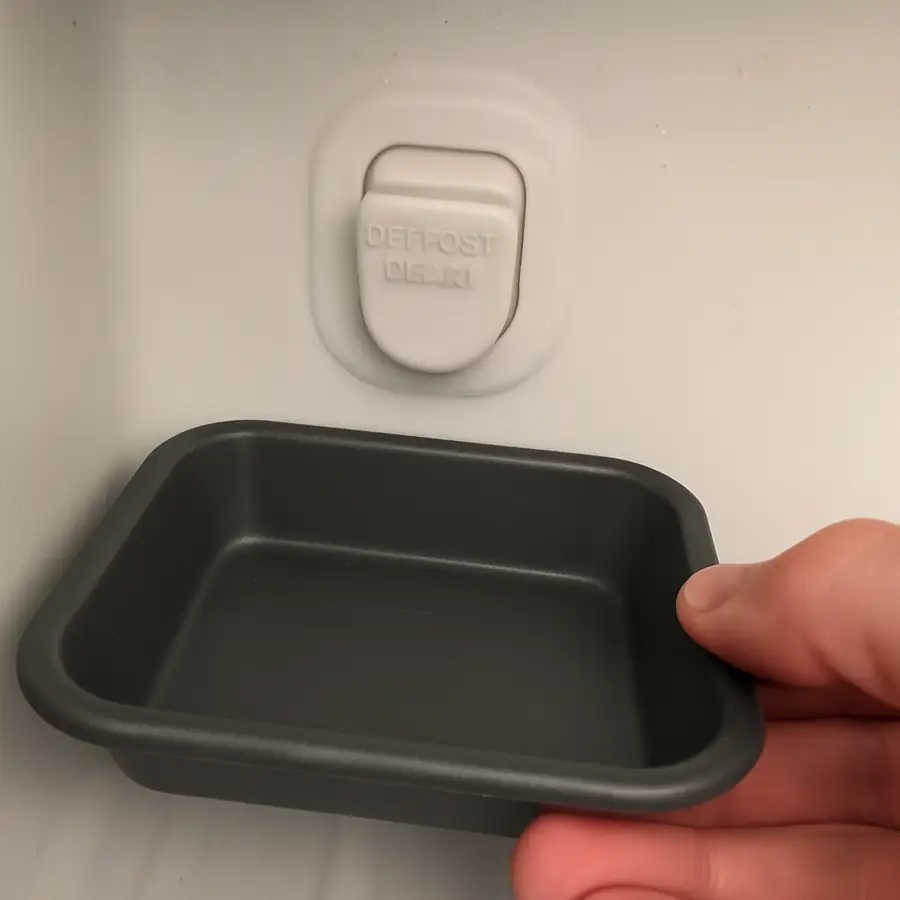
Executing a mess-free clear-out is surprisingly simple when you follow these exact manual defrosting instructions:
- Unplug the freezer and transfer your organized crates into temporary coolers.
- Locate the exterior drain near the bottom base and position a shallow baking pan beneath it.
- Remove the interior plug so the melting ice channels directly into your pan instead of pooling.
- Leave the lid wide open to let the ice melt naturally, strictly avoiding sharp knives or spatulas that could permanently puncture the cooling liner.
- Wipe the interior completely dry with a towel before replacing both plugs and restoring power.
Starting fresh with a dry, frost-free interior ensures your appliance runs at peak performance while protecting your electric bill. Once your groceries are safely chilling again, you can rest easy knowing this tightly sealed environment is primed to handle unexpected emergencies. In fact, a fully stocked and properly maintained unit becomes your greatest household asset when unexpected power outages threaten your grocery investment.
48-Hour Safety Net: Keeping Food Frozen During Power Outages and Temperature Shifts
Suddenly losing electricity often sparks instant panic about the hundreds of dollars of groceries sitting in your kitchen. Fortunately, chest models are essentially giant insulated coolers designed to weather the storm. Homeowners often wonder exactly how long does food stay frozen during power outage conditions; the answer depends on your inventory. A half-full chest freezer protects your groceries for about 24 hours, while a fully packed unit activates the "48-hour insulation rule," keeping everything safely frozen for two full days—as long as you keep the lid firmly shut.
Maximizing this emergency window relies on "thermal mass protection," a principle where cold items naturally keep their surrounding neighbors cold. You can easily boost your freezer’s holding power by filling empty gaps with plastic jugs of tap water, which act as giant, cost-free ice packs during an outage. When the storm finally passes, utilize your unit's power-on indicator light functionality to verify the appliance is receiving electricity at a mere glance, saving you from breaking the crucial lid seal just to check.
Assessing the damage after a prolonged blackout requires relying on the "40-degree rule" rather than just looking for icy frost. According to standard frozen food safety guidelines, if your appliance's internal thermometer reads 40°F or below, your items are safe to refreeze. When inspecting your stash, prioritize checking these high-risk categories first:
- Ice cream and frozen fruit: These thaw the fastest and serve as obvious early indicators of temperature loss.
- Raw meats and poultry: These are safe to refreeze only if they still contain visible ice crystals or feel refrigerator-cold.
- Cooked leftovers and vegetables: Discard these completely if they have thawed and sat above 40°F for more than two hours.
Navigating power grid failures without losing your grocery investment proves exactly why these appliances are so valuable for busy households. By keeping your deep storage adequately stocked and monitoring temperatures closely, you transform a potential kitchen disaster into a minor inconvenience. With your emergency protocols firmly established, a few simple seasonal routines will keep your appliance running reliably and minimize electricity consumption year-round.
Your 12-Month Maintenance Plan: Simple Steps to Minimize Electricity Consumption
You have officially graduated from the stressful game of kitchen Tetris. Rather than just staring at a massive cold box, you can now utilize your chest freezer as a reliable insurance policy that secures serious bulk savings and everyday preparedness.
To lock in these benefits, check your adjustable thermostat control settings. Calibrate the dial to exactly 0°F, which is the optimal temperature for long term storage. This sweet spot protects your food investments while keeping your annual electricity consumption costs between thirty and fifty dollars.
Protect that efficiency with a six-month "dollar bill test" on the door seal to ensure heavy cold air isn't escaping. Combine that tight seal with a master inventory list taped directly to the lid, instantly stopping those duplicate grocery store purchases.
Your new appliance is now a quiet engine driving a completely transformed kitchen workflow. With meals prepped, bulk meats organized, and energy bills minimized, you are ready to enjoy the deep comfort of a fully stocked home.
Buy Commercial Chest Freezers from The Horeca Store
An organized chest freezer starts with choosing a reliable model that offers ample storage, consistent cooling, and long-lasting performance. The Horeca Store offers a wide selection of commercial chest freezers for restaurants, cafés, hotels, catering businesses, convenience stores, and other foodservice operations. Designed to preserve frozen foods efficiently while maximizing storage capacity, our chest freezers help businesses reduce food waste and streamline inventory management.
At The Horeca Store, you'll find commercial chest freezers in a variety of sizes and capacities to meet the needs of businesses of every scale. We stock products from trusted brands known for durability, energy efficiency, and dependable temperature control. Whether you're expanding your frozen storage or replacing an older unit, our expert team can help you choose the ideal chest freezer for your operation. With competitive pricing, quality commercial refrigeration equipment, and outstanding customer support, The Horeca Store is your trusted source for commercial chest freezers.