Choosing a Manitowoc ice machine is really about matching ice style, daily volume, available space, and maintenance expectations to the way your business actually serves customers. This guide walks through the key decisions, from nugget ice and production capacity to installation needs, replacement parts, and day-to-day care. Use it to narrow your options before comparing specific Manitowoc models at The Horeca Store or speaking with an equipment specialist.
Which Manitowoc ice machine is right for your business?
A worktop refrigerator is a different buy from the ice head.
The right Manitowoc ice maker is the one that can keep up with your busiest service periods without wasting space, utilities, or budget. A small office, cafe, clinic, hotel floor, school cafeteria, and high-volume bar may all need ice every day, but they rarely need the same machine.
Start with three questions: how much ice do you use in a day, what type of ice do your customers or staff prefer, and where will the machine be installed? Once those answers are clear, model comparisons become much easier.
A Manitowoc nugget ice machine is often chosen when soft, chewable ice is part of the experience. Nugget ice works well for healthcare settings, self-serve beverage stations, blended drinks, and casual foodservice because it is easy to chew and holds liquid flavor nicely.
Cube ice may be better for cocktails, table service, or slower-melting beverage presentation. Flake-style ice can suit food displays, produce, seafood, or medical uses. Nugget ice is popular, but the best choice always depends on how the ice will be used.
Manitowoc ice machine types at a glance
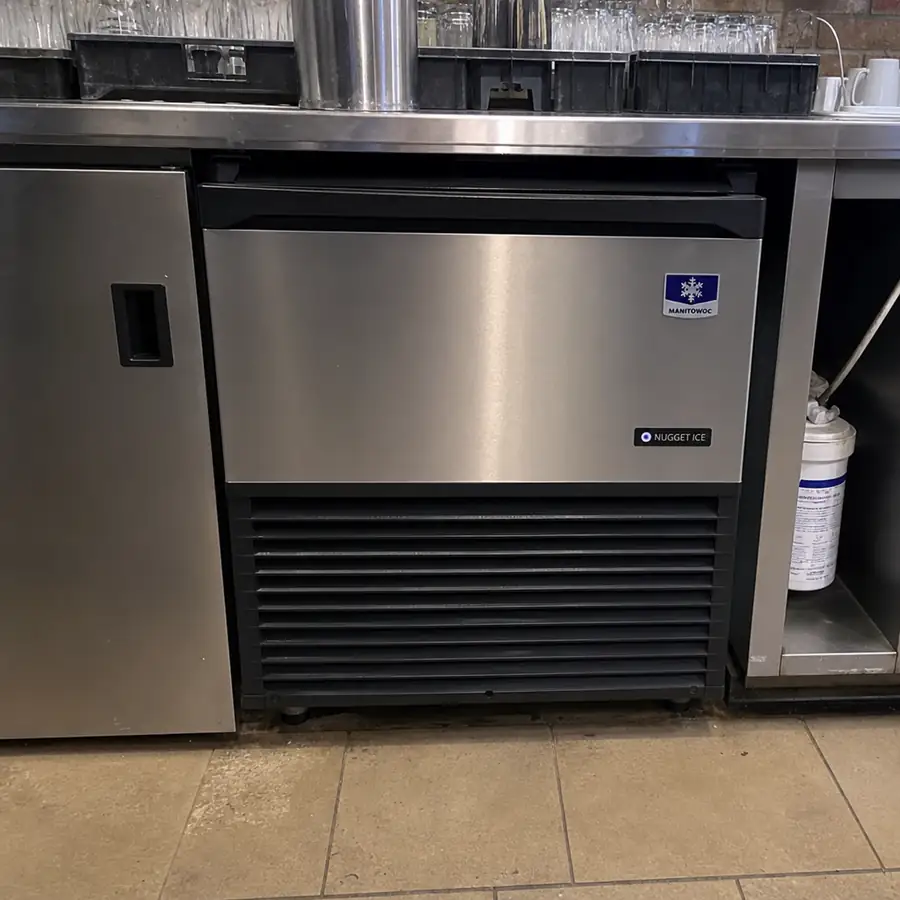
An ice machine bin, undercounter ice makers, and a commercial ice and water dispenser cover the main layout choices.
Manitowoc offers different configurations for different spaces and workloads. Understanding the format is just as important as understanding the production number on the spec sheet.
Undercounter machines combine the ice maker and storage bin in one compact footprint. They are useful for offices, small bars, breakrooms, coffee stations, and satellite service areas where convenience matters more than maximum output.
Modular ice machines sit on top of a separate bin or dispenser. This setup is common in restaurants, hotels, cafeterias, and healthcare facilities because the ice head and storage capacity can be matched more flexibly.
Remote-cooled systems move heat away from the main unit through a remote condenser. These can be helpful when indoor heat and noise are concerns, but they require more planning and professional installation.
Air-cooled models are common and practical, but they need good ventilation. If the machine is squeezed into a hot, tight space, performance may suffer and service calls may become more frequent.
Water-cooled models can perform well in certain environments, yet they may use more water and may be subject to local utility or building restrictions. Always check site requirements before choosing one.
How much ice production do you need?
A prep table and a reach-in refrigerator should be sized on their own.
Daily production tells you how much ice a machine can make under specified conditions, usually expressed in pounds per 24 hours. The real-world number can vary depending on air temperature, water temperature, ventilation, cleaning, and water quality.
Do not choose a machine only by average daily use. Most businesses need enough ice for peak demand, not just a normal afternoon. A restaurant may be quiet at 3 p.m. and overloaded during dinner service, while a hotel may see sudden spikes in ice use when guests arrive.
Use this practical checklist before buying:
- Estimate peak demand. Think about your busiest shift, not your slowest day.
- Account for beverage style. Fountain drinks, iced coffee, cocktails, and blended beverages can use very different amounts of ice.
- Include backup needs. If delivery ice is expensive or inconvenient, a larger machine may reduce stress.
- Compare production and storage together. A high-production machine paired with a small bin can still run out during rushes.
- Leave room for growth. If sales, seating, or staff count may increase, avoid buying too close to today's minimum.
Bin capacity matters because it determines how much finished ice is ready at one time. Production rate tells you how quickly the machine can replenish the bin. A compact bin may be perfectly fine for steady, moderate use, but it can empty quickly when many people draw ice at once.
Reading Manitowoc specs without getting lost
A remote condenser ice machine is the layout that moves heat out of the room.
Spec sheets can feel technical, but most buying decisions come down to a handful of details. Focus on the numbers and requirements that affect performance, installation, and long-term ownership.
Production rating shows approximate ice output in a 24-hour period. Compare this with your busiest-day needs, and remember that hot rooms or warm incoming water can reduce practical performance.
Ice type tells you whether the machine produces nugget, cube, half-dice, full-dice, flake, or another format. This affects drink quality, user preference, melt rate, and storage behavior.
Condenser type affects heat, noise, utility usage, and installation. Air-cooled units are straightforward when ventilation is available. Remote systems can improve comfort in the service area but require more planning.
Electrical requirements should match the site. Never assume an existing outlet is suitable. Commercial machines may require dedicated circuits, specific voltage, or professional electrical work.
Water supply and drain requirements are equally important. An ice machine needs a reliable water source, proper filtration where recommended, and a compliant drain path.
Dimensions and clearance determine whether the unit actually fits. Measure width, depth, height, service access, and ventilation space. Also consider the path into the building; a machine that fits on paper still has to pass through doors and around corners.
Installation details that affect performance
Leave the clearance a walk-in cooler would also need for airflow.
A Manitowoc ice machine should be installed where it can breathe, drain, and be serviced. Poor placement can make even a high-quality machine seem unreliable.
Airflow is especially important for air-cooled equipment. If warm exhaust air is trapped around the machine, the unit may work harder, make less ice, or trigger operating issues. Leave the clearance recommended for the specific model and avoid blocking louvers or vents.
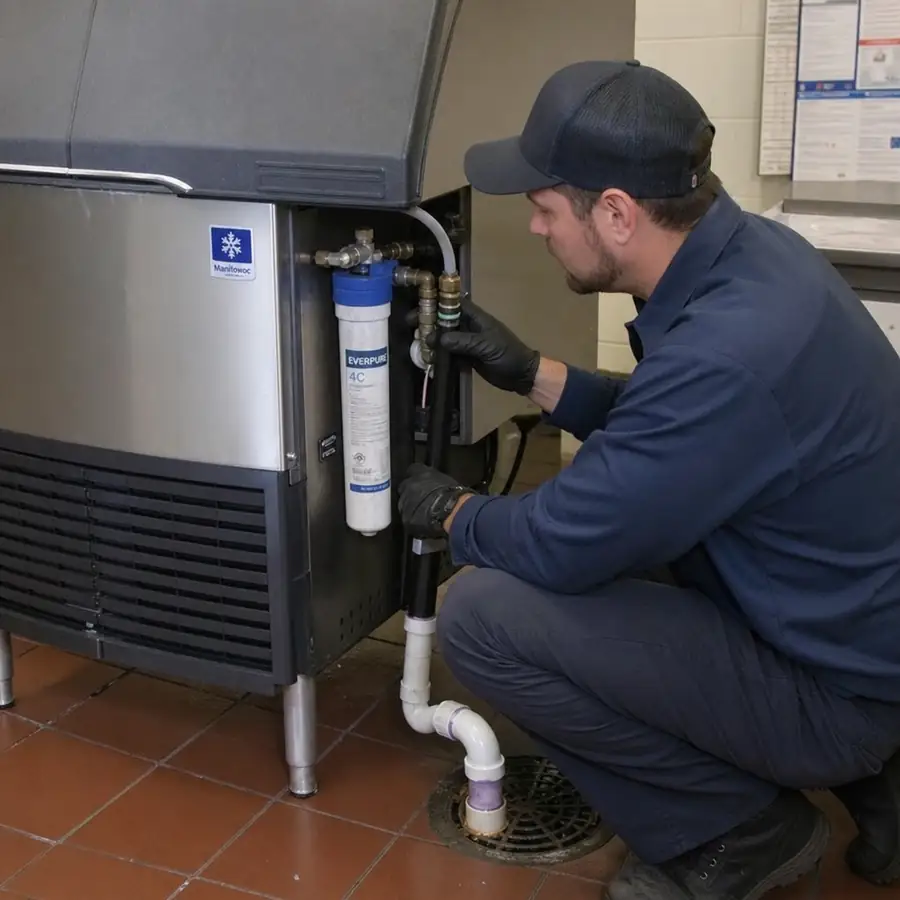
Water quality also has a major impact. Minerals, sediment, and scale can affect taste, ice clarity, and internal components. In many locations, filtration is not just a nice upgrade; it is part of protecting the machine.
Drainage should be planned before delivery. Ice machines create meltwater and purge water, so a proper floor drain or approved drain setup is essential. A poor drain arrangement can create sanitation concerns, leaks, and service headaches.
If the machine will be installed in a tight kitchen, bar line, breakroom, or utility closet, think beyond the footprint. Technicians need access for cleaning, diagnostics, and replacing Manitowoc ice machine parts when needed.
Nugget ice features worth considering
A commercial refrigerator still holds mixers beside the drink station.
Nugget ice has a loyal following because it is soft, chewable, and easy to dispense. It absorbs beverage flavor and creates a generous drink presentation, which is why it is popular in healthcare, schools, convenience stores, cafes, and casual restaurants.
A manitowoc nugget ice machine can be especially useful when customer experience depends on texture. Patients may prefer softer ice, guests may enjoy chewable ice in soft drinks, and staff may appreciate ice that works across multiple beverage programs.
When comparing nugget ice models, pay attention to sanitation features, cleaning access, dispenser compatibility, and storage size. Nugget ice can be handled frequently in self-serve environments, so cleaning routines and safe dispensing practices matter.
Also consider whether the machine will serve drinks directly, fill bins behind a bar, or support a dispenser. The same daily production number can feel very different depending on how many people access the ice and how quickly the bin is refilled.
Maintenance keeps the machine profitable
A reach-in freezer on the same wall still needs its own filter check.
Commercial ice machines work hard in wet, mineral-heavy, high-use environments. Regular maintenance protects ice quality, reduces downtime, and helps prevent small issues from becoming expensive repairs.
Cleaning needs vary by model, water quality, and usage, so follow the manufacturer's instructions for the specific unit. In general, the routine should include descaling, sanitizing food-contact areas, checking filters, inspecting water lines, and keeping air passages clear.
A simple maintenance rhythm can help:
- Daily: Keep the area around the machine clean and avoid storing items against vents.
- Weekly: Check for unusual noise, slow production, leaks, or ice texture changes.
- Monthly: Inspect the filter, bin condition, scoop storage, and visible water connections.
- Scheduled intervals: Clean and sanitize according to the model manual and site conditions.
- As needed: Replace worn or failed components with correct Manitowoc ice machine parts.
Water filters deserve special attention. A clogged or overdue filter can reduce water flow, affect ice production, and contribute to poor taste. In hard-water areas, filtration and scale control can make a noticeable difference in machine reliability.
Common Manitowoc ice machine troubleshooting steps
An undercounter freezer beside the station can show the same airflow problem.
Manitowoc ice machine troubleshooting should start with simple checks before assuming a major failure. Many issues are related to power, water supply, airflow, cleaning, or installation conditions.
If the machine is not making ice, confirm that it has power, the water supply valve is open, the bin is not full, and the unit is not in a cleaning or off mode. Check for error indicators if the model provides them.
If production is low, look at room temperature, condenser cleanliness, water filter condition, and airflow clearance. A machine in a hot corner with restricted ventilation may produce less ice than expected.
If the ice looks poor or tastes unusual, check the filter, cleaning schedule, water quality, and bin sanitation. Ice is food, so taste or odor problems should be handled promptly.
If you suspect a failed part, avoid random replacements. The manitowoc ice machine water inlet valve, for example, can affect water filling and production, but similar symptoms may also come from low water pressure, a clogged filter, or control issues. Diagnose carefully or call a qualified technician.
How do you turn on a Manitowoc ice machine safely?
Confirm the drain the way you would for a bottle cooler before the first cycle.
If you are wondering how to turn on manitowoc ice machine equipment, the safest answer is to follow the operator manual for your exact model, confirm water and power are connected, and make sure the machine is clean and properly installed before starting it. Different models may use different switches, touch controls, or operating modes.
Before powering on, inspect the area around the machine. The water valve should be open, the drain should be clear, the bin should be clean, and vents should not be blocked. If the unit was recently moved, serviced, or stored, have it checked before regular operation.
A general startup approach looks like this:
- Confirm the machine is level and correctly installed.
- Open the water supply valve.
- Make sure the bin and food-contact areas are clean.
- Restore power using the approved outlet or disconnect.
- Select the ice-making mode according to the model controls.
- Watch the first cycle for leaks, odd sounds, or warning lights.
If anything seems wrong, stop and review the manual or call service. Ice machines combine water, electricity, refrigeration, and food safety, so guessing is not worth the risk.
Parts, repairs, and ownership costs
A milk cooler and a back bar cooler are separate buys from the ice head.
Buying an ice machine is not just a one-time equipment decision. Long-term value depends on service access, part availability, maintenance habits, and how costly downtime would be for your operation.
Common replacement items may include filters, water-related components, probes, pumps, gaskets, switches, and bin accessories. The exact parts depend on the model, age, and symptoms.
Using correct Manitowoc ice machine parts helps preserve fit, function, and reliability. Generic or mismatched components may create new problems, especially in water, electrical, or refrigeration systems.
For parts such as the manitowoc ice machine water inlet valve, confirm compatibility before ordering. Model numbers, serial numbers, voltage, and configuration can matter. When in doubt, ask the seller or service provider to verify the part before purchase.
Also consider local service support before you buy. A machine that is easy to repair, clean, and access is usually a better investment than one that barely fits and is difficult to maintain.
Buying checklist before you decide
A sandwich prep table and a pizza prep table do not pull their cold load from the ice head.
Use this quick checklist to compare options clearly:
- Ice type matches the use case: nugget, cube, flake, or another style.
- Daily production meets peak demand, not just average demand.
- Bin capacity supports busy periods.
- Machine dimensions fit the space and delivery path.
- Ventilation clearance is available.
- Electrical, water, and drain requirements can be met.
- Filtration needs are understood.
- Cleaning access is practical.
- Replacement parts and service support are available.
- Total ownership cost fits the budget, including maintenance.
This is where a buying guide becomes more than a product list. The best machine is not always the largest or most advanced; it is the one that fits your workflow, staff habits, utility setup, and service volume.
Frequently asked questions
An ice merchandiser is a display cabinet, not a production machine.
1. Is a Manitowoc nugget ice machine good for restaurants? Yes, it can be a strong choice for restaurants that serve soft drinks, iced coffee, blended beverages, or casual drinks where chewable ice improves the guest experience. For fine cocktails or slow-sipping spirits, cube ice may be more appropriate.
2. What should I check before buying a Manitowoc ice maker? Check ice type, production capacity, bin size, condenser type, dimensions, electrical needs, water supply, drainage, filtration, and service access. Also think about peak demand rather than only average daily use.
3. Why is my Manitowoc machine making less ice than expected? Common causes include high room temperature, poor ventilation, dirty condenser areas, clogged filters, warm incoming water, or overdue cleaning. If simple checks do not solve the issue, schedule professional service.
4. Are Manitowoc ice machine parts easy to replace? Some parts, such as filters or certain accessories, may be straightforward. Water, electrical, refrigeration, and control components should be matched carefully to the model and often handled by a qualified technician.
5. How often should I clean a commercial ice machine? Follow the cleaning schedule in the manual for your exact model and adjust for water quality and usage. High-volume locations or hard-water areas may need more frequent attention.
Final takeaway
A chef base refrigerator and a commercial freezer belong on the cooking line, not on the ice circuit.
A Manitowoc ice machine can be a reliable part of your beverage, foodservice, or healthcare operation when it is sized and installed correctly. Focus first on ice type, peak production needs, bin capacity, utilities, and maintenance access.
Use this Manitowoc Ice Machine Buying Guide as a practical starting point, then compare specific models against your real space and service demands. If you are browsing options through The Horeca Store, have your measurements, daily ice estimate, and preferred ice type ready so the selection process is faster and more accurate.