

We’ve all been there: you try slicing a ripe tomato, but your blade just squishes it into a messy puddle. Equipping your home shouldn't feel like a gamble. Consider the classic trap of choosing a massive $100 12-piece knife block over a single $50 chef's knife. That bulky set might look impressive on the shelf, but it usually guarantees a dozen flimsy tools instead of one reliable one.
Retailers constantly blur the lines between marketing hype and actual cooking needs. Those massive starter bundles are mostly designed to clutter your drawers rather than improve your meals. Smart home buyers evaluate items using the equipment-utility ratio, which simply compares how often you will realistically use a tool against the physical space it demands. Finding reliable kitchen equipment shopping tips requires ignoring flashy packaging and focusing on everyday utility.
Consumer shopping data reveals that cheap, entry-level pans frequently warp within a year, while mid-range gear easily lasts a decade. You can avoid wasting money on flimsy items by practicing the 48-hour rule. Waiting two full days before purchasing essential kitchen gadgets provides time to realize you probably do not need a single-use avocado slicer. This brief pause stops impulse buys and keeps your budget focused on durability.
Are you ready to stop buying items you end up donating a year later? Doing a quick kitchen gear audit is the best way to see what you actually use before bringing anything new home. Our goal is to make you an empowered buyer who knows exactly how a heavy pot should feel before swiping a credit card. Separating what truly matters in a cooking tool from clever advertising prevents buyer's remorse.
Why Your Pan Warps: Choosing the Right Material for Your Heat Source
Have you ever tried frying an egg in a wobbly pan that spun on the stove? That frustrating warping happens when thin metal can't handle sudden temperature changes. One of the best kitchen equipment shopping tips is to physically lift pans before buying. You are feeling for a heavy base, which provides "thermal mass." Simply put, a thick bottom holds heat steadily, preventing the hot spots that burn the center of your chicken breast while leaving edges raw.
Finding the most durable kitchen cookware materials is like building a wardrobe. Beyond checking for standard food grade safety certifications for cookware, match the core metal to your cooking habits:
- Stainless Steel: Like a tough denim jacket. Lasts forever and handles high-heat searing, but requires careful scrubbing.
- Cast Iron: The heavy winter coat. Takes time to warm up but retains heat brilliantly, demanding strict hand-washing.
- Non-stick: Your comfortable raincoat. Food slides off for effortless cleanup, though the coating eventually wears out.
Ensure these metals actually work with your stove before purchasing. For induction cooktops, simply use the "Magnet Test"—if a fridge magnet sticks securely to the pan's bottom, it works. To guarantee even cooking across any burner, look for "tri-ply" construction, meaning a fast-heating aluminum core is fully sandwiched inside tough stainless steel.
The Handle Test: Spotting Ergonomic Wins Before You Leave the Store
Imagine chopping onions with wet hands—a slippery handle quickly becomes a dangerous liability. When evaluating the best kitchen tools, prioritize grip friction over aesthetics. Smooth metal looks sleek on a display shelf but offers zero security when covered in cooking oil. Instead, seek slightly textured rubber or brushed wood that physically locks into your palm to prevent frustrating accidents.
Internal construction is just as vital for your daily comfort. For cutlery, always look for a "full-tang" design, meaning the blade's steel extends completely through the handle to the base.
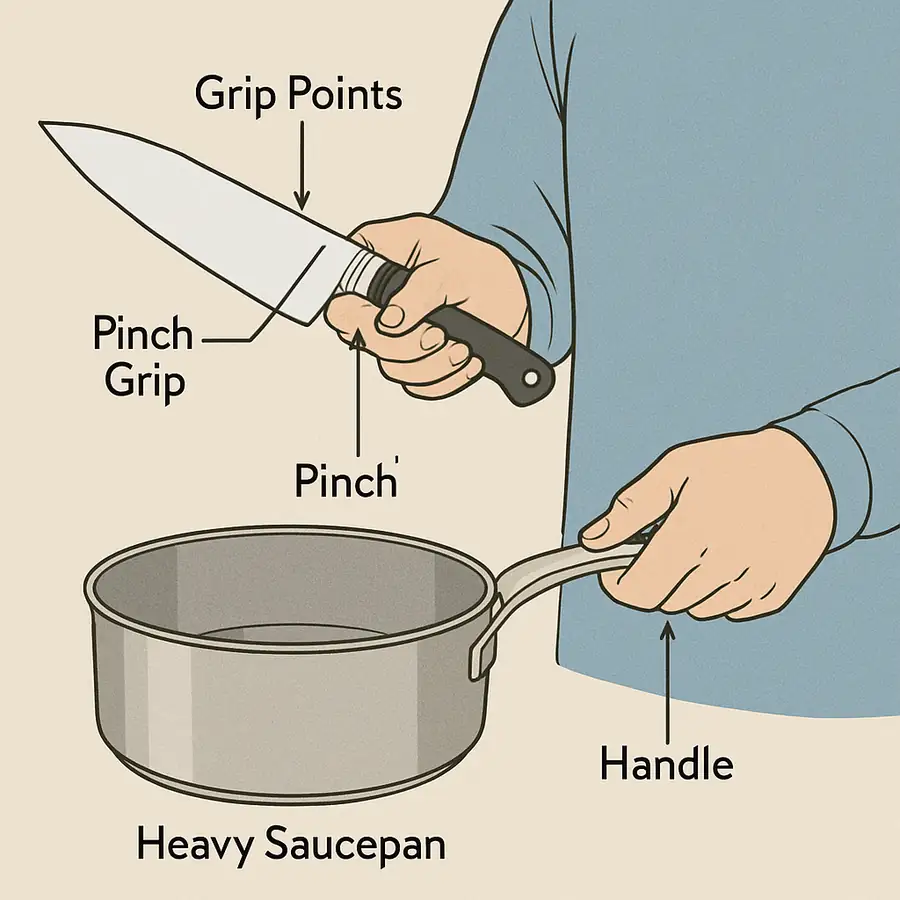
This continuous metal spine prevents the handle from snapping and creates a perfect balance point exactly where your fingers naturally pinch the metal.
Testing this weight distribution is equally important for heavy, durable kitchen cookware. Perform a five-second balance check in the store: lift the empty pan by its handle and mimic a pouring motion. If it strains your wrist while empty, it will be impossible to manage when filled with boiling water. Excellent ergonomic design in handheld kitchen gadgets means the equipment works with your body, not against it.
Measure Twice, Buy Once: Fitting Appliances Into Your Real-Life Kitchen
Showrooms have a sneaky way of making massive refrigerators look perfectly reasonable. When measuring kitchen space for new appliances, you must account for your physical movement, not just the machine's static footprint. Your "work triangle"—the invisible walking path between your fridge, sink, and stove—must remain completely clear of physical roadblocks.
Grabbing a tape measure is just step one. The smartest kitchen equipment shopping tips focus on hidden space requirements that cause headaches during installation. Check these four easily forgotten dimensions before buying:
- Door swing: Will the oven door bang into your kitchen island when fully opened?
- Plug depth: Does a thick power cord prevent the unit from sitting flush against the wall?
- Counter clearance: Can the appliance easily slide underneath your upper cabinets?
- Ventilation gap: Is there enough breathing room around the back to prevent the motor from overheating?
Visualizing how a machine actually lives on your counter prevents the dreaded "Cabinet Gap" trap—buying a beautiful blender that is half an inch too tall to use under your cupboards. When researching space saving appliances for tiny kitchens, always weigh depth against width. A taller, narrower machine preserves vital countertop real estate for chopping vegetables, whereas a wider unit might swallow your workspace entirely.
Respecting these basic clearance zones ensures daily meal prep feels effortless rather than cramped.
Gas vs. Electric vs. Induction: Choosing the Engine of Your Kitchen
Your chosen heating method dictates your daily cooking rhythm. When comparing gas vs electric cooktop performance, the starkest difference lies in response time and how they measure power. Gas stoves use BTUs to create a visible flame, offering instant temperature drops from a rolling boil to a gentle simmer. Conversely, traditional electric units measure efficiency in wattage, heating glass surfaces that stubbornly hold onto warmth. If a pot starts boiling over on standard electric, simply turning the dial down will not instantly stop the mess.
Induction completely changes this dynamic through electromagnetic heating. Instead of getting hot itself, an induction burner sends a magnetic current directly into your cookware, turning the pan into the heat source. When evaluating kitchen appliance energy efficiency, this technology wins easily because virtually no heat escapes around the base. However, your current cookware library dictates your upgrade path. Try sticking a standard fridge magnet to the bottom of your favorite skillet; if it holds firm, you are set, but if it slides off, you need new pots.
Modernizing your stove often unlocks smart kitchen technology integration benefits, like a burner that automatically activates your ventilation hood the moment you start searing. While this automation clears smoke effortlessly, it introduces another physical comfort factor to consider. An efficient exhaust fan is practically useless if it is too loud to talk over.
The Decibel Dilemma: Why Noise Level Ratings for Ventilation Matter
We have all flipped the fan on for a smoky chicken breast, only to feel like a jet engine is idling inside the kitchen. When hunting for the best kitchen tools, many mistakenly assume the highest CFM (Cubic Feet per Minute) rating is always superior. CFM simply measures airflow volume. Yet, when comparing professional grade vs residential appliances, forcing massive air through standard home ductwork creates high static pressure. This physical bottleneck means your overly powerful fan just rattles against the vent pipe, creating a deafening roar instead of effectively clearing the air.
Evaluating noise level ratings for kitchen ventilation requires learning a new term: Sones. While decibels measure raw sound pressure, Sones measure how your ear actually perceives that noise in a room:
- 1 Sone: The gentle, quiet hum of a refrigerator.
- 3 Sones: A normal, relaxed household conversation.
- 5+ Sones: A loud television or busy, chaotic restaurant.
Hitting the sweet spot—around 300 to 400 CFM at roughly 3 Sones—ensures effective ventilation without the headache. After the smoke clears and dinner ends, you still have to wash up. Just as buying an overly loud exhaust fan creates unexpected daily friction, choosing the wrong cookware materials can turn nightly cleanup into a nightmare.
Is It Dishwasher Safe? The Hidden Maintenance Reality of High-End Gear
Staring at a sink full of dirty pots quickly separates culinary fantasy from reality. While chefs love cast iron—one of the most durable kitchen cookware materials available—these heavy pans demand active upkeep. They require "seasoning," which means baking a thin layer of oil into the surface to create a natural, non-stick barrier. Tossing them in the sink to soak strips that protective oil and invites oxidative rust, rapidly turning a premium skillet into a reddish-brown, unusable mess.
Manufacturers often stretch the truth with "dishwasher safe" marketing labels, setting expensive traps for cooks. Consider a beautiful knife boasting sustainable kitchenware materials and sourcing, like an ethically harvested walnut handle. The appliance's intense heat combined with high dishwasher detergent acidity will quickly bleach, dry, and crack that natural wood, leaving the blade dangerously loose. Just because a machine can physically wash an item does not mean those materials are built to survive such a brutal.
Before purchasing any new gadget, be honest about whether you will realistically hand-wash and dry it every single night. If you prefer pressing a button and walking away, prioritize easy to clean kitchen equipment features like single-piece silicone or solid stainless-steel handles. Matching your purchases to your actual cleaning habits prevents premature wear, though protecting your investment also requires understanding the fine print of warranty terms and the 'true' lifespan of major appliances.
Reading the Fine Print: Warranty Terms and the 'True' Lifespan of Major Appliances
Expecting a modern refrigerator to last twenty years usually ends in disappointment. Today, the average lifespan of major kitchen appliances hovers around a decade. Instead of fixating on the upfront price tag, calculate the Cost Per Year—a $1,000 fridge lasting ten years costs you $100 annually. Manufacturers track this reliability using Mean Time Between Failures (MTBF), a metric estimating how many hours a machine will run before breaking down. Interestingly, when comparing high-end vs entry-level kitchen brands, basic mechanical models often outlive luxury units simply because they have fewer delicate components.
Protecting that lifespan means understanding kitchen appliance warranty terms before you swipe your card. A standard manufacturer guarantee differs greatly from a pricey retail extended protection plan, and both hide inconvenient service rules. For example, check if the contract offers "in-home service," where a mechanic visits your kitchen, or "depot repair," which forces you to mail heavy gear back to a warehouse. Always watch for these three warranty red flags:
- Limited vs. Full: A "Full" warranty covers everything; "Limited" only covers specific, often durable, parts.
- Labor Exclusions: The company might supply a free replacement motor but charge you hundreds for the technician’s installation time.
- Unauthorized Repair Clauses: Attempting to fix a minor issue yourself instantly voids the entire contract.
Digital touchscreens frequently complicate these repairs and represent the most common point of failure. Because a fried motherboard can render a perfectly good motor useless, these modern additions artificially shorten an appliance's life, forcing you to question which smart tech integrations are actually worth the expensive risk.
Smart Kitchen Hype vs. Help: Which Tech Integrations Are Actually Worth It?
Staring down an appliance aisle today feels like visiting a smartphone store, with refrigerators boasting giant touchscreens and Wi-Fi-connected ovens. Before getting swept up in the novelty, you must weigh the actual return on investment. Manufacturers often charge a "tech premium"—a sudden 30% markup—for built-in tablets or interior cameras you will probably never sync to your phone after the first week.
The best smart kitchen technology integration benefits actually hide behind the scenes rather than glowing on a glass panel. A genuinely helpful feature is a simple smartphone alert that your freezer door popped open, directly improving food safety, or automated tracking for evaluating kitchen appliance energy efficiency over time. However, every new sensor introduces point-of-failure multiplication. Adding a fragile computer board to a basic heating element means one glitching Wi-Fi chip can disable your entire stove. While digital instant-read thermometers remain essential kitchen gadgets, permanently embedding that same delicate technology into heavy, heat-producing appliances usually invites expensive trouble.
Protecting your wallet ultimately means prioritizing physical durability over digital hype. If a connected feature doesn't directly save your groceries or lower your utility bill, skip the upgrade. Sidestepping these fragile electronic complications also requires deciding when to splurge on professional-grade equipment, and when standard residential models will serve you perfectly.
Professional Grade vs. Residential: When to Splurge and When to Stay Home
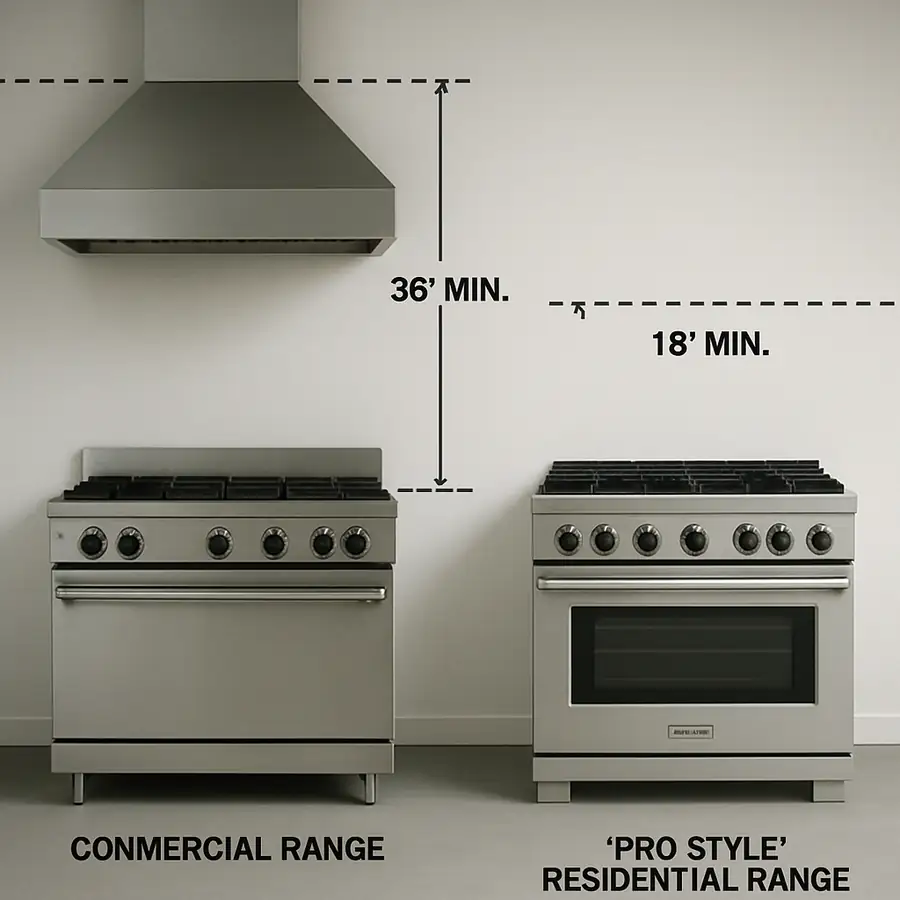
Watching a chef sear a steak over roaring flames makes buying actual restaurant gear for your house incredibly tempting. However, choosing between professional grade vs residential appliances requires understanding the hidden dangers of industrial heat. An authentic restaurant stove lacks the thick layers of thermal insulation designed to keep your wooden cabinets from catching fire. Because the exterior metal gets dangerously hot, installing true commercial equipment usually voids standard home insurance policies.
Instead of risking a kitchen fire, look for "Pro-sumer" equipment—appliances built for the everyday consumer that mimic the heavy-duty look of a restaurant. When navigating high-end vs entry-level kitchen brands, prioritize models featuring a zero-clearance rating. This vital safety label means the appliance remains cool to the touch on the outside, so it can slide perfectly flush against your counters without melting them.
Save true commercial purchases for high-frequency hand tools you use daily, like a heavy frying pan. Always verify these basic pieces carry proper food grade safety certifications for cookware to guarantee they won't leach metals into your Tuesday night dinner.
The Sustainability Scorecard: Materials and Sourcing for the Conscious Cook
Navigating "eco-friendly" kitchen marketing often feels overwhelming. True sustainability isn't just about recycled packaging; it depends on a product's "cradle-to-grave" lifespan, meaning how long a tool lasts before ultimately hitting a landfill. The greenest pan is simply the one you only have to buy once. By prioritizing the most durable kitchen cookware materials, you naturally reduce household waste while saving money over decades of everyday cooking.
When evaluating sustainable kitchenware materials and sourcing, use this simple material hierarchy:
- Multi-Generational (Best): Cast iron and carbon steel. With basic care, these heavy-duty pieces literally outlive us.
- Highly Recyclable (Good): Uncoated stainless steel. It endures heavy use and melts down easily for recycling if damaged.
- Short Lifespan (Avoid): Mixed plastic utensils. They degrade quickly from heat and rarely qualify for standard curbside recycling bins.
Beyond the base metal, closely inspect non-stick coatings. Always verify food grade safety certifications for cookware, looking specifically for explicit "PFC-free" or "PFOA-free" labels to avoid persistent chemicals that linger in the environment. Choosing safe, recyclable pieces protects both your household and the planet.
Your Kitchen Investment Strategy: A 3-Step Action Plan for Quality Gear
A clutter-free kitchen is built by deliberately choosing fewer, better items rather than buying a massive boxed set where half the pieces simply gather dust. To put this into practice, start by building a mental inventory of your most frequent Tuesday night dinners. Tracking what you actually reach for on a busy evening helps you build a highly personalized rotation of the best kitchen tools for your specific lifestyle. This immediately puts the quality over quantity philosophy into motion, ensuring you only invest in pieces that earn their keep.
When you are ready to upgrade those items, head to a physical store to execute a smart shopping trip using your new evaluation skills. Pick up a skillet and feel how the weight balances in your hand, or grip a knife to see if it feels secure. These physical sensation checks are your strongest defense against buyer's remorse when searching for essential kitchen gadgets. If a tool feels flimsy, hollow, or awkward when it is completely empty on the shelf, it will only feel worse when filled with hot food.
Try starting with a simple, immediate action: identify the one tool in your kitchen right now that actively makes cooking frustrating. Whether it is a spatula that melts at the edges or a skillet where everything sticks to the center, replace just that single item using your new criteria. Notice how much more enjoyable and effortless your next meal prep becomes once you remove that daily friction.
As you continue to build your ideal collection, protect your budget by implementing a mandatory forty-eight-hour cool-down rule for any major purchase. If you still feel that a new piece of equipment will genuinely improve your daily routine after two days of thinking it over, you can buy it with absolute certainty. You are no longer just filling drawers with random supplies; you are purposefully building a reliable kitchen that will serve you beautifully for years to come.
Buy the Right Kitchen Equipment for Your Business from The Horeca Store
Choosing the right commercial kitchen equipment is essential for improving efficiency, maintaining food quality, and creating a productive workspace. Before purchasing, businesses should consider factors such as equipment durability, kitchen space, energy efficiency, functionality, and budget. The Horeca Store offers a wide selection of professional kitchen equipment designed for restaurants, hotels, cafés, catering businesses, and commercial foodservice operations.
At The Horeca Store, we provide reliable restaurant kitchen equipment that meets the demands of busy commercial kitchens. From cooking appliances and refrigeration units to food preparation tools and storage solutions, our products are built for performance and long-term use. Explore our collection to find high-quality equipment that helps streamline operations and support your business growth.