
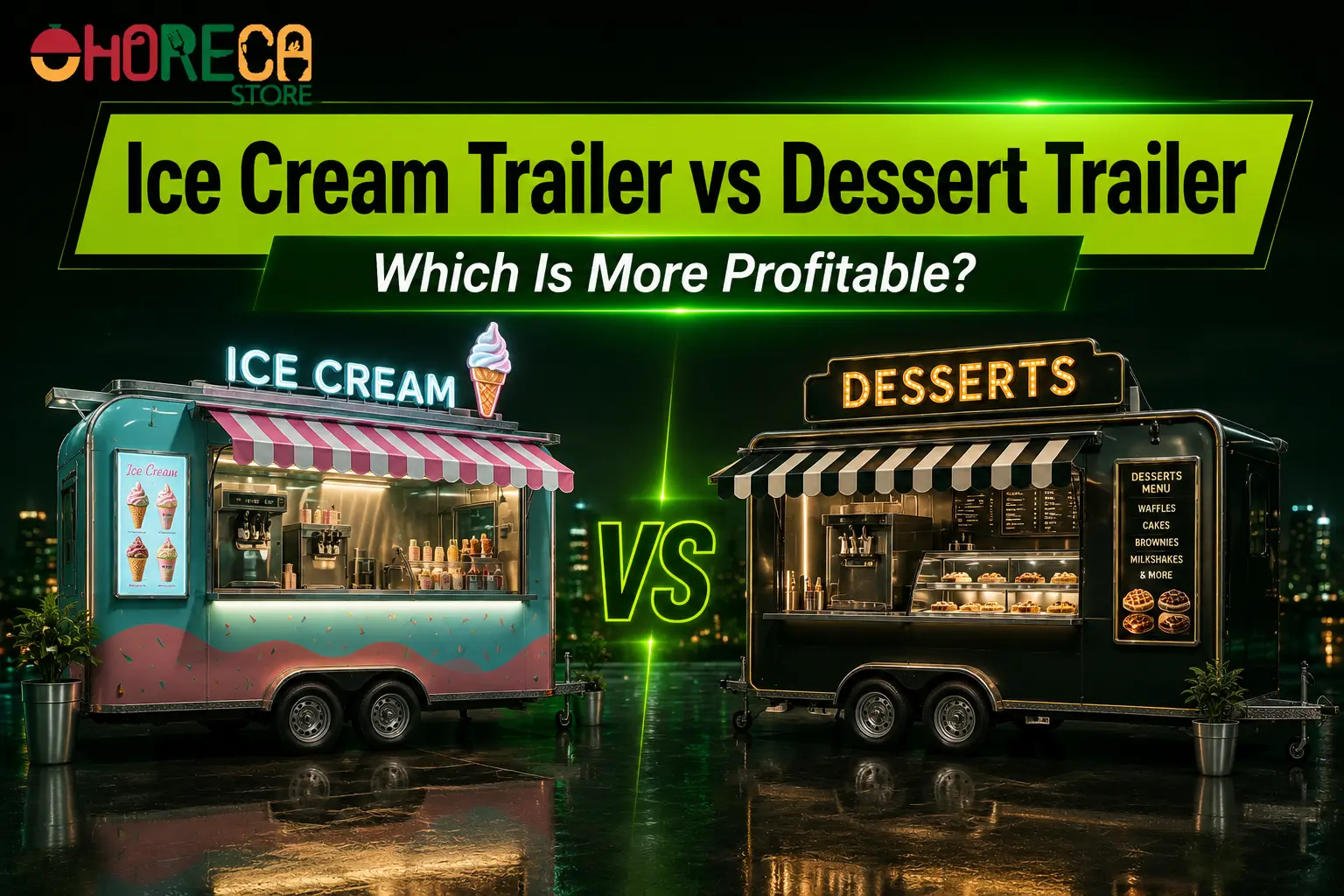
The sweet smell of freshly baked waffles, the nostalgic jingle of an approaching freezer on wheels, and the endless lines of smiling customers—entering the mobile sweets industry is a dream for many aspiring entrepreneurs. But when it comes down to brass tacks, a critical question emerges: Ice Cream Trailer vs Dessert Trailer: Which Makes More Money?
Choosing between scooping frozen treats and serving up warm, decadent pastries isn't just a matter of culinary preference. It is a fundamental business decision that impacts your initial investment, daily operations, and long-term financial success. Both avenues offer incredible potential, but they operate on surprisingly different business models.
In this comprehensive guide, we are going to slice into the details of both business types. We will explore profit margins, seasonal fluctuations, startup investments, and daily operational strategies to help you decide which path will yield the highest returns for your entrepreneurial journey.

1. Understanding the Mobile Sweet Tooth Market
Before we can accurately compare profitability, we need to define what exactly constitutes an ice cream trailer versus a dessert trailer. While they share the same target demographic—people looking to satisfy a sugar craving—their operational realities are distinct.
The Classic Ice Cream Business
The mobile ice cream industry is an iconic staple of modern food culture. Whether operating a traditional ice cream truck or a modern tow-behind trailer, the model is built on high volume and speed of service.
Generally, a mobile ice cream setup falls into one of three categories:
- Novelty/Pre-packaged: Selling commercially produced popsicles and ice cream bars.
The Dynamic Dessert Trailer
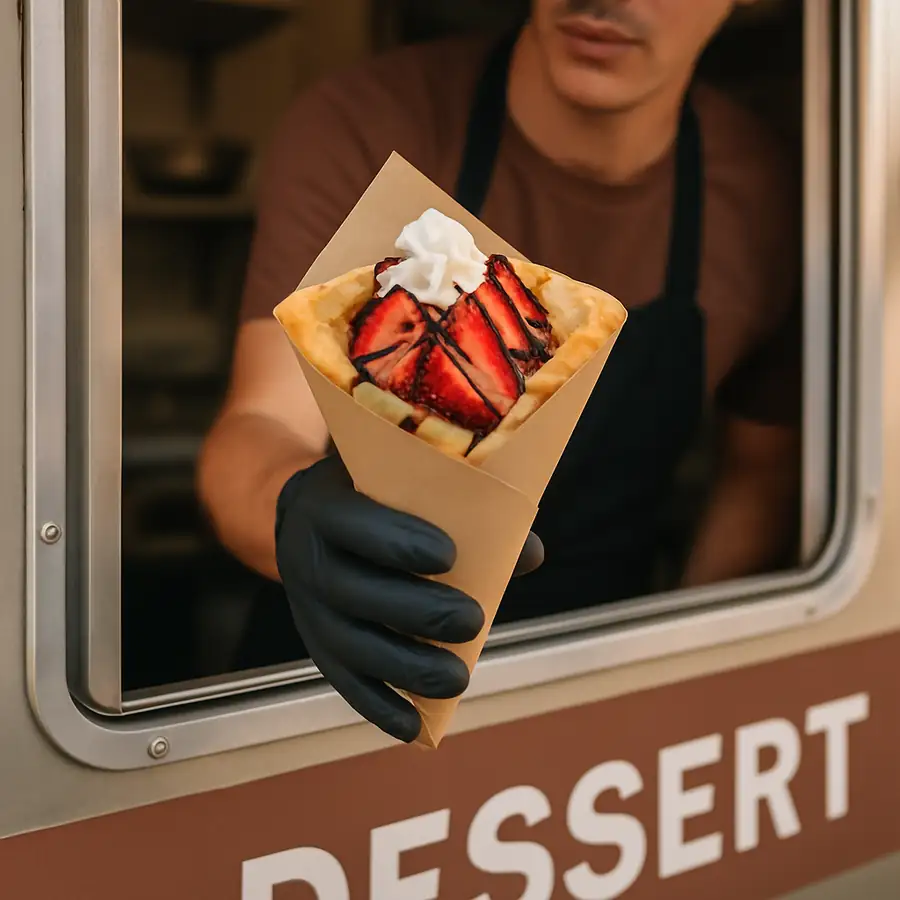
A dessert trailer is a broader concept. Instead of focusing solely on frozen dairy, these mobile kitchens serve an array of sweet treats. The menu versatility of dessert trailers is their superpower. Operators might focus on mini-donuts, crepes, loaded churros, gourmet cookies, or liege waffles.
Alternatively, a dessert truck might combine baked goods with specialized toppings, creating highly Instagrammable treats that draw massive crowds. Because they often prepare food from scratch (or use specialized batter mixes), the operational dynamic feels much more like a traditional food truck.
2. Startup Investments: Which Costs More to Launch?
To understand how much money you can make, you first have to look at how much you need to spend. Analyzing the initial setup costs is vital because your upfront expenditure directly dictates how quickly you will break even.
Startup Costs for a Dessert Food Truck vs. Ice Cream Trailer
Generally speaking, an ice cream trailer requires less complex interior outfitting than a full-fledged dessert kitchen, though there are exceptions depending on the equipment.
Ice Cream Trailer Startup Costs
If you are selling pre-packaged goods, your startup costs can be astonishingly low—sometimes under $15,000 for a used trailer and commercial freezers. However, if you are moving into soft serve, a high-quality commercial soft-serve machine alone can run between $10,000 and $18,000.
- Used Trailer + Buildout: $15,000 – $30,000
- Freezers/Dipping Cabinets: $3,000 – $8,000
- Soft Serve Machinery (Optional): $10,000 – $20,000
- Total Estimated Range: $18,000 to $58,000
Dessert Trailer Startup Costs
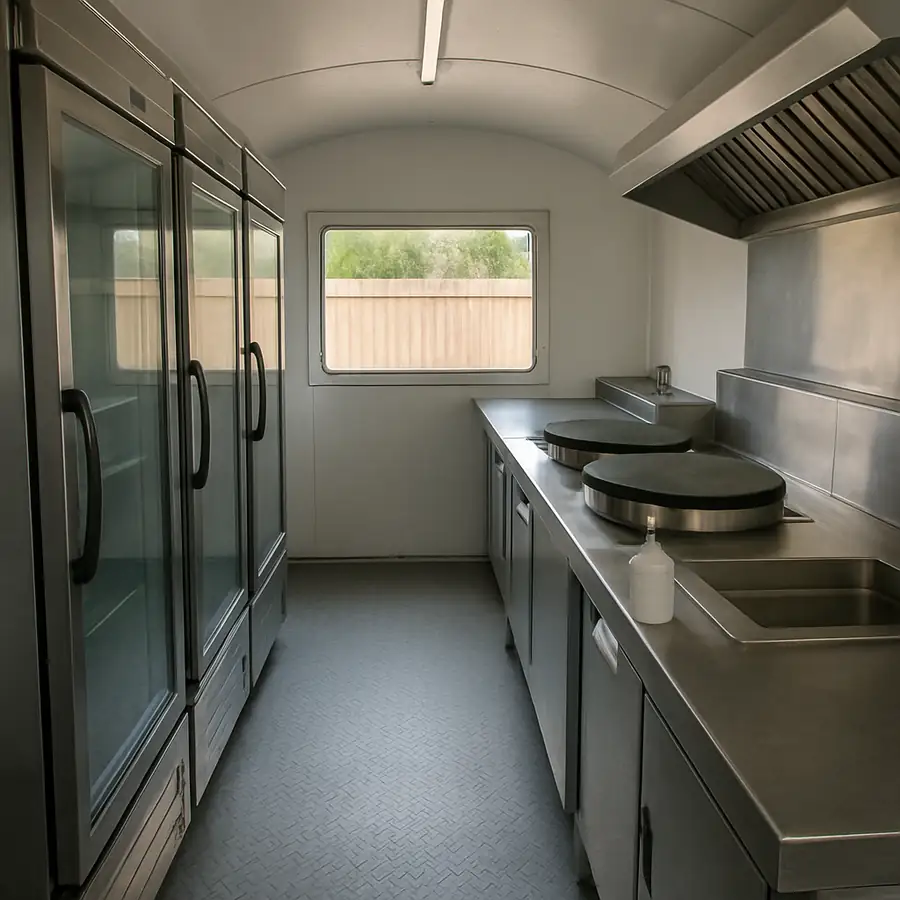
The startup costs for a dessert food truck or trailer are typically higher due to the need for cooking equipment, ventilation, and fire suppression systems.
- Used Trailer + Buildout: $20,000 – $40,000
- Cooking Equipment (Fryers, Ovens, Crepe Makers): $5,000 – $15,000
- Hood and Fire Suppression System: $4,000 – $8,000
- Total Estimated Range: $29,000 to $63,000
Equipment Requirements for Baked vs Frozen Goods
The variance in costs comes down to the equipment requirements for baked vs frozen goods.
Ice cream relies on reliable power (usually a high-wattage generator) to keep commercial freezers running flawlessly. A failure in power means total inventory loss.
Conversely, a dessert trailer relies heavily on heat. You will likely need propane tanks to power fryers (for churros or donuts) or griddles (for crepes). You also need commercial ventilation, which adds significantly to the build-out cost and maintenance routine.
Permitting for Specialized Food Trailers
Do not overlook the legalities. Permitting for specialized food trailers varies wildly by city and county. Because ice cream trailers often deal with pre-frozen items and no open flames, the health department and fire marshal inspections are usually straightforward.
Dessert trailers, dealing with raw eggs, batter, hot oil, and propane, will face much stricter health department scrutiny and rigorous fire safety inspections. This can translate to higher licensing fees and a longer wait time before you can legally hit the road.
3. Breaking Down the Numbers: Profit Margins and Revenue
Now we get to the core of the debate: Ice Cream Trailer vs Dessert Trailer: Which Makes More Money? The answer lies in understanding the difference between total revenue and profit margins.
Mobile Dessert Business Profit Margins
Dessert trailers benefit from incredibly low food costs. The primary ingredients for waffles, funnel cakes, or donuts are flour, sugar, water, and eggs.
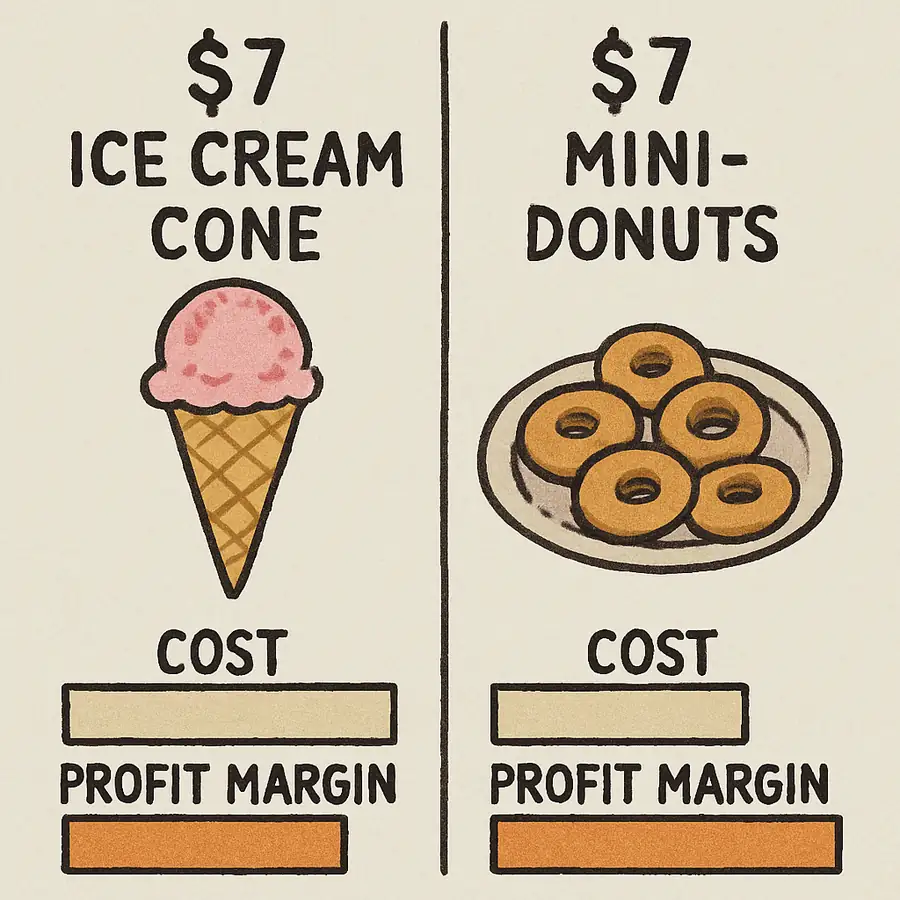
- Cost to produce a plate of gourmet mini-donuts: $0.80 to $1.20
- Selling price: $7.00 to $10.00
- Profit Margin: 85% to 90%
Because of this, mobile dessert business profit margins are among the highest in the entire food service industry. However, the preparation takes time. You can only pump out so many fresh crepes per hour, which naturally caps your maximum hourly revenue during a rush.
Ice Cream Profits and Margins
Ice cream profits operate differently. The food cost for a scoop of premium artisanal ice cream or a soft-serve cone is higher than a donut, but the speed of service is unmatched.
- Cost to produce a premium waffle cone with two scoops: $1.50 to $2.50
- Selling price: $6.00 to $9.00
- Profit Margin: 65% to 75%
While the margin percentage is slightly lower than raw batter-based desserts, the volume compensates for it. In a busy festival setting, an ice cream trailer can serve three or four customers in the time it takes a dessert truck to cook one fresh waffle. Therefore, overall ice cream trailer profit often exceeds dessert profit during high-volume summer events.
Average Daily Earnings for Mobile Food Businesses
What does a typical day look like financially? The average daily earnings for mobile food businesses depend heavily on location and event type.
- Standard Street Parking/Parks: On a typical weekend afternoon, an ice cream trailer might gross $400 to $800, whereas a dessert trailer might pull in $500 to $900.
- Large Festivals and Fairs: This is where the magic happens. Ice cream sales can easily exceed $3,000 to $5,000 per day because the transaction time is less than 30 seconds. A dessert trailer might cap out at $2,000 to $3,500 simply because of cooking times, unless they pre-cook items (which lowers quality).
Ultimately, overall food trailer profits depend on your operational speed. If your dessert trailer sells pre-baked goods (like gourmet cupcakes or cookies), your speed of service matches an ice cream trailer, leveling the playing field.
4. How to Calculate ROI for Food Trailers
To truly determine which makes more money, you need to understand how to calculate ROI (Return on Investment) for food trailers. ROI measures how quickly your business pays for its initial setup costs and starts putting real wealth into your pocket.
The basic formula is: (Net Profit / Total Investment) x 100 = ROI %
A Hypothetical Example
Scenario A: The Ice Cream Trailer
- Total Investment: $35,000
- Annual Ice Cream Revenue: $90,000
- Operational Expenses (COGS, Fuel, Permits): $40,000
- Net Profit: $50,000
- ROI Calculation: ($50,000 / $35,000) x 100 = 142% First-Year ROI
Scenario B: The Dessert Trailer
- Total Investment: $50,000
- Annual Dessert Revenue: $85,000
- Operational Expenses (COGS, Propane, Permits): $30,000
- Net Profit: $55,000
- ROI Calculation: ($55,000 / $50,000) x 100 = 110% First-Year ROI
In this hypothetical (but realistic) scenario, the dessert trailer generated a slightly higher net profit due to lower food costs. However, the ice cream trailer provided a higher ROI because the initial startup investment was significantly lower.
5. The Impact of Seasonality
You cannot discuss ice cream trailer revenue without addressing the elephant in the room: winter.
Seasonal Revenue for Ice Cream Vendors
Ice cream truck income is notoriously seasonal. In regions with harsh winters, ice cream businesses effectively operate for six to eight months of the year. During the peak summer months, ice cream revenue skyrockets. A well-placed trailer can make enough money between May and September to sustain the owner for the entire year.
However, during November through March, ice cream sales plummet. Operators must either pivot their menu (selling hot chocolate and warm cider), move their trailer south, or hibernate the business and rely on their summer savings.
Customer Demand for Year-Round Desserts
This is where the dessert trailer takes a massive lead. Customer demand for year-round desserts is incredibly stable. A warm, freshly cooked churro, a hot crepe stuffed with Nutella, or a gooey chocolate chip cookie sells just as well in sunny July as it does in freezing December.
In fact, many dessert trucks see a spike in sales during the autumn and winter holiday seasons, catering to winter festivals, Christmas markets, and corporate holiday parties. If you live in a region with four distinct seasons, a dessert trailer offers a much more consistent, 12-month revenue stream without the stress of cramming a year's worth of earnings into a four-month window.

6. Daily Operations and Ongoing Expenses
It is not just about how much you make; it is about how much it costs to keep the business running day-to-day. Operational expenses for mobile concession stands can eat into your profits if you are not careful.
Inventory Waste Management for Perishable Goods
Waste management is a critical factor in mobile food profitability.
For an ice cream trailer, inventory waste management for perishable goods is heavily reliant on electricity. Commercial tubs of ice cream have a very long shelf life as long as they stay frozen. If you have an event get rained out, you simply roll the freezers back into your commissary or leave them plugged in. Your product is safe for the next day. The primary risk is a freezer breakdown or a generator failure, which can result in thousands of dollars of lost inventory overnight.
Dessert trailers face a different type of waste. Fresh batter, dairy-based fillings, and pre-baked pastries have a very short shelf life. If you mix 100 portions of crepe batter and your event is a bust due to bad weather, you usually have to throw that batter away. Managing inventory for a dessert trailer requires highly accurate sales forecasting to ensure you don't pour your profits into the trash can at the end of the night.
Foot Traffic Analysis for Food Trailer Locations
Whether you sell gelato or gourmet donuts, you need customers. Conducting a proper foot traffic analysis for food trailer locations is non-negotiable.
- Parks and Splash Pads: Incredible for ice cream. Children playing in the heat guarantee high ice cream sales.
- Downtown Nightlife/Bar Districts: Excellent for warm, greasy desserts. A late-night crowd leaving a bar at 1 AM is highly likely to spend $10 on loaded churros or warm cookies.
- Corporate Parks: Great for dessert trailers offering afternoon coffee and pastry breaks.
Understanding where your specific target audience naturally gathers dictates your daily parking strategy.
7. Niche Markets and Menu Versatility
To maximize your food trailer profits, you should look beyond standard menus and explore specialized concepts. Today's consumer loves an "experience."
Niche Dessert Trailer Revenue Potential
The beauty of the dessert truck is its adaptability. Niche dessert trailer revenue potential is staggering if you tap into current dietary trends. For example:
- Vegan/Gluten-Free Desserts: Catering to dietary restrictions allows you to charge premium prices.
- Cultural Desserts: Authentic Mexican churros, Japanese Taiyaki (fish-shaped pastries stuffed with custard), or Thai rolled ice cream.
- Hybrid Models: Why not both? Many successful operators pair a warm dessert with a frozen element—like warm brownie sundaes, waffle ice cream sandwiches, or freshly baked pie à la mode.
Best-Selling Items in Mobile Dessert Units
If you are leaning toward the baked goods route, research the best-selling items in mobile dessert units. Currently, the market is dominated by:
- Loaded Mini Donuts: Easy to fry, easy to share, and highly customizable with different drizzles and crumbles.
- Gourmet Stuffed Cookies: Thick, heavy cookies stuffed with caramel or cheesecake. (Great because they can be pre-baked to ensure fast service!).
- Sweet Crepes: High perceived value, allowing operators to charge $10+ for an item that costs $1 to make.
8. Marketing Strategies for Mobile Food Startups
Even the most beautiful ice cream trailer or the best-smelling dessert truck will fail without proper marketing. Effective marketing strategies for mobile food startups rely heavily on visual appeal, community engagement, and digital presence.
- Leverage High-Quality Visuals: Desserts and ice creams are inherently visual. Your social media feeds should be packed with high-resolution photos of your dripping ice cream cones and powdered-sugar-dusted waffles.
- Geo-Tagging and Live Updates: Always post your daily locations on Instagram Stories or Facebook. Let your audience know exactly where to find you and how long you will be there.
9. Breaking Down the Pros and Cons
Let's summarize the battle of Ice Cream Trailer vs Dessert Trailer to give you a clear, side-by-side perspective.
Ice Cream Trailer Pros & Cons
Pros:
- Lower initial startup costs (depending on equipment).
- Incredibly fast speed of service, allowing for massive volume during rushes.
- Long shelf life for products (low daily food waste).
- Universally loved, requiring minimal marketing to explain the concept.
Cons:
- Highly seasonal (in most climates).
- Lower profit margin percentage per item compared to flour/batter-based goods.
- Heavy reliance on generators and freezers (mechanical failure equals product loss).
Dessert Trailer Pros & Cons
Pros:
- Extremely high profit margins per item (cheap ingredients like flour and sugar).
- Year-round appeal; immune to the winter slump.
- Massive menu versatility (easy to pivot trends from waffles to cookies).
- Incredible smells naturally draw in foot traffic.
Cons:
- Higher initial startup costs (hoods, fire suppression, fryers).
- Slower speed of service, which can cap revenue during massive crowds.
- Higher daily food waste if fresh batter/ingredients aren't sold.
10. The Verdict: Which Makes More Money?
So, Ice Cream Trailer vs Dessert Trailer: Which Makes More Money?
The truth is, it depends entirely on your business model, your location, and your work ethic.
If you live in a warm climate (like Florida, Texas, or Southern California), or if you plan to exclusively target massive, high-volume summer music festivals, an Ice Cream Trailer will likely make you more money. The sheer speed of service allows you to process hundreds of transactions an hour. While your food costs might be slightly higher, the volume you push through an ice cream truck window is unparalleled.
On the other hand, if you live in a region with four distinct seasons, value consistent year-round income, and prefer higher profit margins per item, a Dessert Trailer is the winner. The ability to sell warm churros in December and iced cupcakes in July gives you a stabilized business model. You make more money per transaction, and you aren't forced into a frantic, four-month summer rush.
A Hybrid Solution?
For the truly ambitious entrepreneur, the ultimate money-maker is a hybrid model. Imagine a trailer that sells freshly made liege waffles topped with premium soft-serve ice cream. By combining the high-margin, aromatic draw of hot baked goods with the fast-service, crowd-pleasing nature of cold ice cream, you effectively eliminate the downsides of both models.
Which Trailer Can Make More Money?
There is no guaranteed winner because profitability depends on your location, target customers, menu, pricing, operating costs, and event schedule. The Horeca Store an ice cream trailer may be more profitable if you want a simple operation with fast service and strong seasonal demand. A dessert trailer may have greater revenue potential if you can offer a diverse menu and successfully encourage customers to purchase premium toppings, combinations, and drinks.
For either concept, controlling operating costs and choosing the right takeaway supplies can make a significant difference to your margins. The Horeca Store provides a wide range of disposable foodservice products, including ice cream cups, dessert containers, takeaway cups, food containers, napkins, and other catering essentials. Stock up on quality disposable supplies at competitive prices and give your customers a convenient, professional takeaway experience.
Final Takeaway
Starting any mobile food business is a labor of love. Whether you are analyzing the ice cream business or looking into the startup costs for a dessert food truck, success boils down to executing your concept with excellence.
Calculate your local customer demand, analyze your regional weather patterns, secure your financing, and build a menu that makes your heart—and your wallet—happy. Whichever path you choose, the mobile sweets industry is a highly profitable, endlessly fun way to achieve entrepreneurial freedom. Now, get out there and start serving up some smiles!