
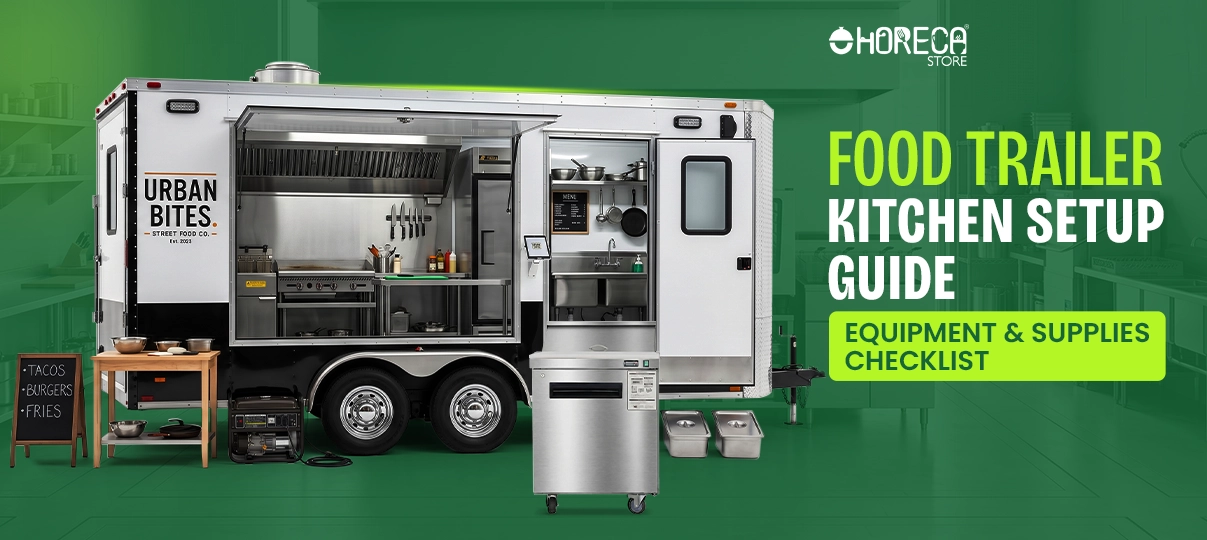
You’ve perfected your signature taco recipe in your spacious home kitchen, but moving that exact operation into a 12-foot trailer is like trying to solve a high-stakes puzzle. Transitioning from a passionate hobbyist to a professional operator requires a complete shift in how you view your cooking environment. A successful food trailer kitchen setup is not simply a room with appliances shoved inside; it is a finely tuned engine built to generate profit. In practice, seasoned operators know that outfitting this space means building a seamless system where every single component works together to serve customers quickly.
Inside a mobile unit, space is your most expensive currency, meaning every inch must actively earn its keep. According to veteran food mechanics, the secret to a thriving business lies in spatial ergonomics—the practice of designing a workspace so cooks can move efficiently without crossing paths or taking wasted steps. Proper food truck design dictates that you cannot just buy the largest commercial refrigerator available and hope for the best. Instead, you must carefully select durable gear that fits your strict power, water, and physical footprint constraints.
How do you arrange these heavy-duty pieces so that your turnaround time drops and your daily profit margins soar? Mastering your food trailer kitchen layout design involves balancing your culinary ambitions with the hard realities of local health regulations. Success requires optimizing your limited square footage, selecting the right commercial-grade equipment, and building a workflow that makes the health inspector smile.
Why Your Menu is the Master Blueprint for Your Equipment List
Perfecting your food trailer kitchen setup doesn’t begin with an appliance catalog, but with your recipes. In this business, the equipment always follows the food. While serving a massive variety of dishes sounds appealing, a focused menu is the true secret to a fast, efficient workspace. Specializing means you buy fewer appliances, significantly reducing your initial costs and keeping your limited floor space comfortably open for service.
To avoid buying redundant gear and actually start maximizing small space storage solutions, you must align your layout directly with what you cook. Use this three-step menu analysis to equipment mapping:
- List ingredients.
- Identify cooking methods.
- Select matching equipment.
Recognizing this direct link helps you balance your "Power-to-Menu" ratio, ensuring every single appliance earns its keep without draining your resources. Once you know exactly what commercial gear your specific food requires, you must secure the appropriate power source to run it without overloading your system.
Powering Your Profit: How to Choose a Food Trailer Generator Without Blowing a Fuse
Imagine it’s 12:30 PM, you have a line of twenty hungry customers, and your entire food trailer kitchen setup suddenly plunges into darkness. At home, you can run the blender, microwave, and fridge simultaneously without a second thought. However, a mobile kitchen requires you to calculate your exact power load to prevent mid-service outages. Every appliance draws electricity, and knowing your total required wattage is the only way to keep your service running smoothly.
The secret to avoiding a blown fuse lies in understanding two crucial numbers: running watts and starting watts. Running watts represent the continuous power an appliance needs to operate, while starting watts provide the temporary extra energy burst required to turn a heavy motor on. When tallying your needs, you must account for these initial surges using typical baselines:
- Commercial fryer (2000-5000W)
- Undercounter Fridge (400-800W)
- LED lights (50W)
Choosing the right food trailer generator models comes down to matching your peak starting wattage while maintaining a pleasant atmosphere. Health inspectors and event organizers frown upon deafening, construction-style equipment, making quiet inverter generators essential for customer comfort. If your electrical needs still exceed realistic generator limits, shifting heavy heating loads to gas becomes necessary.
Gas vs. Electric Cooking: Choosing the Right Fuel for Mobile Kitchen Efficiency
When electrical needs exceed your generator's limits, shifting the heavy heating load to propane prevents mid-service blackouts. Evaluating gas vs electric cooking equipment for trailers is truly about mobility and budget. While wiring a massive electrical panel seems straightforward, installing a professional propane line is usually much cheaper for high-heat menus. Just remember that gas line safety requires certified installation and strict fire code compliance to protect your business from becoming a mobile hazard.
This fuel choice dramatically impacts daily kitchen efficiency. Gas appliances are measured in BTUs (British Thermal Units), which simply indicates how much raw heat a burner can produce. When running high-capacity commercial countertop fryers, gas models reheat the oil much faster than electric ones after you drop in a basket of frozen fries. That rapid heat recovery means quicker turnaround times, happier customers, and higher hourly profits.
Securing the right cooking gear is only half the battle. Figuring out exactly where to place those hot fryers without melting your nearby refrigerator requires careful spatial planning and workflow management.
The Art of the 'Dance': Kitchen Layout Ideas that Maximize Small Space Storage
Stepping into a food trailer during the lunch rush is like watching a highly choreographed performance. Space is your most expensive currency, meaning your kitchen layout ideas must completely eliminate "cross-traffic" collisions between staff. If your grill cook constantly squeezes past the cashier to grab frozen fries, you lose precious seconds on every order and risk a dangerous hot-oil spill.
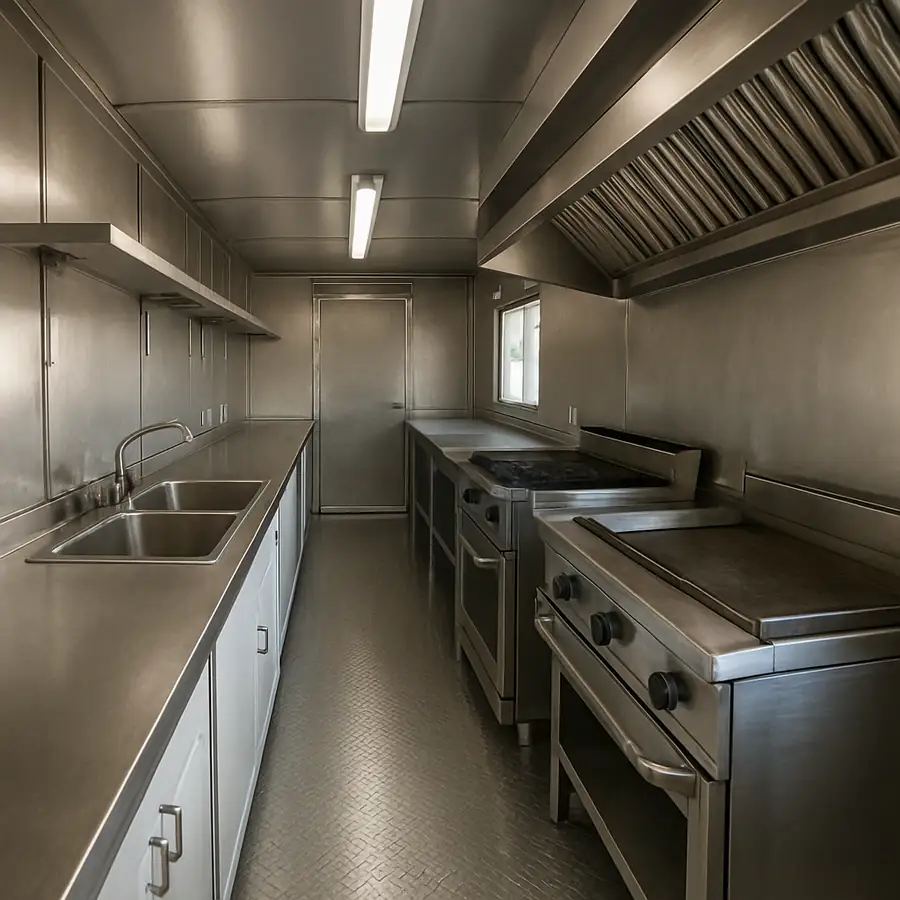
Mastering your food trailer kitchen layout design relies on the "work triangle," specifically optimizing the path connecting your prep station, cooking equipment, and service window. Think of this movement as a continuous dance where nobody steps on toes. Keeping the plating area directly adjacent to the window lets staff hand over hot food instantly, which drastically reduces your turnaround time and keeps the line moving.
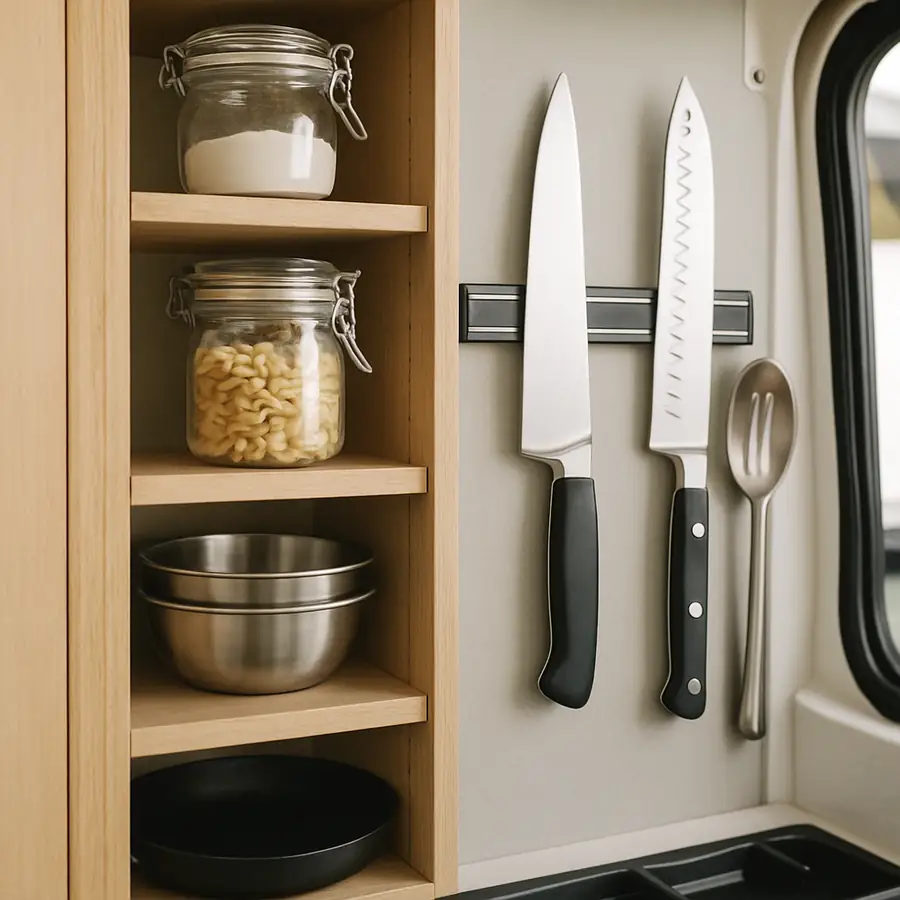
Finding room for supplies in this tight footprint requires looking up rather than out. Implementing vertical systems is the true secret to maximizing small space storage solutions without eating up your valuable floor space. Hanging magnetic knife strips, wall-mounted ticket rails, and high wire shelving keeps crucial tools at eye level while freeing up your limited countertops for actual food preparation.
Every inch of your mobile workspace must earn its keep by matching these ergonomic strategies with proper commercial equipment. Once this workflow dance is clearly mapped out on your floor plan, you are finally ready to fill those specific zones with essential cooling, cooking, and cleaning gear.
The Big Three Essentials: NSF Certified Cooling, Cooking, and Cleaning Gear
Bringing your favorite residential fridge into a mobile kitchen might seem like a great money-saving hack, but it guarantees an immediate health inspector failure. Mobile operations strictly require NSF certified food service equipment. The National Sanitation Foundation (NSF) tests gear to ensure it is highly durable, easily cleanable, and completely free of tiny crevices where dangerous bacteria hide. Without that silver NSF sticker, inspectors simply will not let you open for business.
Cooling ingredients safely in a hot metal box introduces a crucial concept called "recovery time." When you open a fridge door twenty times an hour during a rush, a home unit cannot cool down fast enough, risking rapid food spoilage. Commercial units use powerful compressors to recover that lost temperature instantly. To save precious space, smart operators rely on dual-purpose refrigerated prep tables, which keep ingredients safely cold underneath while providing a sanitary cutting surface on top.
Outfitting your specific work zones means prioritizing health-approved versions of the "Big Three" operational categories. Your essential NSF certified equipment must include:
- Compact undercounter commercial refrigeration to protect ingredients while maximizing your vertical workspace.
- High-capacity commercial countertop fryers or griddles that deliver massive heat output within a small footprint.
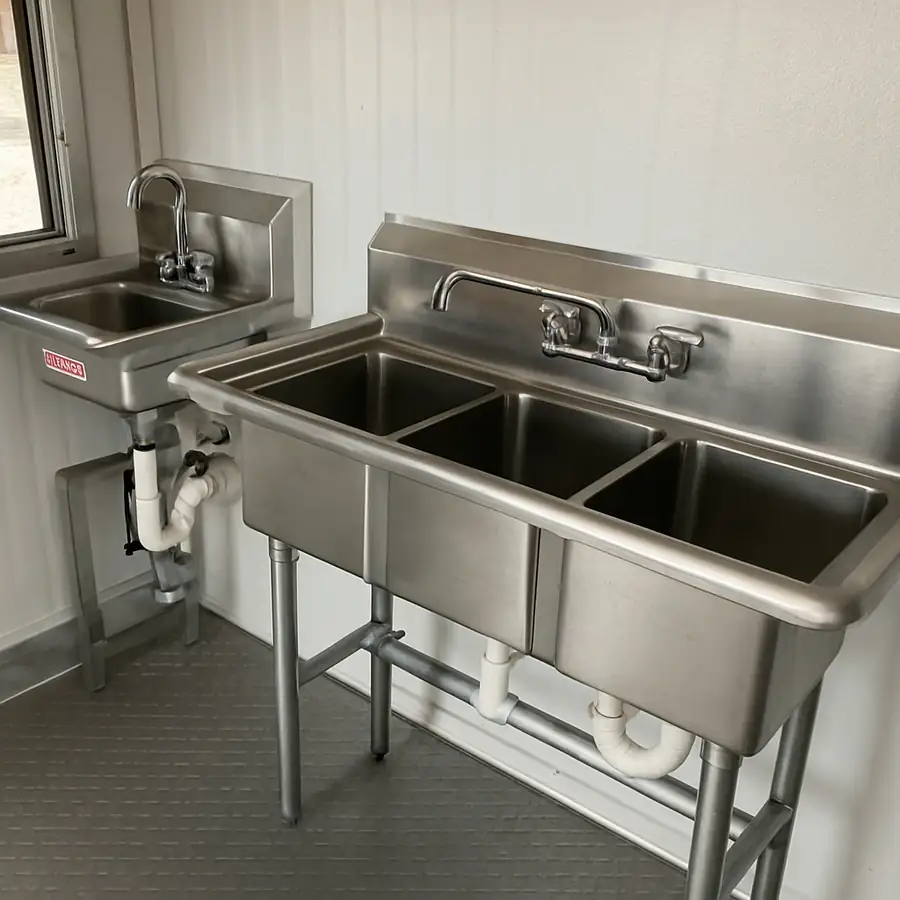
- Three-compartment sinks for legally mandated washing, rinsing, and sanitizing.
Locking down these foundational appliances ensures your workflow is safe and efficient enough to handle heavy crowds.
Breathing Easy: Installing Concession Trailer Vent Hoods and Fire Suppression
Trapped heat and airborne grease quickly turn a confined mobile kitchen into a dangerous environment. Therefore, installing concession trailer vent hoods is a non-negotiable requirement for passing local health inspections. Think of the hood as the lungs of your business, pulling smoke out before you breathe it in. Inspectors measure its exhaust power in CFM (Cubic Feet per Minute), which simply calculates how much stale air the heavy-duty fan removes from your workspace every sixty seconds.
Beneath that exhaust fan sits your ultimate safety net: an automatic fire suppression system, often called an Ansul system. If a sudden grease fire erupts on the griddle, this equipment reacts instantly without you lifting a finger. Heat-sensitive links melt at a specific high temperature, automatically spraying chemical suppressants over the flames while immediately shutting off the gas supply. Every proper fire suppression system installation guide strongly recommends hiring certified professionals, as fire marshals strictly require authorized sign-offs before you can open.
Securing these overhead safeguards protects both your livelihood and your crew. With air quality controlled and fire hazards neutralized, the next operational hurdle is mastering essential plumbing.
Essential Plumbing: Balancing Fresh Water and Grey Water Tank Capacity
Navigating what are the health department requirements for food trailers usually starts at the sink. Inspectors mandate a four-sink setup: a three-compartment sink for washing, rinsing, and sanitizing, plus a separate hand-washing station. Supplying these requires a reliable tank of potable water—the safe, drinkable fresh water you use daily.
Once that water goes down the drain, it becomes grey water, or wastewater. Mastering essential plumbing for mobile food units means understanding tank ratios. By law, your wastewater tank must be 15% larger than your fresh tank. For example, a 40-gallon fresh supply requires at least a 46-gallon grey water tank capacity for food trailers to prevent messy overflows during a full day of service.
Heating this supply adds heavy strain to your electrical panel. Commercial water heaters draw massive power, meaning you must calculate their load against your generator so you don't blow a fuse mid-shift. Once your plumbing functions safely, keeping the kitchen pristine requires durable work surfaces.
Surfaces That Last: Why Stainless Steel vs. Aluminum Work Tables Impact Your Sanitation
Countertops in a mobile kitchen take a brutal daily beating. While tempting for your budget, comparing stainless steel vs aluminum work tables reveals why health inspectors demand steel. Stainless is completely non-porous, meaning it lacks microscopic holes where bacteria or grease can hide. This guarantees a rapid, sanitary wipe-down—a core requirement for any NSF certified food service equipment.
Selecting the best metal requires understanding grade and gauge. Always choose 304 over 430 stainless; the 304 grade includes nickel, preventing rust in a humid, steam-filled trailer. Furthermore, metal thickness relies on "gauge," where lower numbers mean thicker steel. A heavy-duty 14-gauge table survives aggressive chopping, whereas a thinner 18-gauge table dents easily. With your sanitary prep stations finalized, your focus must shift toward administrative requirements.
The Final Checklist: From Portable POS Systems to Passing the Health Department
Securing physical equipment is just the start; administration dictates if you actually open. Before asking what are the health department requirements for food trailers, build a "Compliance Binder." This physical folder holds your permits and technical manuals for instant access during emergencies or surprise visits. Next, secure a reliable portable POS system for mobile vendors. Food festivals often have terrible cell service, so choose a system with an "offline mode" to process credit cards without an internet connection, ensuring you never miss a sale.
Passing your final inspection requires thinking like an official. Inspectors relentlessly verify temperature control in mobile commercial kitchens to prevent foodborne illness. Conduct a mock walkthrough using this 'Day Zero' inspection checklist:
- Hot water temp check
- Sanitizer strips present
- Thermometers in all fridges
- Surfaces clear of clutter
- Permits on display
Master this checklist, and you are ready to execute your 30-day action plan.
Moving from Blueprint to Business: Your 30-Day Action Plan for a Ready-to-Roll Kitchen
You’ve transformed an overwhelming, high-stakes puzzle into a clear blueprint for a profit engine. You now understand how commercial gear and smart workflow combine to make your daily operation seamless. Instead of guessing where to squeeze in appliances, you have the knowledge to execute a professional food trailer kitchen setup that operates efficiently and safely under pressure.
To avoid costly last-minute delays, prioritize your infrastructure first. Follow this structured 30-day timeline to bring your food truck design to life:
- Week 1: Layout finalized
- Week 2: Power/Gas install
- Week 3: Equipment mounting
- Week 4: Deep clean and Inspection
Try taping your floor plan onto a driveway today and notice how quickly you spot workflow bottlenecks. Your long-term success lies in these early details and the reliability of your chosen gear. By taking these confident steps, you will soon shift your focus entirely from building a kitchen to serving your very first customers.
Set Up Your Food Trailer Kitchen with Commercial Equipment from The Horeca Store
Creating an efficient food trailer kitchen setup requires the right combination of durable commercial equipment, space-saving solutions, and essential supplies. The Horeca Store offers a wide range of commercial kitchen equipment for food trailers, including cooking equipment, refrigeration units, stainless steel prep tables, storage solutions, and kitchen accessories. Our products are designed to help food truck owners maximize limited space while maintaining speed, safety, and efficiency during daily operations.
At The Horeca Store, we provide reliable food trailer kitchen equipment and supplies to support restaurants on wheels, mobile catering businesses, and food truck startups. Whether you need compact cooking appliances, commercial refrigeration, or workspace solutions, our collection helps you build a functional and professional mobile kitchen. Choose The Horeca Store for quality equipment, competitive pricing, and dependable solutions for your food trailer business.