
Walking into a store to buy a new frying pan can feel like a pop quiz you didn't study for. Stainless steel, non-stick, cast iron… it’s easy to feel overwhelmed. Faced with dozens of choices, those big, all-in-one boxes of cookware and knife blocks seem like a great deal—a whole kitchen in one easy purchase.
But here’s the secret the big-box stores don’t want you to know: most of those sets are a trap. In practice, they are often padded with low-quality, single-purpose items you’ll rarely touch. You end up paying a premium for filler, while the essential pieces you use every day are a step down in quality from what you could have bought separately.
Consider the classic 15-piece knife block. Are kitchenware sets a good deal when you only end up using two or three of those knives? Instead of spending $150 on that block, you could buy a single, professional-quality Victorinox chef's knife for about $40 and a simple paring knife for $10. You'd save $100 and get tools that are sharper, safer, and a joy to use.
This simple principle—buy individuals, not sets—is the key to saving money and building a superior collection of tools that will last for years. This guide offers the ultimate kitchen starter kit checklist, helping you create a budget kitchen essentials list with gear you’ll actually love.
The "Kitchen Trinity": How to Choose the Only 3 Items You Need to Start
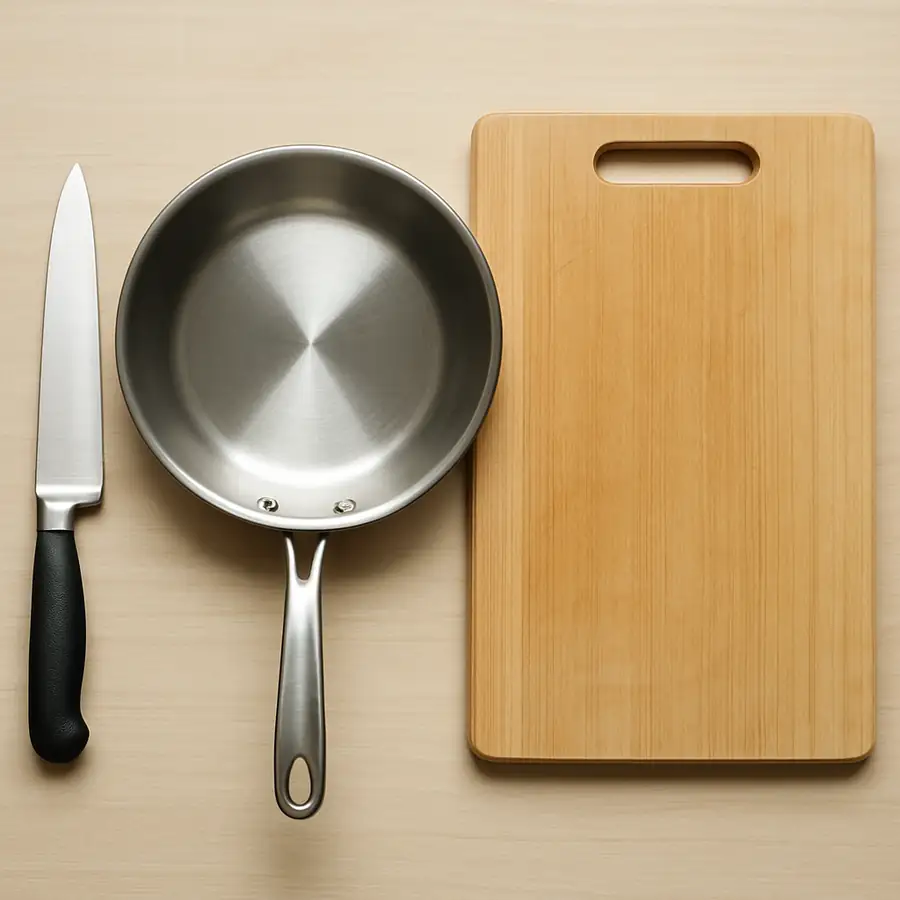
Instead of getting lured into a massive 20-piece "kitchen-in-a-box" set, focus your budget on what chefs call the "Kitchen Trinity." This powerful trio—a great chef's knife, a versatile skillet, and a large cutting board—is the simple kitchen starter kit checklist you actually need. With just these three tools, you can confidently prepare almost any meal, saving money and avoiding the clutter of tools you'll rarely touch.
Your most important investment is an 8-inch chef's knife. When shopping, look for one that is "full tang." This just means the single piece of metal from the blade runs all the way through the handle, making the knife far stronger, better balanced, and easier to control than cheaper alternatives where the blade is just glued in. A full tang knife is one of the few kitchen items worth investing in because it will last for decades.
For the skillet, a 10-inch stainless steel pan is your do-everything workhorse. The key feature to look for is "tri-ply" or "multi-clad" construction, which means layers of metal are bonded together. This allows the pan to heat evenly without the "hot spots" that burn your food in one area while leaving another undercooked. It gives you professional-level control for a fraction of the cost of a full high-end set.
Finally, don't overlook the humble cutting board. A large board—at least 15 by 20 inches—is safer because it gives you plenty of room to chop without things spilling over. It also makes your prep work cleaner and more efficient. This simple, inexpensive item is the stage where your knife and your ingredients come together. But while the knife and board are straightforward, choosing the right pan involves a few more trade-offs, which we’ll break down next.
Pan vs. Pan: A Simple Guide to Your Kitchen's Most Important Tool
While we called out a stainless steel skillet as the ideal starting point, walking into a store presents a dizzying choice. It’s easy to feel paralyzed by the options, but understanding the job of each pan type makes the decision simple. Instead of looking for one pan that does everything perfectly, think of them as a small team with different specialists. For beginners, focusing on one or two high-performers is a much smarter use of money than buying large, affordable cookware sets filled with pans you won't use.
To cut through the noise, here’s what each material is actually good for:
- Non-Stick: Best for: Eggs, pancakes, and delicate fish. Pro: Food slides right off with little oil. Con: The coating wears out, often in just a year or two. Avoid high heat and metal utensils, which destroy the surface.
- Stainless Steel: Best for: Sautéing vegetables, searing meat, and creating pan sauces. Pro: Extremely durable and versatile. Con: Food can stick if you don't preheat the pan properly with oil.
- Cast Iron: Best for: Searing steaks, frying chicken, and even baking. Pro: Gets incredibly hot and stays hot, plus it will literally last forever. Con: It's heavy and requires a bit of maintenance called "seasoning."
That "seasoning" on cast iron isn't salt and pepper; it’s a simple process of wiping the pan with oil and heating it, which bakes on a natural, non-stick surface over time. While the upfront cast iron vs. stainless steel cost is often similar, a well-cared-for cast iron pan will outlive you, making it an incredible long-term value.
So, what's the verdict? Start with one great stainless steel workhorse. If you love eggs, add a cheap, small non-stick pan and accept that it’s disposable—there are no truly durable non-stick pan deals. This simple strategy avoids waste, but it also brings up a crucial money-saving idea: the true cost of your gear.
The "Pan Math" That Saves You Hundreds: Why a $20 Pan Costs More Than an $80 One
Thinking about the true cost of your kitchen gear is a total game-changer. It’s tempting to grab a $20 pan over an $80 one, but the real bargain isn't the sticker price—it’s the Cost-Per-Use. This simple idea just means dividing an item's price by how many times you’ll use it. A cheap tool that you have to replace often ends up being far more expensive over time.
Consider the "pan math." That $20 non-stick pan might last two years before it's scratched and useless. Over a decade, you’d spend $100 replacing it five times. In contrast, one high-quality $80 stainless steel or cast iron skillet can last decades, making it a smarter investment. Suddenly, the $80 pan is the clear winner, costing you significantly less in the long run.
This mindset is the key to building a quality kitchen on a budget. For core items like pans and knives, try to "Buy It For Life" (BIFL). These are the durable workhorses that will serve you for years, making their cost-per-use incredibly low. The best part? You don't always have to pay a premium for this kind of quality. In fact, some of the most durable kitchen tools are hiding where you'd least expect.
Where the Pros Shop: Unlocking a Hidden Gem for Kitchen Deals
So where do you find these "buy it for life" tools without the premium price tag? The answer is often hiding in plain sight: a restaurant supply store. These warehouses sell directly to chefs and restaurant owners, but most are open to the public. They are a true hidden gem for anyone looking to equip their kitchen with affordable cookware that’s built to last.
Forget fancy packaging and celebrity endorsements. At a restaurant supply store, you're paying for function, not fashion. The equipment sold here is designed to survive the intense, high-volume environment of a professional kitchen. This means you get incredibly durable gear, like commercial-grade pots and cheap kitchen gadgets that actually work, without the brand-name markup.
This is the perfect place to stock up on core kitchen essentials. Instead of browsing aimlessly, go in with a list of the best bargains, which are often the simplest items:
- Heavy-duty aluminum sheet pans ("cookie sheets") that don't warp
- Stainless steel mixing bowls in every size for just a few dollars each
- Durable metal tongs and spatulas that won't melt or break
- Simple, white ceramic plates and bowls that are nearly indestructible
You won't find the latest high-tech appliances or cookware in trendy colors, but what you will discover is the power of simple, no-nonsense tools. These are the versatile workhorses that form the foundation of a smart, efficient kitchen, proving you don't need a specialized tool for every single task.
The Power of One: How Multi-Purpose Tools Declutter Your Kitchen and Your Budget
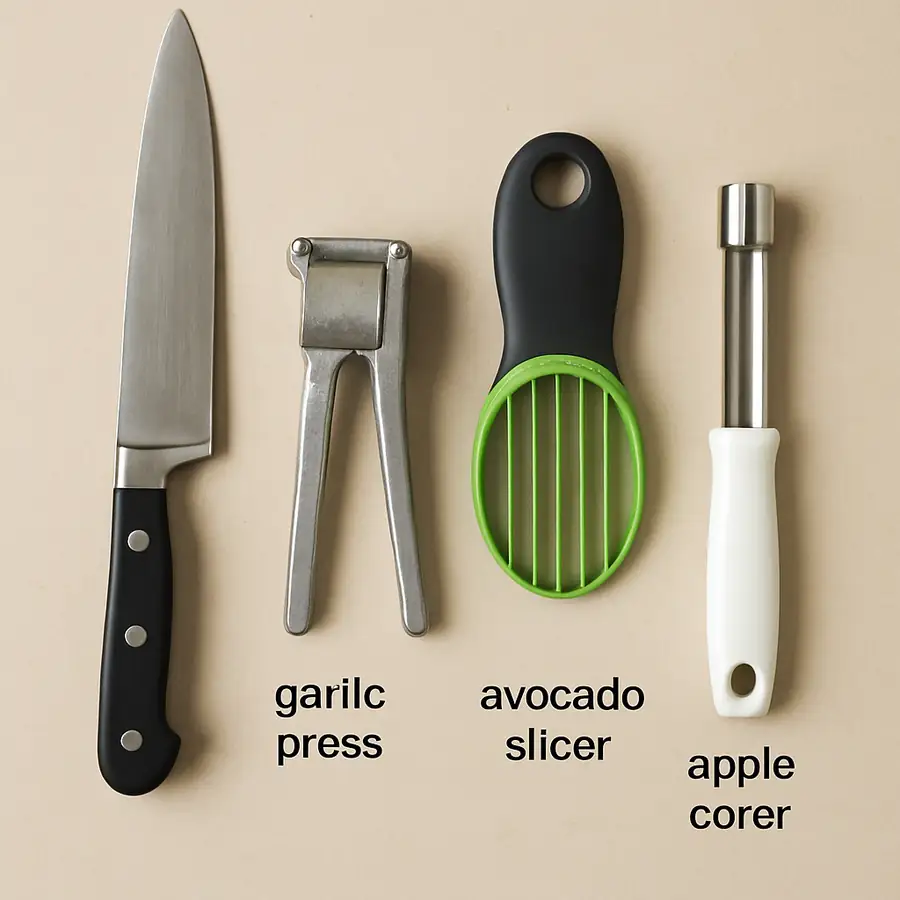
Every kitchen seems to have one: a "junk drawer" filled with gadgets that promised to make life easier but now only gather dust. These are the classic "uni-taskers"—tools designed for one hyper-specific job, like an avocado slicer or an egg separator. While they seem clever on the shelf, they often represent wasted money and valuable cabinet space. Resisting these single-use items is a foundational step in building a smart, affordable kitchen.
The alternative is to embrace multi-purpose kitchen tools to save money and become a more capable cook. A single, sharp chef's knife, for instance, easily replaces a garlic press, an apple corer, and a dozen other specialized slicers. A simple Dutch oven can sear meat, simmer soup, bake bread, and even deep-fry, performing the jobs of four different appliances. These workhorses are the best alternatives to expensive kitchen tools because their value comes from their versatility, not their novelty.
Before you add any new item to your cart, ask yourself one simple question: "Can a tool I already own do this job?" This quick mental check is your best defense against impulse buys and kitchen clutter. By focusing on a short list of powerful, flexible essentials, you'll not only save a significant amount of money but also build a kitchen that is more functional and less stressful to work in.
Your Guide to Thrift Store Gold: Finding and Restoring Used Kitchenware
Beyond the clothing racks and dusty furniture lies a secret weapon for outfitting a new kitchen on a budget. Thrift stores are where you can find heavy-duty cookware that has already proven it can last, often for the price of a fancy coffee. Following a few tips for buying used kitchen gear is the fastest way to acquire high-quality pieces from brands like Pyrex and Lodge for pennies on the dollar.
To make your hunt successful, you need to know what’s a treasure and what’s trash. Use this simple guide to thrift store kitchen finds to spot the difference.
Look For:
- Cast iron pans (even if they look neglected)
- Pyrex or other heavy glass baking dishes
- Stainless steel pots with thick, heavy bottoms
- Solid wood utensils and cutting boards
Avoid:
- Scratched non-stick pans (the coating can flake into food)
- Chipped or cracked glassware and ceramic
- Dull, rusted knives (they're a safety hazard)
- Stained, warped, or melted plastic items
Don't be intimidated by a cast iron pan that looks a little rusty. That’s often just a surface issue. With a good scrub and a fresh coat of cooking oil baked on (a simple process called "seasoning"), that $5 pan can be restored to perfect, non-stick condition and will last for generations.
Once home, most glass and stainless steel items just need a thorough wash in hot, soapy water to be ready for use.
Your First Kitchen Checklist: 10 Essential Items for Under $300
You're no longer walking into the kitchen aisle unprepared. Instead of being overwhelmed by flashy marketing for 20-piece sets, you now have the tools to spot true value, understand the difference between a short-term bargain and a long-term investment, and build a kitchen that works for you. You can confidently shop for kitchen supplies, avoiding common traps and making smart investments.
To put this knowledge into action, here is the ultimate budget kitchen essentials list—a highly functional foundation for under $300.
- 8" Chef's Knife (~$40)
- Large Cutting Board (~$20)
- 10" Stainless Steel Skillet (~$50)
- 3-Quart Saucepan (~$30)
- Large Stockpot or Dutch Oven (~$60)
- Set of Metal Mixing Bowls (~$20)
- Heavy-Duty Sheet Pan (~$12)
- Silicone Spatula & Metal Tongs (~$15)
- Paring Knife (~$8)
- Measuring Cups & Spoons (~$15) Total: ~$270
Remember the key strategies: prioritize individual workhorses over bloated sets, think in cost-per-use, and always check thrift or restaurant supply stores first. Building a great kitchen is a marathon, not a sprint. Start with these essentials, and you'll have a foundation of quality tools that make cooking a joy, not a chore—all without breaking the bank.
Buy Affordable Kitchen Supplies from The Horeca Store
Finding high-quality kitchen supplies at competitive prices is easier with The Horeca Store. We offer a wide range of commercial kitchen supplies and hospitality essentials, including food storage containers, cookware, serving equipment, preparation tools, disposable packaging, refrigeration solutions, and professional kitchen accessories. Our products are designed to meet the needs of restaurants, cafés, hotels, bakeries, cloud kitchens, and catering businesses while helping you manage costs effectively.
At The Horeca Store, we focus on providing durable products, competitive pricing, and reliable service to support your business operations. Whether you are setting up a new kitchen or upgrading your existing setup, our extensive collection helps you find the right supplies without overspending. Choose The Horeca Store for smart purchasing decisions and kitchen solutions built for long-term performance.