
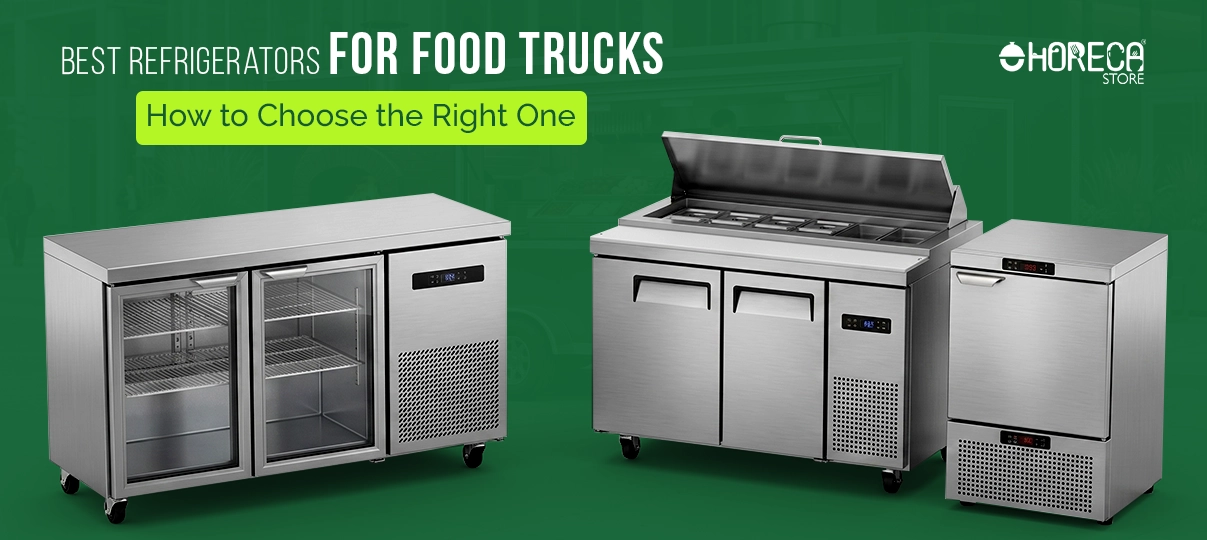
In a residential kitchen, a dead fridge means eating takeout for a few days while waiting for a repair technician. Inside a 100-degree mobile kitchen parked at a bustling summer festival, that same failure is a total business shutdown. Buying a refrigerator for food truck operations isn't about picking a convenient place to store ingredients; you are investing in a mission-critical asset. According to national health inspection data, inadequate holding temperatures are a leading cause of immediate health permit suspensions for mobile vendors.
Keeping perishable ingredients legally cold means strictly adhering to health department refrigeration standards throughout your entire shift. This critical boundary, known as the Health Department Safety Zone, requires your equipment to maintain food safety temperatures below 41°F despite doors opening constantly in a sweltering environment. A basic residential unit simply cannot recover cold air fast enough to satisfy an inspector holding a thermometer. Your cooler acts as a literal insurance policy against being forcefully shut down in the middle of a lunch rush.
Have you calculated the true cost of cutting corners on this equipment? Consider the inventory valuation risk: a fully stocked taco truck might carry $2,000 worth of raw meat, dairy, and prepped vegetables for a weekend event. Losing just one day of that inventory to spoilage instantly wipes out any money you saved by purchasing a cheap, non-commercial unit. Industry experience makes it clear that spending extra upfront on commercial-grade cooling protects your product, preserves your profits, and keeps your service window wide open.
Why Residential Means Risk on the Road: The NSF and Vibration Trap
You might be tempted to strap a big-box store fridge into your kitchen to save cash, but that shortcut ends in disaster. When evaluating commercial vs residential refrigeration for food trucks, your first hurdle is the health inspector. They look for an NSF (National Sanitation Foundation) sticker. NSF certified refrigerators use food-safe, easily cleanable materials designed to prevent bacteria. Without this certification, the health department simply won't let you open your service window.
Beyond regulations, household appliances cannot survive the highway. The impact of road vibrations wreaks havoc on standard cooling systems. Specifically, the delicate capillary tubes—small lines carrying the refrigerant that keeps your food safe—easily fracture when hitting potholes. Mobile commercial units feature capillary tube resilience, utilizing reinforced tubing to absorb those shocks without leaking expensive coolant.
Even if a home unit survives the drive, it will choke during a dinner rush because of its compressor duty cycle. This simply dictates how long the motor must run to recover lost cold air. Household fridges expect minimal door openings, whereas food truck doors open constantly, quickly burning out standard motors. Consequently, manufacturers void residential warranties in mobile settings for three distinct reasons:
- Lack of NSF-approved sanitary construction.
- Unapproved mechanical stress from road transit.
- Compressor burnout from continuous commercial usage.
Once you’ve secured a durable commercial unit, your next priority is ensuring your mobile power supply can safely handle its startup demand.
Don't Blow Your Breaker: Calculating Power Draw for Mobile Cooling
Securing a rugged commercial refrigerator is only half the battle; powering it is the real challenge. You already know appliances require Watts and Amps, but mobile kitchens operate on strict electrical budgets. If your generator cannot handle the load when the compressor kicks on, you will trip a breaker and plunge your entire service into darkness during a busy lunch rush.
The biggest trap for new operators involves misunderstanding the difference between resting power and initial demand. Think of your compressor like a heavy cart: it takes a massive shove to get rolling, but only a light push to keep moving. That initial shove represents your startup amps, a sudden surge required to wake the motor, while running amps simply maintain the cold cycle once it is coasting.
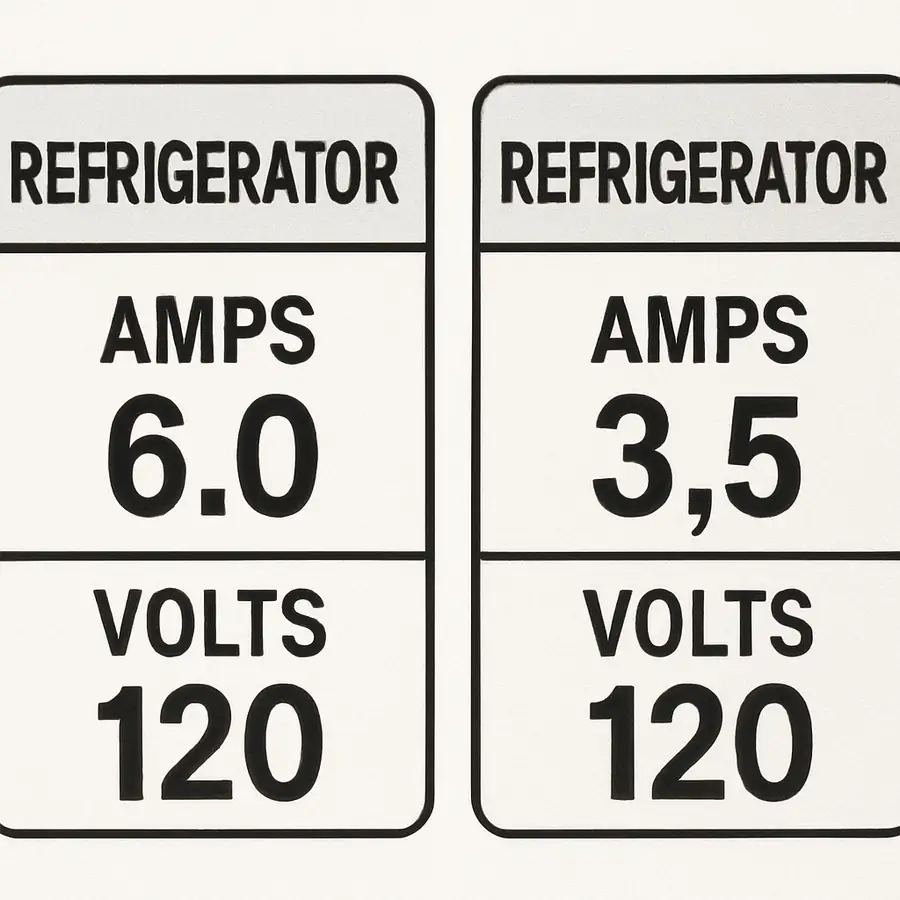
To accurately calculate your food truck generator power requirements, locate the LRA, or Locked Rotor Amps, on the unit's spec sheet. This LRA number represents the absolute maximum peak surge wattage the unit pulls in that first split second of starting. If your generator lacks the overhead capacity to handle this massive LRA spike alongside your fryers and lights, the entire electrical system will crash.
Prioritizing units with lower LRA ratings ensures energy efficient cooling without constantly redlining your portable power source. Once you confidently match your electrical surge capacity, you must tackle the physical challenge of integrating the unit into a highly confined footprint.
Fitting a Kitchen in a Closet: Measuring for Ventilation and Workflow
Squeezing standard commercial equipment into a tight mobile layout often ends in costly failure. Remember, a refrigerator doesn't actually create cold air; it simply pulls heat from your food and pushes it outward. If that exhaust heat has nowhere to go, the compressor suffocates. This makes measuring ventilation clearance critical before bolting anything down. Look for "Front-Breathing" units that intake and exhaust air from the front panel, letting you push them safely flush against a wall.
Before buying heavy trailer appliances, you must map out how they impact your workflow. An enormous fridge is useless if opening it forces your chef into a hot fryer. Always verify your internal capacity against the external footprint using this vital checklist:
- Exterior width: Measure the exact floor space carefully, accounting for wheel wells.
- Door swing radius: Calculate the door's full path so your cook isn't trapped.
- Rear ventilation gap: Confirm the required wall gap if skipping a front-breathing model.
Winning the space battle frequently requires a zero-clearance design, allowing the equipment to safely touch adjacent walls without overheating. Low profile undercounter refrigerators perfectly utilize this technology, sliding directly beneath prep tables to double your workspace. Once your unit physically fits, you must manage the intense ambient heat radiating from your grill to ensure the compressor functions efficiently.
Top Mount vs. Bottom Mount: Choosing the Right Compressor for High-Heat Trucks
In a confined food truck, cooking equipment creates an intense ambient heat ceiling where roof temperatures easily exceed 120 degrees. Since heat naturally rises, a refrigerator with a top-mounted compressor constantly inhales this blistering air, forcing the engine to work much harder. Unless your trailer boasts exceptionally high ceilings, putting the cooling engine in the hottest part of your kitchen risks a mid-service breakdown.
Choosing a bottom-mounted unit solves this by pulling cooler air near the floor, which vastly improves commercial refrigeration temperature stability during a sweltering rush. However, this lower placement transforms the machine into a vacuum for flour, road dust, and fryer grease. You must commit to strict condenser coil maintenance—vacuuming those metal fins every few weeks—because clogged coils choke compressors just like extreme heat.
Your daily menu workflow should ultimately break the tie between top mount vs bottom mount compressors. Bottom-mounted engines elevate the lowest interior shelf, meaning your cook won't have to constantly bend over for heavy produce bins. If this vertical footprint still steals too much precious walking room, you might need to rethink upright units entirely and explore dual-purpose equipment solutions.
Multitasking Gear: Why Chef Bases and Prep Tables Rule Compact Spaces
When every square inch of your truck determines profit, single-purpose equipment is a luxury you cannot afford. Trading vertical storage for horizontal efficiency forces a crucial layout decision: choosing worktop vs reach-in refrigeration. Dual-purpose coolers serve as your literal foundation for food assembly, doubling your usable footprint without requiring a larger vehicle.
To maximize your compact kitchen, you must understand the three primary options for mobile cold storage:
- Reach-in Refrigerators: Tall, high-capacity closets for bulk stock that unfortunately steal valuable wall space and block sightlines.
- Worktop Units: Counter-height fridges with flat stainless steel tops, perfect for staging orders directly over your "day-of" inventory.
- Prep Tables & Chef Bases: Specialized powerhouses integrating specific ingredient organization or heavy equipment support into the cooling unit itself.
For taco or sandwich operators, selecting the right pan-top capacity dictates your rush-hour speed. Don't overbuy; measuring your sandwich prep table dimensions against your actual menu complexity prevents you from wasting generator energy cooling empty slots. You can then reserve the refrigerated cabinet underneath for backup ingredients, quickly swapping out empty top pans mid-shift without running to a distant bulk cooler.
Grilling operators often experience sticker shock when pricing a heavy duty chef base, but its reinforced top is structurally engineered to safely hold hundreds of pounds of hot griddles directly over your raw proteins. However, placing a 400-degree flat top right above your cold storage puts immense thermal stress on the compressor, requiring strict temperature management strategies.
Staying in the Safety Zone: Maintaining 40°F When It’s 100°F Outside
Stepping into a summer food truck feels like an oven, creating a massive thermal load—the total ambient heat your equipment must actively fight. Refrigerators do not actually create cold; they simply pump heat out of an insulated box. You must give your compressor a fighting chance against this environment with a strict pre-cooling strategy. Run your unit overnight on shore power to reach a core temperature of 35°F before loading your inventory, ensuring unbroken cold chain continuity from your commissary to the festival grounds.
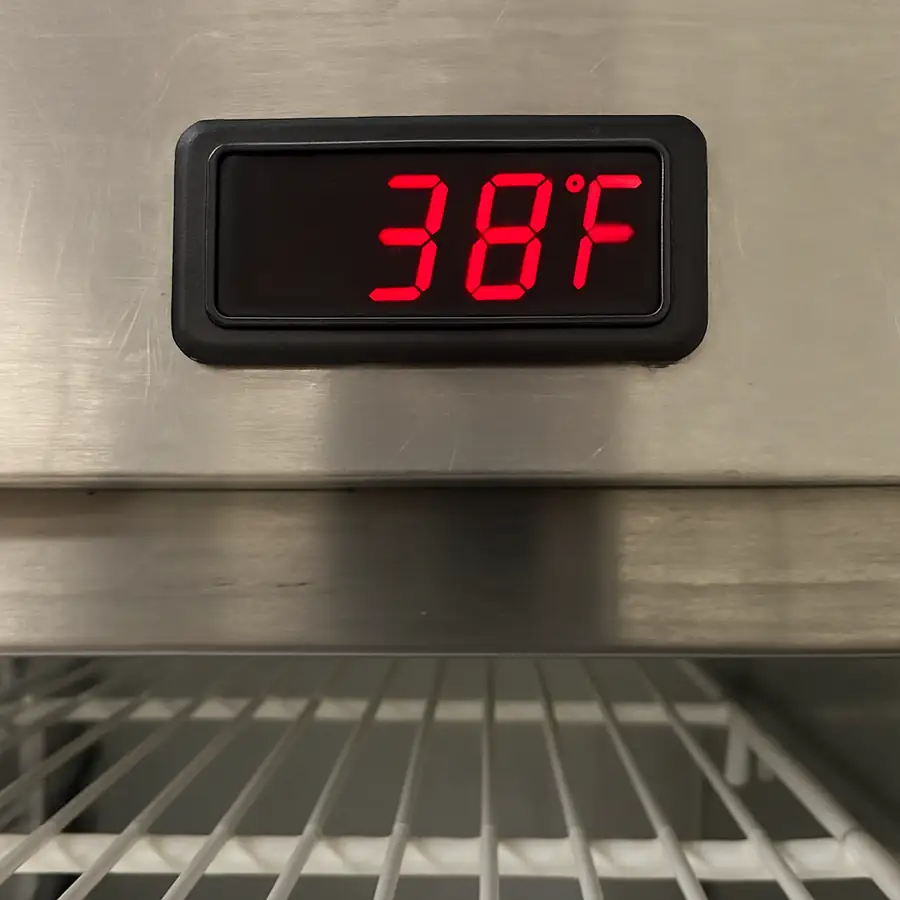
During the lunch rush, your biggest enemy shifts from the weather outside to your constantly opening doors. Every time you grab a backup pan of sliced tomatoes, hot air rushes into the cabinet, making temperature recovery your most critical metric. This refers to how fast the compressor can pull the internal climate back down to a safe level. A true commercial unit is engineered to bounce back rapidly, ensuring temperature stability in high heat while you serve fifty hungry customers.
Proving your proteins stayed out of the danger zone is vital when a health inspector makes a surprise visit. Invest in independent digital data loggers to record your cooling metrics minute-by-minute. This inexpensive tool provides undeniable proof that you are maintaining food safety temperatures during transport and peak service. Armed with the physics of mobile refrigeration, you can confidently finalize your purchase and installation timeline.
Your 48-Hour Purchase Plan: From Measuring to Health Dept Approval
Sourcing the right refrigeration is no longer a guessing game of hoping a home appliance survives a pothole. You are ready to transition from calculating total cubic foot capacity to confidently outfitting your mobile kitchen. Before you buy anything, execute a "Mock Layout" first. Grab a roll of masking tape and outline the exact footprint on your truck floor—including the door-swing radius—to ensure you can actually maneuver around it during a dinner rush.
Approach your purchase timeline with a dedicated inspection preparation mindset. Follow this final checklist to bridge the gap between planning and installation:
- Measure twice: Confirm your tape layout and required ventilation clearance gaps.
- Verify NSF: Check the spec sheet for strict commercial sanitation compliance.
- Check Generator Amps: Ensure your power supply can easily handle the startup surge.
- Verify Weight: Check the unit's shipping weight to ensure your truck's suspension can safely handle the load before checkout.
Ultimately, the correct commercial fridge is an investment in your sleep. You are buying the peace of mind that comes from never waking up to a $5,000 meat loss overnight because an underpowered compressor choked in the summer heat. Put this foundation to work, secure the right equipment for your exact spatial and electrical constraints, and prepare to easily pass your next health inspection.
Equip Your Food Truck with The Horeca Store
Building a successful food truck requires reliable equipment designed for mobile operations. The Horeca Store offers a wide range of commercial refrigeration solutions, including undercounter refrigerators, reach-in units, prep tables, freezers, stainless steel workstations, cooking equipment, storage solutions, and foodservice essentials.
Whether you are launching a coffee truck, pizza trailer, burger truck, dessert van, or custom mobile kitchen, The Horeca Store provides quality commercial equipment designed for durability, efficiency, and space optimization. With competitive pricing, trusted products, and dependable support, we help food entrepreneurs create professional food trucks ready for daily service and long-term growth.