
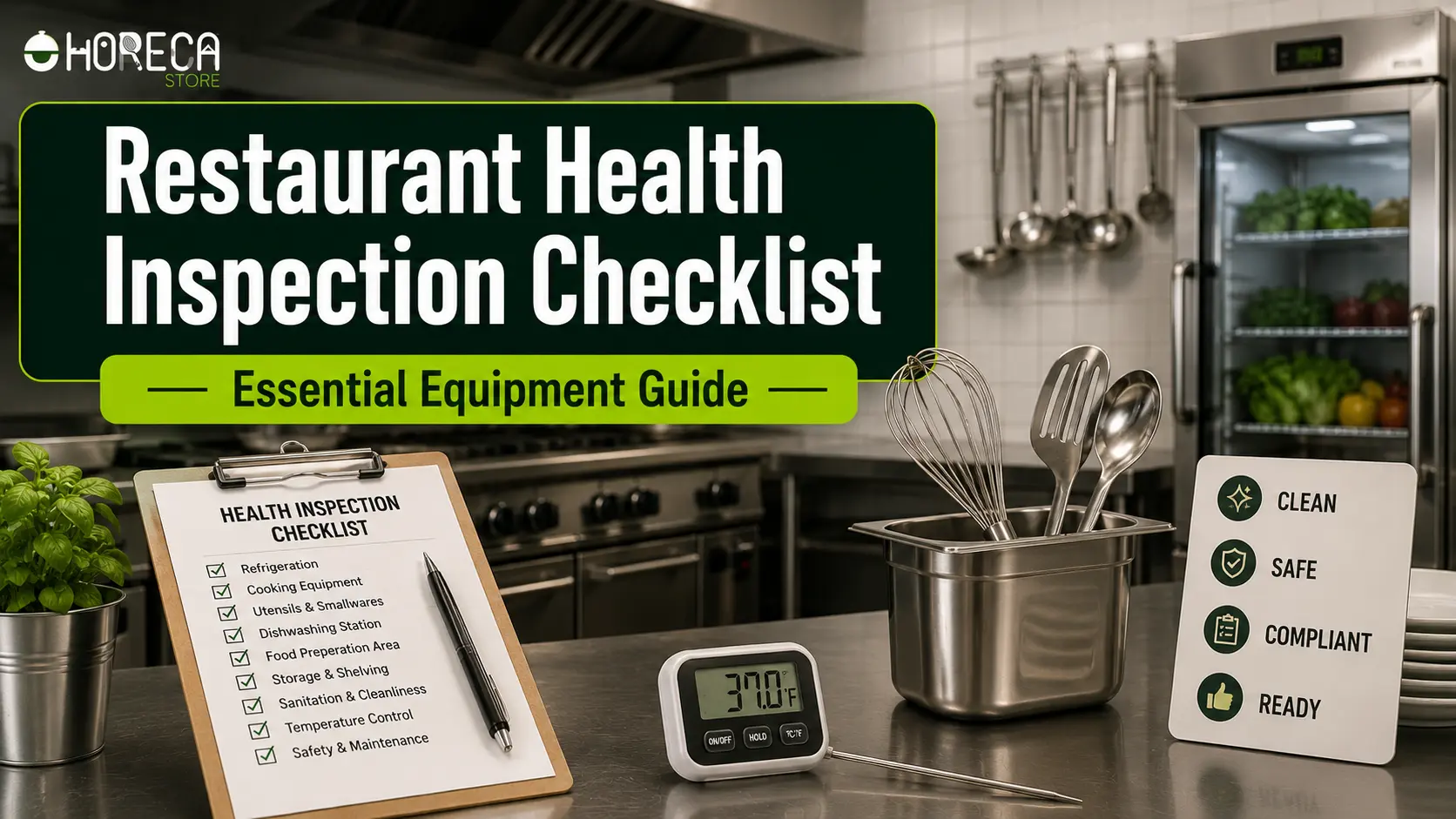
The dreaded moment when a health inspector walks through your doors with a clipboard in hand can send a chill down any restaurateur’s spine. However, inspections don't have to be a source of anxiety. When your kitchen operates at peak standards every single day, an unannounced visit simply becomes an opportunity to show off your hard work.
If you are wondering exactly How to Pass Your Restaurant Health Inspection: Equipment Checklist, you are in the right place. An A-grade comes down to more than just sweeping the floors; it requires well-maintained equipment, strict protocols, and a proactive team.
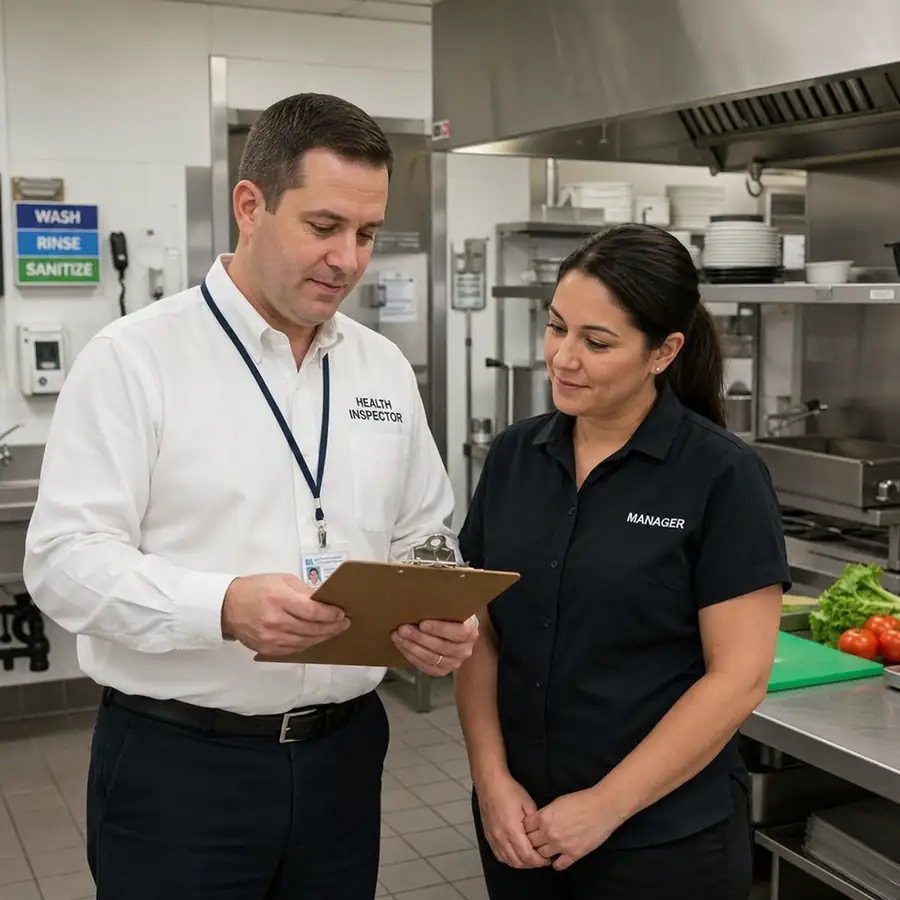
Here is your comprehensive, actionable guide to ensuring your kitchen machinery and prep stations are always inspection-ready.
The Foundation: Proper Standards and Maintenance
Before diving into daily cleaning tasks, you need to ensure your kitchen’s foundation is solid. Inspectors look closely at the type of equipment you use and how well you maintain it.
First, verify that your tools and appliances meet NSF certified kitchen equipment standards. NSF certification guarantees that your equipment is constructed from materials that are non-toxic, non-absorbent, and easily cleanable. If you are using residential-grade appliances, you are practically inviting a citation.
To keep this equipment running safely, implement a HACCP based equipment maintenance schedule. A Hazard Analysis Critical Control Point (HACCP) system isn't just for food handling; applying its principles to your equipment means proactively scheduling deep cleans, part replacements, and professional servicing before a machine breaks down and causes a food safety hazard.
Cold Storage: Keeping the Danger Zone at Bay
Temperature control is arguably the most critical aspect of any health inspection. If your cold storage fails, bacteria multiply, and you risk a catastrophic shutdown.
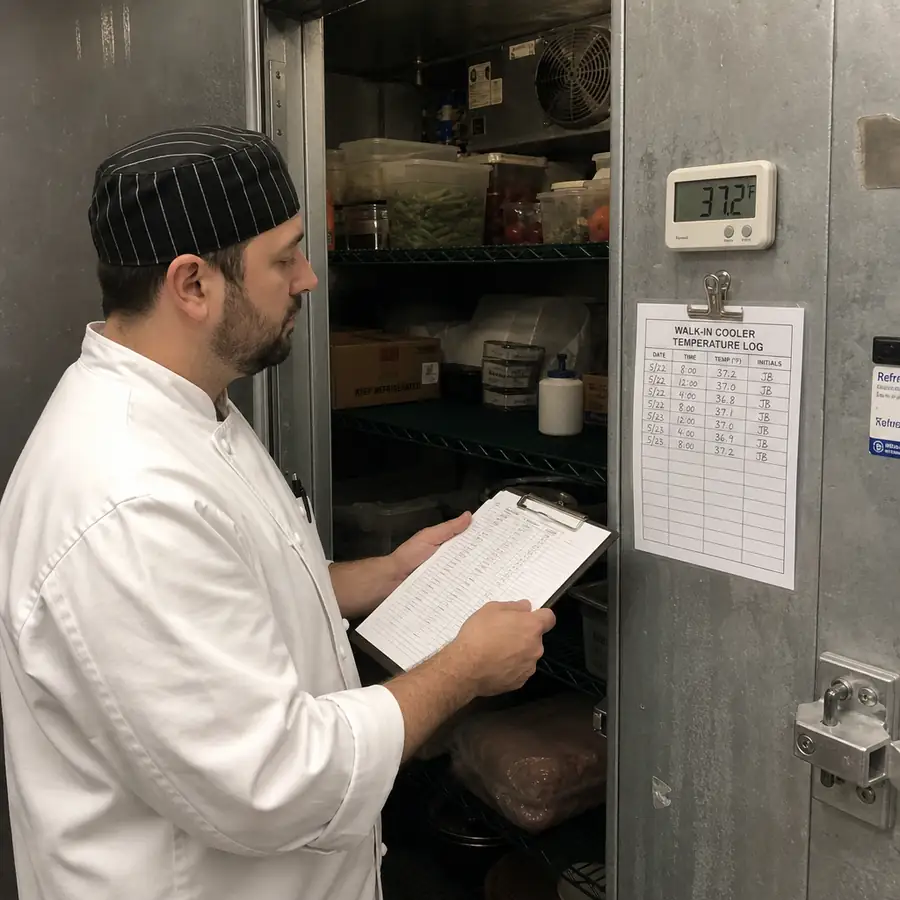
- Log Everything: Inspectors want to see proof of consistency. Adhering to strict commercial refrigerator temperature log requirements—usually meaning checking and recording internal temperatures at least twice a day—proves that your staff is vigilant.
- Airflow is Key: Do not overpack your coolers. Maintaining walk-in cooler airflow and temperature requires keeping boxes off the floor and away from the evaporator fans. Blocked fans lead to warm spots, which lead to spoiled food and major health code violations.
Food Prep: Safety on the Cutting Board
The preparation phase is where raw ingredients transform into culinary masterpieces, but it's also where bacteria can easily spread. Preventing cross-contamination in food prep areas requires diligent equipment management.
Prep Tables and Thermometers
Establish strict stainless steel prep table cleaning protocols. Your team should wash, rinse, and sanitize these surfaces between every single task, especially after handling raw meat.
Furthermore, having accurate tools is non-negotiable. Train your staff on calibrating digital food thermometers for accuracy. An uncalibrated thermometer can easily read 40°F when a piece of chicken is actually sitting at a dangerous 48°F. Use the ice-water bath method daily to ensure your thermometers sit exactly at 32°F.
Sanitization and Warewashing Stations
If your dishes and surfaces aren't truly sanitized, nothing in your kitchen is safe. Inspectors will aggressively test your cleaning solutions and dishwashing setups.
Sanitizer Buckets
Red and green sanitizer buckets are a kitchen staple, but filling them isn't a "guesswork" task. You must test your restaurant sanitizer bucket ppm levels (parts per million) using test strips. If you use chlorine, it generally needs to be between 50-100 ppm; quaternary ammonia (quat) usually sits between 200-400 ppm. Too low, and it doesn't kill bacteria. Too high, and it becomes a toxic chemical hazard.
Dishwashing Protocols
For automated systems, routine commercial dishwasher sanitation cycle testing is mandatory. If you have a high-temp machine, the final rinse must reach 180°F. If it's a chemical sanitizing machine, test the water with your strips.
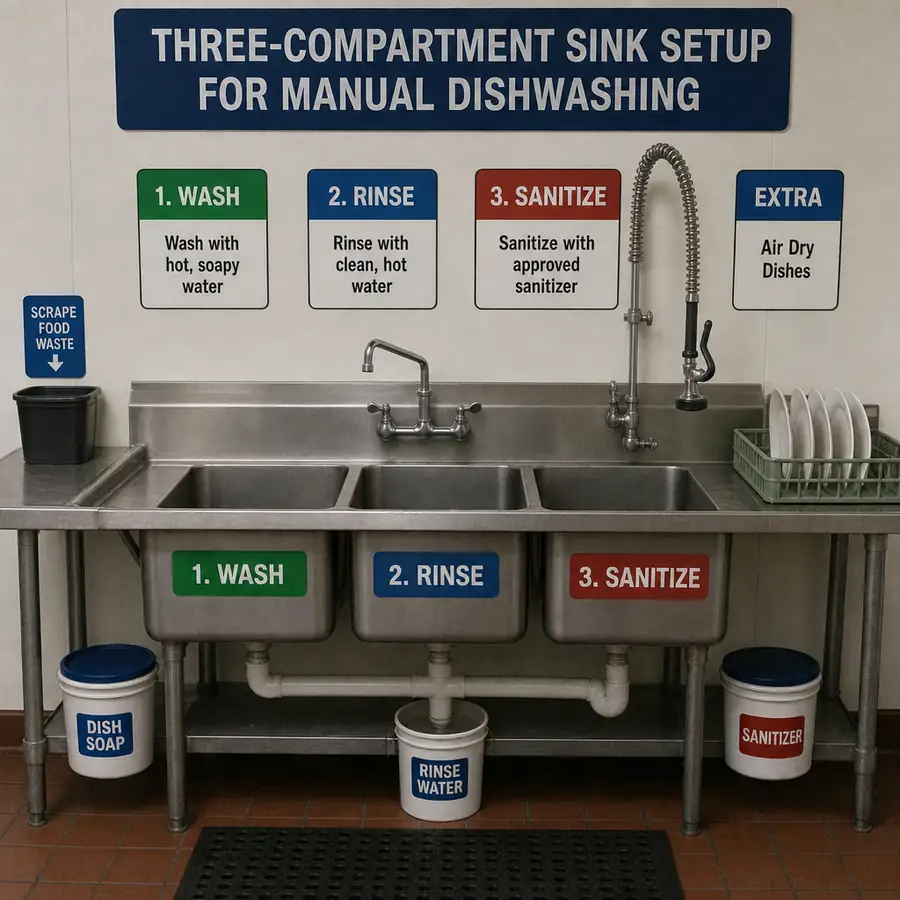
For manual washing, the inspector will check your three-compartment sink setup for manual warewashing. Ensure the bays are clearly labeled and strictly used for:
- Wash: Hot soapy water (at least 110°F).
- Rinse: Clean, hot water.
- Sanitize: Chemical solution at the correct ppm.
Plumbing, Water, and Pest Prevention
Infrastructure matters just as much as the cooking equipment. Water flow, drainage, and pest entry points are prime targets for the inspector's flashlight.
Handwashing Stations
Hand sinks must be dedicated solely to handwashing—no dumping coffee or rinsing towels! Keep up with hands-free handwashing station installation requirements if your local municipality mandates them. Even if not mandated, knee pedals or electronic sensors are highly recommended. Always ensure sinks have hot water (at least 100°F), soap, paper towels, and a trash can nearby.
Plumbing Infrastructure
Work with your maintenance team to run through a commercial kitchen plumbing inspection checklist. Look for missing floor drain covers, ensure air gaps are present at food prep sinks to prevent backflow, and fix any leaky faucets immediately. Standing water is a breeding ground for pests.
Ice Machines and Entrances
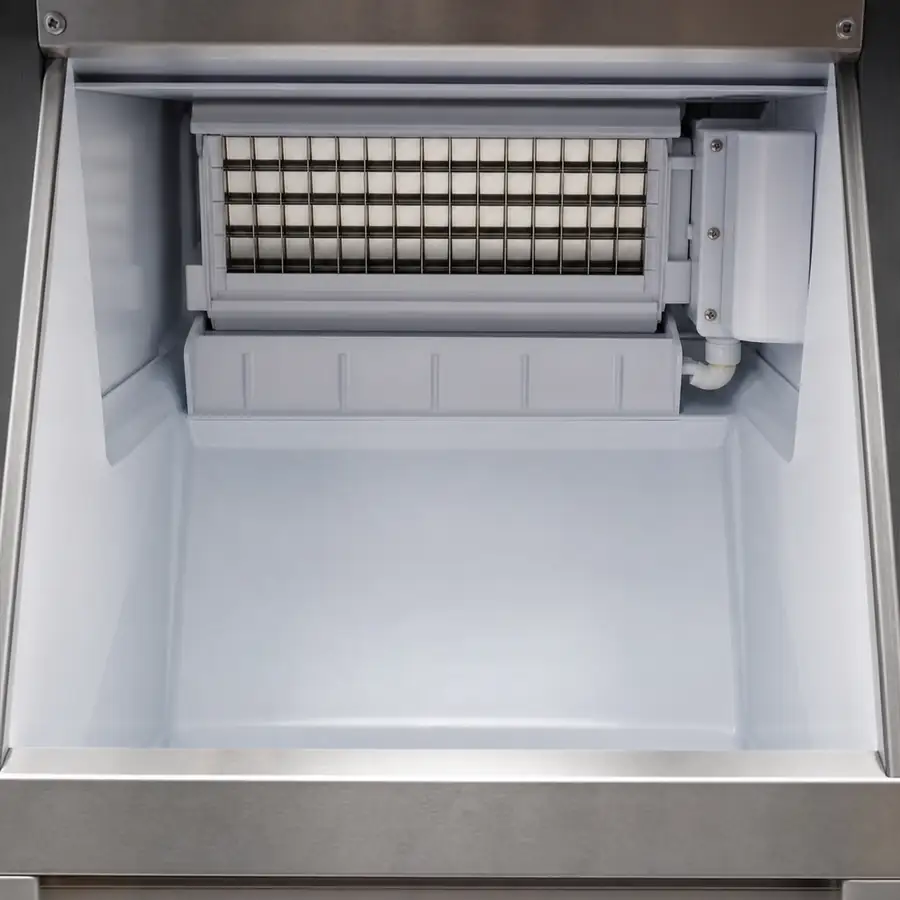
Speaking of pests and bacteria, never forget that ice is considered food. Learning exactly how to clean commercial ice machines for health inspection will save you from one of the most common automatic-fail citations: black mold inside the ice drop chute. Empty the bin, descale the interior, and sanitize all components on a regular schedule.
To keep flying pests away from your spotless kitchen, evaluate your back doors. You may need to decide between an air curtain vs fly fan for kitchen entrances. Both provide a barrier of high-velocity air that prevents flies from entering when delivery doors are propped open, though air curtains generally provide a more uniform, protective downward seal.
Avoiding Common Pitfalls
Even in great kitchens, small details slip through the cracks. Be on the lookout for these common restaurant equipment health code violations:
- Torn gaskets on refrigerator doors (which trap food particles and harbor bacteria).
- Cracked or deeply scored cutting boards (they cannot be properly sanitized).
- Ice scoops stored inside the ice bin with the handle touching the ice.
- Buildup of grease on ventilation hoods and fire suppression lines.
How to Pass Your Restaurant Health Inspection: Equipment Checklist
The Horeca Store Passing a restaurant health inspection starts with maintaining clean, well-functioning equipment that supports food safety and sanitation standards. Essential equipment includes commercial refrigerators and freezers with accurate temperature control, handwashing sinks, three-compartment sinks, dishwashers, food storage containers, thermometers, stainless steel worktables, and proper waste disposal systems. Regular cleaning, preventive maintenance, and routine equipment inspections help reduce food safety risks and keep your kitchen inspection-ready.
Choosing reliable commercial equipment makes it easier to meet health and safety requirements while improving daily operations. The Horeca Store offers a complete range of commercial kitchen equipment, refrigeration solutions, dishwashing equipment, stainless steel furniture, food storage products, and restaurant supplies for professional foodservice businesses. With quality products, competitive pricing, and dependable support, The Horeca Store helps restaurants build safe, efficient, and compliant kitchens.
Conclusion
Passing an inspection shouldn't require a frantic, all-night cleaning session. By integrating these checks into your opening and closing duties, maintaining safety becomes second nature to your staff.
Bookmark this guide on how to pass your restaurant health inspection: equipment checklist, and share it with your back-of-house managers. When your equipment meets standards, your temperatures are logged, and your sanitization is strictly monitored, you won't just pass your next health inspection—you will ace it with complete confidence.