
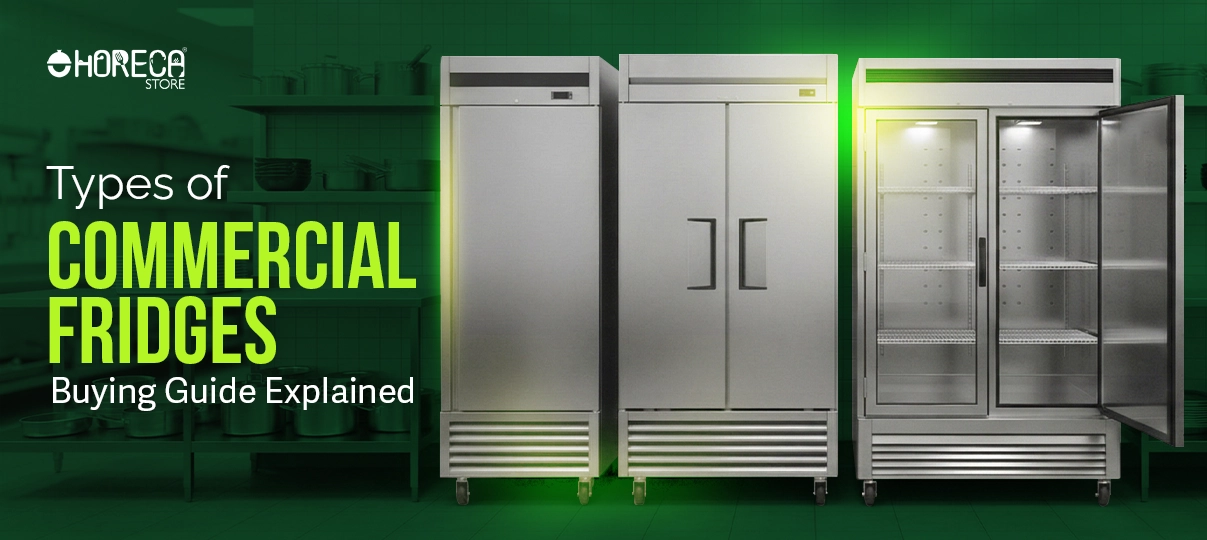
Understanding the nuances involved in selecting the appropriate commercial refrigeration unit for your business is an endeavor necessitating acute comprehension and discernment. The strategic acquisition of a commercial fridge is not merely a purchase but an investment pivotal to operational efficacy and product preservation. This comprehensive guide will elucidate the myriad types of commercial refrigerators and provide an erudite buying guide aimed at equipping decision-makers with the knowledge requisite for informed procurement.

Importance in the Culinary Industry
Commercial refrigeration units are indispensable assets in the culinary industry due to their role in ensuring food safety and quality. They are essential for maintaining the freshness of ingredients, which is critical in preserving the taste and nutritional value of dishes. Restaurants, cafes, and catering services rely heavily on these units to store a wide range of perishable items, from dairy products and meats to fruits and vegetables, keeping them at safe temperatures to prevent spoilage.
Impact on Retail Operations
In the retail sector, commercial refrigerators play a crucial role in managing inventory and reducing waste. Supermarkets, convenience stores, and specialty food shops need reliable refrigeration to display and store chilled products effectively. The visual appeal of well-preserved items can significantly influence purchasing decisions, making refrigeration units integral to sales and customer satisfaction.
Economic Implications
Inadequate refrigeration can lead to significant financial losses, as spoiled products must be discarded, and customer dissatisfaction can result in lost business. Moreover, energy-efficient refrigeration units can provide substantial cost savings over time by reducing utility bills.
Types of Commercial Refrigerators
Reach-In Refrigerators
Reach-in refrigerators are ubiquitous in commercial kitchens, characterized by their vertical orientation and multiple compartments. These units are designed for accessibility and convenience, facilitating the quick retrieval of stored items.
Configuration Options
Reach-in refrigerators typically come equipped with adjustable shelving and are available in single, double, or triple-door configurations. This flexibility allows businesses to tailor their storage solutions to specific needs, accommodating a variety of items and volume requirements.
Benefits in Fast-Paced Environments
In fast-paced environments like bustling kitchens, reach-in refrigerators provide easy access to frequently used ingredients, reducing the time spent searching for items and enhancing workflow efficiency. Their design ensures that staff can quickly grab what they need and return to food preparation, minimizing downtime.
Considerations for Placement
When selecting a reach-in refrigerator, consider the layout of your kitchen or storage area. Proper placement is crucial for maximizing utility and ensuring that the refrigerator does not obstruct workflow or accessibility.
Walk-In Refrigerators
Walk-in refrigerators are expansive storage solutions ideal for establishments requiring substantial refrigeration capacity. These units resemble small rooms and are customarily constructed with insulated panels to maintain optimal temperature conditions.
Customization and Capacity
The primary advantage of walk-ins is their voluminous capacity, accommodating large quantities of inventory. Walk-in refrigerators can be customized to fit specific spatial constraints and operational needs, offering tailored solutions for unique storage challenges.
Temperature Consistency
Maintaining consistent temperature is vital in walk-in refrigerators, fluctuations can compromise the quality and safety of stored goods. Insulated panels and precise temperature controls help ensure a stable environment, preserving the integrity of perishable items.
Applications Across Industries
Beyond the culinary sector, walk-in refrigerators find applications in various industries, including pharmaceuticals and floristry, where controlled environments are necessary for preserving sensitive products.
Under-Counter Refrigerators
Under-counter refrigerators are compact units designed to fit beneath countertops, optimizing space in limited kitchen areas. These refrigerators are ideal for establishments with space constraints, providing a convenient storage solution without compromising on capacity.
Space-Saving Design
The compact design of under-counter refrigerators makes them perfect for small kitchens, bars, and cafes. By utilizing under-counter space, these units free up valuable floor area, allowing for more efficient use of the available space.
Versatility in Use
Under-counter refrigerators are frequently utilized in bars and small eateries for storing beverages, garnishes, and ingredients needed for quick service. Their proximity to preparation areas streamlines operations and enhances service speed.
Considerations for Efficiency
When selecting an under-counter refrigerator, consider the unit's energy efficiency and storage capacity relative to your specific needs. Properly assessing these factors can help ensure that the refrigerator meets operational demands without excessive energy consumption.
Display Refrigerators
Display refrigerators serve a dual purpose of storage and product presentation. Predominantly used in retail environments, these units feature transparent doors, enabling customers to view products while maintaining refrigeration.
Enhancing Product Visibility
The primary advantage of display refrigerators lies in their ability to showcase products effectively. Transparent doors and interior lighting highlight the visual appeal of items, attracting customer attention and encouraging impulse purchases.
Strategic Placement for Impact
Strategic placement of display refrigerators within a retail space can significantly impact sales. Positioning these units near high-traffic areas or checkout lines can maximize exposure and influence purchasing behavior.
Balancing Aesthetics and Functionality
While aesthetics are important, functionality should not be overlooked. Ensure that display refrigerators provide consistent cooling to maintain product quality while presenting them in an appealing manner.
Factors to Consider When Purchasing a Commercial Refrigerator
Energy Efficiency
The energy consumption of commercial refrigerators is a critical consideration, impacting operational costs significantly. Opt for units with high energy efficiency ratings, which not only reduce electricity expenses but also contribute to environmental sustainability.
Long-Term Cost Savings
Investing in energy-efficient appliances can lead to significant long-term savings. By lowering electricity bills, these units help businesses allocate resources more effectively, potentially freeing up funds for other operational needs.
Environmental Responsibility
Choosing energy-efficient refrigerators aligns with eco-friendly business practices, reducing the carbon footprint of your operations. Energy Star-rated appliances are a prudent choice for businesses seeking eco-friendly solutions, contributing to sustainability goals.
Assessing Energy Ratings
When evaluating potential refrigerators, examine the energy ratings and certifications provided by manufacturers. These indicators offer insights into the appliance's efficiency and potential cost savings, aiding in informed decision-making.
Capacity and Size
Determining the appropriate capacity involves evaluating the volume of goods requiring refrigeration and the spatial constraints of the installation area.
Right-Sizing for Efficiency
An oversized unit may result in unnecessary energy expenditures, while an undersized refrigerator could impede operational efficiency. Precise measurements and inventory assessments are essential, ensuring that the chosen unit meets business needs without excess.
Balancing Storage Needs
Consider the types of products you store and the turnover rate when selecting a refrigerator size. Adequate capacity ensures that inventory is stored safely and that staff can access items without overcrowding the unit.
Future-Proofing Your Investment
When purchasing a commercial refrigerator, consider potential future growth. Selecting a unit with a bit of extra capacity can accommodate business expansion without the need for immediate upgrades.
Temperature Range
Different perishable items necessitate distinct temperature settings for optimal preservation. It is imperative to select a refrigerator capable of maintaining the requisite temperature range for the specific goods stored.
Importance of Adjustable Controls
Ensure that the unit offers adjustable temperature controls to accommodate varying storage needs. This flexibility allows businesses to store diverse products, each with specific temperature requirements, without compromising quality.
Monitoring and Consistency
Regular monitoring of temperature settings is crucial for maintaining product integrity. Consistent temperatures help prevent spoilage and ensure compliance with food safety regulations, protecting both consumers and businesses.
Specialized Temperature Needs
Certain industries, such as pharmaceuticals, require precise temperature control for compliance and safety. In such cases, selecting a refrigerator with advanced temperature management features is essential.
Construction and Durability
The construction material of the refrigerator significantly influences its longevity and performance. Stainless steel is a preferred choice for its durability, ease of cleaning, and resistance to corrosion.
Material Selection
Evaluate the build quality, including door seals and hinges, to ensure robustness and reliability. High-quality materials contribute to the unit's durability, reducing the need for frequent repairs or replacements.
Maintenance Considerations
Durable construction materials also simplify maintenance and cleaning, essential for ensuring food safety and compliance with health regulations. Stainless steel surfaces, for example, resist bacterial growth and are easy to sanitize.
Longevity and Investment Protection
Investing in a well-constructed refrigerator protects your investment by extending the unit's lifespan. Durable appliances can withstand the demands of busy commercial environments, delivering reliable performance over time.
Technological Features
Modern commercial refrigerators are often equipped with advanced technological features such as digital temperature controls, self-cleaning capabilities, and remote monitoring systems.
Enhancing Functionality
These features enhance functionality and ease of use, streamlining operations and ensuring compliance with food safety standards. Advanced controls allow precise temperature management, while self-cleaning systems reduce manual labor.
Remote Monitoring and Alerts
Remote monitoring systems provide real-time data on refrigerator performance, allowing businesses to address issues promptly. Alerts can notify staff of temperature fluctuations or maintenance needs, preventing potential spoilage.
Future-Proof Technology
Incorporating the latest technology in refrigeration units can future-proof your investment, keeping your business competitive in a rapidly evolving market. Upgradable software and connectivity options ensure ongoing relevance and adaptability.
Maintenance and Care
Regular maintenance is essential to prolong the lifespan of a commercial refrigerator and ensure optimal performance.
Routine Cleaning and Inspections
Establish a routine maintenance schedule, including the cleaning of condenser coils, checking door seals, and calibrating temperature settings. Regular inspections help identify potential issues early, preventing costly repairs and downtime.
Professional Servicing
Engaging professional services for periodic inspections can preempt potential malfunctions and avert costly repairs. Technicians can offer expert insights and perform thorough checks, ensuring the refrigerator operates at peak efficiency.
Preventive Measures
Implement preventive measures such as keeping vents clear and avoiding overloading the refrigerator. These practices help maintain airflow and temperature consistency, supporting the unit's long-term performance and reliability.
Cost Considerations and Budgeting
The financial investment in a commercial refrigerator should align with the budgetary constraints of the business while fulfilling operational requirements.
Cost-Benefit Analysis
Conduct a cost-benefit analysis to ascertain the long-term savings associated with energy-efficient models and advanced features. Consider factors such as reduced energy bills, maintenance costs, and potential revenue from enhanced product quality.
Financing Options
Explore financing options and warranties to alleviate upfront expenses and safeguard the investment. Leasing arrangements or payment plans can make high-quality refrigeration solutions more accessible to businesses with limited capital.
Prioritizing Quality Over Cost
While budget considerations are important, prioritize quality and features that align with your business needs. Investing in a reliable, efficient refrigerator can provide better returns over time, offsetting initial costs through improved performance and savings.
Conclusion
The acquisition of a commercial refrigerator is a decision that warrants meticulous consideration and strategic planning. By comprehending the various types and key factors influencing purchasing decisions, businesses can make informed choices that enhance operational efficiency and product preservation. This guide serves as a foundational resource, providing the expertise necessary to navigate the complexities of commercial refrigeration procurement. Making an informed choice not only ensures immediate benefits but also contributes to the long-term success and sustainability of your business.