
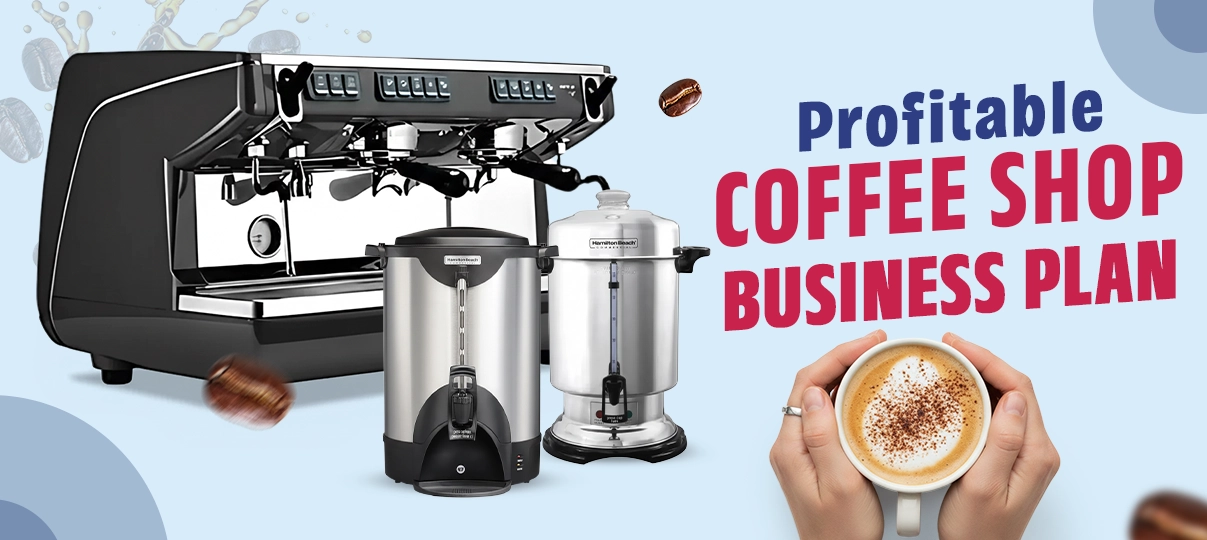
Opening a coffee shop in 2026 is more exciting than ever. Customer habits are shifting, specialty brews are becoming mainstream, and small cafes are turning into community favorites.
However, there may be something that most people do not see behind the successful coffee shops, and that is the clear and well put business plan.
Looking to start a local cafe or a contemporary grab-and-go restaurant, the correct strategy will allow you to make better decisions, eliminate extraneous expenses, and create a brand that people will not forget.
It is a guide that takes you through every step in developing a profitable coffee shop business plan in the trends and opportunities that are set to come in 2026. It is time to begin molding your cafe into a unique business and one that prospers.
TL;DR
|
10 Steps to Create a Profitable Coffee Shop Business Plan in 2026
Begin by familiarizing yourself with the fundamentals that make the coffee shop a success: your idea, market, menu, money and everyday operations.
These 10 steps make it easy to divide it into easy steps that can be put to practice to create a profitable and sustainable cafe by 2026.
Step 1: Define Your Coffee Shop Concept
You must have a clear and focused idea before you transition to the world of finances or operations. This is what your coffee shop will be identified with and will make it easy to get the right customers at the very beginning.
The concept is also a solid one, which builds up your branding, pricing and menu design that makes your whole business plan be more realistic and close to what people in your locality actually want.
- Select a design such as specialty cafe, grab-and-go bar, sit down area or coffee + workspace lounge.
- Research on local customer preferences and locate what is lacking in the immediate cafes.
- Choose your core menu focus: espresso drinks, cold drinks, seasonal drinks or light food.
- Include some signature drinks to create a riveting brand image.
- Do something different: be of high quality, quicker, different theme, or lower price.
Helpful Hint: Check out some of the local coffee shops, and make a list of what they do well and what is lacking. Take those lessons and make something the customers will be actually interested in.
Step 2: Conduct a Detailed Cafe Market Analysis
A good cafe market analysis also avoids expensive errors, such as the inappropriate selection of themes or providing what people do not like.
You should go out and explore your surrounding community, its customer behavior and watch what is coming in the future in 2026 so that you can design a coffee experience that people desire.
- Determine the age, living standard and the amount that people spend in your location.
- Research on traffic and hours of high activity.
- Track 2026 trend includes premium brews, eco-friendly cafes, and work-friendly hybrid spots.
- Competitor analysis of their menu, prices and weaknesses.
- Read the reviews left by customers to know actual expectations.
- Search through loopholes like superior quality, new flavor or more comfortable atmosphere.
Your coffee shop will be guided long term and have a clear idea about what is expected in the market after a well-researched market analysis.
Step 3: Plan Your Menu & Recipe Costing
It is important to plan your menu in order to keep the costs within control and ensure that the quality remains the same.
Select beverage types to suit your idea and incorporate simple food that would complement what you are selling. Standardize all the recipes in order to be able to determine cost per serving and price it with confidence.
- Add a variety of espresso beverages, cold brews and specialty brews.
- Include basic food such as pastries, sandwiches and desserts.
- Standardization of all recipes to uniform taste.
- Divide the total cost by the number of servings in order to charge profitably.
- Invest in quality and fast commercial coffee machines.
A cost-effective menu planning assists you in increasing profit and still providing a uniform customer experience.
Step 4: Choose the Right Equipment & Setup
Selection of equipment is among the most crucial activities when establishing a coffee shop. Consistency, speed and the end consumer experience is directly influenced by the quality of your tools.
Begin by identifying what you need based on your menu and style of service then concentrate on the equipment that favors longevity and functionality.
- Include core items like refrigerators, blenders, and POS systems
- Add key essentials such as commercial espresso machines, espresso grinders, coffee bean grinders, and coffee urns for smooth operations
- Arrange your furniture, tables and decorations as per your idea.
- Find reliable suppliers of equipment and installation advice.
- Check energy efficiency in order to reduce monthly operating costs.
You will find your coffee shop as smooth, faster and more profitable on the first day since it is well equipped.
Insider Tip: Select energy efficient commercial machines to save on utility bills and long term maintenance expenses.
Step 5: Create a Strong Operations & Staffing Plan
Your business will run well day in day out with a proper coffee shop operations plan. It assists you to organize employees, cope with peak hours and ensure regular service. Mistakes are also minimized and customer satisfaction increases with clear processes.
Arrange the way your team will operate at busy and quiet hours. Establish roles, plan training processes and establish systems that can simplify and accelerate day-to-day activities.
- Determine an effective workflow during peak and off peak hours.
- Role and responsibility of staff
- Fast-track training of train baristas on speed, accuracy and customer service.
- Keep track of beans, milk, supplies and wastage by use of an inventory system.
- Follow to a daily operations checklist.
A well written operations plan will help put your coffee shop on its feet, run smoothly and have customers.
Step 6: Build Your Coffee Shop Financial Plan
A well-built financial plan will give you the idea of your expenditures, the sources of income, and time span of your coffee shop to break even. It also keeps your expenditure locked up and you will be ready to go through slow months or other unforeseen costs.
Concentrate on making realistic projections depending on your place of location, customer traffic, and menu prices. This provides you with a definite sense of financial direction prior to launch.
- Make elaborate financial projections of coffee shops.
- Connect your entire start up expenses: rent, interior, licenses, coffee shop equipment and branding.
- Determine monthly operating costs such as utilities, staff and supplies.
- Predict revenue based on the daily visitors, ticket price and the conversion rates.
- Compute your break-even position.
- Create a risk management strategy in the event of low sales or increased cost.
A well-structured financial plan keeps your coffee shop stable and profitable.
Step 7: Location Strategy & Cafe Layout Planning
The location is one of the key factors in the success of your coffee shop. A prime location will make you more visible, will draw constant traffic, and will make your cafe more accessible to the daily clientele.
Arrange your design in such a way that the customers have a comfortable time getting around, making orders and having a comfortable seating experience.
- Make sure that you have parking and neighborhood fit that suit your target customers.
- Layout a smooth plan which has the right flow, sitting, bar and display counters.
- Turn the place into a friendly environment to every customer.
- Make your design functional to assist in quick service and easy flowing.
When there is a properly selected place and a clever layout, customers' experience will be improved, and the sales will increase every day.smart layout leads to better customer experience and higher daily sales.
Step 8: Develop a Winning Coffee Shop Marketing Strategy
Creating a good coffee shop marketing plan can assist you in getting new clients and ensuring that frequent guests will continue to visit frequently. The use of both online and offline marketing is the most effective particularly in local companies.
Pay attention to establishing the presence in your neighborhood and developing a brand image that can be remembered.
- Online marketing should be used to reach local customers.
- Optimize and create your Google Business Profile.
- Increase local search engine optimization in order to be found in a search such as coffee near me.
- Post Instagram, make reels, and cooperate with local influencers.
- Conduct offline marketing using flyers, local events and collaborations.
- Include loyalty programs and subscriptions in order to make repeat visits.
The marketing strategy will create awareness, bring about traffic and increase customer loyalty in the long run.
Step 9: Legal Requirements & Licensing
It is important to satisfy all legal stages and licensing prior to opening your coffee shop. These steps will need to be completed in advance to avoid wastage of time, penalties and to be able to run smoothly. Make sure that you have all the paperwork and approvals ready in advance, so that your set up remains stressed.
- Form your company in the right legal structure.
- Obtain all necessary local approvals and health/safety licenses.
- Make sure that your equipment and building are fire safe.
- Full state and federal tax registrations.
- Establish relationships with suppliers of effective equipment and products.
Helpful Note: Keep all permits, certificates, and renewal dates in one digital folder to avoid missing deadlines or facing compliance issues.
A proper legal setup gives your coffee shop a solid foundation and keeps your operations running without interruptions.
Step 10: Long-Term Growth & Expansion Strategy
Long-term growth will make your coffee shop remain competitive and profitable as long as the tastes of your customers change. An expansion plan clearly also makes you ready for new challenges even after the initial location.
- Launch new products such as brewing classes, packaged coffee, or branded products.
- Consider the possibility of opening up to other destinations.
- Think of coming up with a franchise model in case your concept is doing well.
A long-term business plan makes your coffee shop grow and be successful in the long term.
Turn Your Coffee Shop Idea Into a Profitable Reality
A clear coffee shop business plan brings together every part of your coffee shop from concept and market research to operations, menu planning, financial forecasting, and long-term growth. When each section is well thought out, your chances of running a stable and profitable business increase significantly.
For a smooth setup, begin by selecting high-quality equipment. Discover reliable commercial coffee machines and essential cafe supplies to establish a profitable coffee shop from the outset.
For equipment guidance, setup support, or product recommendations, contact us anytime. We’re here to help you get started.
Build Your Coffee Shop with Quality Equipment from The Horeca Store
A profitable coffee shop business plan should include not only your concept, menu, and financial projections but also a strategy for investing in reliable commercial equipment. The Horeca Store helps entrepreneurs turn their business plans into reality by offering a complete range of café and coffee shop supplies. From espresso machines, coffee grinders, brewing equipment, refrigerators, display counters, and commercial kitchen appliances to furniture, tableware, takeaway packaging, and cleaning essentials, you'll find everything needed to launch and grow a successful coffee shop.
Whether you're opening an independent café, a specialty coffee bar, or a multi-location coffee chain, The Horeca Store provides durable, commercial-grade equipment at competitive prices. Our extensive product selection, dependable service, and hospitality expertise make it easy to source all your café essentials from a single supplier. By choosing quality equipment from the start, you can improve operational efficiency, enhance customer satisfaction, and build a strong foundation for long-term business success.