
Restaurant kitchen utensils need a complete cleaning and sanitizing process: remove food debris, wash, rinse, sanitize, and air-dry. Each stage has a different job, and skipping one can leave utensils unsuitable for food preparation. This article explains how to organize that process, verify sanitizing conditions, and protect clean tools until their next use.
What is the right way to clean and sanitize kitchen utensils?
The right method is to remove food residue with detergent and mechanical cleaning, rinse away loosened debris and detergent, then apply an approved sanitizing treatment before air-drying. Cleaning removes soil; sanitizing reduces microorganisms on an already-clean surface. Neither step replaces the other, so a quick dip in sanitizer is not a substitute for washing.
A spoon can look clean without having received an effective sanitizing treatment. Equally, sanitizer cannot compensate for grease or dried food left behind. Think of cleaning as preparing the surface and sanitizing as the controlled treatment that follows.
In the United States, the FDA Food Code provides a model for food-service requirements, but jurisdictions adopt and administer their own rules. Confirm your procedure with the local regulatory authority, alongside sanitizer labels and equipment instructions. Treat this article as an operational starting point, not a replacement for those requirements.
Set up a station that separates dirty and clean utensils
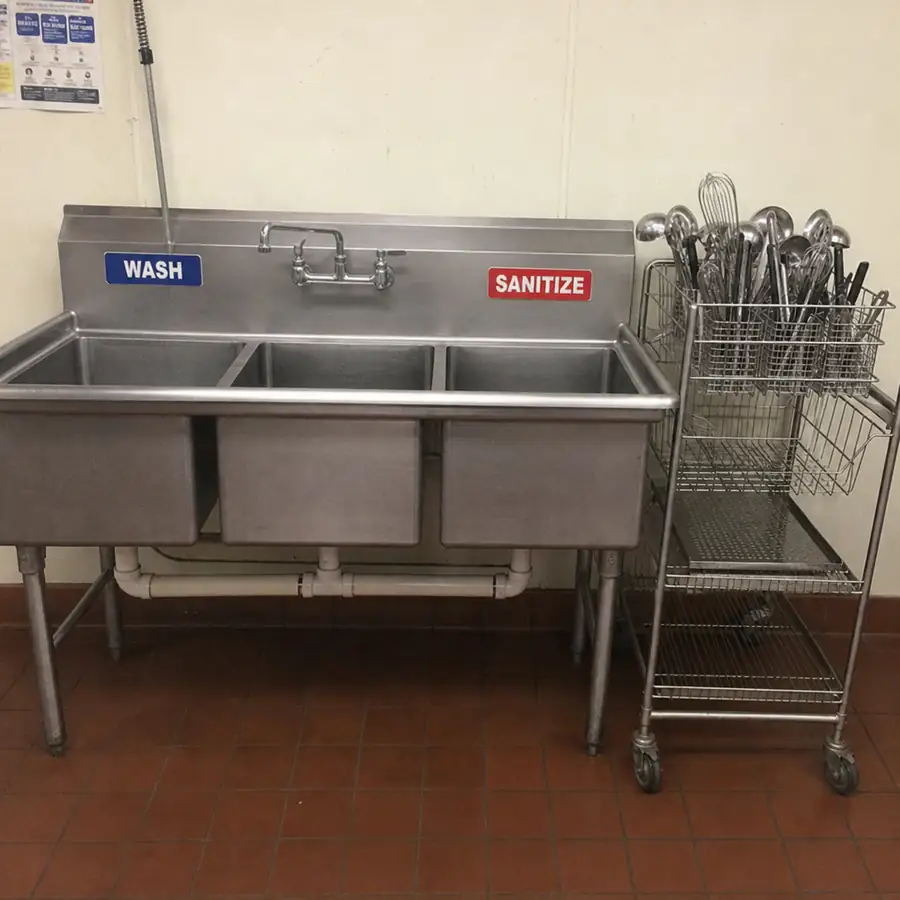
Use an approved three-compartment sink for manual warewashing, or an approved commercial warewashing machine. Manual sink compartments must accommodate the utensils being washed; equipment that cannot fit needs an approved alternative cleaning procedure. Do not improvise an oversized-item method without checking its suitability.
Arrange the work area so utensils move in one direction, from receiving dirty items to drying clean ones. Before service, assemble:
- Suitable detergent and cleaning tools: Choose brushes and other tools appropriate for the utensil and soil involved.
- An approved food-contact sanitizer: Keep its preparation and use instructions accessible.
- The correct measuring equipment: Provide a compatible sanitizer test kit and thermometers or temperature indicators where needed.
- A protected drying area: Reserve enough rack or drainboard space for utensils to drain without touching dirty items.
As a practical planning step, assign separate landing areas for incoming and finished utensils. Label them clearly enough that a new employee can follow the intended route without guessing.
How do you sanitize utensils in a three-compartment sink?
To sanitize kitchen utensils manually, first scrape, wash, and rinse them, then fully immerse them in an approved sanitizing solution for the required contact time. Use the concentration and operating conditions specified by the product label and applicable food code. Finish by allowing utensils to air-dry in a protected area.
Remove debris and wash thoroughly
Scrape food into the appropriate waste container before washing. Presoak utensils when necessary to loosen stubborn residue rather than expecting sanitizer to remove it. Pay particular attention to fork tines, whisk wires, tong hinges, and the junction between handles and utensil heads.
Wash in the first compartment using detergent and the required water temperature. Scrub all accessible surfaces, not just the visibly dirty section. Under the FDA Food Code model, manual wash solution is generally maintained at least at 110°F, unless the cleaning agent's label specifies another temperature.
Inspect the item before moving it forward. If food remains around a joint or inside a groove, continue cleaning; the next compartment is not a remedy for incomplete washing.
Rinse before sanitizing
Rinse washed utensils in clean water in the second compartment. This removes loosened food and cleaning chemicals before the sanitizing step. Follow the rinse procedure applicable to your approved setup rather than moving soapy utensils straight into sanitizer.
Keep wash and rinse water clean enough to do their jobs, replacing solutions when soiled. Include this task in the station assignment so employees know who should stop and reset the sink.
Immerse, time, and air-dry
Place rinsed utensils in the third compartment so the sanitizing solution contacts every surface. Avoid tight bundles that prevent full exposure. Start timing only when the required surfaces are immersed, and maintain the specified contact time rather than estimating a quick dip.
Move sanitized utensils onto a clean, self-draining rack. Do not towel-dry them; allow air-drying before storage. After approved no-rinse sanitizing, do not add a rinse that your procedure does not authorize.
Control sanitizer strength instead of guessing
Chemical sanitizing depends on more than choosing a familiar product. Concentration, contact time, temperature, and sometimes water characteristics must match the sanitizer's instructions and applicable requirements. Use an EPA-registered product labeled for the intended food-contact use, and read the sanitizing directions rather than assuming its disinfecting directions are interchangeable.
Common food-service sanitizers include chlorine, quaternary ammonium compounds, and iodine. There is no single dilution that works for every product. Too little sanitizer may be ineffective; excessive concentrations can leave unsafe residues. Verify the solution with the appropriate test kit rather than judging its smell or appearance.
For the station's written instructions, record the product name, required concentration range, contact time, temperature conditions, and matching test kit. Include a space for the employee to record a failed check and the correction made. This turns an instruction such as "check sanitizer" into a task someone can demonstrate.
Follow label requirements for protective equipment and safe handling. Never mix cleaning chemicals or add bleach to other cleaners: dangerous vapors can result. Keep working containers correctly labeled and chemicals away from food and clean utensils.
Verify commercial dishwashing performance
A commercial dishwasher must be operated according to its data plate and manufacturer's instructions. Load utensils so spray can reach their surfaces and water can drain. Overlapping or nested items can obstruct exposure, so inspect the rack arrangement before starting the cycle.
For high-temperature machines, verify sanitizing performance using the appropriate utensil-surface temperature indicator; the FDA Food Code model specifies a utensil surface temperature of 160°F. Do not mistake a machine's displayed water temperature for direct proof that every utensil reached the required surface temperature. Chemical-sanitizing machines require appropriate concentration checks instead.
If a check fails, notify the person in charge and stop treating that machine as an effective sanitizing method until the problem is corrected. Use an approved alternative if available, and reprocess affected utensils as directed. Failed sanitizing performance calls for corrective action, not simply another unchecked cycle.
For shift handovers, make the machine's status explicit: ready for use, awaiting correction, or operating under an approved alternative arrangement. Assign one person to confirm that any unresolved problem reaches the next shift lead.
Give complex utensils and removable parts extra attention
Cleaning kitchen equipment often requires more than washing its visible exterior. Disassemble removable food-contact components according to the manufacturer's instructions so detergent, rinse water, and sanitizer can reach the necessary surfaces. Follow an approved procedure for fixed equipment and parts that cannot be immersed.
Can openers, slicer components, and other intricate tools deserve close inspection before reuse. A flashlight can help reveal residue in equipment that is difficult to inspect. Remove damaged utensils from service when cracks, chips, or worn surfaces prevent effective cleaning.
Allergen control also needs the complete process, not just a sanitizer wipe. FDA research found that full wash-rinse-sanitize-air-dry cleaning was effective at removing the tested allergens and minimizing transfer. For allergy orders, follow your restaurant's allergen procedures and thoroughly clean and sanitize equipment and utensils before preparation when a separate area is unavailable.
A useful equipment-specific instruction card can show the parts to remove, the surfaces to inspect, and the approved reassembly sequence. Ask staff to demonstrate the task with the actual tool rather than relying only on a signed training sheet.
When should restaurant utensils be cleaned and sanitized?
Clean and sanitize utensils when contamination occurs, when changing from raw foods to ready-to-eat foods, and at the intervals required for their use. Under the FDA Food Code model, utensils contacting foods that require time and temperature control for safety generally need cleaning at least every four hours, with specified exceptions. Four hours is not permission to keep using a contaminated tool.
Build these triggers into daily kitchen hygiene practices:
- Task changes: Replace or reprocess utensils when moving between incompatible food-preparation tasks.
- Contamination incidents: Remove a dropped or otherwise contaminated utensil immediately.
- Scheduled intervals: Use timers or logs for equipment and utensils subject to time-based cleaning requirements.
- Allergy orders: Follow the established cleaning and preparation procedure before handling the order.
As an operational choice, keep a clearly identified supply of replacement utensils near busy stations. Give employees a defined place to put used tools so returning one for cleaning does not depend on finding a supervisor first.
Protect utensils after sanitizing
Restaurant kitchen hygiene includes storage and handling after washing. Store clean utensils in a dry, protected location away from splash, dust, chemicals, and dirty equipment. Use racks or containers that allow drainage, and cover or invert suitable items once stored.
Handle clean knives, forks, and spoons by their handles rather than food-contact surfaces. Employees should wash their hands before handling clean utensils. Do not return a freshly sanitized tool to a dirty drawer or mix it with used utensils.
Between-use storage needs its own approved procedure. A bucket of sanitizer is not a storage system for working utensils, and standing room-temperature water is not an acceptable substitute. Select a method permitted for the utensil and food involved.
Make the routine easy to check during service
The most useful restaurant cleaning tips turn broad expectations into visible responsibilities. Managers should establish clear cleaning procedures and train employees to carry them out correctly. Checking actual performance matters as much as explaining the steps.
Adapt this shift checklist to your approved procedures:
- Before opening: Assign station ownership and confirm that instructions, chemicals, test supplies, and drying space are available.
- During service: Record required checks and note any corrective action, not just a tick indicating completion.
- At handover: Identify tools awaiting cleaning, unresolved machine problems, and supplies needing replacement.
- At closing: Review recurring issues and assign follow-up before the next service.
Keep records simple enough to use at the station. Ask employees to demonstrate a sanitizer test and explain what they would do if it failed. Use missed steps as specific retraining opportunities rather than issuing another general reminder to "clean better."
Keep the complete process consistent
Learning how to clean and sanitize restaurant kitchen utensils means managing the entire route from dirty collection to protected storage. Preserve the wash-rinse-sanitize-air-dry sequence, verify the treatment, and prevent recontamination afterward. Make those checks part of each shift's assigned work, not a task postponed until closing.