
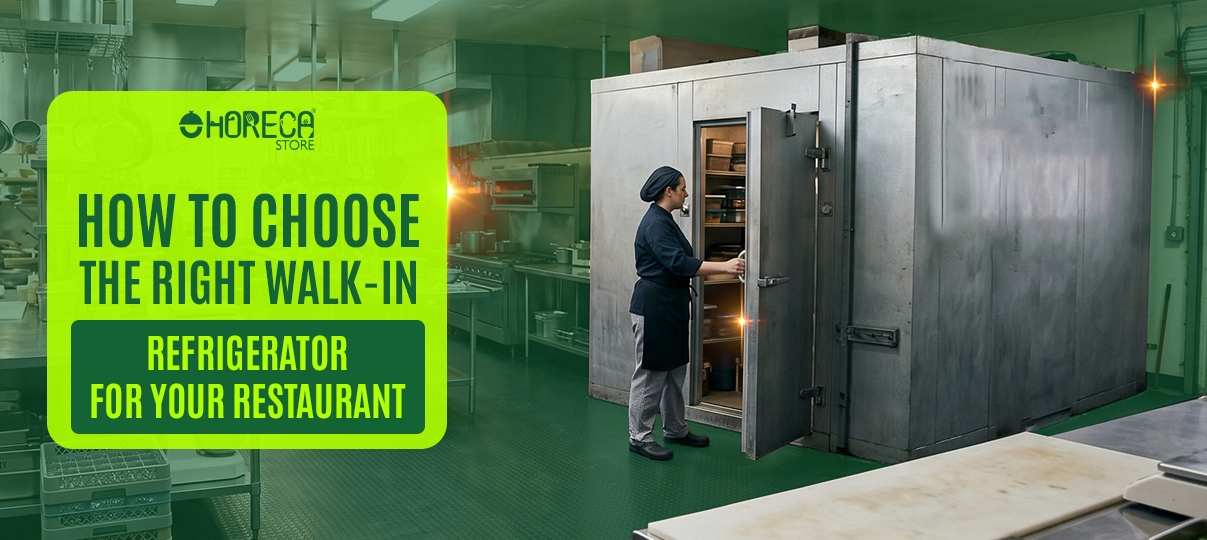
Proper cold storage is the backbone of any successful commercial kitchen. Without a reliable way to keep perishable ingredients at safe temperatures, a restaurant simply cannot function. Upgrading or installing a new walk-in refrigerator represents a major financial commitment. Buying the wrong unit can lead to spoiled food, skyrocketing utility bills, and failed health inspections.
Selecting the perfect unit requires careful planning and a solid understanding of how commercial refrigeration works. You have to evaluate your physical space, the volume of food you process, and your long-term business goals. A small cafe will have vastly different cold storage needs than a high-volume steakhouse.
This comprehensive guide will help you navigate the complex world of commercial refrigeration. We will break down the essential components of walk-in coolers, compare different cooling systems, and explain how to calculate your storage requirements. By the end of this post, you will have the knowledge you need to make a smart, cost-effective equipment purchase for your business.
Understanding Your Restaurant's Needs

Before you start comparing technical specifications, you need to look closely at your daily operations. A walk-in refrigerator must support your menu and your kitchen's workflow.
Type of Cuisine and Ingredients
Different ingredients demand different storage environments. A seafood restaurant needs precise, consistent temperature control to keep delicate fish fresh. A bakery might require bulk storage space for massive containers of butter and milk. Take a close look at your menu and identify your most voluminous perishable items. Produce, raw meats, and dairy all have specific temperature and humidity requirements. Your walk-in must have the capacity to keep these distinct food categories organized and safely separated to prevent cross-contamination.
Storage Capacity Requirements
Figuring out the right size for your walk-in cooler is a critical step. A unit that is too small will leave your staff struggling to organize deliveries. A unit that is too large will waste energy and drive up your monthly utility bills. A helpful industry rule of thumb states that one cubic foot of walk-in space can hold about 28 pounds of food. Calculate the maximum weight of the inventory you plan to store at any given time. Divide that number by 28 to find your minimum required cubic footage. You should also factor in future growth. Buying a slightly larger unit now can prevent you from needing a costly replacement if your business expands.
Available Space
You are ultimately limited by the physical footprint of your building. Measure your available space carefully before ordering equipment. Walk-in refrigerators require adequate ventilation space on all sides to function properly. Most manufacturers recommend leaving at least one inch of clearance around the exterior walls and two inches between the top of the box and the ceiling. You must also consider the delivery path. Make sure the individual panels will fit through your building's doors and hallways during the installation process.
Budget Considerations
A walk-in refrigerator involves both an initial purchase price and ongoing operating costs. While a cheaper, poorly insulated box might save you money upfront, it will force the compressor to work constantly. This drives up your monthly electricity bills and shortens the lifespan of the equipment. Investing in high-quality panels, an efficient motor, and durable door seals will save you a substantial amount of money over the life of the unit.
Key Components of a Walk-in Refrigerator
A prefabricated walk-in refrigerator is essentially a massive insulated box attached to a powerful cooling system. Understanding how the individual parts work together will help you evaluate different models.
Panels and Insulation
The walls, ceiling, and floor of your walk-in are made from insulated panels. These panels consist of a layer of foam insulation sandwiched between two sheets of metal. Aluminum is a popular, affordable choice that resists corrosion well. Stainless steel panels cost more but offer maximum durability for high-traffic kitchens.
The insulation inside the panels determines how well the box retains cold air. Extruded polystyrene and polyurethane are the two most common options. Extruded polystyrene resists moisture heavily and maintains its insulating strength over many years. Polyurethane is also effective, but it tends to lose some of its thermal resistance over time.
Refrigeration Systems
The refrigeration system is the heart of your walk-in. You have two main options to choose from, and each has distinct advantages.
Self-contained units: These systems package the condenser and evaporator together in one single unit. They are generally pre-charged with refrigerant and offer a simple installation process. Because all the components sit together, they are very easy to service. This can make the cooking area uncomfortably warm and force your building's air conditioning system to work harder.
Remote systems: A remote system places the condenser outside the building, usually on the roof. The evaporator stays inside the walk-in, and the two components connect via refrigerant lines. This setup removes noisy fans and excess heat from your kitchen environment. Remote systems are often more energy-efficient, especially in cooler climates. The main drawback is a more complex, expensive installation process that requires running lines through building.
Doors
The door takes more abuse than any other part of the walk-in. Kitchen staff constantly open and close it during busy shifts. You should look for heavy-duty hinges and a self-closing mechanism. A self-closing door prevents staff from accidentally leaving the cooler open, which can quickly lead to spoiled food and a burnt-out compressor. High-quality rubber gaskets are also crucial to maintain a tight thermal seal.
Shelving and Interior Layout
Your walk-in needs durable shelving to keep food organized and sanitary. FDA health codes require all food to be stored at least six inches off the floor. Epoxy-coated wire shelving is an excellent choice for damp environments because it resists rust and allows cold air to circulate freely around the food containers.
Flooring
You can purchase a walk-in with or without an insulated floor. If you install your walk-in over a concrete slab resting directly on the earth, you might not need an integrated floor for a standard cooler. However, freezers always require insulated floors to prevent the ground underneath from freezing and buckling. If your walk-in sits above a basement or a warm room, you absolutely need an insulated floor to keep heat from seeping into the box.
Types of Walk-in Refrigerators
The commercial refrigeration market offers several distinct categories of walk-in units to accommodate different business models.
Coolers vs. Freezers
Walk-in coolers are designed to hold fresh food at safe refrigeration temperatures, generally below 41 degrees Fahrenheit. Walk-in freezers operate at roughly 0 degrees Fahrenheit to keep inventory frozen solid.
Indoor vs. Outdoor Walk-ins
If you lack interior space, you can install a walk-in outdoors. Outdoor walk-ins free up valuable kitchen real estate, but they require specialized construction. They must have a heavy-duty, rainproof roof to keep water out of the panels. In cold climates, an outdoor unit also needs a winterizing kit. This kit includes a heater for the compressor oil to ensure the system functions properly when ambient temperatures drop below freezing.
Custom-Built vs. Modular Units
Prefabricated modular units arrive in pre-cut panels that latch together. They are highly popular because they assemble quickly and can be easily expanded later by adding more panels. Custom-built walk-ins feature structural tiles built directly into the walls of the building. Custom units maximize odd-shaped spaces flawlessly, but they are permanent fixtures that cannot be moved if you relocate your restaurant.
Energy Efficiency and Operating Costs
Commercial refrigeration accounts for a massive portion of a restaurant's total energy consumption. Focusing on efficiency protects your profit margins.
Factors Affecting Energy Consumption
Poor insulation, damaged door seals, and blocked airflow all force a compressor to run longer than necessary. Every time a staff member opens the door, warm air rushes in, and the system has to consume energy to drop the temperature back down.
Tips for Reducing Energy Bills
You can implement several simple upgrades to cut your power usage. Installing thick, plastic strip curtains behind the main door keeps cold air trapped inside when staff carry boxes in and out. Switching to LED interior lighting also makes a noticeable difference. LEDs use far less electricity than traditional incandescent bulbs and emit very little heat, which reduces the overall cooling load.
Understanding SEER and EER Ratings
When shopping for cooling equipment, you will likely encounter energy ratings. EER (Energy Efficiency Ratio) measures a cooling system's efficiency at a single, specific operating temperature. SEER (Seasonal Energy Efficiency Ratio) measures the average efficiency over an entire season of varying outside temperatures. Higher ratings indicate better energy efficiency and lower utility bills.
Installation and Maintenance Best Practices
Even the most expensive equipment will fail prematurely if it is installed poorly or neglected.
Site Preparation and Professional Installation
Always hire a licensed, qualified refrigeration technician to install your walk-in. They will ensure the panels are sealed perfectly and the refrigerant lines hold the correct pressure. Proper site preparation is equally important. The floor must be completely level so the panels align tightly and the door closes flush against the frame.
Regular Cleaning and Sanitation
Mildew and bacteria thrive in damp, enclosed environments. You must establish a strict cleaning schedule to uphold food safety standards. Wash the interior walls and floors regularly with an approved food-safe cleaner or a mild bleach solution. Never use highly corrosive chemicals or high-pressure sprayers, as these can permanently damage the metal panels.
Preventative Maintenance
Preventative maintenance stops small issues from becoming catastrophic failures. Inspect the rubber door gaskets weekly and replace them immediately if they crack or harden. The condenser coils also require frequent attention. Dust and grease routinely clog these coils, restricting airflow and causing the compressor to overheat. Brush and vacuum the coils monthly to keep the system breathing easily.
Regulatory Compliance and Food Safety
Commercial kitchens operate under strict legal guidelines designed to protect public health. Your refrigeration equipment plays a central role in meeting these standards.
Health Code Requirements
The FDA food code mandates that all refrigerated food must be held below 41 degrees Fahrenheit to prevent the rapid growth of dangerous bacteria. Health inspectors check your walk-in temperatures meticulously. If your equipment cannot hold this temperature reliably during a busy service, you risk massive fines or a forced closure.
Temperature Monitoring and HACCP
Hazard Analysis Critical Control Points (HACCP) is a systematic approach to food safety. Under a HACCP plan, cold storage is a critical control point. You must monitor and record your walk-in temperatures continuously. While manual logbooks work, modern digital thermometers and data loggers automate this process, sending alerts to your phone if the temperature ever spikes dangerously.
Why Choose HorecaStore for Your Walk-in Refrigerator Needs
Equipping your kitchen is a major undertaking, and choosing the right supplier is just as important as choosing the right machine. HorecaStore provides everything you need to build a highly profitable commercial kitchen.
We stock over 100,000 items from the most respected brands in the foodservice industry, including True Refrigeration, Vulcan, and Hoshizaki. Our extensive catalog ensures you can find the perfect walk-in cooler or freezer to match your exact footprint and volume requirements. We focus entirely on commercial-grade quality, providing equipment built to withstand the punishing environment of a professional kitchen.
Shopping with HorecaStore protects your budget. We consistently beat competitor pricing by 8 to 15 percent, offering exceptional value without middle-man markups. We also ship free next-day nationwide, ensuring your crucial equipment arrives exactly when you need it. If you are launching a new concept or upgrading an existing space, we offer flexible financing options to help manage your upfront capital.
Equip Your Kitchen for Success
Selecting a walk-in refrigerator requires balancing your storage capacity needs against your available space and budget. By paying close attention to panel insulation, refrigeration system types, and energy efficiency features, you can secure a reliable unit that keeps your ingredients fresh and your operating costs low. Regular maintenance and strict temperature monitoring will ensure your investment serves your business for years to come.
Ready to upgrade your restaurant's cold storage? Explore our massive inventory of top-tier commercial refrigeration and Request a Free Quote from the experts at HorecaStore today.
Buy Walk-In Refrigerators from The Horeca Store
Choosing the right walk-in refrigerator is crucial for maintaining food safety, maximizing storage capacity, and improving the efficiency of your commercial kitchen. The Horeca Store offers a wide selection of commercial walk-in refrigerators designed for restaurants, hotels, cafés, catering businesses, bakeries, and other foodservice operations. Built for reliable temperature control and long-lasting performance, our walk-in refrigeration solutions help keep ingredients fresh while supporting smooth day-to-day operations.
At The Horeca Store, you'll find walk-in refrigerators in a variety of sizes and configurations to suit kitchens of all types and capacities. We offer products from trusted commercial refrigeration brands known for energy efficiency, durability, and dependable performance. With competitive pricing, expert product guidance, and excellent customer support, The Horeca Store is your trusted destination for investing in a walk-in refrigerator that meets your business's refrigeration and storage needs.