

Walking into a shop and seeing a shimmering, perfectly lit row of fresh pastries is rarely a coincidence—it is a calculated business move. Your equipment acts as your most reliable salesperson, working every minute your doors are open to capture customer attention. Consider a local bakery owner who watches afternoon sales plummet simply because an outdated unit casts harsh shadows, making morning-fresh croissants look dull and unappetizing. Finding the best refrigerated display case means recognizing that this machine is actually a critical retail tool designed to bridge the gap between back-of-house quality and front-of-house temptation.
To maximize your investment, distinguishing between a basic storage cooler and a true merchandising unit is essential. While a standard commercial fridge simply keeps inventory cold behind closed metal doors, a specialized display case actively drives your retail ROI by putting items front and center. According to consumer shopping studies, clear visibility directly correlates with much higher impulse purchase rates, seamlessly turning a passing glance into an extra item at checkout. Exceptional food presentation requires targeted lighting and anti-fog glass that remove visual barriers between hungry customers and your profitable inventory.
Underneath that beautiful presentation, however, food safety remains the absolute, non-negotiable foundation of your purchase. A reliable unit must hold precise temperatures despite constantly opening doors and warm ambient room conditions. In practice, choosing the right airflow mechanics directly impacts your bottom line through shrinkage reduction—the retail industry term for cutting down on costly food waste.
Technical specifications can easily feel overwhelming when you are an expert in your product line rather than commercial refrigeration systems. Translating these complex cooling mechanics into practical business decisions protects your profit margins. Identifying exactly which features matter most for your specific floor plan and daily customer traffic is the key to a successful upgrade.
Open-Air Merchandisers vs. Closed Cases: Balancing Convenience with Coldness
Removing the physical barrier between a hurried customer and a cold drink can instantly boost impulse sales. When you start shopping for commercial display cases, you will face a critical choice: do you want a unit with glass doors, or one that is completely open? A standard closed case is incredibly efficient at holding its temperature, but forcing a busy commuter to open a door adds a tiny moment of friction purchase.
To solve this convenience issue, manufacturers created the reach-in merchandiser—an open-front cooler that lets customers grab items on the go. You already know that leaving a standard refrigerator door open lets all the cold air spill out onto the floor, so how do these open cases stay cold? The secret is air curtain technology. These units blow a continuous, invisible waterfall of cold air from the ceiling of the case down to the bottom grate, creating a protective shield that keeps the interior chilled while keeping warm store air out. However, constantly fighting the room's ambient temperature requires the internal engine to work continuously, making open air merchandiser energy consumption significantly higher than that of closed models.
Your final choice between these two styles depends entirely on what you are selling and your daily foot traffic. Use this quick checklist to evaluate your operational needs:
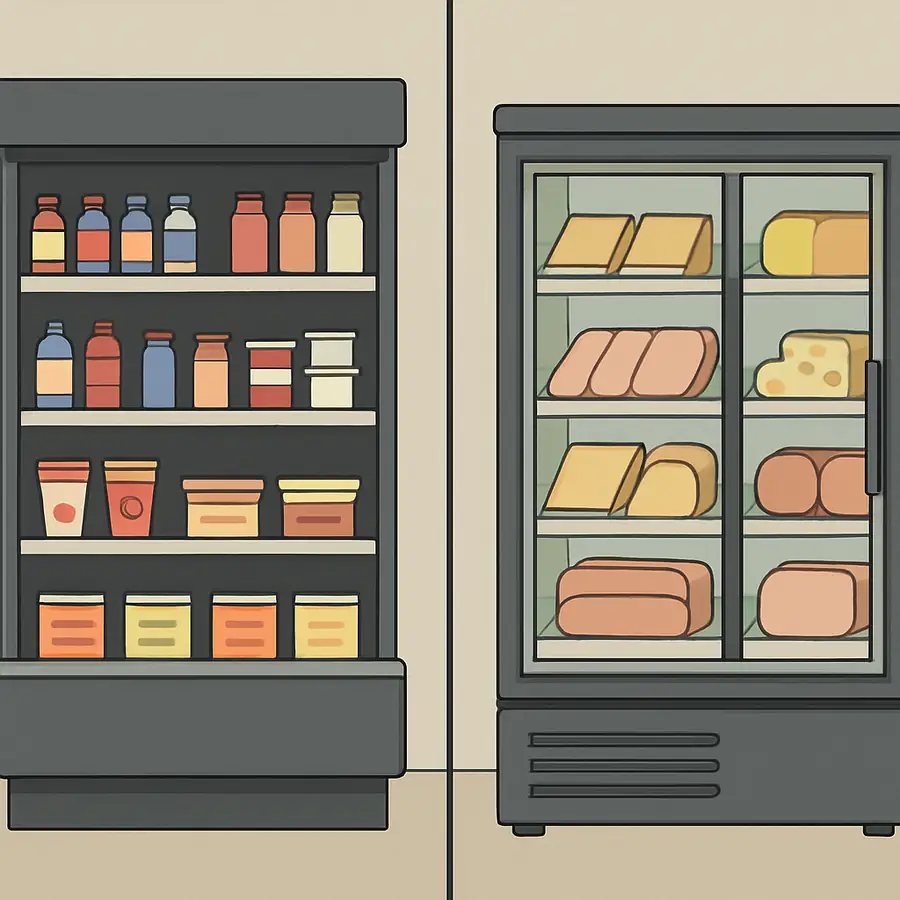
- Choose an open-air reach-in when: You sell pre-packaged, high-margin impulse items (like bottled drinks or wrapped sandwiches) in a high-traffic area where fast grab-and-go service is essential.
- Choose a closed glass-door case when: You display delicate, unpackaged items (like fresh meats or artisan pastries) that need strict temperature control to prevent wilting, or if minimizing long-term utility bills is your top priority.
Ultimately, the extra electricity cost of an open case must be offset by a measurable increase in daily sales volume. If a closed option makes more financial sense for your refrigerated merchandisers, the choice between a sleek, modern curve or a traditional flat front significantly impacts both aesthetics and functionality.
Curved vs. Straight Glass: How Aesthetics Influence Your Customer’s View
Walking into a bakery and seeing a sweeping deli case immediately communicates a premium experience. When evaluating curved glass vs straight glass display aesthetics, the rounded European style is highly favored for drawing customer eyes across your retail layout. A major hidden benefit of this curved design is visual glare management; the continuous slope naturally deflects overhead store lighting, preventing harsh reflections that might obscure your artisan products. However, that elegant aerodynamic slope inevitably sacrifices a bit of upper shelving room inside the unit.
Conversely, the traditional straight glass model acts as a highly efficient workhorse for shops focused on maximizing volume. Because the front glass stands straight up before meeting a flat ceiling, these units offer superior top-loading capacity, letting you pack taller items on the highest interior shelves without them touching the front pane. Furthermore, the sturdy, flat roof creates valuable secondary counter space, giving a busy corner deli the perfect spot to rest a heavy commercial scale, a register, or dry-good visual merchandising displays right at the checkout.
Maintenance routines also shift significantly depending on the architectural shape you select. Wiping down a sweeping curved surface is one smooth, ergonomic motion for your staff, though replacing a custom-bent pane can be quite expensive if it ever chips. Straight cases are much cheaper to repair with standard flat glass, but they tend to trap crumbs in the sharp ninety-degree corners where panels meet, requiring extra elbow grease during closing procedures.
Choosing the right exterior profile comes down to balancing a high-end, glare-free presentation against the practical need for usable storage and counter space. While the exterior glass dictates what your customers see, the internal cooling mechanism dictates how long your food lasts, making airflow management just as crucial.

Forced Air or Gravity Coil? Choosing the Right 'Breeze' for Your Food
Selecting the perfect glass profile is only half the battle; if the internal environment ruins your food, that beautiful display becomes an expensive liability. Beyond simply keeping things cold, you must manage how air circulates to meet specific commercial bakery case temperature requirements and local health codes without destroying product quality. The wrong type of airflow can turn a vibrant, moist slice of cake into a stale, unappetizing brick in a matter of hours.
To prevent delicate, unpackaged items from drying out, many shop owners rely on a gravity coil system, which like gentle, invisible cold blanket settling over your food. In this setup, a refrigeration coil sits at the top of the cabinet, allowing heavy, cold air naturally sink down over the products without the use of harsh fans. This method excels at maintaining moisture, making it the perfect solution when you need gentle chilling for "naked" items like raw meats, cheeses, and fresh deli salads.
Conversely, if you are selling grab-and-go beverages or pre-packaged sandwiches, you need the rapid chilling power of a forced-air convection system. Think of this mechanism like a brisk winter breeze; it uses built-in fans to actively circulate cold air throughout the entire cabinet, ensuring every corner stays at a uniform temperature. Understanding the difference between high humidity vs low humidity refrigeration is crucial here, as this constant fan movement quickly dehydrates exposed foods but works perfectly for anything protected by plastic or glass packaging.
| Cooling System | Airflow Mechanism | Best For (Product Types) | | :--- | :--- | :--- | | Gravity Coil | Natural drop of cold air (No fans) | Raw meats, deli salads, fresh seafood, unpackaged pastries | | Forced Air | Fans actively push cold air | Bottled drinks, pre-packaged meals, wrapped sandwiches |
Navigating the choice between forced air vs gravity coil cooling systems ultimately comes down to whether your inventory needs a gentle, humid chill to stay fresh or an active breeze to cool down quickly. Once you match your menu's specific moisture needs to the right mechanical airflow, the next step is determining how to power that system efficiently and deciding where the hardware should be positioned.
Self-Contained vs. Remote Units: Deciding Where Your Fridge’s 'Engine' Lives
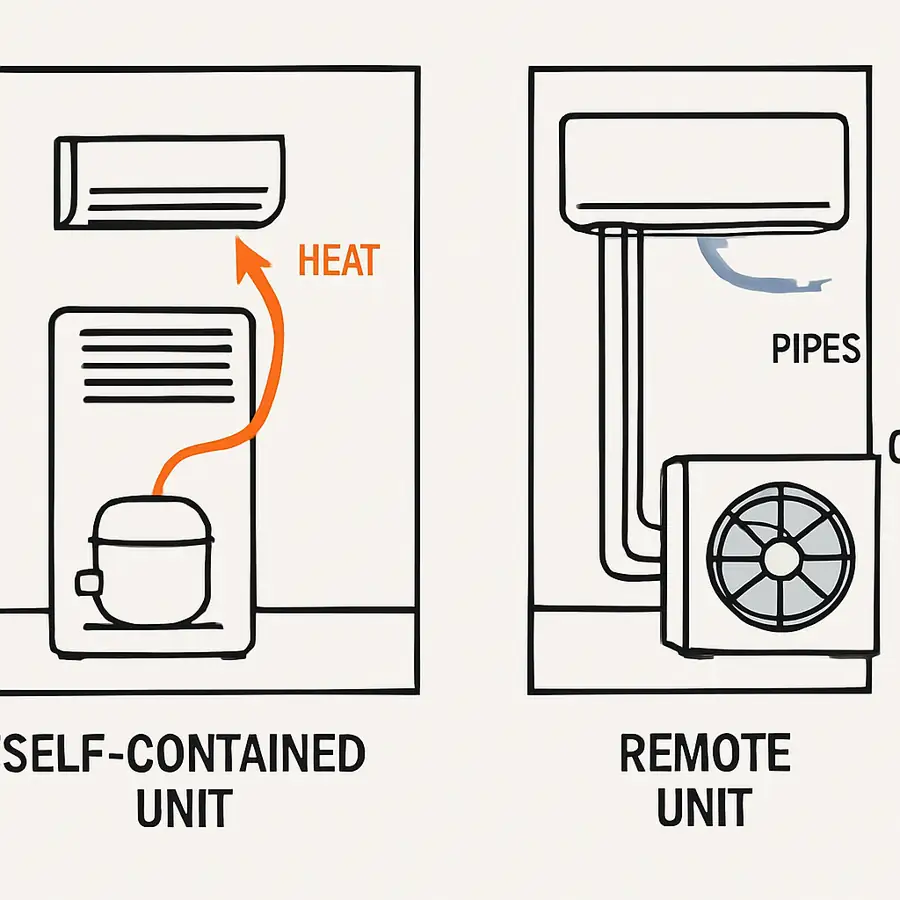
Walking into a quiet, beautifully lit bakery only to be greeted by the loud hum of a struggling refrigerator engine can instantly ruin your shop's welcoming atmosphere. Every display case relies on a cooling engine—specifically, a compressor (the pump that circulates the refrigerant) and a condenser (the coil that vents the extracted heat). The biggest layout decision you will make is whether to keep that machinery built into the cabinet or move it outside, a choice commonly known as comparing remote condenser vs self-contained refrigeration units. Think of it like cooling your house: do you want a bulky window AC unit blowing right into the room, or a central air system where the noisy hardware sits outside?
Opting for a "plug-and-play" self-contained unit is usually the go-to for new businesses because it requires no specialized plumbing and offers a much lower initial price tag. However, keeping the engine inside the cabinet means it will continuously dump warm exhaust and mechanical vibration directly into your shop. This creates a hidden operational cost: your building’s air conditioning system will have to work overtime to fight the extra heat generated by the fridge. If your shop is small or already struggles with summer heat, compressor noise management and ambient temperature control can quickly become a major daily headache.
To completely eliminate that indoor heat and noise, a remote system places the heavy machinery up on your roof or in a back alley. While this guarantees a whisper-quiet customer service area, it requires a professional commercial refrigeration installation to permanently run copper pipes from the indoor display case to the outdoor engine. When deciding which setup fits your business plan, weigh these primary trade-offs:
- Self-Contained: Easy, cheaper installation, and simple to move; but increases room heat, operational noise, and your monthly AC bill.
- Remote: Silent operation and lowers indoor HVAC strain; but requires expensive, permanent plumbing and structural access.
Balancing these factors ultimately depends on whether you have the capital for complex outdoor piping or prefer the simplicity of rolling a unit in and plugging it into the wall. Once you have decided where your cooling engine will live, understanding daily electricity consumption is vital for accurately calculating the total cost of ownership.
The High Cost of Low Energy Ratings: Calculating Total Cost of Ownership
Buying a display case based purely on the sticker price is the quickest way accidentally inflate your monthly overhead. When calculating total cost of ownership for coolers, you must look beyond the initial invoice to the daily electricity required to run the machine. A bargain unit saves money today, but outdated technology quietly drains profits through high utility bills over its lifespan. To protect your margins, treat energy efficiency core business strategy rather than a technical afterthought.
Lighting plays a surprisingly massive role in your energy equation. Older fluorescent bulbs run hot, literally baking the inside your fridge and forcing the compressor to work harder just to fight off the fixture's heat. Upgrading to modern bulbs eliminates this internal struggle while drastically improving the LED lighting impact on food presentation. Because LEDs emit bright light without damaging warmth, delicate pastries won't dry out prematurely and floral arrangements will maintain their vibrant colors under the glass.
The physical construction of the box dictates how well that efficiently generated cold air stays inside. Cabinets built with high-density insulation act like premium thermoses, stopping room heat from seeping through the walls and ruining your commercial refrigeration energy efficiency ratings. Behind that thick insulation, the chilling process itself relies on modern chemicals like R290, a highly eco-friendly hydrocarbon. When researching the best refrigerant types for commercial use, R290 stands out because it absorbs heat faster and requires less electricity to circulate than older industry standards.
These upfront investments ensure your refrigerator draws minimal power while maximizing your visual merchandising. You will pay slightly more initially for dense insulation, cold-running lights, and advanced refrigerants, but those choices pay for themselves through years of reduced utility costs and lowered food waste. Fully understanding the financial impact of these internal mechanical features paves the way for ensuring the physical box fits your building and passes local health inspections.
From NSF Certification to Floor Space: The Technical 'Must-Haves' Before You Buy
A stunning display means nothing if a health inspector slaps a violation sticker on it during your grand opening. Navigating commercial kitchen health codes requires specific equipment standards, most notably the NSF certification for food display cases (a strict sanitation standard guaranteeing the machine is easy to clean and holds safe temperatures). Inspectors actively search for the NSF/ANSI 7 label on refrigerators holding open foods like fresh deli meats or dairy. Without that simple silver sticker, you might be legally barred from using the cooler you just purchased.
Once regulatory compliance is guaranteed, your next operational hurdle is making sure the massive metal box actually functions safely in your specific layout. Understanding how to measure floor space for commercial refrigerators goes beyond simply matching the unit's width to an empty spot. Commercial compressors need to "breathe" to release the heat they pull from your food. If you shove a self-contained unit flush against a wall without proper ventilation clearance, internal engine will overheat, burn out prematurely, and completely ruin your inventory.
Protect your business capital by running through this 'Pre-Purchase Measurement Checklist' at your storefront before finalizing an order:
- Doorways: Measure every door frame and hallway between your delivery dock and the installation spot to avoid getting the unit stuck outside.
- Floor Space: Account for the total cabinet footprint, plus extra room for swinging doors and customer traffic flow.
- Air Clearance: Leave the manufacturer-mandated breathing room near the ventilation grilles so the compressor does not suffocate.
- Electrical Power: Verify your wall sockets match the required NEMA plug types (specific prong layouts standardized for different commercial voltages), as commercial motors draw heavier currents than standard household outlets.
Handling these physical and electrical details ensures your refrigerator powers on safely the moment it is installed. However, keeping products appetizing and visible regardless of ambient store conditions requires active management of environmental challenges like glass condensation.
Stop the Fog: Maintaining Visibility and Food Freshness for Years to Come
Nothing kills a carefully crafted merchandise display faster than foggy glass. When the cold air inside your unit meets the warm, humid air of your shop, condensation forms on the surface, completely hiding your products from customers. The secret to preventing glass fogging in refrigerated cases is investing in anti-fog glass technology, which usually features heated or triple-pane glass. This subtle heating element warms the outermost layer of glass just enough to stop condensation before it starts, ensuring your fresh perishables remain the star of the show.
Sometimes, condensation acts as a warning sign of a mechanical leak rather than just a muggy afternoon. If you notice moisture pooling strictly around the door edges instead of the main viewing pane, you likely have a failing gasket seal—the magnetic rubber strip that keeps cold air locked inside when the door closes. A cracked gasket forces your engine to run continuously to maintain safe temperatures, which quickly drives up your utility bill and stresses the system.
Protecting that hardworking internal engine requires a consistent commercial cooler maintenance routine. The most critical component to watch is the condenser coil, which acts like a car radiator to blow hot air away from the refrigeration system. When this coil gets clogged with everyday shop dust or kitchen grease, the compressor overheats and will eventually burn out completely.
You can easily extend the life of your equipment by following this basic refrigerated deli case maintenance checklist:
- Monthly Coil Cleaning: Use a shop vacuum to gently remove dust and debris from the condenser coils.
- Weekly Gasket Checks: Wipe down the rubber door seals with soapy water and inspect them for tears.
- Ambient Humidity Control: Monitor your shop's thermostat so room humidity doesn't overwork the display.
Mastering these simple upkeep tasks protects your investment long-term, ensuring reliable operation for years to come.
Your 5-Step Blueprint for Selecting the Perfect Display Case
Selecting the ideal commercial refrigeration unit means balancing physical fit, aesthetic appeal, and operational dependability. To lock in the best refrigerated display case for your specific needs, verify these final operational priorities before purchasing:
- Finalize your core priority: aesthetics, energy efficiency, or convenience.
- Measure your floor space, doorways, and ventilation clearances.
- Verify warranty terms, especially for the compressor.
- Confirm the availability of local repair technicians for your chosen brand.
- Check your existing electrical capacity to prevent blown fuses.
If your product line is diverse, do not forget the dual zone refrigerated display case benefits. For businesses that sell both chilled drinks and ambient-temperature fresh pastries, these hybrid units maximize your floor space while keeping every single item at its perfect selling temperature.
Consulting an electrician and general contractor to review your current outlets and floor plan confirms your shop's infrastructure is ready. With the proper preparation and the right mechanical features in place, your new display case will consistently serve as your most profitable, reliable salesperson.
Choose the Best Refrigerated Display Case for Your Business from The Horeca Store
Selecting the right refrigerated display case is important for businesses that need to keep food products fresh while showcasing them attractively to customers. Restaurants, cafés, bakeries, supermarkets, and catering businesses can benefit from display cases that offer reliable cooling, energy efficiency, and clear product visibility. The Horeca Store provides a wide range of commercial refrigerated display cases designed to preserve food quality while enhancing product presentation.
At The Horeca Store, we offer high-performance refrigerated display cases in different sizes and configurations to meet various business needs. Whether you need a display solution for desserts, beverages, bakery items, or ready-to-serve foods, our equipment delivers durability, efficiency, and professional results. Choose The Horeca Store for quality commercial refrigeration solutions that help improve customer experience and streamline your business operations.