
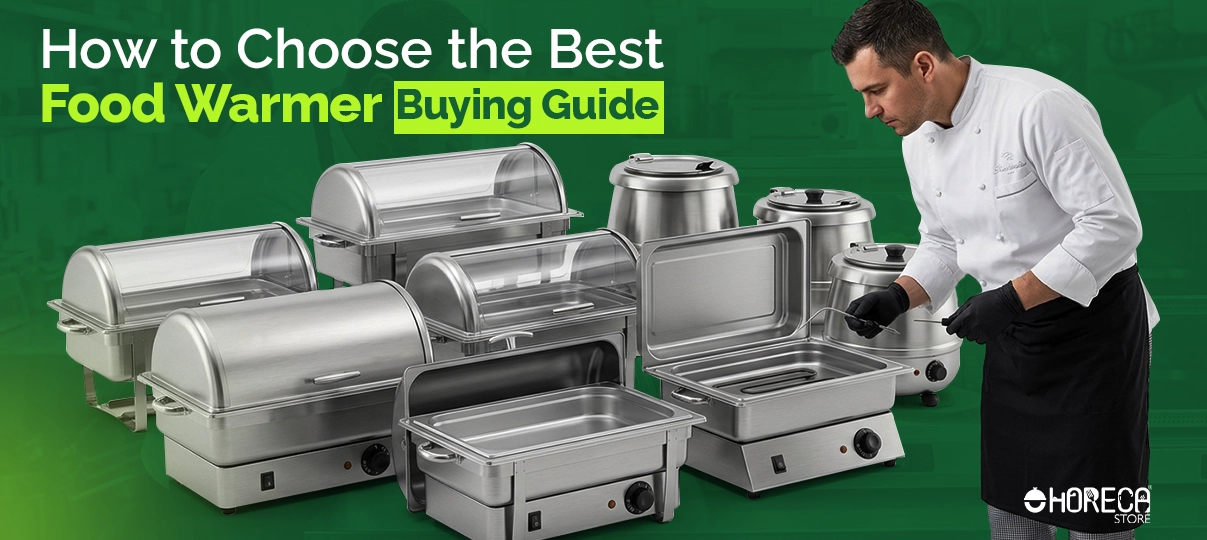
You’ve spent hours preparing a perfect Sunday roast, but half the family is stuck in weekend traffic and the side dishes are rapidly losing their steam. Staggered meal times and chaotic holiday gatherings often leave home cooks facing a frustrating choice: serve cold food or ruin the meal by overcooking it during reheating. This familiar kitchen struggle is exactly where a dedicated food warmer changes the game. By maintaining a gentle, consistent heat, these appliances solve the age-old problem of coordinating dinner times without sacrificing your hard work.
Most people assume a quick zap in the microwave is the easiest fix, but that is actually the fastest way to turn a crisp crust into a soggy mess. Because microwaves heat by agitating water molecules, they essentially steam your food from the inside out, ruining delicate textures. A proper food warmer operates differently by focusing on texture preservation rather than aggressive reheating. Think of it like a highly precise version of the "keep warm" setting on your favorite slow cooker; it holds the dish at a steady temperature to preserve that just-cooked freshness, rather than continuing to cook the food until it dries out.
Beyond simply protecting the crunch of your roasted potatoes, proper temperature control is a critical matter of health. According to food safety guidelines established by the USDA, bacteria thrive in the "Danger Zone"—a temperature range between 40°F and 140°F. Leaving a casserole sitting on the counter for hours invites these unwanted guests, whereas a quality food warmer holds your meals safely above that 140-degree threshold. You gain total peace of mind knowing your dinner is safe to eat, even if your spouse works late or the kids have back-to-back soccer practices.
Figuring out how to choose the best food warmer for your kitchen comes down to matching these benefits to your specific household routine. Whether you are serving a massive Thanksgiving turkey or just trying to keep Tuesday night's pancakes warm, capacity planning and heat type matter. Maximizing kitchen efficiency and protecting overall food quality requires evaluating specific design features that fit your lifestyle.
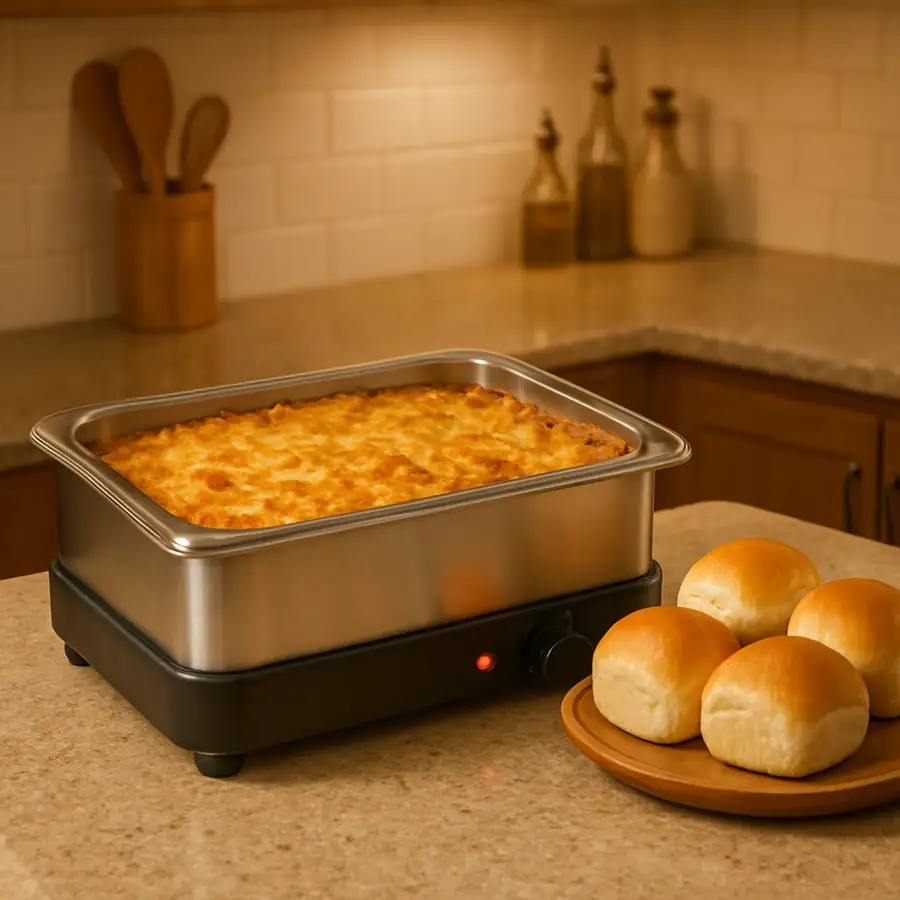
The Science of Freshness: Why 140°F Keeps Dinner from Turning into a Brick
You've timed the roast perfectly, but your guests are running thirty minutes late. While leaving the platter on the counter seems harmless, this enters what USDA food safety guidelines call the "Danger Zone." When food drops below 140°F but stays above 40°F, it becomes the perfect environment for bacteria to multiply rapidly.
Solving this isn't as simple as tossing your casserole back into a hot oven, which will just overcook your meal and dry it out. Instead, a dedicated warmer focuses on thermal stability—providing a consistent, gentle heat that stops right at the necessary threshold. By maintaining safe internal food temperatures at exactly 140°F or slightly above, these devices ensure reliable bacteria growth prevention without actively cooking the dish further.
That precise temperature control means your mashed potatoes stay fluffy rather than turning into a stiff brick while you wait for everyone to gather around the table. Maintaining safe internal food temperatures seamlessly bridges the gap between cooking and serving.
Warming Drawers vs. Buffet Servers: Choosing the Right Footprint for Your Counter
Keeping your food safely at 140°F brings up an immediate practical question: where is this appliance going to live? If your counters are already crowded, adding a new device requires strategic footprint management. The main decision is between permanent installation and portable convenience.
Those currently planning a kitchen remodeling project often choose a built-in warming drawer. These sleek units slide perfectly into lower cabinetry or under wall ovens, permanently freeing up workspace. Because they are always plugged in and ready, they are ideal for daily family life, like keeping dinner hot for staggered arrival times without cluttering your kitchen island.
Conversely, a portable countertop buffet server for entertaining makes more sense if you only need extra capacity occasionally. These plug-and-play models sit right on the dining table so guests can easily serve themselves. While they require pantry storage during the off-season, comparing a warming drawer vs buffet server reveals that portable units offer a much friendlier cost-to-utility ratio for the occasional host.
To quickly summarize how these two footprints compare:
- Installation: Built-in permanent drawer vs. Plug-and-play portable server.
- Cost Range: Built-ins typically cost $800–$2,000+; Portable servers run $40–$150.
- Best Use Case: Daily family life (Drawers) vs. Holiday parties (Servers).
Whichever layout you choose, how these devices actually generate their heat dictates the quality of the food they hold.
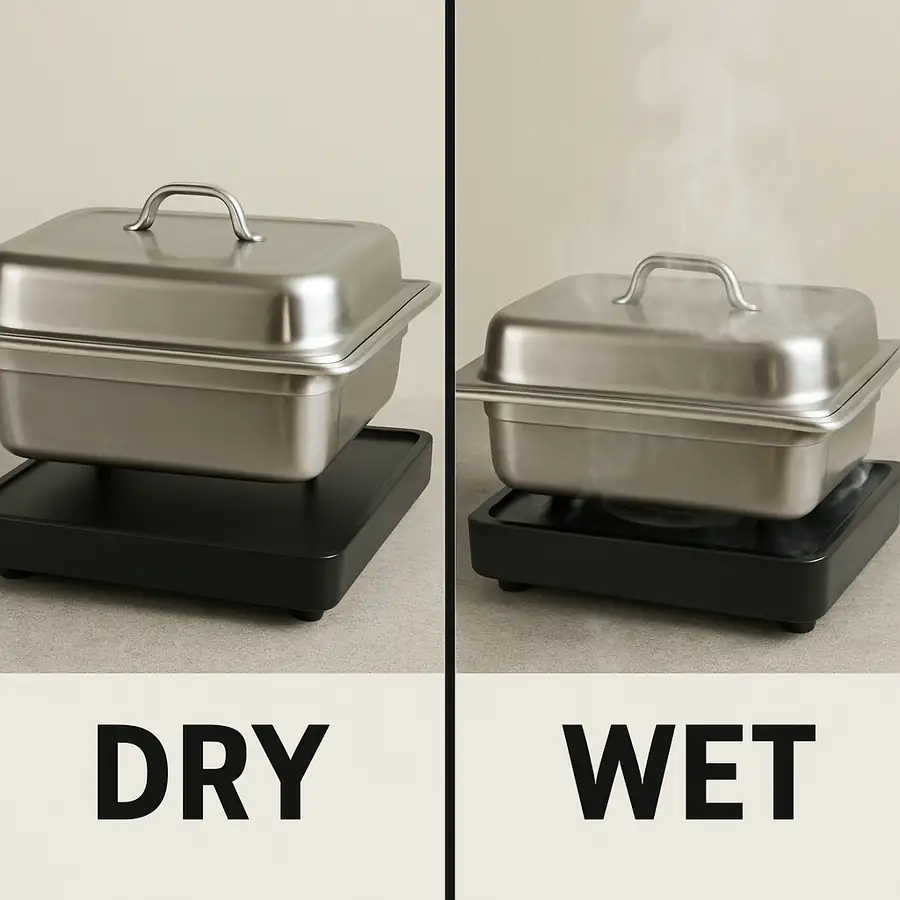
The 'Water Bath' Secret: Why Moist Heat Beats Dry Heat for Mashed Potatoes
You’ve likely scooped into a bowl of holiday mashed potatoes only to find a tough, rubbery skin across the top. This happens when hot air strips moisture from your dishes, a frequent issue with standard electric trays. Understanding the difference between wet and dry heating methods is the secret to keeping your side dishes tasting like they just came off the stove, rather than sitting under a heat lamp.
Caterers avoid the "rubbery skin" problem by using a "bain-marie," which is simply a gentle hot water bath. Your food container rests inside a larger pan filled with steaming water, creating the humid environment essential for preventing food from drying out in warmers. This moist heat method is perfect for keeping gravy silky, macaroni and cheese creamy, and starchy sides fluffy without forming a thick dairy skin.
Conversely, that same humid air will instantly ruin crispy fried chicken or warm dinner rolls. For roasted vegetables and crusty breads, you need dry heat transferring directly from a hot surface to preserve their crunch. Weighing bain marie vs dry heat warming ultimately comes down to whether a specific recipe requires moisture retention or a crisp exterior. Yet, even when matching perfect humidity to the right dish, relying on unregulated heat will still ruin carefully crafted textures.
Why 'Low' Isn't Enough: The Importance of Adjustable Temperature Control
You might assume that switching a basic dial to "Low" is enough to hold dinner until your family is ready to eat. However, entry-level models often use fixed-heat elements that pump out constant heat without any feedback. This is exactly how a perfectly pink roast beef slowly turns gray and tough while waiting on the counter.
Spending the extra twenty dollars for an adjustable temperature control food warmer changes everything. Rather than just blasting continuous warmth, a precise thermostat reads the surface conditions and cycles on and off to maintain your chosen setting. This allows you to manage thermal convection heating for food safely, locking in the ideal temperature for specific categories:
- Dinner Rolls: 110°F
- Sliced Meats: 140°F–160°F
- Soups and Stews: 170°F
Dialing in these exact numbers prevents the notorious "slow-cooker effect," where a finished dish inadvertently keeps cooking simply because the tray beneath it won't adapt. Taking command of your temperature takes the panic out of delayed meals and staggered schedules. Beyond heat settings, the physical material of the warming surface also heavily influences food preservation.
Glass Top vs. Stainless Steel: Which Surface Prevents Food from Drying Out?
Staring at a buffet table, you want your appliances to look as appealing as the meal itself. An energy efficient glass top warming tray fits perfectly into modern dining rooms, offering a sleek profile that practically disappears under your plates. Because the surface is completely smooth, wiping away a stray drip of gravy takes just one swipe with a damp cloth, creating incredibly easy to clean food warmer surfaces for busy weeknights.
On the other hand, holiday hosting often demands the rugged reliability of metal. While glass is stylish, stainless steel excels at heat distribution uniformity, meaning every square inch maintains the exact same temperature without developing stubborn cold spots. This consistent, edge-to-edge warmth is exactly why people rely on food grade stainless steel warming pans to keep large casseroles piping hot without burning the edges or drying out the center.
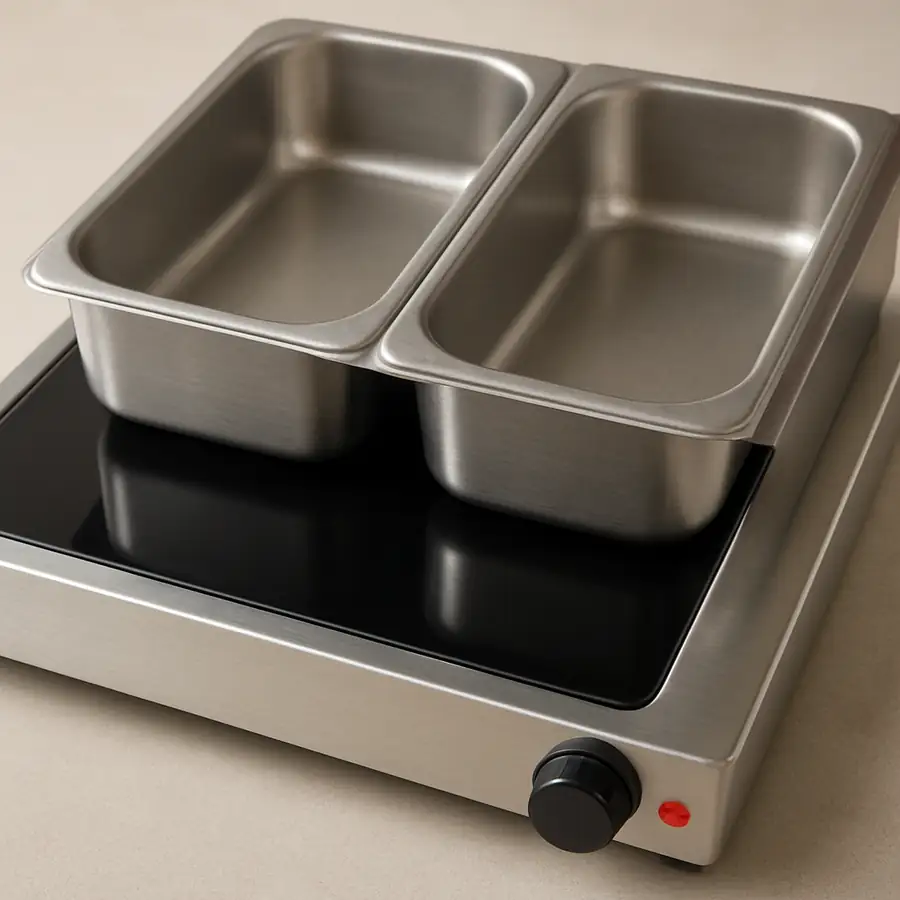
Whichever finish you prefer, verifying that the manufacturer explicitly uses "food-grade" materials ensures no harmful elements will leach into your dinner if a runaway dinner roll touches the surface directly. With the right surface material selected, accurately sizing the unit prevents countertop crowding.
Calculating Your Crowd: What Size Food Warmer Do You Actually Need?
When figuring out what size food warmer do I need, the trick is balancing your everyday reality with your biggest annual event. If you buy a massive commercial unit just for Thanksgiving, it will end up collecting dust and eating up valuable kitchen storage space for the other eleven months of the year. Instead, think about the footprint of your standard 13x9 casserole dishes and focus on a model that comfortably holds those familiar pans without crowding your counters.
Translating manufacturer dimensions into actual human appetites makes setting up a home buffet station much less stressful. As a general capacity-to-guest ratio rule, you can easily match your typical crowd to these standard sizes:
- 2-3 People: A small warming tray (perfect for staggered family dinner times or keeping a batch of pancakes hot).
- 6-10 People: A 3-pan buffet server (ideal for holding a main roast and two side dishes during a Sunday dinner party).
- 12+ People: A full-size warming drawer or extra-large modular tray system (essential for major holiday gatherings).
Even if you occasionally host larger groups, you do not necessarily need a bigger appliance if you master the art of rotating dishes. Keep backup portions in the main oven, swapping them onto a moderately sized warmer as pans empty out. Proper rotation paired with consistent heat ensures every batch remains safe for consumption.
Safety First: Maintaining Internal Temperatures Without Overcooking
Keeping food safe means holding it above the 140°F "danger zone," but leaving a stove burner on simmer often overcooks the bottom layer of your favorite dish. Instead of guessing, use a simple meat thermometer to verify your warmer's performance before guests arrive. This ensures dishes stay perfectly safe to eat without ruining the tender texture you worked so hard to achieve.
Powering that gentle heat effectively comes down to a careful balance between wattage and insulation. While a high wattage rating means the unit heats up quickly, modern heat retention technology for kitchen appliances acts like a heavy winter coat to trap that warmth inside. Good insulation limits how often the internal heating element actually needs to run, making the unit incredibly energy efficient while actively lowering your household utility costs.
Peace of mind matters just as much as a perfectly warm casserole when you are hosting. Always prioritize models equipped with built-in auto-shutoff safety features, which automatically cut the power if you forget to unplug the device after a chaotic family dinner. Balancing capacity, heating efficiency, and structural safety makes selecting the ideal unit straightforward.
Your 5-Point Checklist for Choosing the Perfect Kitchen Companion
Finding the best food warmer doesn't require a culinary degree, just a clear understanding of your typical dinner routine. Whether you are hosting a Thanksgiving feast or holding Tuesday's tacos for a late-working spouse, narrowing your options means matching the machine to your daily lifestyle. You can now commit to a purchase with confidence, knowing your choice will ensure food safety and preserve that perfect just-cooked texture.
To quickly filter through the market, use this essential kitchen appliance checklist:
- Heat Type: Choose dry heat to keep fried foods crispy, or wet heat (a water bath) for tender pastas.
- Capacity: Verify it can handle your typical pan count, such as holding two standard 13x9 casserole dishes.
- Material: Pick heavy-duty stainless steel for easy scrubbing, or tempered glass for a sleek look on the table.
- Control: Select precise digital thermostats over manual, basic "on/off" switches to prevent accidental overcooking.
- Portability: Check that the handles and cord length actually work for your specific dining room layout.
Applying these five criteria prevents overspending on industrial features while guaranteeing your family always sits down to a hot meal.
From Chaotic Holidays to Stress-Free School Nights: Your New Kitchen Routine
You no longer have to orchestrate a frantic kitchen ballet to ensure everyone gets a hot plate. Instead of handing a rubbery, microwaved dinner to a spouse who gets home late, you now know how to preserve the fresh, just-cooked texture of your meals for hours. You have officially transitioned from simply surviving mealtime to actually savoring it.
As you elevate your kitchen lifestyle, look at your upcoming family gatherings to decide your first move. If large holiday dinners are your specialty, start with a versatile multi-pan setup to build an inviting home buffet. By matching the proper heat type to your favorite recipes, you guarantee those famous mashed potatoes stay fluffy rather than gummy, no matter when folks grab a scoop.
Ultimately, a reliable food warmer delivers much more than safe holding temperatures; it is the absolute secret to stress-free hosting. When you no longer need to spend the dinner party chained to your stove playing catch-up, you finally get to pull up a chair, relax, and truly enjoy the evening with your guests.
Buy Commercial Food Warmers from The Horeca Store
Choosing the right food warmer is essential for maintaining safe serving temperatures, preserving food quality, and improving kitchen efficiency. The Horeca Store offers a wide range of commercial food warmers, including countertop warmers, heated display cases, soup warmers, drawer warmers, steam tables, and holding cabinets for restaurants, cafés, hotels, bakeries, catering businesses, buffets, and cloud kitchens. Our commercial-grade food warmers are designed to keep food fresh, flavorful, and ready to serve throughout busy service hours.
Whether you're operating a quick-service restaurant or a large-scale catering business, The Horeca Store provides reliable food warming solutions from trusted brands at competitive prices. Our experienced team can help you choose the ideal food warmer based on your menu, service style, kitchen space, and capacity requirements. With quality equipment, expert guidance, and dependable customer support, The Horeca Store is your trusted destination for commercial food warmers that enhance food quality, improve workflow, and support efficient kitchen operations.