
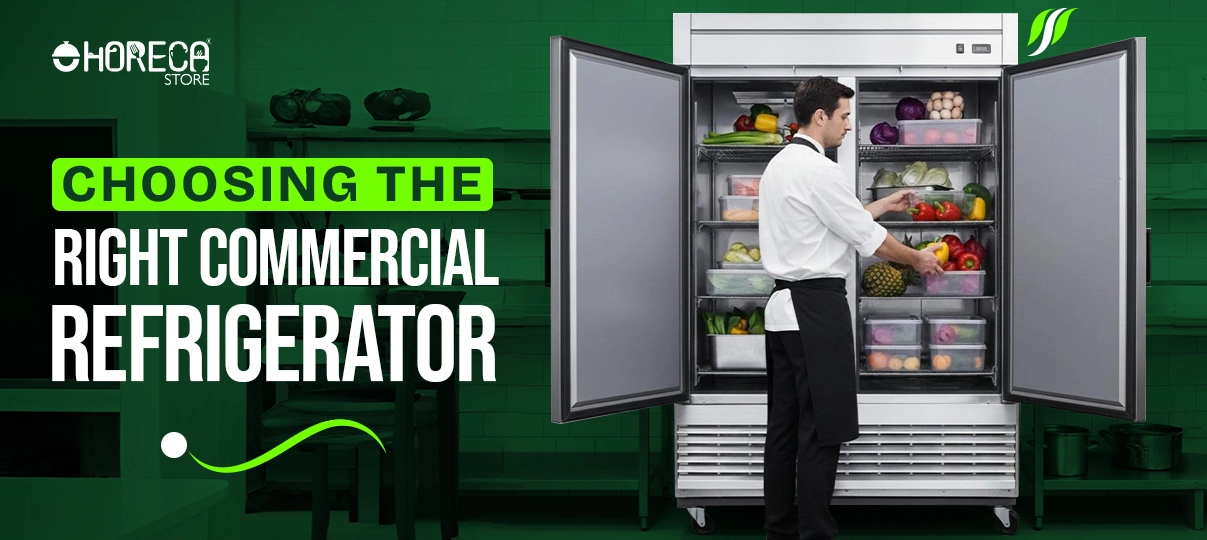
Choosing the right commercial refrigerator for your restaurant is a very important decision for keeping the food fresh and maintaining the quality of the food. The right refrigerator helps your kitchen run smoothly, saves your electricity bills, and supports smooth kitchen operations This guide will help you to learn how to choose a commercial refrigerator that suits your restaurant’s needs.
Why Choosing the Right Commercial Refrigerator Matters?
A refrigerator does more than cooling the ingredients, it plays an important role in efficiency, safety rules, and profitability. Restaurants rely on consistent temperature control to maintain freshness of their ingredients and meet food safety standards.
Key reasons why this decision matters:
- Prevents food from spoilage and mixing with other items
- Consumes less energy and lowers long-term expenses
- Ensures HACCP guidelines and local health code compliance
- Enhances productivity during busy hours
A reliable commercial refrigerator for restaurants helps in maintaining both the product quality and the brand reputation.
Understand Food Safety & Refrigeration Rules
Before you even start comparing models, make sure your refrigerator follows local and national food safety rules.
What to know:
- Food must be stored below 5°C (41°F) to prevent bacterial growth.
- Some ingredients (like meat and seafood) require separate refrigerator sections.
- Check for NSF or ETL sanitation certifications.
Pro Tip: Always verify that your new refrigerator complies with food storage regulations in your region before installation, it saves you compliance headaches later.
Step 1: Assess Your Menu and Storage Requirements
Your menu decides your refrigeration needs. For example, a seafood restaurant will need a very cold storage, while a café may focus more on beverage cooling and prep stations.
Ask yourself these questions:
- Which ingredients need to be refrigerated every day?
- Do you need different temperature zones for fruits, vegetables, meat, and dairy?
- How often do you receive your supplies?
Choosing the correct commercial refrigerator size and capacity helps your kitchen work smoothly, and prevent overcrowding or overstocking.
Common mistake: Many restaurants buy a smaller refrigerator to save space but waste time in refilling their fridge multiple times a day.
Step 2: Learn About Different Refrigerator Types
Each type of refrigerator has a different purpose. Understanding these will help you choose the best commercial refrigerator for your restaurant use.
Reach-In Refrigerators
- Standard vertical design with one to three doors.
- It is ideal for everyday storage and quick access.
Undercounter Refrigerators
- It is compact and space-saving; designed to fit easily under kitchen counters.
- Best for small kitchens or frequently used ingredients.
Worktop Refrigerators
- Dual-purpose design with prep space on top.
- Perfect for sandwich, salad, or bakery prep stations.
Walk-In Refrigerators
- Very large storage space for bulk items.
- Suitable for hotels, catering business, and large kitchens.
Glass Door Refrigerators
- Provide visibility for display or quick stock checks.
- Perfect for storing beverages in front-of-house areas.
Prep Table Refrigerators
- It comes with built-in cold storage areas and worktop surfaces.
- Well suited for high demand kitchens like pizzerias and fast-food outlets.
Step 3: Choose the Right Size and Storage Capacity
Selecting the right size is very important. Measure your kitchen space and allow in door swing, clearance, and ventilation gaps.
Size vs. Space Efficiency
A refrigerator that’s too large limits movement; while the one which is too small you’ll face constant restocking. Go for modular or stackable models if you have small spaces.
Future Expansion
If you plan to grow, select a slightly larger model now to avoid costly replacements later.
Pro Tip: Leave at least 2–3 inches of clearance around your refrigerator to maintain airflow and prevent overheating.
Step 4: Energy Efficiency & Temperature Control
Your refrigerator runs 24/7, so its energy efficiency is very important. Investing in energy saving commercial refrigerators helps lower electricity bills and contributes to sustainability goals.
Look for these features:
- ENERGY STAR® certification in the models
- Digital thermostats and temperature displays
- LED lighting and advanced compressors
- Strong, thick polyurethane insulation
Temperature Control in Commercial Refrigerators
Maintaining a stable temperature is essential for food safety. Refrigerators with automatic defrost systems, real-time monitoring, and multi-zone control maintain steady cooling.
Comparison:
| Feature | Standard Unit | Energy Efficient Unit |
| Energy Consumption | High | 25–30% lower |
| Temperature Accuracy | Manual dial | Digital sensor-based |
| Defrost | Manual | Automatic |
| Maintenance | Frequent | Reduced |
Step 5: Durability, Maintenance & Build Quality
A quality refrigerator should perform reliably for years. Pay attention to commercial refrigerator maintenance and durability during your selection.
Key Features to Look for:
- Durable stainless steel body inside and outside for corrosion resistance
- Magnetic door seals for keeping the cold air escaping
- Strong wheels for easy shifting for cleaning and maintenance
- Removable condenser filters for fast and quick cleaning
Maintenance Tip: Clean the condenser coils once a month and get professional servicing every 6-12 months. Proper care and regular maintenance, a commercial refrigerator can last up to 30% longer.
Step 6: Check Warranty and After-Sales Service
Many buyers skip this step, but strong warranty coverage can help you save a lot of money in costly repairs later.
While comparing the refrigerator models, check:
- Warranty period (minimum 2–5 years on the compressors)
- Easy availability of spare parts in your local area
- Authorized service centers for reliable repairs
- Extra maintenance plans, if available
Pro Tip: Go for brands or suppliers who offer quick customer support and clear repair timelines. Horecastore partners with trusted and reliable manufacturers that provide strong warranties and nationwide service support.
Pros & Cons of Common Refrigerator Styles
| Refrigerator Type | Pros | Cons |
| Reach-in Refrigerators | Easy access and versatile use, suitable for many storage needs | Limited storage space |
| Walk-in Refrigerators | Perfect for bulk storage needs | High installation cost |
| Undercounter Refrigerators | Compact and space-saving | Smaller internal capacity |
| Glass Door Refrigerators | Good for display and good access | Slightly higher energy consumption |
| Worktop Refrigerators | Combines storage with preparation area | Limited top space |
| Prep Table Refrigerators | Perfect for quick food preparation and fast service | Needs regular cleaning and maintenance |
Quick Decision Checklist
✅ Make sure it follows food safety standards
✅ Match storage space with your menu-specific needs
✅ Measure your kitchen layout to ensure it fits properly
✅ Prioritize energy efficient commercial refrigerators
✅ Look for strong temperature control and durability
✅ Check warranty details and after-sales service support
Final Thoughts
Choosing the right refrigerator isn’t just about storage, it’s an investment in your restaurant’s success. Knowing how to choose a commercial refrigerator helps balance performance, energy savings, and reliability.
Whether you need a compact prep table fridge or a walk-in cooler, make sure your choice supports both your menu and operational flow.
Explore Horecastore’s range of durable, energy efficient commercial refrigerators for restaurants.