
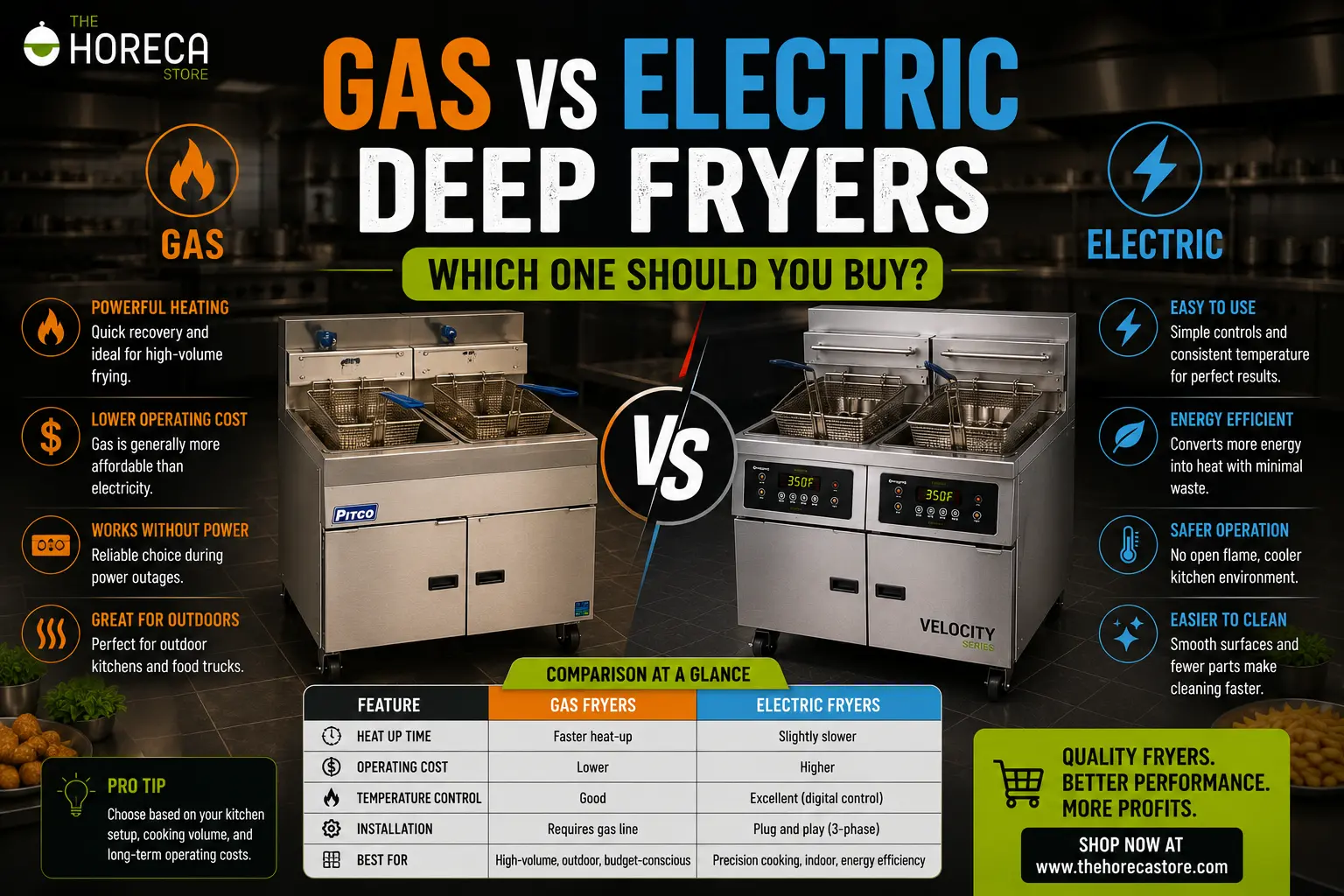
Choosing the right deep fryer can be a daunting task. Gas and electric fryers each have unique benefits. Understanding these differences is key.
Gas fryers heat up quickly, ideal for high-volume cooking. They offer consistent heat, perfect for continuous frying. However, they may require more maintenance.
Electric fryers are energy-efficient and easy to install. They only need an electrical outlet. Their compact design suits smaller kitchens.
Safety is another consideration. Electric fryers are often safer indoors, with no open flames. Gas fryers might need extra safety measures.
Cost is also a factor. Gas fryers can be cheaper to operate where natural gas is affordable. Electric fryers often have a lower initial cost.
Consider your cooking needs and kitchen setup. This guide will help you make an informed choice. Let's explore the pros and cons of each type.
Understanding Deep Fryers: Gas vs Electric
Deep fryers are essential kitchen appliances for frying food. Choosing between gas and electric models depends on specific needs.
Gas deep fryers use natural gas or propane. They heat oil via burners placed beneath the fryer. These are common in commercial settings.
Electric deep fryers use electrical elements to heat the oil. They are generally more user-friendly and often used in homes.
Both fryer types have distinct advantages and downsides. Understanding these can aid in making an informed choice.
Here are some key points to consider:
- Gas Fryers: Quick heating, consistent heat, may require gas lines.
- Electric Fryers: Easy installation, energy-efficient, compact.
Fryer reviews can provide helpful insights into specific models. Comparing features and costs further aids decision-making.
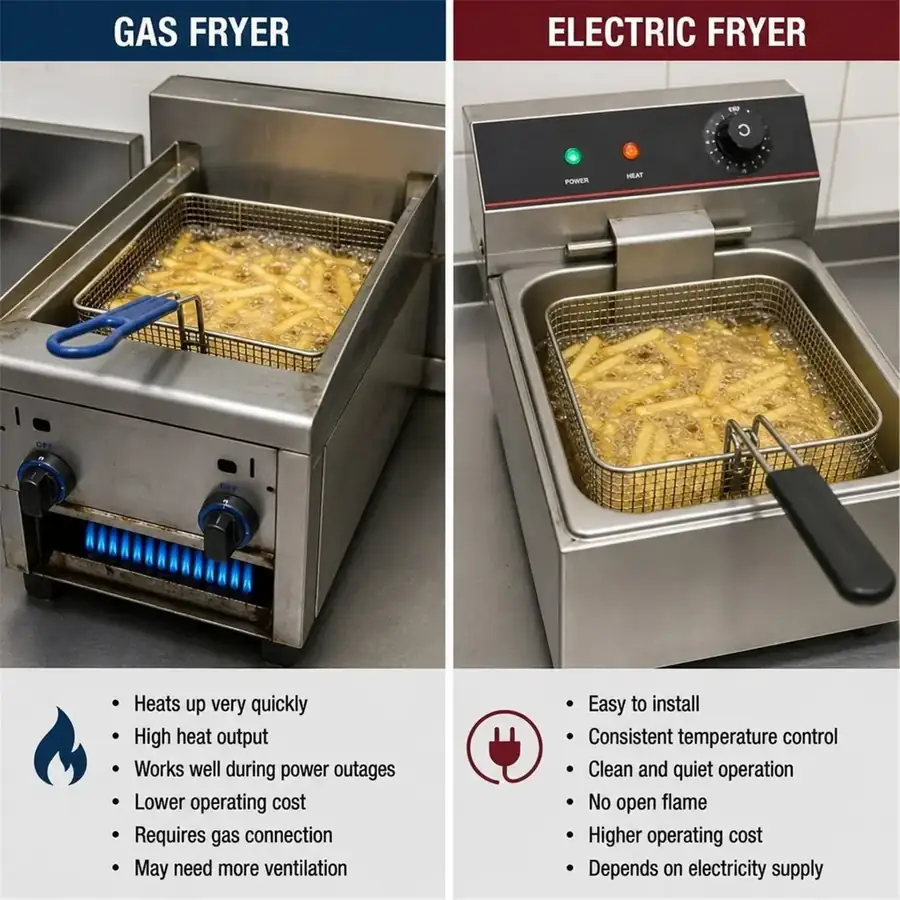
How Gas Deep Fryers Work
Gas deep fryers utilize burners to heat the oil rapidly. This process is efficient for high-volume frying tasks.
Gas is supplied through a line connected to the fryer. Once ignited, the burners heat a metal tube or tank containing the oil.
The heat transfer is direct and quick, ensuring consistent oil temperature. This is crucial for maintaining food quality during continuous frying.
Gas fryers come equipped with thermostats. These devices help control and maintain the desired frying temperature.
The burners in gas fryers can be adjusted for different heat levels. This flexibility is beneficial when preparing various types of food.
A few key points about gas deep fryers include:
- Rapid Heating: Ideal for high-volume environments.
- Consistent Temperature: Maintains oil heat efficiently.
- Adjustable Heat: Versatile for different cooking needs.
Gas deep fryers require proper ventilation as they produce fumes. This factor is important for indoor use. Always ensure safety measures are in place when using gas appliances.
How Electric Deep Fryers Work
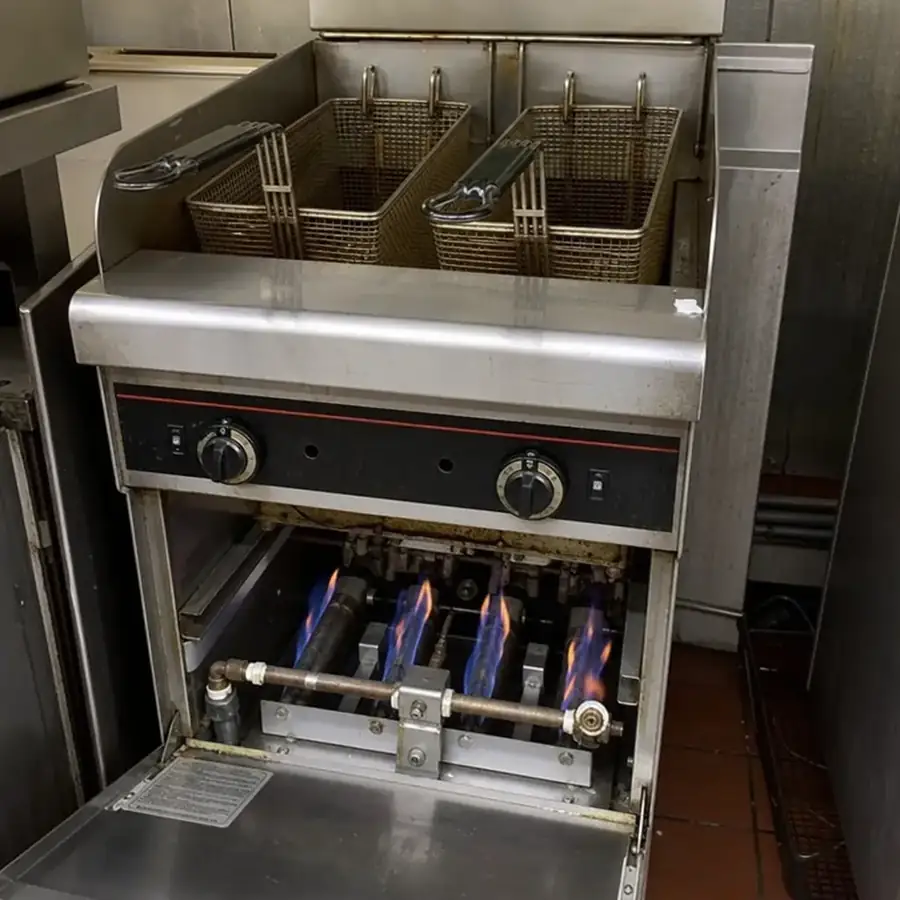
Electric deep fryers rely on heating elements to warm the oil. They are designed for both home and commercial use.
These fryers plug into an electrical outlet. Electricity passes through the coils, heating them to the set temperature.
The heating elements are often submerged in the oil. This results in even heat distribution throughout the fryer.
Electric fryers usually have thermostats. These controls allow users to maintain precise oil temperatures.
They are compact, with sizes varying from small countertop models to larger units. Their flexibility makes them suitable for different kitchen sizes.
Electric fryers often include safety features, like automatic shut-off. This feature helps in preventing overheating and potential hazards.
Key features of electric deep fryers include:
- Even Heat Distribution: Submerged elements ensure consistent oil temperature.
- Precision Temperature Control: Ideal for delicate frying.
- Compact Design: Fits small kitchens and various spaces.
Using electric fryers is straightforward. Most models come with user-friendly interfaces and digital controls. This simplifies operation, especially for beginners.
Key Differences: Gas vs Electric Deep Fryers
When choosing between gas and electric deep fryers, understanding their differences can guide your decision.
Heat Generation: Gas fryers use burners, while electric fryers use coils. This affects heating methods and temperature management.
Gas fryers often heat up faster. Their flames can reach high temperatures swiftly, ideal for large batches.
Electric fryers, on the other hand, offer precise temperature control. They maintain consistent heat with their submerged coils.
Installation and Portability: Gas fryers usually need a fixed gas line. This can limit their placement flexibility in the kitchen.
Electric fryers are more portable. They simply need an outlet, which offers more freedom in fryer location.
Cost Considerations: Initial costs can differ. Gas fryers might need professional installation, adding to upfront costs.
Electric fryers generally involve less initial setup expense. Their compact nature can also reduce space-related costs.
Energy Efficiency: Electric models are typically more energy-efficient. They convert electricity directly to heat with minimal energy loss.
In contrast, gas fryers might waste some heat. Yet, in regions with low gas costs, operating expenses could be lower.
Safety Elements: Electric fryers pose fewer fire risks indoors since they don't use open flames.
Maintenance can also vary. Gas lines need regular checks, whereas electric fryers have simpler upkeep.
Key differences include:
- Heating Method
- Installation Needs
- Portability
- Operating Costs
- Energy Use
- Safety and Maintenance
Cooking Performance and Speed
Cooking performance often sets gas and electric fryers apart. For high-volume frying, speed can be critical.
Gas fryers excel in fast heating. They can reach optimal frying temperatures quickly, which supports efficient cooking in busy kitchens.
Electric fryers, meanwhile, offer steady performance. Their heat distribution is even, making them suitable for delicate frying tasks.
Recovery time is also essential. Gas fryers tend to recover temperature faster after adding cold food. This helps maintain consistent results during continuous cooking.
Electric fryers may take longer to bounce back. However, their precise temperature control can lead to evenly cooked, high-quality food.
For time-sensitive environments, consider gas fryers. Their ability to handle large batches rapidly is beneficial.
Electric fryers are ideal for smaller servings. Their controlled heat suits recipes requiring careful temperature regulation.
When evaluating performance, keep the following in mind:
- Heating Speed
- Temperature Recovery
- Cooking Consistency
- Ideal Batch Sizes
Gas fryers often lead in speed. Electric models win in precision. Your choice depends on what's most important for your needs.
Energy Efficiency and Utility Costs
Energy efficiency is a vital factor when choosing between gas and electric fryers. It affects both running costs and environmental impact.
Electric fryers are generally more energy-efficient. They convert most of their energy into heat, wasting less than gas fryers.
Gas fryers can be more cost-effective if natural gas is cheaper than electricity in your area. However, they may consume more energy overall.
Installation costs differ. Electric fryers need a simple plug-in, while gas fryers might require professional setup.
Operational costs can vary based on kitchen usage. Regularly using a fryer influences utility bills significantly.
Maintenance plays a role in cost, too. Gas fryers might need more frequent servicing to ensure safe and efficient operation.
Consider these factors when evaluating costs:
- Local Utility Rates
- Frequency of Use
- Installation Expenses
- Maintenance Needs
Electric fryers, despite higher upfront electricity costs, might save money long-term with lower maintenance.
Installation and Space Requirements
When picking a fryer, installation and space matter a lot. These factors can influence ease of use and practicality.
Gas fryers often require professional installation. Connecting to a gas line is complex and might need permits.
Electric fryers are simpler. They only need a power outlet. This makes setup quick and easy.
Consider the space your fryer will occupy. Electric models are typically more compact, fitting smaller kitchens better.
Gas fryers often demand more room. They need ventilation space due to extra heat production.
Think about these points:
- Space Availability
- Ease of Installation
- Ventilation Needs
- Kitchen Layout
Proper placement enhances safety and efficiency. Both fryer types have unique demands that affect suitability for your kitchen.
Safety Considerations
Safety is a top priority when using deep fryers in your kitchen. Both gas and electric models present unique concerns.
Gas fryers involve open flames. This can increase the risk of fire, especially with improper setup or ventilation.
Electric fryers are generally safer indoors. They lack open flames and have more straightforward safety features.
Be aware of these safety factors:
- Risk of Fire or Explosion
- Ventilation Needs
- Overheating Concerns
- Safe Usage Practices
Ensure safety by following manufacturer instructions closely. Regular maintenance and inspections can mitigate potential hazards.
Good kitchen safety involves awareness and preparedness. A well-chosen fryer can help maintain a safe cooking environment.
Maintenance and Cleaning
Keeping your deep fryer clean and well-maintained is essential for safe operation and longevity. Each type of fryer has specific needs that you should consider.
Gas fryers generally require more maintenance. Regular inspections of gas lines and burner systems are crucial to ensure efficiency and safety.
Electric fryers typically come with parts that are easier to remove and clean. Many have dishwasher-safe baskets and oil pans for convenience.
Here are some maintenance tips for both types:
- Gas Fryers: Check and clean burners regularly, inspect gas connections, ensure proper ventilation.
- Electric Fryers: Clean heating elements gently, wipe surfaces, check for frayed cords.
Regular cleaning prevents oil buildup, which can alter flavor and reduce efficiency. Be proactive with a maintenance routine for best results.
Neglecting maintenance can lead to poor performance or even hazards. Keeping your fryer clean ensures it stays in top working condition.
Cost Comparison: Purchase, Operation, and Maintenance
When choosing a deep fryer, consider both initial costs and long-term expenses. Gas fryers often have a higher initial cost due to installation needs.
Electric fryers generally cost less upfront. They plug into a standard outlet, which simplifies setup.
Operational costs differ based on energy prices in your area. Gas is cheaper in some regions, while electricity may be more economical elsewhere.
Maintenance costs should also be considered. Gas fryers might require more frequent servicing for burners and gas lines.
Electric fryers usually have lower maintenance expenses. Their components are simpler, leading to fewer repairs.
Here is a quick comparison:
- Initial Costs: Gas fryers can be costlier due to installation.
- Operational Costs: Depend on local energy prices; gas may be cheaper.
- Maintenance Costs: Gas fryers require more upkeep; electric fryers are simpler.
Evaluate these costs to determine which fryer is more budget-friendly over time. Balancing initial purchase price with ongoing expenses helps in making an informed decision.
Suitability for Home vs Commercial Use
Choosing the right fryer depends on where you plan to use it—home or commercial settings. Home users often prioritize convenience and size.
Electric fryers typically suit home kitchens better. They're compact, easy to install, and require minimal maintenance. Most models come with user-friendly controls, ideal for casual cooks.
In commercial kitchens, gas fryers shine. They handle heavy-duty frying, offering quick heat recovery essential for high-volume cooking. Their robust performance meets the demands of bustling restaurant settings.
Consider your cooking needs:
- Home Use: Opt for electric fryers for their convenience and compactness.
- Commercial Use: Gas fryers excel in high-output environments.
When deciding, think about the level of usage. Frequent frying, especially in large quantities, is better suited for gas fryers. Conversely, light, occasional frying activities lean towards electric models.
Evaluate your space and usage needs before purchasing. This ensures your fryer aligns well with your cooking habits.
Taste and Food Quality
When it comes to taste, both gas and electric fryers can deliver delicious results. However, there are subtle differences.
Gas fryers often provide a crisper texture. They maintain consistent high temperatures, which can enhance the crunchiness of fried foods.
Electric fryers excel in offering precise temperature control. This is beneficial for foods requiring delicate frying processes.
Consider these factors when assessing taste and quality:
- Texture: Gas fryers often enhance crispiness.
- Temperature Precision: Electric fryers offer better control for complex recipes.
- Flavor Consistency: Consistent heat in gas fryers can improve flavor depth.
Overall, your choice depends on personal taste preferences. Both types can produce excellent frying results with the proper technique.
Environmental Impact
Considering the environment is crucial when choosing kitchen appliances. Gas fryers and electric fryers impact the environment differently.
Gas fryers emit more carbon dioxide, contributing to air pollution. They burn natural gas, which is a fossil fuel.
Electric fryers may be more environmentally friendly, especially if powered by renewable energy sources. They have no direct emissions.
Key environmental considerations include:
- Emissions: Gas fryers produce more CO2.
- Energy Source: Electric fryers can be greener if using renewable energy.
- Carbon Footprint: Electric fryers typically have a smaller carbon footprint overall.
In conclusion, electric fryers can be a greener choice for eco-conscious cooks.
Pros and Cons Summary Table
Choosing between gas and electric fryers can be simplified with a clear summary. Each type offers unique advantages and disadvantages. Understanding these can help in making an informed decision.
Below is a table summarizing the pros and cons of gas and electric fryers:
Gas Fryers:
- Pros: Fast heating, consistent heat, durable, cost-effective in some areas.
- Cons: Requires a gas line, more maintenance, ventilation needed.
Electric Fryers:
- Pros: Energy-efficient, easy installation, portable, precise temperature control.
- Cons: Slower heat-up, may have higher operational costs.
How to Decide: Key Questions to Ask Yourself
Deciding between gas and electric deep fryers involves several factors. Asking the right questions can clarify your needs and priorities.
Consider your kitchen setup. Do you have access to a gas line? If not, an electric fryer might be more suitable.
Think about your cooking style. Do you need quick heating and high capacity? A gas fryer could be ideal.
Evaluate your budget for both purchase and ongoing costs. Is electricity more affordable than gas in your area?
Here are some key questions to guide your decision:
- What is my budget for a new fryer?
- How much space do I have for installation?
- What type of food will I fry most often?
Top-Rated Gas and Electric Deep Fryers (Fryer Reviews)
Choosing the right deep fryer can be daunting. Knowing which models stand out can simplify your decision.
For gas fryers, performance is key. Top picks often deliver rapid heating and robust construction.
Top Gas Fryers
- Frymaster GF14: Known for its durable build and efficient heat retention.
- Pitco 35C+S: Offers excellent heat consistency and reliability for heavy-duty frying.
- Vulcan LG500: Praised for its high capacity and ease of maintenance.
Electric deep fryers are celebrated for convenience and ease of use. Look for models with precise controls and safety features.
Top Electric Fryers
- T-fal FR8000: Features an oil filtration system and adjustable temperature settings.
- Presto FryDaddy: Compact and known for delivering consistent frying results.
- Cuisinart CDF-500: Stands out for its precise temperature control and quick heating time.
Reading reviews helps assess actual user experiences. Compare frying capacities and added features before making a purchase.
Choosing between these top-rated models will depend on your specific needs. Whether you prioritize speed, efficiency, or safety, these fryers have proven their value among users.
Final Thoughts: Making the Right Choice for Your Kitchen
Choosing the ideal deep fryer involves many factors. Each model offers distinct advantages suited to different needs. Think about your kitchen's needs and what suits you best.
Gas fryers excel in high-output settings. Their fast heating and consistent heat make them a staple in commercial kitchens. They shine when large quantities of food are required quickly.
Electric fryers, on the other hand, cater to those who prioritize energy efficiency and safety. They're great for home kitchens with limited space. Their precise controls and easy portability enhance their appeal.
Ultimately, the decision between gas and electric fryers depends on your personal preference and circumstances. Assess your cooking habits, kitchen environment, and utility availability. By weighing these factors, you can select the perfect fryer that enhances your cooking experience and fits your lifestyle.
Where to compare models and specs without guesswork
Once you’ve identified the capacity and utility constraints, the next step is comparing specific commercial models (vat size, BTU/kW, recovery, filtration options, footprint, and electrical/gas requirements). A knowledgeable supplier can help ensure the unit you choose aligns with your kitchen’s infrastructure and service goals.
If you want a straightforward place to compare commercial options, readers can explore The Horeca Store for a wide selection of commercial gas and electric deep fryers from leading brands, plus helpful guidance, competitive pricing, and fast shipping—useful when you’re trying to balance performance needs with budget and timeline.
Conclusion: choosing the right fryer (and a reliable place to buy)
Gas and electric deep fryers can both be excellent investments when they’re matched to your operation. If you need maximum throughput and strong recovery for continuous frying, a commercial gas fryer is often the natural fit—especially in kitchens already built around gas and robust ventilation. If you value precise temperature control, strong energy efficiency, and a potentially simpler path in locations where gas isn’t readily available, a commercial electric fryer may be the better choice.
When you’re ready to purchase, The Horeca Store is a reliable destination for commercial gas and electric deep fryers for restaurants, hotels, cafés, food trucks, and other foodservice businesses—offering a broad selection from trusted brands, solid support, and convenient fulfillment to help you get the right equipment into service with confidence.
How to Choose Between Gas and Electric Deep Fryers
Choosing between a gas and electric deep fryer depends on your kitchen setup, cooking volume, energy availability, and operational needs. Gas fryers are often preferred by high-volume commercial kitchens because they can provide powerful heating and fast temperature recovery. Electric fryers, on the other hand, offer precise temperature control, efficient heat transfer, and can be easier to install in kitchens without a suitable gas connection. When comparing the two, consider factors such as heating performance, oil capacity, recovery time, energy costs, ventilation requirements, available utilities, kitchen space, and expected frying volume.
For restaurants that serve fried chicken, French fries, seafood, appetizers, or other fried foods regularly, selecting the right fryer can improve productivity and cooking consistency. The Horeca Store offers a selection of professional commercial gas and electric fryers designed for different foodservice requirements. Explore our restaurant equipment collection to compare available options and choose a deep fryer that fits your kitchen's capacity, utility setup, and daily production needs.