
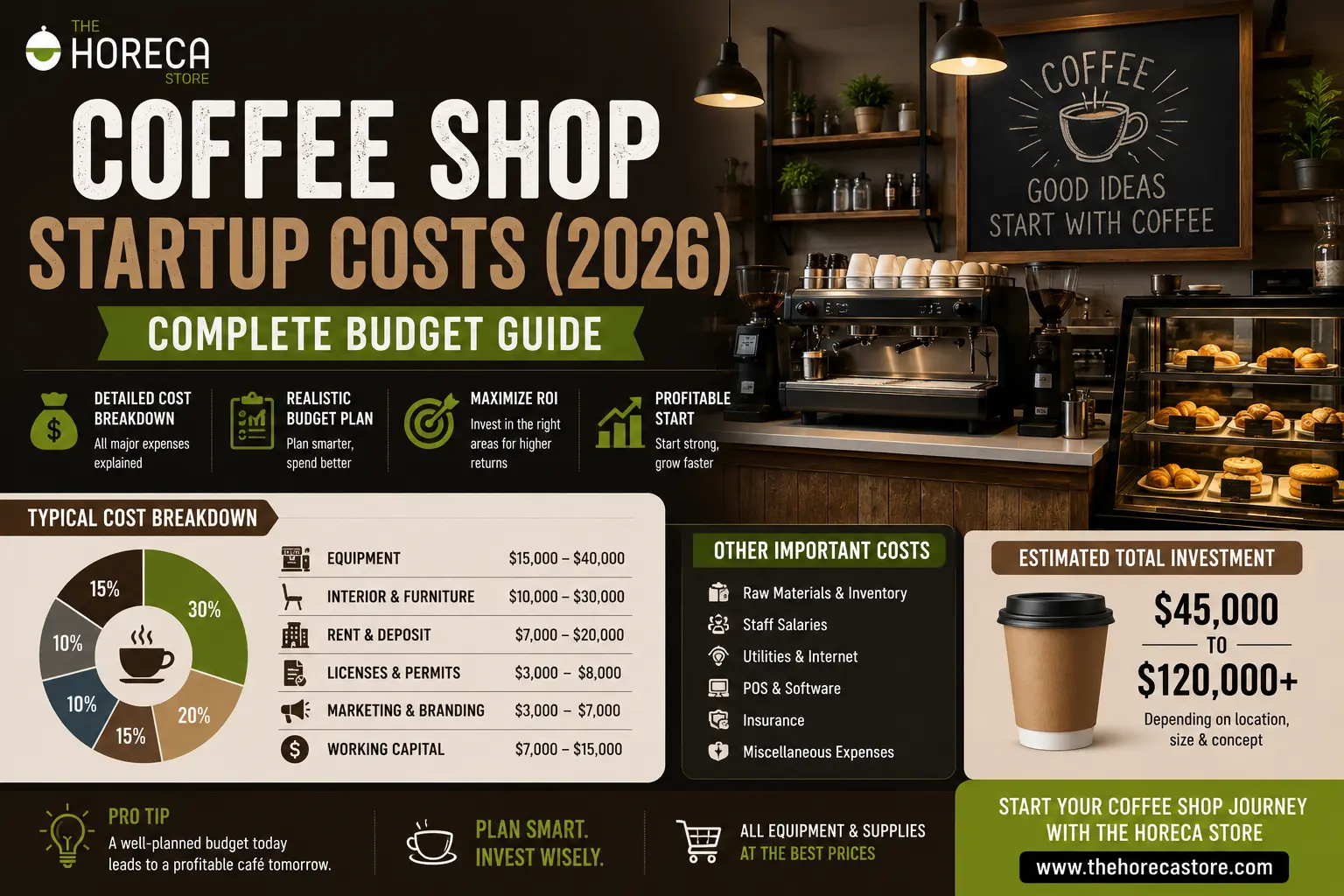
The aroma of freshly roasted beans, the hiss of the steam wand, and the hum of early morning conversation—there is something undeniably magical about opening coffee shop doors to your community. But behind the romanticized vision of latte art and cozy seating lies a complex financial reality. If you are an aspiring entrepreneur drafting your blueprints for the near future, the most pressing question on your mind is undoubtedly: How much does it cost to open a coffee shop in 2026?
The short answer? It depends entirely on your vision, location, and business model. A bare-bones espresso cart might get off the ground for $20,000, while a spacious, heavily foot-trafficked metropolitan storefront could easily demand upward of $350,000.
In this comprehensive guide, we will break down every financial facet of a modern coffee business startup. From analyzing average rent to exploring commercial coffee equipment financing options, we will provide an actionable, detailed roadmap to help you budget, plan, and thrive in the competitive 2026 hospitality landscape.
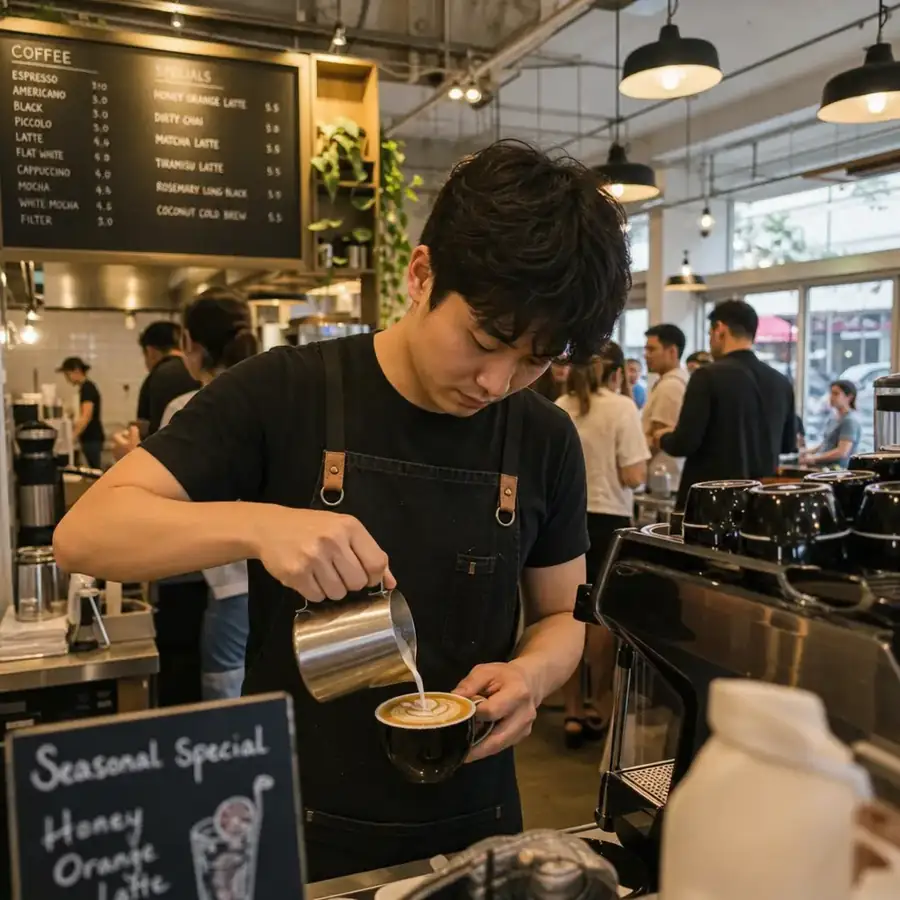
The 2026 Coffee Market: What You Need to Know
Before you sign a lease or purchase a roaster, it is crucial to understand the economic environment. The transition of coffee shop startup costs 2025 or 2026 has been heavily influenced by inflation, shifting consumer habits, and a massive push toward sustainability.
Consumers in 2026 expect high-quality, ethically sourced beans, fast digital ordering systems, and eco-friendly packaging. While the coffee shop investment required today may be slightly higher than it was half a decade ago, the potential for profitability remains incredibly strong for those who operate efficiently and understand their margins.
Understanding your coffee shop startup costs us 2026 (for the US market) means preparing for higher baseline prices in raw materials and construction, but also taking advantage of highly efficient modern technology that can lower long-term operating costs.
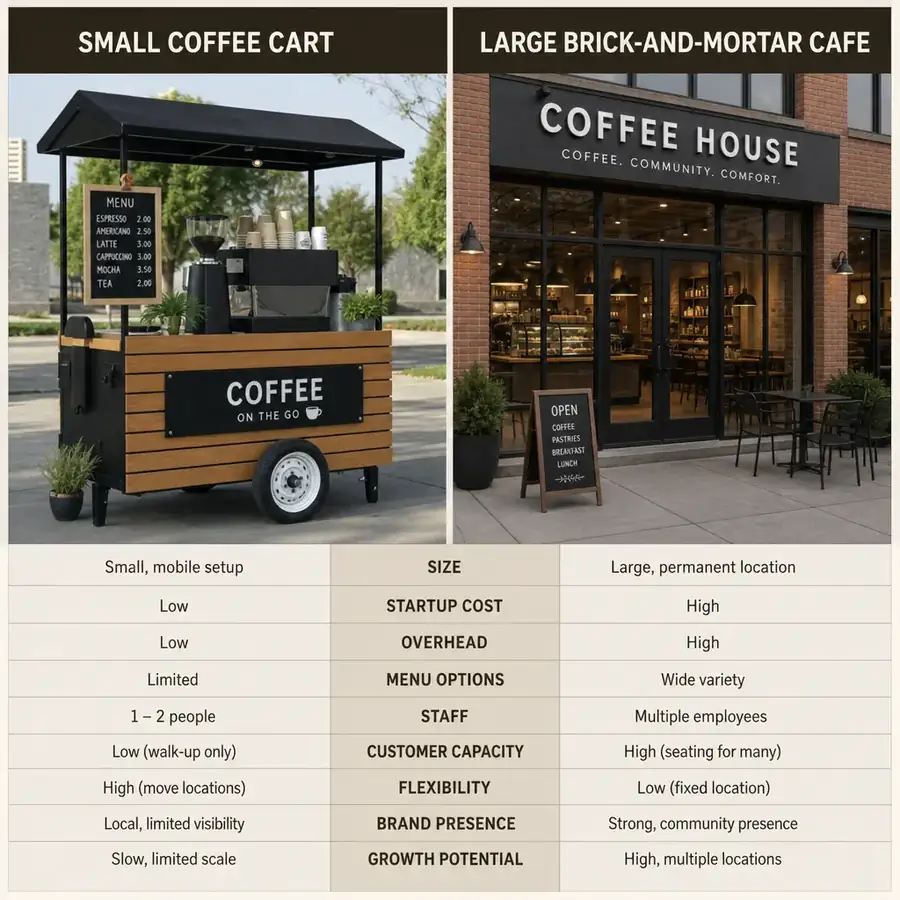
Starting a Mobile Coffee Cart vs Storefront
The foundation of your coffee business costs is dictated by the physical format of your venture. Let’s compare the two most popular entry points.
The Mobile Coffee Cart or Food Truck
If you want to test the waters with lower risk, starting a mobile coffee cart vs storefront is an excellent strategy. Mobile setups are highly versatile, allowing you to cater weddings, attend farmers' markets, or park outside busy office parks.
- Estimated Cost: $15,000 – $50,000
- Pros: Minimal overhead, agility to chase foot traffic, lower initial coffee shop expenses, no expensive commercial leases.
- Cons: Revenue is largely weather-dependent, lower daily transaction limits, and logistical challenges with water and power supply.
The Traditional Storefront (Brick-and-Mortar)
For those dreaming of a community hub where remote workers linger and friends gather, a physical storefront is the ultimate goal. However, cafe startup costs skyrocket when real estate is involved.
- Estimated Cost: $100,000 – $400,000+
- Pros: Year-round stability, higher volume capacity, space to sell high-margin food items, and the ability to build a strong local brand presence.
- Cons: High barrier to entry, long-term lease commitments, and complex permitting processes.
Breakdown: Coffee Shop Startup Costs 2026
To accurately answer "How much does it cost to open a coffee shop in 2026?", we must dissect the expenses category by category.
1. Real Estate, Rent, and Deposits
Location can make or break a cafe. Landlords typically require a security deposit (often equal to 1-3 months of rent) plus the first month’s rent upfront.
When scouting locations, you must factor in the average rent for retail space per square foot. In 2026, a prime downtown location in a mid-sized US city might cost anywhere from $35 to $75 per square foot annually.
- Example: A 1,200-square-foot space at $40/sq ft will cost $48,000 a year, or $4,000 a month. Your upfront deposit requirement could be $8,000 to $12,000 just to secure the keys.
2. The Cost of Interior Build-Out and Permits
This is where the majority of cafe startup expenses are hidden. Most commercial spaces are not naturally suited for a high-volume coffee bar. You will need to build it out.
The cost of interior build-out and permits typically includes:
- Plumbing and Electrical: Espresso machines require dedicated 220V lines, and health departments mandate specific floor sinks, mop sinks, and water filtration systems. ($15,000 – $35,000)
- Architecture and Design: Floor plans must be ADA-compliant and optimized for barista workflow. ($5,000 – $12,000)
- Permitting and Licenses: Health department permits, fire marshal inspections, and city business licenses. ($1,500 – $5,000)
- Millwork and Furniture: Custom counters, seating, lighting, and décor. ($20,000 – $50,000+)
Pro Tip: Look for a "second-generation" restaurant space. If location already has commercial plumbing and grease traps installed, you can easily save $30,000 on your build-out.
3. Equipment and Technology Investments
Your bar is the engine of your business. Skimping on equipment will lead to workflow bottlenecks, inconsistent coffee, and expensive repair bills.
The Espresso Machine and Grinders
The espresso machine is the heart of your operation. In 2026, sustainability is not just a buzzword; it is a financial necessity to combat rising utility costs. Energy-efficient espresso machine prices currently range from $12,000 to $25,000 for high-end, multi-boiler systems that auto-regulate power usage during slow periods.
Alongside the machine, you will need:
- Commercial espresso grinders (2-3 units): $2,000 – $4,000 each
- Batch brewers and drip coffee grinders: $2,500 – $4,500
- Refrigeration (under-counter fridges, display cases): $4,000 – $10,000
- Water filtration systems (crucial for protecting your espresso machine): $1,000 – $2,500
If writing a $30,000 check for equipment sounds intimidating, you are not alone. Many owners utilize commercial coffee equipment financing options. Equipment leasing allows you to pay a manageable monthly fee (e.g., $500–$800/month) rather than a massive upfront lump sum, preserving your working capital for other critical launch needs.
Point of Sale (POS) Systems
Modern customers expect to pay with a tap of their phone or a smart watch. Your POS system manages transactions, tracks inventory, and integrates with loyalty programs.
When budgeting, look beyond the hardware (which can cost $1,000–$2,500 for screens, cash drawers, and receipt printers) and consider the point of sale system monthly fees. In 2026, leading cloud-based POS providers charge anywhere from $70 to $150 per month, plus payment processing fees (usually around 2.5% + $0.10 per transaction).
4. Inventory and Raw Materials
You cannot open your doors without products to sell. Your initial inventory and raw material budget must cover everything required for the first month of operation. This ensures you do not run out of vanilla syrup during your grand opening weekend.
Budget roughly $5,000 to $10,000 for your initial stash, which includes:
- Roasted coffee beans (espresso and filter)
- Milks (dairy and plant-based alternatives like oat and almond)
- Syrups, sugars, and garnishes
- Teas, matcha, and chai concentrates
- Pastries or food items
- To-go packaging: Cups, lids, sleeves, napkins, and straws.
Structuring Your Plan: Business Plans and Pricing
A beautiful build-out means nothing if the underlying business model is flawed. Securing funding and achieving profitability requires meticulous planning.
The Business Plan
Do not attempt to secure funding without a comprehensive blueprint. Utilizing a specialty coffee shop business plan template will help you organize your thoughts, identify your target market, and present a professional front to investors or banks.
Your business plan should heavily feature a competitive analysis, a localized marketing strategy, and detailed financial projections. It must prove that you understand your local demographic and have a clear path to profitability.
Coffee Shop Pricing Strategy
How much will you charge for a vanilla latte? Your coffee shop pricing strategy is critical. Setting prices based purely on what the shop down the street charges is a recipe for failure. Instead, you must price based on your actual Cost of Goods Sold (COGS).
A healthy COGS for a coffee shop is between 25% and 30%. This means if a latte costs you $1.25 to make (including the cup, lid, milk, espresso, and syrup), you should be charging roughly $4.50 to $5.00 for it.
Forecasting ROI
Many new owners ask when they will make their money back. Forecasting ROI for independent coffee shops is complex but vital. If your total initial investment is $200,000, and your shop generates a net profit of $40,000 per year, your Return on Investment (ROI) timeline is roughly 5 years.
To speed up ROI, focus on increasing your average ticket size. Train your baristas to naturally upsell (e.g., "Would you like a freshly baked croissant with your latte today?") to maximize revenue per customer.
Navigating Funding: How to Pay for Your Dream
Unless you have hundreds of thousands of dollars in liquid savings, you will need to explore coffee shop financing.
Traditional Bank Loans and SBA Loans
The most common route for serious entrepreneurs is securing a loan backed by the Small Business Administration (SBA). However, securing one is not as simple as walking into a bank.
SBA loan requirements for small businesses in 2026 generally include:
- A strong personal credit score (typically 680 or higher).
- An upfront down payment (usually 10% to 20% of the total loan amount).
- Collateral (such as equity in your home or other assets).
- A bulletproof business plan with realistic cash flow projections.
- Industry experience (banks love to see that you have managed a cafe or worked in hospitality before).
Alternative Funding
If a traditional loan is out of reach, consider alternative paths:
- Investors or Partnerships: Trading equity in your business for capital.
- Crowdfunding: Platforms like Kickstarter can generate both funds and local buzz.
- Equipment Leasing: As mentioned earlier, financing your machines directly through the manufacturer or a third-party lender.
The Reality of Day-to-Day Operations
Opening day is just the beginning. To truly understand your coffee business costs, you must look at ongoing expenses.
Operating Expenses for High-Volume Cafes
Running a busy shop involves continuous cash outflow. Your operating expenses for high-volume cafes can be categorized into fixed and variable costs.
- Fixed Costs: Rent, loan repayments, POS subscriptions, and insurance.
- Variable Costs: Utilities (water, electricity), inventory replenishment, and maintenance.
A highly successful cafe might bring in $60,000 a month in revenue, but if operating expenses eat up $55,000 of that, the margin for error is razor-thin. Efficient management of these costs is the hallmark of a successful owner.
Mastering Labor Costs
Outside of your raw materials, labor will be your largest ongoing expense. Knowing how to calculate coffee shop labor costs accurately will save your business.
Industry standards dictate that total labor costs (including payroll taxes, workers' compensation, and benefits) should not exceed 30% to 35% of your gross revenue.
How to calculate it:
- Forecast your weekly gross sales (e.g., $10,000).
- Determine your target labor percentage (e.g., 30%).
- Calculate your weekly labor budget ($10,000 x 0.30 = $3,000).
- Subtract roughly 15% from that $3,000 to account for payroll taxes and insurance ($3,000 - $450 = $2,550).
- You now have $2,550 to spend on actual hourly wages for your staff for that week.
By meticulously scheduling staff around your busiest rushes and cutting labor during afternoon lulls, you can keep your coffee shop expenses firmly in check.
Often Overlooked Coffee Shop Startup Costs
It is easy to remember to buy coffee beans; it is much harder to remember the bureaucratic and promotional costs that sneak up on new business owners.
Coffee Shop Insurance
Do not open your doors without comprehensive coverage. Coffee shop insurance policy premiums vary by state and size of operation, but expect to budget $1,500 to $3,500 annually. You will generally need:
- General Liability Insurance: Protects you if a customer slips on a wet floor or spills hot coffee on themselves.
- Commercial Property Insurance: Covers your build-out and equipment in case of fire, theft, or vandalism.
- Workers' Compensation: Mandatory in almost all states to cover employee injuries on the job.
Marketing and Launch Budgets
"Build it and they will come" is a dangerous myth in the hospitality industry. You must aggressively let the neighborhood know you exist.
Allocating a dedicated marketing budget for new cafe launch is non-negotiable. Budget between $3,000 and $5,000 for your first three months. This should cover:
- Professional photography of your drinks and interior.
- A sleek, mobile-optimized website.
- Targeted social media ads (Instagram and TikTok are highly effective for aesthetic cafes).
- Signage and A-frame sandwich boards for the sidewalk.
- A "Soft Opening" budget (giving away free coffee for a few days to build hype and let baristas practice).
Certifications and Roasting Costs
If your business model includes roasting your own beans rather than buying wholesale, your costs will shift significantly. While roasting in-house lowers your per-pound coffee cost, it requires massive upfront capital for a commercial roaster ($15,000 - $50,000) and proper ventilation.
Furthermore, modern consumers care deeply about ethical sourcing. If you plan to market your roasted beans to conscious consumers, you must factor in sustainability certification costs for roasters. Acquiring and maintaining certifications like USDA Organic, Fair Trade, or B-Corp status can cost anywhere from a few hundred to several thousand dollars annually in audit fees and administrative overhead.
Summing Up the Investment
One of the most effective ways to control startup costs is to purchase equipment that matches your expected customer volume instead of overspending on oversized models. Prioritize high-quality commercial espresso machines, coffee brewers, refrigeration, ice production, food prep equipment, and storage solutions that can support daily operations while allowing room for future growth. Investing in durable commercial equipment often results in lower maintenance costs and a longer service life.
Many new café owners choose suppliers that provide access to multiple commercial kitchen brands in one place, making it easier to compare features, pricing, and warranty options. The Horeca Store is one example of a supplier that carries commercial coffee shop and restaurant equipment from leading manufacturers, helping businesses source everything from beverage equipment to refrigeration and stainless steel workspace essentials through a single purchasing channel.
Save on Equipment with The Horeca Store
Commercial coffee equipment can represent a significant portion of your initial investment, so choosing the right equipment supplier can help you build your café more efficiently. The Horeca Store offers a range of professional restaurant and café equipment, including coffee and beverage equipment, refrigeration, food preparation equipment, and other commercial kitchen essentials. Explore The Horeca Store to find equipment for your coffee shop setup.
Conclusion
Opening a coffee shop in 2026 is both an exciting opportunity and a significant financial commitment. While startup costs typically range from $15,000 for a mobile coffee cart to over $400,000 for a large café or roastery, your actual investment will depend on factors such as location, shop size, menu, build-out requirements, equipment selection, and local labor costs. Careful planning, realistic budgeting, and investing in reliable commercial equipment can help reduce long-term operating expenses and position your business for sustainable growth.
As you prepare to launch, work with experienced suppliers that can provide dependable commercial equipment backed by reputable manufacturers. The Horeca Store is a reliable one-stop destination for outfitting new coffee shops with high-quality commercial espresso machines, coffee brewers, commercial refrigerators, ice machines, prep tables, sinks, shelving, and other essential restaurant and café equipment from leading brands at competitive prices. Whether you're opening a compact takeaway café or a full-service coffee shop, choosing the right equipment from the beginning can help improve efficiency, product quality, and long-term profitability.