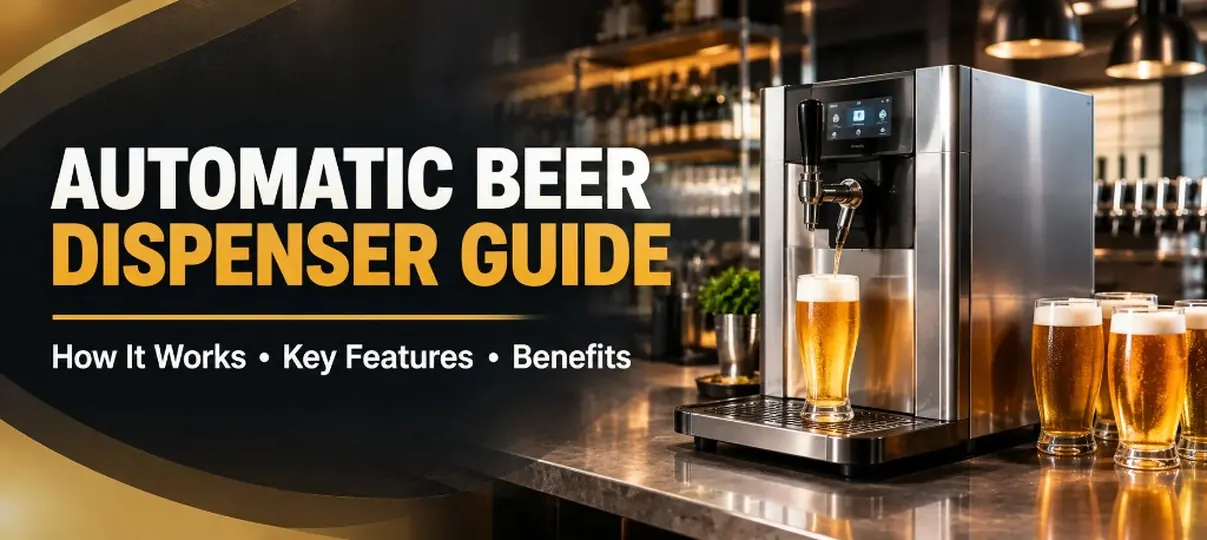
An automatic beer dispenser works by controlling the pour for you: it releases beer from a keg, can, or chilled reservoir through a tap or dispensing head, manages flow and foam, and stops when the programmed serving is complete. In a commercial draft beer system, it usually combines refrigeration, gas pressure, beer lines, sensors, and a dispensing valve so each glass is filled with less manual handling. A walk-in cooler is a different cabinet from the keg box.
A beer dispenser is equipment designed to store, chill, and serve beer in a controlled way. Depending on the setup, it may be a countertop beer pouring machine, a self-service beer tap system, a full bar draft beer system, or even an automatic beer can dispenser for packaged beverages.
How does an automatic beer dispenser work?
An automatic beer dispenser works by moving beer from its source to the glass while controlling temperature, pressure, flow, and foam. The beer source may be a keg, tank, can, or cartridge. The machine uses a tap valve or dispensing mechanism to start and stop the pour, while sensors, timers, or programmed volume controls help maintain consistency. Pair kegs with a bottle cooler when the menu also includes packaged beer.
In many commercial systems, carbon dioxide or a gas blend pushes beer from the keg through chilled lines. The dispenser then regulates the pour so the operator does not need to tilt the glass, judge the foam manually, or stop the tap at the exact second. More advanced machines may detect glass position, control head height, or create a finished foam cap.
A simple way to understand the process is:
- Beer is chilled in a keg cooler, undercounter unit, or built-in refrigeration chamber.
- Gas pressure pushes the beer through the line toward the tap.
- A valve opens automatically when the pour is activated.
- Flow control manages speed so beer does not rush out too quickly.
- Foam is controlled by temperature, pressure, line balance, and sometimes a separate foam function.
- The machine stops the pour based on time, volume, sensor reading, or preset serving size.
This matters because beer is sensitive. If the temperature is too warm, pressure is wrong, or the line is poorly balanced, the result can be excess foam, waste, slow service, and inconsistent pints.
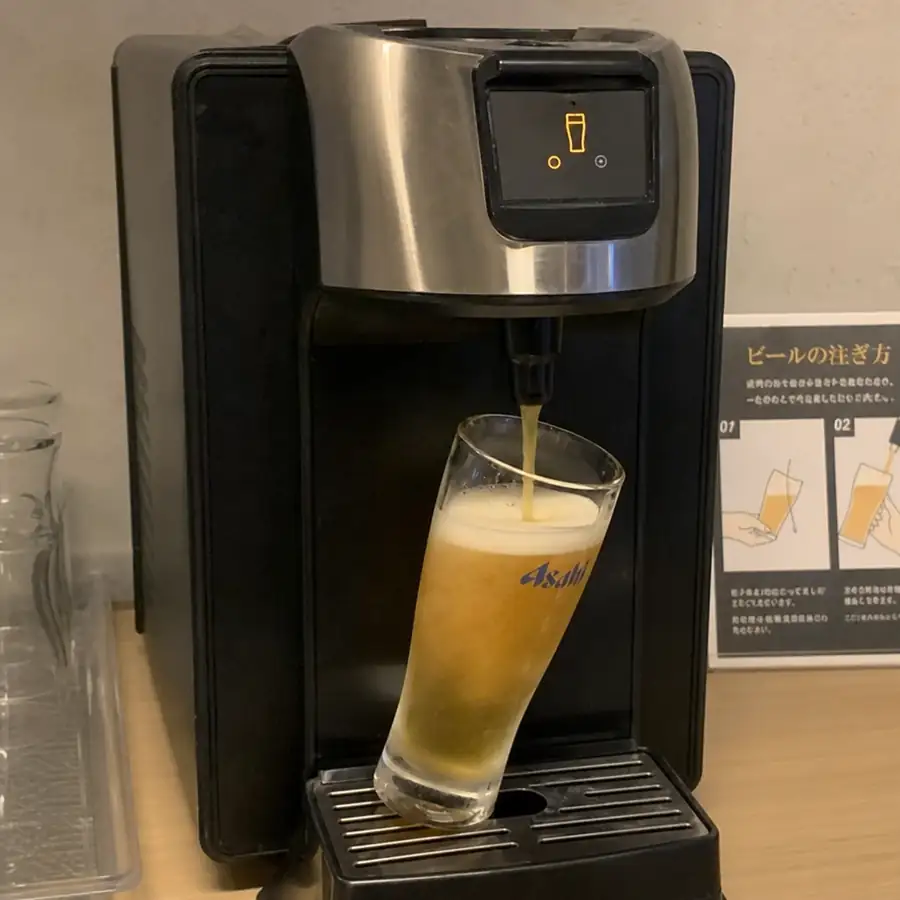
The main parts of a beer dispensing system
A back bar cooler can hold bottled beer beside the draft line.
Most automatic beer dispensers look simple from the outside, but the system behind the pour is doing several jobs at once. The exact parts depend on whether it is a small countertop unit, a high-volume bar system, or a branded dispenser such as an Asahi automatic beer dispenser used for consistent presentation.
Beer source
The beer source is usually a keg in commercial hospitality settings. Kegs are practical for bars, restaurants, hotels, catering services, and event venues because they support repeated pours from one stored container. Some compact machines may use cans, mini kegs, or small tanks instead.
An automatic beer can dispenser is different from a keg-based draft setup. It is typically designed to organize, chill, release, or serve canned beer rather than pull beer through draft lines. This can suit retail displays, self-service areas, staff beverage stations, or venues that sell packaged beer but still want speed and organization.
Refrigeration
Temperature has a direct effect on beer quality and foam. A dispenser may use built-in cooling, an undercounter keg refrigerator, a remote cooler, or chilled beer lines. If beer warms up inside the line, it can foam heavily even when the keg itself is cold.
For busy operations, cooling capacity is not just about keeping beer cold overnight. It also affects recovery during peak service. A bar serving pint after pint needs a system that can maintain stable temperature under load.
Gas and pressure control
Keep an ice machine on its own circuit, separate from the gas plan.
Most draft beer systems use gas to push beer from the keg to the tap. Pressure must be matched to the beer style, line length, temperature, and required serving speed. Too much pressure can create turbulence and foam; too little pressure can make beer pour slowly or lose carbonation over time.
Some systems use CO2, while others use a mixed gas for certain beers or longer line runs. The regulator, coupler, and gas line must be compatible with the keg and beverage program.
Tap, valve, and flow control
Beer glasses should match the pour size the valve is set for.
The tap or dispensing valve controls the release of beer. In a manual beer tap system, the bartender opens and closes the tap by hand. In an automatic setup, the machine may use a programmed valve, button, lever, sensor, or electronic control.
Flow control is important because it affects speed, foam, waste, and presentation. A restaurant with moderate volume may prioritize consistency and ease of training, while a stadium kiosk or QSR may prioritize rapid repeat pours.
Sensors and automation
A commercial refrigerator still holds garnish and mixers.
Automation varies widely. Basic machines may use timed pours. More advanced units may use flow meters, cup sensors, portion settings, or glass-positioning mechanisms. These features reduce the skill needed for a clean pour and help new staff produce more consistent results.
The operational benefit is simple: less guesswork. When pours are more predictable, businesses can reduce waste, keep service moving, and deliver a more consistent customer experience.
Types and configurations available
An underbar ice bin belongs at the well, not in the beer line.
Automatic beer dispensers come in several formats. The best choice depends on space, service volume, beverage menu, staff workflow, and whether beer is sold by the glass, pitcher, can, or self-service tap.
A compact beer dispenser can be useful where space is tight, but it may not handle continuous peak demand. A larger draft beer system can support higher throughput, but it requires more planning for installation, cleaning, gas storage, and parts. Leave airflow the way you would for a commercial freezer, and keep a milk cooler off the beer circuit.
Features and specifications that affect performance
A reach-in refrigerator is for food, not for kegs.
The most important specifications are not always the most visible ones. A polished tap tower matters for presentation, but the system's performance depends on cooling, line balance, pressure, controls, and serviceability.
Capacity affects how often staff must change kegs, refill containers, or restock cans. A small cafe offering occasional beer service may be fine with a compact unit. A sports bar needs enough keg storage and tap capacity to handle rush periods.
Size and footprint determine where the machine can be installed. Countertop units save undercounter space but occupy valuable service area. Undercounter systems keep the bar cleaner, but they need ventilation, access, and room for kegs.
Power and cooling design influence stability. Built-in refrigeration may require a standard electrical supply, ventilation clearance, and time to reach serving temperature. In high-volume venues, cooling recovery matters as much as initial chill.
Number of taps controls menu flexibility. One tap is simple and easy to maintain. Multiple taps let restaurants, pubs, and hotels offer lagers, ales, craft beer, or seasonal options, but every additional line adds cleaning and inventory management.
Automation level determines how much human skill is needed. Timed dispensing is simple. Flow-metered dispensing can be more accurate. Sensor-based systems can improve repeatability, especially where staff turnover is high.
Material quality and cleanability affect hygiene and long-term ownership cost. Beer touches lines, couplers, valves, and taps, so food-safe materials and accessible parts matter. If a component is difficult to clean, it can create flavor issues and service delays.
Matching dispenser options to business needs
A wine cooler is a separate buy if the list includes bottles of wine.
Different hospitality businesses need different dispensing priorities. A single "best" beer pouring machine does not exist; the right choice depends on the service model.
For a restaurant, an undercounter draft beer system with one to four taps is often practical. It keeps the bar area tidy, supports common beer choices, and gives staff a familiar workflow. Consistency matters because servers may not be dedicated bartenders.
For a pub, brewery, or taproom, a multi-tap beer tap system is usually more suitable. These venues need variety, speed, and reliable line management. They should focus on cooling stability, tap count, cleaning access, and keg rotation.
For hotels and event venues, automation can help standardize service across shifts and temporary staff. A preset pour reduces training time and supports banquets, receptions, and conference bars where demand arrives in waves.
For QSRs, food trucks, and catering services, compact equipment and fast setup matter. A small beer dispenser may be useful if regulations and service conditions allow it. Portability, power access, cooling method, and cleaning time should be checked before purchase.
For cafes and bakeries adding beer service, a small countertop or single-tap solution may be enough. The goal is usually controlled expansion, not a full bar buildout.
For retail or packaged beverage operations, an automatic beer can dispenser may make more sense than draft. It supports organized can storage and quick dispensing, without the line cleaning and pressure management required by draft beer.
If you are comparing options through the horeca store or another equipment supplier, ask how the dispenser fits your exact service pattern, not just whether it can pour beer.
Brand and model considerations
Glass chillers keep glassware cold without crowding the tap, and a prep table still needs its own space.
Brand-specific machines can be attractive when a venue wants a recognizable pour style or consistent presentation. An Asahi automatic beer dispenser, for example, is commonly associated with automated pouring and a controlled foam finish in settings that serve Asahi beer. The key point is compatibility: the dispenser, keg format, gas setup, glassware, and service expectations must work together.
Generic commercial dispensers may offer more flexibility across beer brands and keg types. They can be a better fit for bars and restaurants that rotate products often. However, the buyer should confirm coupler compatibility, replacement part availability, cleaning requirements, and local support.
Model choice should be guided by practical questions:
- Can it handle your busiest hour without warming beer or slowing service?
- Does it fit your counter, undercounter, or mobile setup?
- Are parts such as taps, valves, seals, couplers, and lines easy to source?
- Does the supplier offer installation guidance and after-sales support?
- Is the warranty clear about labor, parts, misuse, and commercial use?
Installation, cleaning, and ownership costs
Installation can be simple for a compact unit or more involved for a commercial draft beer system. Larger systems may need ventilation, drainage, electrical access, gas cylinder storage, line routing, and secure keg placement. Local rules may also affect self-service alcohol systems.
Cleaning is not optional. Beer lines, taps, couplers, drip trays, and dispensing heads need regular cleaning according to the manufacturer's instructions and local hygiene expectations. Poor cleaning can cause off-flavors, excessive foam, slow flow, and unhappy customers.
Maintenance includes checking seals, replacing worn lines, inspecting gas connections, calibrating portion controls where applicable, and keeping refrigeration components clear of dust and blockage. The total cost of ownership includes not only the purchase price, but also cleaning supplies, gas, spare parts, service calls, energy use, downtime, and staff training.
Warranty and support are worth reviewing before buying. A cheaper machine may become expensive if parts are hard to obtain or service is unavailable. For commercial users, fast support can be more valuable than a small upfront saving.
Clear buying guidance
A chef base refrigerator and a worktop refrigerator stay on the cook line.
Use your business requirement as the starting point, then choose the equipment around it.
- If you serve beer occasionally, choose a compact countertop beer dispenser with simple controls and easy cleaning.
- If you run a restaurant with steady dinner service, choose an undercounter draft beer system with enough tap capacity for your core menu.
- If you operate a pub or taproom, choose a multi-tap system with strong cooling, accessible lines, and reliable gas control.
- If staff consistency is a challenge, choose an automatic beer pouring machine with portion control or sensor-assisted pouring.
- If you sell packaged beer, choose an automatic beer can dispenser rather than a keg-based tap system.
- If you serve one flagship beer brand, consider a branded dispenser, but confirm keg, gas, parts, and warranty compatibility first.
- If your venue is mobile or seasonal, prioritize portability, setup time, power requirements, and cleaning simplicity.
The best automatic beer dispenser is the one that keeps beer cold, pours consistently, fits your workflow, and can be maintained without disrupting service.
FAQ
Review bar refrigeration as a whole, including bottled beer and draft.
How Does an Automatic Beer Dispenser Work?
It chills beer, moves it from a keg or container using gas pressure or a dispensing mechanism, controls the flow through a tap or valve, and stops the pour automatically. The goal is a consistent serving with controlled foam and less manual adjustment.
Is a beer pouring machine better than a manual tap?
It can be better when consistency, speed, and staff training are priorities. A skilled bartender can pour well manually, but automation helps reduce variation across different operators and busy service periods.
Can one dispenser serve different beer brands?
Many commercial dispensers can serve different brands if the keg, coupler, gas pressure, and line setup are compatible. Brand-specific machines may be more limited, so always check compatibility before purchase.
How often should a draft beer system be cleaned?
Follow the manufacturer's instructions and local hygiene requirements. In general, beer-contact parts such as lines, taps, and couplers need routine cleaning to protect flavor, foam quality, and food safety.
What should I check before buying a beer dispenser?
Check capacity, tap count, cooling performance, dimensions, power needs, gas setup, cleaning access, spare parts, warranty, and supplier support. Match those details to your peak demand, available space, and staff workflow.