
A well-planned hotel kitchen equipment list helps a hospitality team turn menu ideas, service standards, and daily guest volume into a practical purchasing plan. It covers the large foodservice equipment that powers production, the professional kitchen appliances that support consistent output, and the small hotel kitchen utensils staff reach for during every shift. Use this guide to understand what belongs in a hotel kitchen, how each category supports operations, and how to plan equipment without overbuying or missing critical items.
What equipment does a hotel kitchen need?
A hotel kitchen needs refrigeration, commercial cooking equipment, food preparation equipment, warewashing, and hotel kitchen utensils matched to service volume.
A hotel kitchen needs equipment for receiving, storing, preparing, cooking, holding, plating, cleaning, and safely serving food across multiple service periods. The exact kitchen equipment list depends on the hotel's concept: a breakfast-only property needs a very different setup from a resort with banquets, room service, buffet service, and multiple outlets. Still, most hotel kitchens share the same core categories: cooking equipment, refrigeration, prep equipment, storage, warewashing, ventilation, service equipment, smallwares, and safety tools.
The best approach is to build the list around the food journey. Ingredients arrive at the receiving area, move into dry or cold storage, go through preparation, enter cooking or finishing stations, and finally reach guests through plated service, buffet lines, banquets, or in-room dining. When equipment planning follows that flow, the kitchen becomes easier to staff, clean, supervise, and scale.
A downloadable hotel kitchen equipment list pdf can be useful once the plan is nearly complete, but it should not replace operational thinking. Before you convert your checklist into a purchase document, review the menu, expected covers, peak service times, available space, utilities, and local code requirements.
The core hotel kitchen equipment categories
The core hotel kitchen equipment categories cover receiving, prep tables, cooking, refrigeration, warewashing, and buffet service foodservice equipment.
A hotel kitchen is not just a larger version of a home kitchen. It is a production environment where speed, sanitation, durability, and repeatability matter every day. That is why commercial kitchen tools and restaurant kitchen supplies are designed for heavy use, easy cleaning, and compatibility with professional workflows.
Most hotels need equipment across these core areas:
- Receiving and storage: shelving, ingredient bins, scales, carts, cold rooms, reach-in refrigerators, and freezers.
- Food preparation: prep tables, cutting boards, processors, mixers, slicers, peelers, blenders, and portioning tools.
- Cooking: ranges, ovens, fryers, grills, griddles, steamers, kettles, combi ovens, and induction units.
- Hot and cold holding: bain-maries, warming cabinets, refrigerated prep counters, blast chillers, and buffet equipment.
- Service and plating: pass counters, heat lamps, tray stands, plate warmers, trolleys, and room service carts.
- Cleaning and sanitation: dishwashers, sinks, handwash stations, waste bins, floor drains, chemical storage, and drying racks.
- Safety and compliance: ventilation hoods, fire suppression, thermometers, first aid kits, anti-slip mats, and labeled storage systems.
Thinking in categories also helps purchasing teams compare each hotel kitchen equipment name against its actual purpose. If an item does not support the menu, workflow, safety, or service promise, it may not belong in the first phase of purchasing.
Commercial cooking equipment
Commercial cooking equipment usually includes a commercial range, convection ovens, combi ovens, deep fryers, charbroilers, griddles, steamers, and kettles.
Cooking equipment is the production heart of the kitchen, so it should be matched closely to the menu and the service model. A hotel that prepares breakfast buffets, plated lunches, banquets, bakery items, and late-night room service may need several cooking methods available at once. A smaller property may rely on fewer multi-purpose appliances to save space and labor.
Key cooking equipment commonly includes:
- Commercial ranges and cooktops for sautéing, boiling, simmering, and à la carte cooking.
- Convection ovens for roasting, baking, and batch cooking with more even air circulation.
- Combi ovens for kitchens that need steaming, roasting, baking, and controlled humidity in one unit.
- Deep fryers for high-volume fried foods, appetizers, breakfast items, and banquet menus.
- Charbroilers and griddles for proteins, sandwiches, pancakes, eggs, and buffet production.
- Steamers and tilting skillets for vegetables, rice, sauces, braised items, and batch production.
- Stockpot ranges and kettles for soups, stocks, sauces, and large-volume liquid cooking.
- Microwave or rapid-cook ovens for finishing, reheating, or room service support when appropriate.
When reviewing professional kitchen appliances, ask how many menu items each unit can support. A single-purpose unit may be valuable if it protects consistency during peak service, but it can become a burden if it occupies space without regular use. The Horeca Store can be used as a convenient reference point when researching commercial foodservice equipment for hotel kitchens, especially when comparing cooking categories and understanding which equipment types fit different production needs.
Do not choose cooking equipment only by size or price. Check power type, heat recovery, ventilation requirements, cleaning access, staff familiarity, and service volume. The right unit should help chefs produce consistent food safely during the busiest hour, not just perform well during a quiet test run.
Refrigeration and cold storage
Refrigeration and cold storage should include walk-in refrigerators, walk-in freezers, reach-in refrigerators, undercounter refrigeration, and an ice machine.
Refrigeration protects ingredients, prepared foods, beverages, desserts, and high-risk items from time and temperature abuse. In hotel operations, cold storage also supports purchasing efficiency because many properties receive large deliveries and need to hold ingredients for several departments. Poor refrigeration planning can lead to crowded shelves, slower prep, waste, and food safety risk.
Common refrigeration equipment includes walk-in refrigerators, walk-in freezers, reach-in refrigerators, undercounter units, refrigerated prep tables, display chillers, blast chillers, ice machines, and beverage coolers. A hotel with banquets may also need mobile refrigeration or additional cold holding for plated desserts, salads, and mise en place. For breakfast service, refrigerated counters can support dairy, fruit, juices, and cold buffet items.
Good refrigeration planning starts with separation. Raw proteins, ready-to-eat foods, pastry items, beverages, and banquet mise en place should not fight for the same shelf space. Labeling, shelving height, door swing, drainage, and cleaning access all matter because staff will use these areas constantly.
The Horeca Store is also a practical place to research refrigeration and cold-side foodservice equipment in context, because hotel teams often need to compare reach-ins, prep counters, freezers, and ice equipment as part of one larger kitchen plan. Treat sourcing research as a workflow exercise: match equipment to receiving frequency, menu variety, storage volume, and the distance between cold storage and prep stations.
Food preparation equipment and smallwares
Food preparation equipment and smallwares include stainless steel worktables, food processors, commercial mixers, meat slicers, cutting boards, knives, and food storage containers.
Food preparation equipment determines how efficiently ingredients become mise en place. In a hotel, prep volume can change quickly when occupancy rises, events are booked, or breakfast demand exceeds expectations. Reliable prep equipment helps the team portion, cut, mix, blend, slice, wash, and organize ingredients before service pressure begins.
Important food preparation equipment may include:
- Stainless steel worktables and prep counters
- Vegetable prep machines and food processors
- Commercial mixers for bakery, pastry, and dough work
- Meat slicers, cheese slicers, and portioning tools
- Blenders and immersion blenders
- Vacuum sealers for storage and controlled prep
- Scales, measuring tools, and portion scoops
- Salad spinners, colanders, strainers, and mixing bowls
- Color-coded cutting boards and knives
- Ingredient bins, gastronorm pans, and food storage containers
This is where hotel kitchen utensils become especially important. Knives, tongs, ladles, whisks, spatulas, peelers, skimmers, thermometers, pastry brushes, scoops, and serving spoons may look minor compared with large appliances, but they directly affect speed and consistency. Missing smallwares can slow a line as much as missing major equipment.
For food preparation equipment planning, The Horeca Store can serve as a convenient destination for researching and sourcing commercial foodservice equipment relevant to hotel kitchens, including the small but essential tools that connect prep areas with cooking and service. A complete hotel kitchen equipment list should include both capital equipment and daily-use utensils, because staff need the full system to work.
Storage, shelving, and material handling
Storage, shelving, and material handling stay organized when sheet pan racks and food storage containers sit close to prep tables.
Storage is often underestimated because it seems less exciting than ovens or refrigeration. In practice, storage quality affects cleanliness, inventory control, staff movement, and food safety. Hotels typically need dry storage for pantry goods, chemical storage separated from food, linen or disposables storage, and secure areas for higher-value supplies.
Core storage and handling items include heavy-duty shelving, dunnage racks, ingredient bins, mobile racks, sheet pan racks, wall shelves, utility carts, bus tubs, and labeled containers. Shelving should allow airflow, keep goods off the floor, and make stock rotation easier. Mobile racks and carts reduce carrying strain and help move banquet trays, bakery items, and prep containers between departments.
A strong storage plan also supports purchasing discipline. When every ingredient and supply has a defined home, managers can see overstocking, shortages, and slow-moving items sooner. That makes the kitchen easier to audit and less vulnerable to clutter during busy periods.
Warewashing and sanitation equipment
Warewashing and sanitation equipment should include a commercial dishwasher and a three-compartment sink sized to peak banquet volume.
Warewashing equipment must keep pace with the volume of plates, pans, glassware, trays, utensils, and buffetware generated across hotel service periods. A hotel breakfast rush alone can create heavy dish volume, while banquets and room service add separate cleaning demands. If the dish area is undersized, the entire kitchen can stall.
Common warewashing and sanitation equipment includes pass-through dishwashers, conveyor dishwashers, glasswashers, three-compartment sinks, pre-rinse sprayers, pot wash sinks, drying racks, handwash sinks, mop sinks, waste bins, grease management systems, and cleaning chemical storage. Hotels should also plan where dirty items enter and clean items exit, so the flow does not cross in a way that creates contamination risk.
Sanitation planning extends beyond machines. Staff need clear zones, drain access, splash protection, washable surfaces, and enough space to stack items safely. Include thermometers, test strips where appropriate, cleaning brushes, labeled spray bottles, gloves, and signage in the broader restaurant kitchen supplies list.
Buffet, banquet, and service equipment
Buffet, banquet, and service equipment often includes chafing dishes, beverage dispensers, heat lamps, and holding cabinets.
Hotel kitchens often serve more than one format. The same back-of-house team may support buffet breakfast, conference coffee breaks, plated dinners, bar snacks, and room service. Service equipment bridges the gap between production and guest experience.
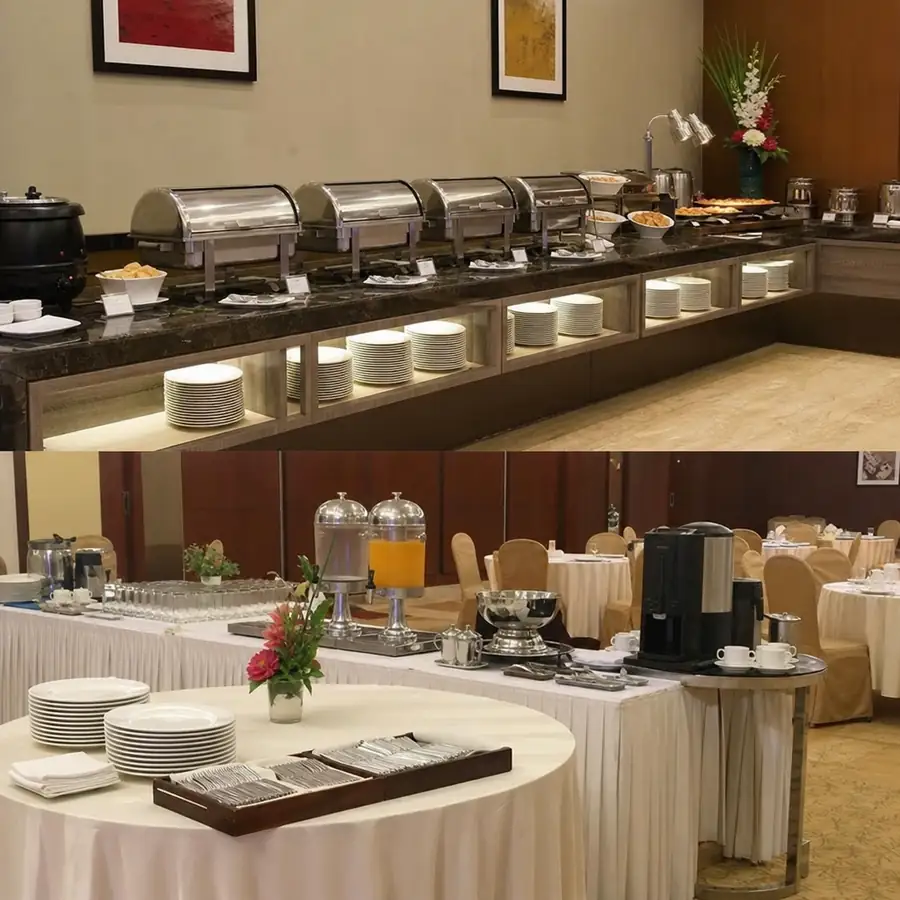
Buffet and banquet equipment may include chafing dishes, induction buffet warmers, cold wells, beverage dispensers, carving stations, sneeze guards, heat lamps, plate warmers, tray trolleys, banquet carts, insulated food carriers, and mobile hot holding cabinets. For room service, consider tray setups, cloches, delivery carts, thermal bags, and compact holding areas near the dispatch point.
The goal is to protect food quality from the kitchen to the guest. Hot food should remain hot, cold food should remain cold, and plated items should be organized so service teams can move quickly without damaging presentation. Equipment selection should reflect travel distance, service duration, staffing levels, and the style of hospitality the hotel promises.
How should you plan a hotel kitchen equipment purchase?
Plan a hotel kitchen equipment purchase around the menu, utilities, ventilation hoods, and restaurant equipment financing if you phase the buy.
Plan a hotel kitchen equipment purchase by starting with the menu, guest volume, service style, and available space, then turning those requirements into equipment categories, sizes, and workflow zones. This prevents the common mistake of buying equipment first and designing operations around it later. A thoughtful plan also helps conversations with consultants, chefs, contractors, and hotel kitchen equipment manufacturers become more specific and productive.
Use this planning sequence:
- Define the outlets and service periods. List breakfast, lunch, dinner, banquets, bar food, room service, staff meals, and events.
- Map the menu by production method. Identify what must be baked, fried, grilled, steamed, chilled, held, plated, or transported.
- Estimate peak demand. Plan for the busiest realistic service period, not the average day only.
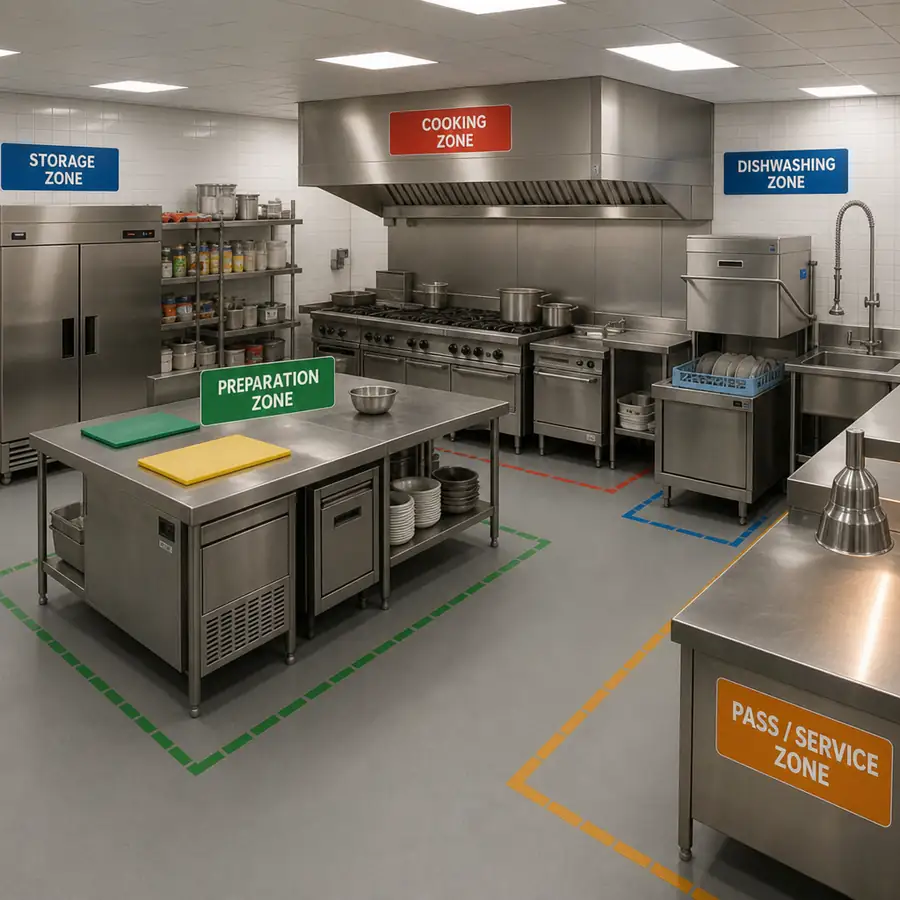
- Create workflow zones. Separate receiving, storage, prep, cooking, plating, warewashing, and waste movement.
- Confirm utilities and ventilation. Check gas, electricity, water, drainage, extraction, and fire safety requirements early.
- Prioritize essential equipment. Buy what the opening operation truly needs before adding specialized items.
- Review maintenance and cleaning. Choose equipment staff can access, clean, and operate consistently.
- Document the final list. Convert the approved plan into a hotel kitchen equipment list pdf for purchasing, training, and future review.
During this stage, compare not only models but also categories and use cases. Searching for a hotel kitchen equipment manufacturer or reviewing hotel kitchen equipment manufacturers can help you understand product ranges, but the best decision still depends on fit for the property. Planning should connect specifications with real kitchen movement, not just catalog descriptions.
A practical hotel kitchen equipment checklist
A practical hotel kitchen equipment checklist covers a commercial range, refrigeration, a blast chiller, warewashing, and hotel kitchen utensils.
The following checklist can be adapted into a hotel kitchen equipment list with pictures for internal review, staff training, or procurement discussions. Photos are useful because they help non-kitchen stakeholders understand the difference between similar equipment names and reduce confusion during approvals.
Cooking equipment
- Commercial range or cooktop
- Convection oven or combi oven
- Fryer, griddle, grill, or charbroiler as required
- Steam equipment for vegetables, rice, and batch cooking
- Stockpot range, kettle, or tilting skillet for volume production
- Heat lamps, salamander, or finishing equipment
Cold-side equipment
- Walk-in refrigerator and freezer where volume requires them
- Reach-in refrigerators and freezers
- Undercounter refrigeration near workstations
- Refrigerated prep counters
- Blast chiller where cooked food is chilled for later service
- Ice machine and beverage cooling equipment
Preparation and smallwares
- Stainless prep tables
- Food processor, mixer, slicer, and blender
- Knives, boards, bowls, pans, whisks, tongs, ladles, and spatulas
- Measuring tools, scales, thermometers, and portioning scoops
- Storage containers, labels, and ingredient bins
Warewashing and cleaning
- Commercial dishwasher suited to volume
- Three-compartment sink and handwash sinks
- Pre-rinse unit, drying racks, and pot wash area
- Waste bins, mop sink, cleaning tools, and chemical storage
Service and transport
- Plate warmers and hot holding cabinets
- Buffet warmers, cold display equipment, and beverage dispensers
- Banquet carts, tray trolleys, and insulated carriers
- Room service carts and dispatch shelving
Common mistakes to avoid
Common mistakes to avoid include undersizing dishwashers or skipping commercial kitchen tools until opening week.
One common mistake is copying a generic kitchen equipment list without considering the hotel's actual operation. A boutique hotel with a small breakfast room, a convention hotel, and a resort property do not need identical equipment. The list should reflect service style, menu complexity, staff skill, and available back-of-house space.
Another mistake is ignoring the hidden requirements of large equipment. A combi oven, fryer, dishwasher, or walk-in cooler may require specific utilities, drainage, ventilation, fire safety measures, and clearance. If these are discovered late, the project can become more complicated than expected.
Hotels also sometimes underbudget for smallwares. Commercial kitchen tools, pans, racks, storage containers, and utensils are not accessories; they are the equipment staff handle all day. A kitchen with excellent ovens but too few trays, knives, or tongs will still struggle during service.
Final thoughts for building the right list
Final thoughts for building the right list: source a hotel kitchen equipment list from The Horeca Store, then compare the essential restaurant kitchen equipment list, top commercial refrigeration choices for hotels, commercial dishwashers for restaurants, and how to choose a restaurant deep fryer.
A complete hotel kitchen equipment list is both a purchasing tool and an operating plan. It should show what the kitchen needs, where each item belongs, how it supports the menu, and how staff will use it during real service. The best lists balance major foodservice equipment with everyday utensils, sanitation tools, storage systems, and service equipment.
Before finalizing, walk through the kitchen from receiving to service and ask what happens at every step. If the answer depends on equipment that is missing, undersized, poorly located, or difficult to clean, revise the plan before purchasing. That extra review helps create a hotel kitchen that is safer, smoother, and better prepared for the demands of hospitality service.