
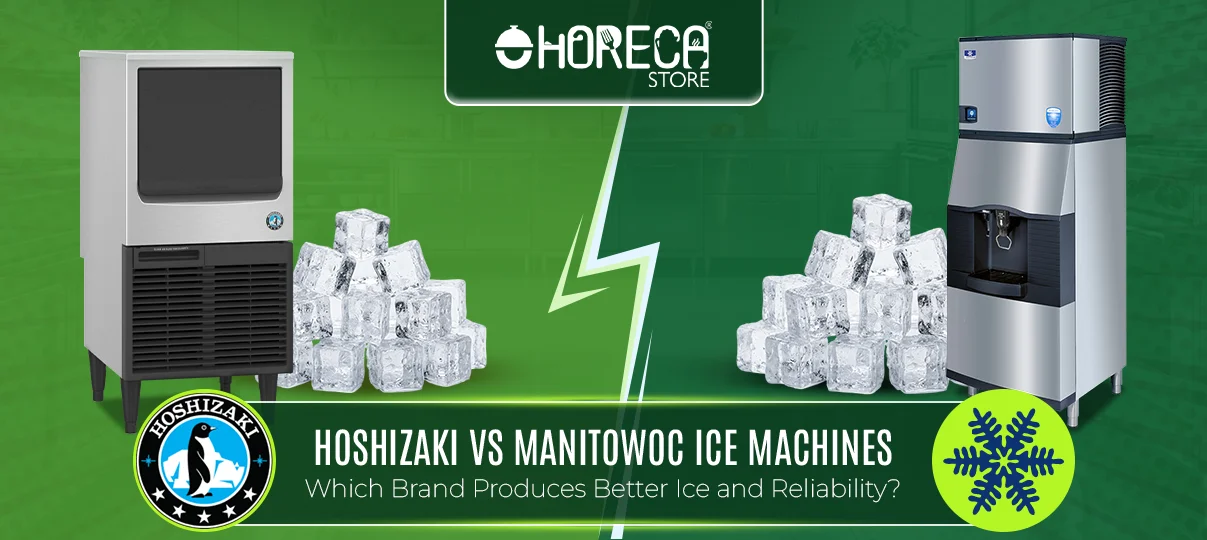
In the fast-paced food service and hospitality industries, few pieces of equipment are as critical—yet often overlooked—as the commercial ice machine. When your ice supply suddenly stops on a busy Friday night, it brings operations to a grinding halt. If you are in the market for a new unit, you are likely asking the ultimate industry question: Hoshizaki vs Manitowoc Ice Machines: Which Brand Produces Better Ice and Reliability?
Both brands are absolute titans in the world of commercial refrigeration. Hoshizaki is revered for its Japanese engineering and bulletproof durability, while Manitowoc is praised for its American-made innovation, high-tech interfaces, and user-friendly maintenance.
In this comprehensive guide, we will break down everything you need to know about these two heavyweights. From ice shapes and evaporator plate materials to maintenance protocols and energy efficiency, we will help you decide which brand belongs in your kitchen.
The Contenders: A Brief Overview
Before diving into the technical specifications, it helps to understand the philosophy behind both brands.
Hoshizaki has built its reputation on extreme reliability and heavy-duty construction. They design their machines to withstand the harshest kitchen environments, focusing heavily on internal component quality and long-term durability.
Manitowoc, on the other hand, leans heavily into technological innovation and ease of use. They design their machines to be intuitive, making them incredibly easy for your staff to monitor, clean, and troubleshoot.
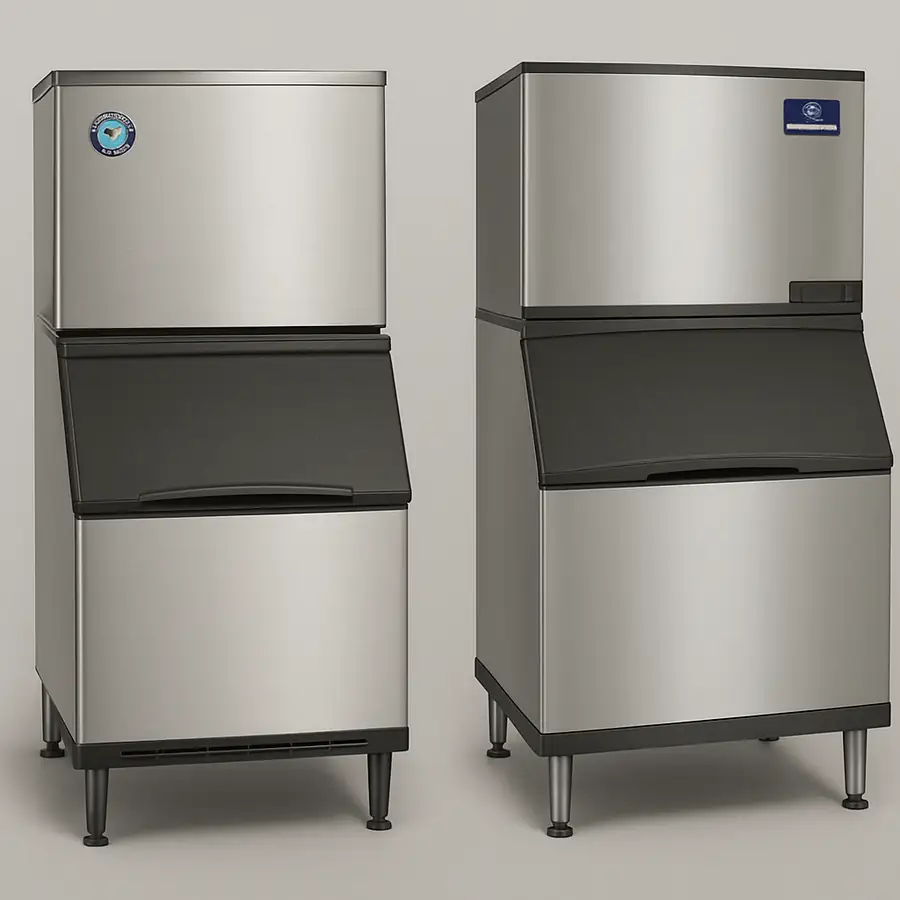
Ice Quality and Shape: Crescent vs. Square
The type of ice you serve impacts everything from beverage presentation to your bottom line. When comparing these brands, you inevitably run into the debate of crescent cube vs square ice cubes.
Hoshizaki’s Signature Crescent Cube
Hoshizaki is famous for its unique crescent-shaped ice. But this isn't just an aesthetic choice; it serves a highly practical purpose:
- Liquid Displacement: Crescent cubes nestle together closely in a glass. This displaces more liquid, meaning you pour less soda or liquor per glass, saving you money over time.
- Slower Melt Rate: Because of their solid, half-moon shape, crescent cubes melt slowly, preserving the flavor and carbonation of your customers' drinks.
- No Splashing: The smooth, curved edges allow liquids to cascade over the ice, preventing splashing when pouring from a soda gun or pitcher.
Manitowoc’s Classic Square (Dice) Cube
Manitowoc utilizes a traditional square-shaped cube, often referred to as "dice" or "half-dice" ice.
- Maximum Cooling Power: Square cubes offer excellent surface area, making them highly effective for rapid cooling.
- Versatility: Dice ice is incredibly versatile. It is ideal for blending into smoothies or margaritas, as the hard edges catch the blender blades easily.
- Classic Presentation: For high-end spirits and cocktails, many bartenders prefer the classic geometric look of a perfectly square cube.
The Verdict on Ice: If you want to maximize syrup yields and prevent splashing, Hoshizaki’s crescent ice is the winner. If you run a high-volume blending concept or prefer traditional aesthetics, Manitowoc’s dice ice takes the crown.
Build Quality: What’s Inside Matters
When investing in commercial ice makers, what goes on behind the panels dictates the lifespan of your equipment. A massive point of divergence between these two brands is how they manufacture their evaporator plates.
The Evaporator Debate: Stainless Steel vs. Nickel Plating
In the industry, the debate of stainless steel evaporator vs nickel plating is highly contested.
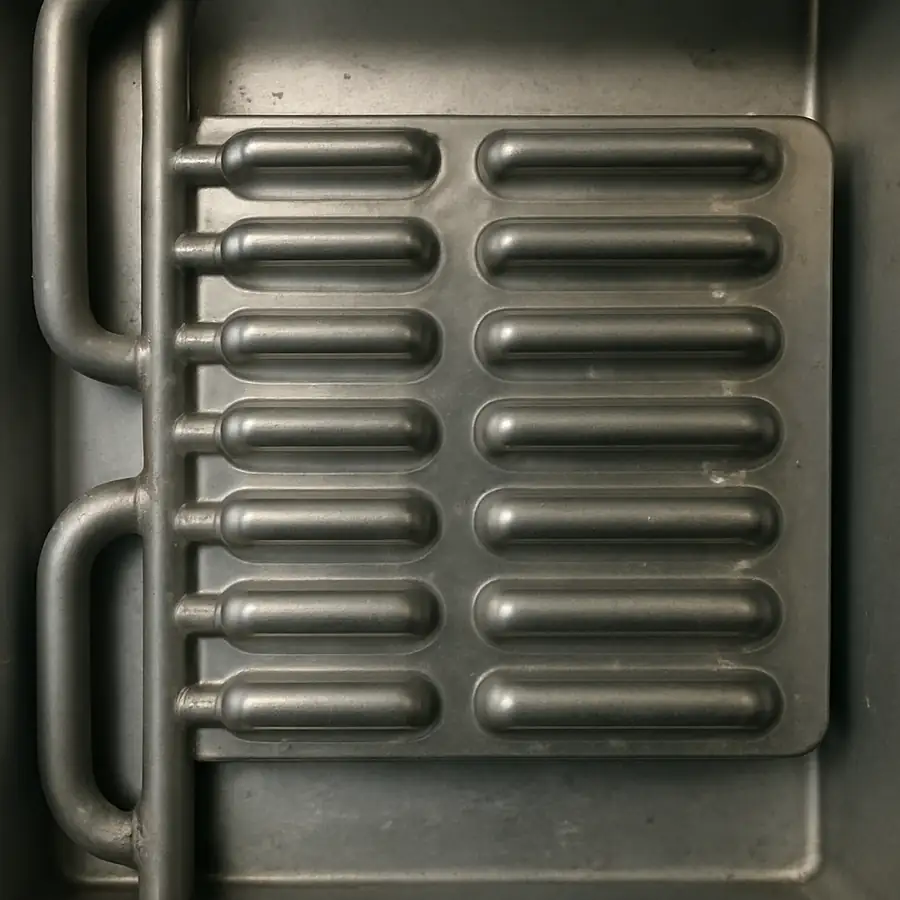
Hoshizaki uses individual, dual-sided stainless steel evaporator plates in their KM series. Stainless steel is incredibly resistant to harsh chemicals and physical wear. Because the plates are dual-sided, the machine produces more ice per cycle. This robust construction is the primary answer to the common question: how long do Hoshizaki ice machines last? With routine maintenance, a Hoshizaki machine can easily last 10 to 15 years—often outliving the restaurant itself.
Conversely, Manitowoc utilizes a nickel-plated evaporator (often referred to as DuraTech). While nickel plating is highly efficient at transferring heat—allowing for incredibly fast ice production—it is more susceptible to flaking and damage if exposed to harsh, acidic cleaning chemicals. However, Manitowoc has mitigated this by designing machines that require less aggressive cleaning.
Head-to-Head: Manitowoc Indigo NXT vs Hoshizaki KM Series
When comparing flagship models, the Manitowoc Indigo NXT vs Hoshizaki KM series showcases two different approaches to reliability.
- Hoshizaki KM Series: Features a "CycleSaver" design. By producing more ice per cycle, the machine runs fewer cycles over its lifespan. This significantly reduces wear and tear on the compressor and water pumps, making it a rugged workhorse.
- Manitowoc Indigo NXT: Features advanced acoustic ice-sensing probes and a highly intelligent touchscreen interface. It provides proactive diagnostics, alerting you to potential issues before they become catastrophic, effectively preventing common ice machine compressor failures.
Maintenance and Cleaning: Which is Easier?
Even the best ice machine will fail if it isn't cleaned. Slime, mold, and scale are the enemies of ice production.
Which Ice Machine Brand is Easiest to Clean?
If you are asking which ice machine brand is easiest to clean, Manitowoc is the undisputed winner. Manitowoc’s engineers intentionally designed their machines for easy access. The front door swings open, and all internal components (water trough, distribution tube, water probe) are easily removable without a single tool. Furthermore, the Indigo NXT features a sleek touchscreen that walks your staff through the cleaning cycle step-by-step.
Hoshizaki machines, due to their intricate stainless-steel setups and tightly packed components, often require a trained technician to disassemble and clean properly. While their parts are highly durable, the labor involved in accessing them is higher.
Keeping Maintenance Costs Down
Commercial ice machine maintenance costs can quickly spiral out of control if you neglect your equipment. Both brands tackle sanitation using modern innovations:
- Antimicrobial Technology in Commercial Ice Machines: Both companies mold antimicrobial agents directly into their plastic components to inhibit the growth of bacteria and slime. Manitowoc uses AlphaSan, while Hoshizaki employs H-Guard Plus.
- Sanitary Ice Production Standards: Both brands meet strict NSF and sanitary ice production standards. Manitowoc also offers optional features like the LuminIce II Growth Inhibitor, which circulates UV-treated air inside the food zone to drastically reduce yeast and bacteria buildup.
- Preventing Scale Buildup in Ice Makers: Hard water is an ice machine killer. Regardless of whether you choose Hoshizaki or Manitowoc, you must use high-quality water filtration. Preventing scale buildup in ice makers through routine filter changes protects your water valves and evaporators, extending the life of your equipment and ensuring your warranty remains valid.
Energy Efficiency and Cooling Methods
Utility bills are a major overhead cost for any business. Fortunately, modern manitowoc ice machines and Hoshizaki units are designed with utility savings in mind.
Understanding Energy Efficiency Ratings
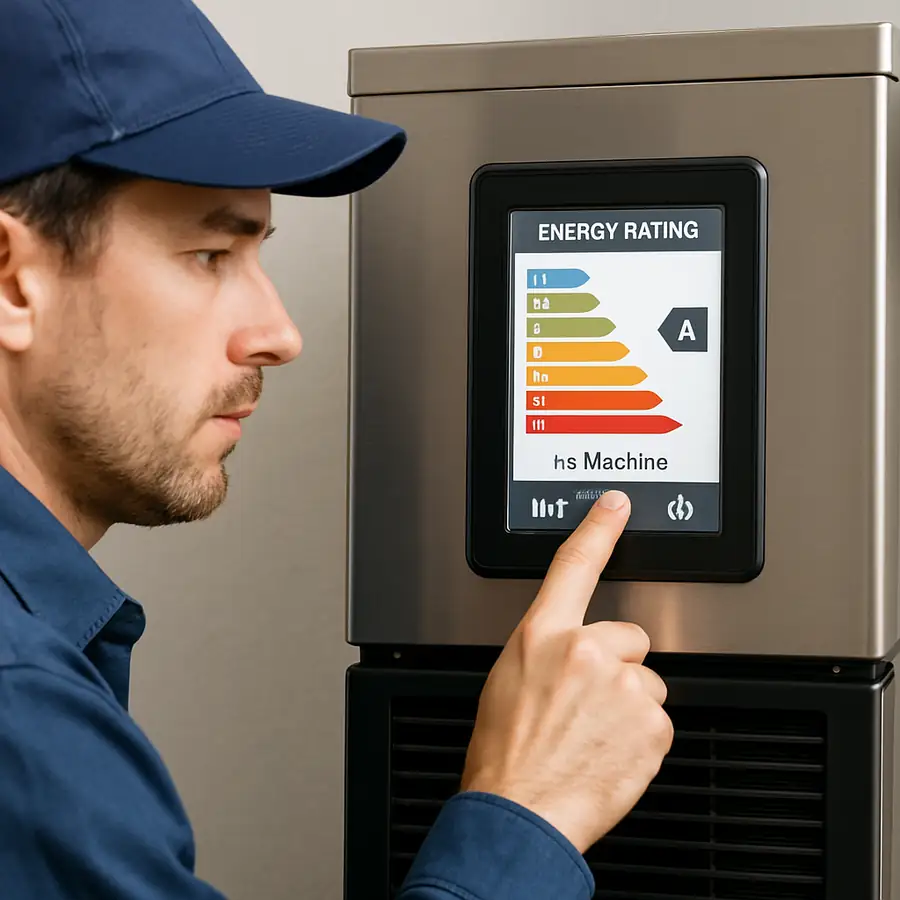
When shopping, pay close attention to ice machine energy efficiency ratings. Look specifically for Energy Star certified ice makers. Both brands boast a wide lineup of Energy Star models. Hoshizaki's CycleSaver technology inherently saves electricity by reducing the total number of cycles, while Manitowoc allows you to program ice production by volume or time of day, ensuring you aren't wasting energy making ice when the restaurant is closed.
Water-Cooled vs Air-Cooled Condensers
A critical decision when buying is choosing between water-cooled vs air-cooled condensers.
- Air-Cooled: These machines use fans to blow ambient air across the condenser coils to remove heat. They are the most popular, cheapest to install, and most energy-efficient regarding water usage. However, they can exhaust warm air into your kitchen and require adequate ventilation clearance. Both Hoshizaki and Manitowoc excel here.
- Water-Cooled: These units run water over the condenser to cool it down. They are incredibly quiet and don't dump heat into your kitchen. However, they use thousands of gallons of water a day. Unless you operate in a high-heat, high-grease environment without proper AC (or use a closed-loop cooling tower), local water regulations often prohibit them.
Sizing, Support, and Warranties
You can buy the best machine in the world, but if it doesn't fit your daily demands, you will still end up running to the gas station for bagged ice.
Choosing the Right Ice Machine Capacity
Choosing the right ice machine capacity is a fundamental step. As a general rule of thumb:
- Restaurants: Need about 1.5 lbs of ice per meal sold.
- Bars/Cocktail Lounges: Need about 3 lbs of ice per seat.
- Hotels: Need about 5 lbs of ice per room.
- Hospitals/Healthcare: Need about 10 lbs of ice per patient bed.
Always calculate your peak daily demand, then add 20% to account for growth and the inevitable drop in production during hot summer months.
Ice Machine Warranty Comparison Guide
Before you finalize a purchase, consult an ice machine warranty comparison guide. Warranties are an excellent indicator of a manufacturer's confidence in their product.
When comparing hoshizaki vs manitowoc ice machines, you will find their warranties are highly competitive, though structured slightly differently:
- Hoshizaki Warranty Overview: Generally offers a 3-year parts and labor warranty on the entire machine, a 5-year parts and labor warranty on the evaporator, and a 5-year parts warranty on the compressor.
- Manitowoc Warranty Overview: Offers a 3-year parts and labor warranty on the ice maker, a 5-year parts and labor warranty on the evaporator, and a 5-year parts and 3-year labor warranty on the compressor.
Complete Your Foodservice Setup with The Horeca Store
A reliable ice machine is essential, but restaurants also need dependable supplies for serving beverages and takeaway orders. The Horeca Store offers a wide range of foodservice essentials, including disposable cups, takeaway cups, food containers, disposable cutlery, napkins, and other catering supplies.
Whether you operate a restaurant, café, bar, hotel, catering business, or takeaway operation, having the right supplies available can help keep service efficient and professional. Explore The Horeca Store for quality hospitality and foodservice products designed to support your everyday business needs.
Conclusion: The Final Verdict
So, returning to our original question: Hoshizaki vs Manitowoc Ice Machines: Which Brand Produces Better Ice and Reliability?
The truth is, there is no single "best" machine—only the best machine for your specific needs.
Choose Hoshizaki if: You prioritize bulletproof reliability, want a machine that will last well over a decade, and want to save money on beverage costs via the unique liquid-displacing crescent cube. If you don't mind paying a technician for slightly more involved preventative maintenance in exchange for heavy-duty stainless-steel internals, Hoshizaki is your brand.
Choose Manitowoc if: You want an incredibly user-friendly machine with high-tech diagnostics, easy front-access cleaning, and programmable production. If you want a classic square ice cube for your bar or blending concept, and prefer an interface that takes the guesswork out of troubleshooting, Manitowoc is the ideal choice.
Both brands are absolute giants in the commercial refrigeration industry for a reason. By understanding your staff's maintenance capabilities, your specific ice application needs, and your volume requirements, you can confidently invest in a commercial ice machine that will keep your drinks cold and your customers happy for years to come.