A Hoshizaki ice maker can be a strong fit for restaurants, bars, hotels, healthcare spaces, markets, offices, and other operations that need dependable ice every day. This Hoshizaki Ice Machine Buying Guide explains how to choose the right commercial ice machine by matching ice type, installation style, production needs, and maintenance expectations to your actual workflow. Instead of chasing the biggest unit or the most impressive spec sheet, the goal is to buy a machine that produces the right ice, in the right place, with fewer surprises after installation. The Horeca Store can match the ice type to the station before you compare model numbers.
What should you look for first in a Hoshizaki ice machine?
Start with the ice itself: shape, texture, volume, and how people will use it. Hoshizaki's ice machine lineup includes options such as crescent ice, cubelet-style chewable ice, flaked ice, top hat ice, 1by1 and 2by2 cubes, and sphere ice, so the "best" machine depends on whether you are filling soda cups, building cocktails, packing seafood, serving healthcare patients, or supporting back-of-house production.
A bar that sells craft cocktails may care about clarity, presentation, and slow melt. A convenience store may care more about fast beverage service and high daily output. A healthcare or hospitality setting may prioritize softer, chewable ice that is easier for guests or patients to enjoy. A seafood counter, salad bar, or prep area may need moldable flake ice that surrounds product well.
Before comparing model numbers, write down three basics: where the ice will be used, how much ice you need during your busiest period, and where the machine can realistically be installed. That simple exercise will narrow your options faster than reading dozens of ice machine reviews without context.
Hoshizaki ice types and their best uses
Ice type affects drink quality, presentation, handling, storage, and customer experience. Hoshizaki describes its product range across multiple ice formats, and each one supports a different kind of operation.
Crescent ice is one of the most recognizable Hoshizaki formats. It is hard, clear, and curved, making it useful for soft drinks, water service, iced tea, and many everyday beverage programs. Because it is individual rather than soft or crushed, it works well where clean dispensing and general-purpose use matter.
Cubelet ice is small, chewable, and nugget-like. It is popular for fountain drinks, healthcare, offices, hospitality areas, and self-serve beverage stations. If customers specifically ask for chewable ice, cubelet or soft cubelet models are usually worth a closer look.
Flaked ice is softer, lighter, and moldable. It is often chosen for food displays, seafood, produce, blended drinks, and medical or therapeutic uses. It cools quickly and fills irregular spaces better than larger cubes.
Specialty cubes and spheres are more presentation-focused. Top hat, 1by1, 2by2, and sphere ice can support premium beverage programs where appearance is part of the customer experience. These machines are typically chosen for a specific menu goal rather than general back-of-house use.
Quick ice-type checklist
A commercial refrigerator still holds mixers and garnish beside the drink station.
Use this checklist before choosing a model:
- Mostly fountain drinks: crescent, cubelet, or soft cubelet ice may be appropriate.
- Cocktail presentation: look at larger cube or specialty ice options.
- Seafood, salad bars, or displays: flaked ice is usually the practical choice.
- Healthcare, hospitality, or office use: cubelet-style chewable ice can improve guest comfort.
- General restaurant service: crescent ice is often a flexible starting point.
- Premium bar programs: choose the ice around the drink menu, not just the machine size.
Machine format matters as much as ice type
An ice machine bin, undercounter ice makers, and a commercial ice and water dispenser cover the main layout choices.
Once you know the ice style, decide where the machine will live. Hoshizaki offers ice machines in different configurations, including modular and undercounter styles; product availability and details vary by region and model.
A modular commercial ice machine sits on top of a separate bin, dispenser, or storage system. This is the common choice for higher-volume operations because you can pair the head with a bin sized to your storage needs. Restaurants, hotels, cafeterias, and bars often choose modular equipment when they need more flexibility and larger production capacity.
A Hoshizaki ice machine undercounter model combines production and storage in a compact footprint. It can be a smart choice for bars, coffee shops, small kitchens, office breakrooms, server stations, or satellite service points where walking to a main ice bin slows down the team. The tradeoff is that undercounter machines usually provide less storage and production than larger modular setups.
A dispenser-style setup may be useful in hotels, healthcare, offices, schools, or self-serve areas. These systems can reduce direct hand contact with ice and simplify guest access. If sanitation, convenience, or staff time is a major concern, dispensing should be part of the conversation early.
How big should your commercial ice machine be?
A prep table and a reach-in refrigerator should be sized on their own, not from the ice bin.
Your machine should cover peak demand, not just average daily use. A unit that looks large enough on paper can still feel undersized if lunch rush, dinner service, banquet prep, or warm-weather beverage demand drains the bin faster than the machine can recover.
Think in time blocks. How much ice do you need before opening? How quickly do you burn through it during the busiest two hours? Do you need ice for prep, displays, bar service, water stations, and takeout at the same time? These questions matter because production capacity and storage capacity are not the same thing.
Storage is the buffer between production and demand. A machine may produce steadily throughout the day, but if the bin is too small, your team may run short during rushes. On the other hand, oversizing can create its own problems if ice sits too long, clumps, absorbs odors, or wastes energy.
Practical sizing considerations
A sandwich prep table and a pizza prep table do not pull their cold load from the ice bin.
When comparing models, consider:
- Peak usage windows. Size around your busiest service periods, not your quiet hours.
- Ice applications. Drinks, prep, catering, displays, and staff use all add up.
- Ambient conditions. Hot kitchens and poor ventilation can affect performance.
- Bin capacity. Production is daily output; storage is what your staff can access now.
- Growth. If you are adding patio seating, catering, or late-night service, leave room.
- Backup plans. Decide whether a second smaller unit would protect your operation better than one central machine.
If you are unsure, a qualified dealer, installer, or service representative can help translate your menu, seats, traffic, and location into a realistic equipment recommendation.
Air-cooled, water-cooled, and remote condenser choices
A remote condenser ice machine moves the heat out of the dining room.
Cooling style affects installation, utility use, noise, heat, and service requirements. Many buyers focus on ice type and capacity first, then discover too late that ventilation or condenser placement is the real constraint.
Air-cooled machines are common because they do not require condenser water. They need adequate airflow, clean filters, and enough clearance to reject heat. If the machine is squeezed into a hot closet or placed next to cooking equipment, performance can suffer.
Water-cooled machines may be used where air-cooled installation is difficult, but they can use more water and may be restricted by local rules or utility costs. Always check local requirements before choosing this route.
Remote condenser systems move condenser heat and noise away from the ice machine area. They can be useful for dining rooms, bars, or tight kitchens where comfort and heat load matter. However, they require more involved installation planning, so the site should be evaluated before purchase.
Installation details that buyers often miss
Confirm ice machine parts and the clearance a walk-in cooler would also need for airflow.
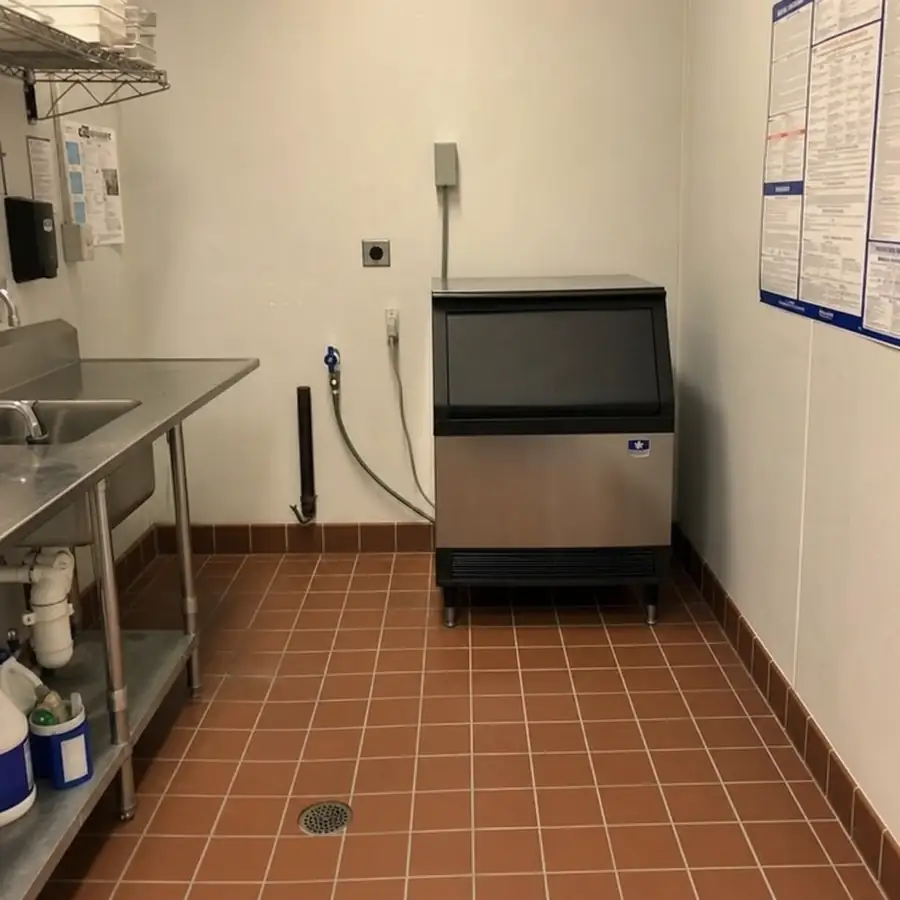
A Hoshizaki ice maker is not a plug-and-play appliance in the same way a small countertop device might be. Commercial machines need the right water supply, drainage, electrical service, clearance, ventilation, and often a dedicated bin or dispenser. Hoshizaki's manuals and guides are model-specific, and the company provides product manuals, spec sheets, cleaning sheets, and technical guides through its support resources.
Water quality deserves special attention. Scale, sediment, chlorine issues, and poor filtration can affect ice quality and machine reliability. Hoshizaki notes that more cleaning may be required in areas with undesirable water, and external water treatment may be necessary.
Drainage is another common oversight. Ice machines shed water during operation and cleaning, and bins need proper drainage as ice melts. Plan the drain route before the machine arrives, not while the installer is standing in the kitchen.
Also think about service access. A machine boxed tightly between walls, shelving, or other equipment may be frustrating and expensive to maintain. Leaving room for panels to open and components to be reached can make routine ice machine maintenance easier.
Reading ice machine reviews without getting misled
A worktop refrigerator review is a different decision from ice production.
Ice machine reviews can be helpful, but only when you know what to look for. A glowing review from a low-volume office may not tell a busy bar anything useful. A negative review caused by poor installation, dirty filters, or hard water may not reflect the machine's true performance.
Look for reviews that mention a similar business type, similar ice demand, and similar installation conditions. Pay attention to comments about noise, recovery time, ease of cleaning, service access, bin capacity, and ice quality. These details are more useful than broad statements like "great machine" or "not worth it."
It also helps to separate equipment feedback from service feedback. A buyer may be frustrated with delivery, installation, warranty handling, or local repair availability rather than the machine itself. Those issues still matter, but they should guide your vendor choice as much as your model choice.
A smarter review-reading framework
An ice merchandiser is a display cabinet, not a substitute for production.
When scanning ice machine reviews, ask:
- Is the reviewer using the machine in a business like mine?
- Do they mention the exact model or only the brand?
- Was the machine professionally installed?
- Do complaints point to sizing, water quality, cleaning, or airflow?
- Are positive reviews based on long-term use or first impressions?
- Do multiple reviewers mention the same strength or weakness?
This approach keeps you from overreacting to one dramatic review or being swayed by a rating that lacks operational detail.
Maintenance is part of the purchase decision
A reach-in freezer on the same wall still needs its own filter and gasket check.
Maintenance should not be treated as an afterthought. Hoshizaki says machines should be cleaned and sanitized at least once a year, with more cleaning required where water conditions are poor.
Some Hoshizaki documentation outlines routine tasks such as cleaning the scoop daily, inspecting air filters bi-weekly, checking external water filters monthly, wiping the exterior, cleaning and sanitizing the icemaker and bin yearly, inspecting the condenser, and checking water hoses. Always follow the manual for the specific model, because procedures and intervals can vary.
Good maintenance protects ice quality and helps prevent avoidable downtime. It also gives staff a clear routine instead of waiting until ice looks cloudy, production drops, or the machine alarms. For busy operations, it is wise to assign ownership: someone should know who checks the filters, who schedules professional cleaning, and who calls service when the machine behaves unusually.
Basic maintenance habits to build into operations
An undercounter freezer beside the station should get the same seasonal cleaning.
- Keep the scoop clean and stored outside the ice when appropriate.
- Train staff not to place bottles, food, or hands inside the bin.
- Inspect air filters and surrounding airflow regularly.
- Replace water filters according to water conditions and usage.
- Schedule cleaning before peak season, not during it.
- Keep the model and serial number accessible for service calls.
- Use the official manual or cleaning sheet for the exact machine.
What does it mean if a Hoshizaki ice machine is beeping 3 times?
Check airflow the way you would on bar refrigeration equipment before you call it a sensor fault.
If you hear a Hoshizaki ice machine beeping 3 times, treat it as a service signal rather than a simple reset problem. Hoshizaki's training FAQ notes that a shorted thermistor can signal zero ohms and cause repeated shutdown on high temperature safety, but alarm meanings and troubleshooting steps can depend on the model and conditions.
Do not keep resetting the unit without finding the cause. Repeated resets can mask issues related to temperature, water, scale, airflow, or components, and the machine may shut down again when the same condition returns. If staff hear repeated beeping, they should record the pattern, note whether the machine is making ice, check obvious non-invasive items such as airflow and water supply, and contact a qualified service technician.
For owners, this is another reason to buy from a source that can support the equipment after the sale. A reliable service path is part of the total value of a commercial ice machine.
Budget beyond the purchase price
A milk cooler, a back bar cooler, and a bottle cooler are separate from the ice head.
The upfront price is only one part of the real cost. Installation, bin or dispenser selection, filtration, drain work, electrical requirements, cleaning supplies, preventive maintenance, and possible service calls all affect long-term ownership. A less expensive machine can become costly if it is poorly matched to the site or demand.
Think in terms of fit rather than bargain hunting. The right Hoshizaki ice maker should support your workflow, fit the physical space, produce the correct ice, and be maintainable by your team or service provider. If two models seem close, the better choice is usually the one that reduces operational friction.
A good buying conversation should cover the machine, the bin, the water filter, installation requirements, warranty process, local service availability, and cleaning schedule. If a quote ignores those details, ask more questions before committing.
Final buying takeaway
A chef base refrigerator and a commercial freezer belong on the cooking line, not on the ice circuit.
Choosing a Hoshizaki ice machine is easiest when you work backward from daily use. Decide what kind of ice your customers or staff need, estimate peak demand, confirm the installation environment, and plan maintenance before comparing final models.
A strong purchase is not just about capacity or brand reputation. It is about selecting a commercial ice machine that fits your menu, space, water conditions, staff routines, and service expectations. Use this guide as a practical starting point, then confirm the final model with current manufacturer documentation, a qualified dealer, or a certified service professional before you buy.