
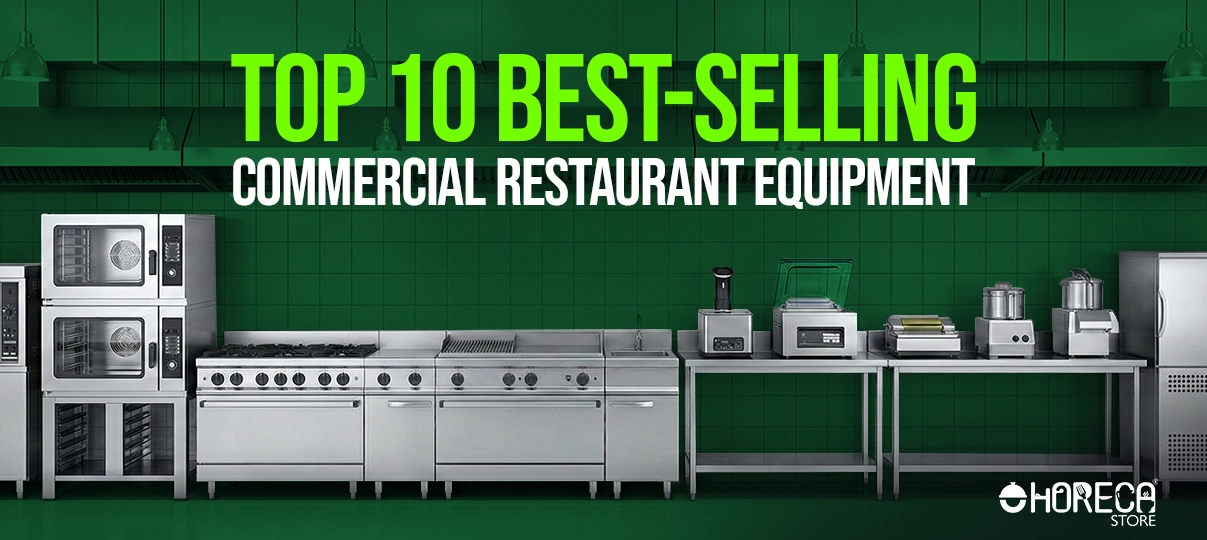
Ever dream of opening your own café, the air filled with the scent of fresh coffee and the buzz of happy customers? That vision is built on passion, a great menu, and… the right equipment. For many aspiring owners, stepping into the world of commercial kitchens can feel like the most overwhelming part of the journey, but it doesn't have to be.
What truly separates a home cook from a professional kitchen? It’s not always a secret recipe. Often, the magic lies in powerful tools built for a different kind of pressure. Your home dishwasher might run once a day; a commercial machine, by contrast, is designed for relentless performance, sanitizing dishes in minutes. That’s the core difference: equipment designed for peak efficiency.
This distinction makes a smart restaurant equipment buying guide crucial for your success. Choosing your tools is as fundamental as perfecting your signature dish. This guide is designed to cut through the noise, giving you the confidence to select the gear that will become the backbone of your operation, whether you're launching a food truck or a neighborhood bistro.
Based on sales data and feedback from thousands of new restaurateurs, we’ve compiled the definitive list of workhorses that power a successful kitchen. We’ll walk you through the top 10 best-sellers, explaining exactly what they do and why they are essential for a new restaurant. Let's start building your dream.
Is Professional Kitchen Equipment Really Worth The High Price Tag?
When you first see the price of a commercial oven or refrigerator, sticker shock is completely normal. After all, why spend thousands when you can get a home appliance for a fraction of the cost? The answer isn't just about size or brand names; it's about what happens during a busy dinner service. Professional equipment is engineered for a battlefield your kitchen at home never has to face.
That higher price tag buys you performance and reliability in three key areas:
- Built for Volume & Durability: A restaurant refrigerator door is opened hundreds of times during a shift, not a dozen times a day. Commercial gear uses stronger motors, tougher components, and durable stainless steel construction to withstand that constant use without breaking down.
- Built for Speed & Power: Time is money. Commercial dishwashers clean dishes in a fraction of the time, and professional ovens cook significantly faster. This speed is essential for getting food to hungry customers quickly.
- Built for Safety & Certification: This is a critical point. Most professional equipment is NSF Certified, which means an independent organization has tested it to ensure it’s easy to clean and meets strict public health and safety standards. This certification is often required to pass health inspections.
Ultimately, investing in durable restaurant equipment isn’t an expense—it’s insurance. It’s the assurance that your tools won’t fail during the weekend rush and that your food is always held at a safe temperature. This peace of mind is the foundation of a successful kitchen, starting with the unsung hero that protects your most valuable ingredients.
#10: The Reach-In Refrigerator — The Unsung Hero of Freshness
We all know what a refrigerator does, but its job in a restaurant is far more demanding. Imagine your team opening the door every 30 seconds during a chaotic lunch rush. A home fridge would struggle, its internal temperature creeping into the food safety danger zone. The best commercial refrigerators for restaurants solve this with a powerful compressor designed for constant use. It works overtime to force cold air back into the cabinet the moment the door closes, ensuring your ingredients stay consistently and safely chilled.
Beyond its powerful heart, the refrigerator's body is also built for battle. That gleaming stainless steel isn't just for looks; it's the core of durable restaurant equipment. It resists dents, won't rust from spills, and most importantly, is non-porous and easy to sanitize. This helps you breeze through health inspections and protects your ingredients from contamination, making it a critical investment in your business’s reputation.
When choosing a model, one practical tip is to consider the compressor’s location. A top-mounted unit works well in cooler kitchens and stays cleaner by avoiding floor dust, while a bottom-mounted unit is easier to access for maintenance. Keeping your ingredients perfectly fresh is the first step, but next, you have to cook them.

#9: The Convection Oven — Your Secret to Perfectly Consistent Cooking
A standard oven cooks with static heat, often creating frustrating hot spots that burn one side of your food while leaving the other underdone. A commercial convection oven solves this with a simple but brilliant addition: a fan. This fan constantly circulates hot air throughout the oven, wrapping your food in a consistent blanket of heat. The result is perfectly even browning from edge to edge, whether you’re baking a delicate pastry or roasting a tray of vegetables, eliminating the need to constantly rotate pans.
Beyond just evenness, that circulating air has another major benefit: speed. A convection oven can cook food about 25% faster than its conventional counterpart. For a bustling kitchen, this is a game-changer for improving restaurant kitchen efficiency. It means you can serve customers more quickly and increase your output during peak hours without needing more space. Think crispy-skinned chicken or perfectly roasted potatoes, finished in a fraction of the time.
If your menu leans heavily on baked goods, pastries, or roasted items, a convection oven is a resounding yes. It’s a foundational piece of commercial cooking equipment that pays for itself in quality and speed. For those who need to bake, roast, and steam, an even more powerful option exists.
#8: The Combi Oven — The Ultimate Space-Saving Multi-Tasker
If the convection oven is a master of one trade, the combi oven is the master of them all. This powerful machine takes the circulating dry heat of a commercial convection oven and adds a new superpower: steam. In one unit, a chef can choose to bake with dry heat, steam vegetables with moist heat, or—and this is the game-changer—use both at the same time. This is one of the most significant pieces of multi-function commercial kitchen equipment you can own.
For any kitchen where space is at a premium, like a small bistro or a food truck, the combi oven is a lifesaver. Instead of needing to buy and make room for a separate steamer and a convection oven, you get the capabilities of both in a single footprint. This consolidation not only saves precious kitchen real estate but also streamlines the cooking process, allowing your team to do more with less.
The real magic, however, is in the food it produces. Imagine roasting a whole chicken. The combination mode uses convection heat to give it that perfectly crispy, golden-brown skin everyone loves, while simultaneously injecting steam to keep the meat incredibly moist and juicy. This ability to precisely control both heat and humidity is why combi ovens are central to 2026 commercial kitchen technology trends, delivering consistently superior results that are difficult to replicate otherwise.
While a combi oven offers incredible versatility for baking, roasting, and steaming, some dishes still demand the raw, direct power of an open flame or a hot, flat surface. For that, you need the undisputed heart of the hot line.

#7: The Commercial Range & Griddle — The Heart of the Hot Line
While a combi oven excels at controlled cooking, the commercial range is where raw power meets classic technique. This is the workhorse you see on TV, the undisputed hub of activity for searing, sautéing, and simmering. The first choice you’ll face is the cooktop style. Do you need open burners, which are like the gas burners on your home stove but far more powerful, for cooking with pots and pans? Or does your menu call for a griddle—a solid, flat steel top perfect for cooking food like burgers, pancakes, and cheesesteaks directly on the surface?
The power of these gas appliances is measured in BTUs (British Thermal Units). Think of BTUs as a simple score for heating power; the higher the number, the faster the unit heats up and the more food it can cook during a rush. This high BTU rating allows a chef to bring a massive pot of water to a boil in minutes or get a perfect sear on a dozen steaks at once, feats that are simply impossible on residential gear.
To choose the right commercial cooking equipment, analyze your menu. If most of your dishes involve simmering sauces, boiling pasta, or using sauté pans, prioritize open burners. If you’re a diner flipping stacks of pancakes or a lunch spot grilling sandwiches, a griddle is your best bet. Of course, many ranges offer a combination of both. While this station masters the sear and sizzle, another hot-line hero is needed for delivering the crunchy, golden foods customers crave.
#6: The Deep Fryer — For Crispy Results Customers Crave
From crispy french fries to golden onion rings, few things satisfy customers like perfectly fried food. This makes a reliable deep fryer essential kitchen equipment for countless menus, especially for bars, bistros, and quick-service spots. But what separates a professional fryer from the one on your countertop isn't just its size; it’s a crucial feature that makes or breaks every batch.
That feature is called recovery time. Think about it: when you drop a basket of frozen fries into hot oil, the oil’s temperature plummets. Recovery time is how quickly the fryer can heat that oil back up to the ideal frying temperature. If it’s too slow, the food just sits and soaks in lukewarm oil, turning greasy and limp. A fast recovery time, however, instantly seals the food’s exterior, guaranteeing a light, crispy result every single time.
For businesses anticipating a steady stream of fried orders, this concept is critical. Gas fryers, thanks to their direct heating power, typically offer a faster recovery time than electric models of a similar size, making them a top choice as durable restaurant equipment for high volume. Of course, perfect results don't just happen at the cooking station; they begin with efficient prep.
#5: The Planetary Mixer — Your Most Powerful Prep Assistant
While a fryer handles the finishing touch, much of a kitchen's hard work happens during prep. Imagine trying to knead dough for 100 pizzas or whip up ten gallons of mashed potatoes by hand. A commercial planetary mixer automates this exhausting labor, turning hours of work into a simple, hands-off task. For bakeries, pizzerias, and even busy cafes, this machine is an indispensable asset for a new restaurant, paying for itself quickly in saved wages and consistent results.
Its power comes from its signature "planetary action"—the attachment spins on its axis while also orbiting around the bowl, like a planet moving around the sun. This clever movement ensures it reaches every part of the bowl, so you get a perfectly uniform mix without having to constantly stop and scrape down the sides. This versatility is unlocked with three main tools:
- Dough Hook: For heavy lifting like bread and pizza doughs.
- Flat Beater: For medium-density mixtures like cake batters and frostings.
- Wire Whip: For incorporating air into light ingredients like cream and egg whites.
Deciding what equipment is needed for a small restaurant often comes down to tools that multiply your effort, and this mixer is a prime example. Of course, efficient prep creates a mountain of dirty bowls and attachments, requiring a different kind of power to keep up with the mess.
#4: The High-Temp Dishwasher — Clean and Sanitize in 90 Seconds
All that mixing and prepping leaves a mountain of dirty bowls and utensils, a problem a home dishwasher would take all night to solve. A commercial high-temp dishwasher, however, is built for the chaos of a dinner rush, capable of washing, rinsing, and sanitizing a full rack of dishes in as little as 90 seconds. This incredible speed is fundamental to improving restaurant kitchen efficiency, allowing a kitchen to turn tables faster without running out of clean plates.
But its real magic isn't just speed; it's how it ensures food safety. Instead of relying solely on chemical sanitizers, these machines use a final rinse of incredibly hot water—typically 180°F (82°C)—to kill bacteria on contact. This process, known as thermal sanitization, is what meets strict health department standards and is one of the most important commercial kitchen technology trends for safe food handling. It ensures every plate, glass, and fork is not just visibly clean, but hygienically safe for the next customer.
This rapid turnaround does more than just prevent pile-ups in the dish pit. Because you can wash and reuse dishes so quickly, you can operate with a much smaller inventory of plates, glasses, and silverware, saving you significant money and valuable storage space. Keeping this workhorse running is a vital part of any food service equipment maintenance checklist.
#3: The Ice Machine — The Overlooked Profit Generator
While the dishwasher uses hot water to sanitize, an ice machine turns cold water into a source of profit. The type of ice you serve is a critical ingredient shaping the customer experience. Slow-melting full-cube ice is perfect for cocktails and sodas, preventing drinks from getting watered down. In contrast, soft, chewable nugget ice can be a customer favorite in specialty coffees or fountain drinks, turning a simple beverage into a memorable highlight. This small detail shows you’re thinking about quality from start to finish.
Deciding on the right machine comes down to your space and expected volume. A self-contained under-counter unit is often the answer to what equipment is needed for a small restaurant, tucking away neatly like a mini-fridge at a bar or coffee station. For higher demand, a modular unit is the professional standard. This is a two-piece system—an ice-making “head” on a separate storage bin—that can produce and hold hundreds of pounds of ice for a packed dinner service.
So how much ice do you really need? A trusted rule of thumb in any restaurant equipment buying guide is to plan for 1.5 pounds of ice per customer during a peak shift. Calculating this right prevents a service-stopping shortage. At HorecaStore, we help new owners get this number right, but picking the correct size is only half the battle. Where you place that machine is just as crucial for a flawless kitchen workflow.
Beyond the Top 10: How to Arrange Your Kitchen for Flawless Workflow
Thoughtful equipment placement isn’t just a suggestion—it’s the secret to a fast, stress-free kitchen. The most successful restaurants think of their space not as a collection of appliances, but as a series of connected "zones." This approach to restaurant kitchen layout and design is all about creating a logical path for food to follow, from raw ingredient to finished plate, minimizing chaos and maximizing speed.
Imagine the journey of a simple burger. It starts in the cold storage zone (refrigerator), moves to the prep zone (prep table), then goes to the hot zone (grill), and finally to the pass for service. By grouping your equipment to support this flow, you eliminate wasted steps. Your chef isn't jogging across the kitchen for a head of lettuce or bumping into the dishwasher to reach the fryer. This is the core principle of improving restaurant kitchen efficiency.
A smart layout also means you can do more with less. When your cooking station is well-organized, a piece of multi-function commercial kitchen equipment like a combi-oven can act as the powerful hub of your hot zone, handling roasting, steaming, and baking all in one spot. The result is a kitchen that feels bigger and runs smoother, allowing your team to focus on food quality and get orders out to happy customers faster.
Before you purchase a single item, here’s your first and most important step: sketch out your menu. Once you know what you'll be making, you can draw a simple map of your kitchen that follows the food's journey. This simple exercise will clarify exactly what you need and where it should go, turning your equipment list into a blueprint for success. With that plan in hand, you’re ready to tackle the final logistics.

Your Smart Buyer's Checklist: Financing and Final Decisions
You’ve mapped your workflow and have a list of dream machines. Before you click “buy,” running through a final checklist can save you from costly surprises. The perfect oven is useless if it won’t fit through your door or if you don’t have the right connections to power it on. This is the last, critical step in your restaurant equipment buying guide.
Taking a moment to confirm these details will ensure your new equipment works from day one. Ask yourself these four questions before making any commitments:
- Check Utilities: Does that high-capacity oven need a special gas line? Some powerful machines also require 3-phase power, which is like an industrial-strength electrical hookup that standard buildings don't always have. Think of it as the special, high-voltage outlet you need for an electric dryer, but for your kitchen.
- Measure Everything: Seriously—measure your doorways, hallways, and the final spot for the equipment. Will it fit?
- Compare New vs. Used: Is the upfront saving on a used item worth the risk of it breaking down without a warranty?
- Explore Leasing: Could you get better equipment by paying a manageable monthly fee instead of buying it outright?
For many new restaurant owners, that last point on financing commercial kitchen equipment is a game-changer. Leasing allows you to get the professional-grade tools you need to succeed without draining your startup cash. Instead of a massive upfront cost, you have a predictable monthly payment, preserving your capital for ingredients, marketing, and payroll. It’s a strategic way to build the kitchen you need, not just the one you can afford today.
From Dreamer to Doer: Building Your Perfect Kitchen Starts Now
Before you started, a professional kitchen might have looked like a confusing sea of stainless steel. Now, you can see the purpose behind the polish. You understand that a convection oven isn’t just a hot box, but the key to consistency. You know a commercial dishwasher isn’t just for cleaning, but for keeping a dinner rush flowing smoothly. The mystery is gone, replaced by a clear understanding of how each machine works together to create an experience customers will remember.
This guide highlights a core truth: choosing your tools is a direct investment in your business's success. The right equipment ensures every plate meets your standard for quality, every order is served efficiently, and every health inspection is passed with confidence. Seeing your future kitchen through this lens transforms it from a simple shopping list into a strategic business plan.
So, what’s your first step? Start today by turning that dream into a blueprint. Grab a piece of paper and create two lists for your concept: a "Must-Have" list with the absolute essentials, and a "Nice-to-Have" list for when you grow. This simple act marks the moment your vision starts becoming a reality. HorecaStore is here when you're ready for the next step.