
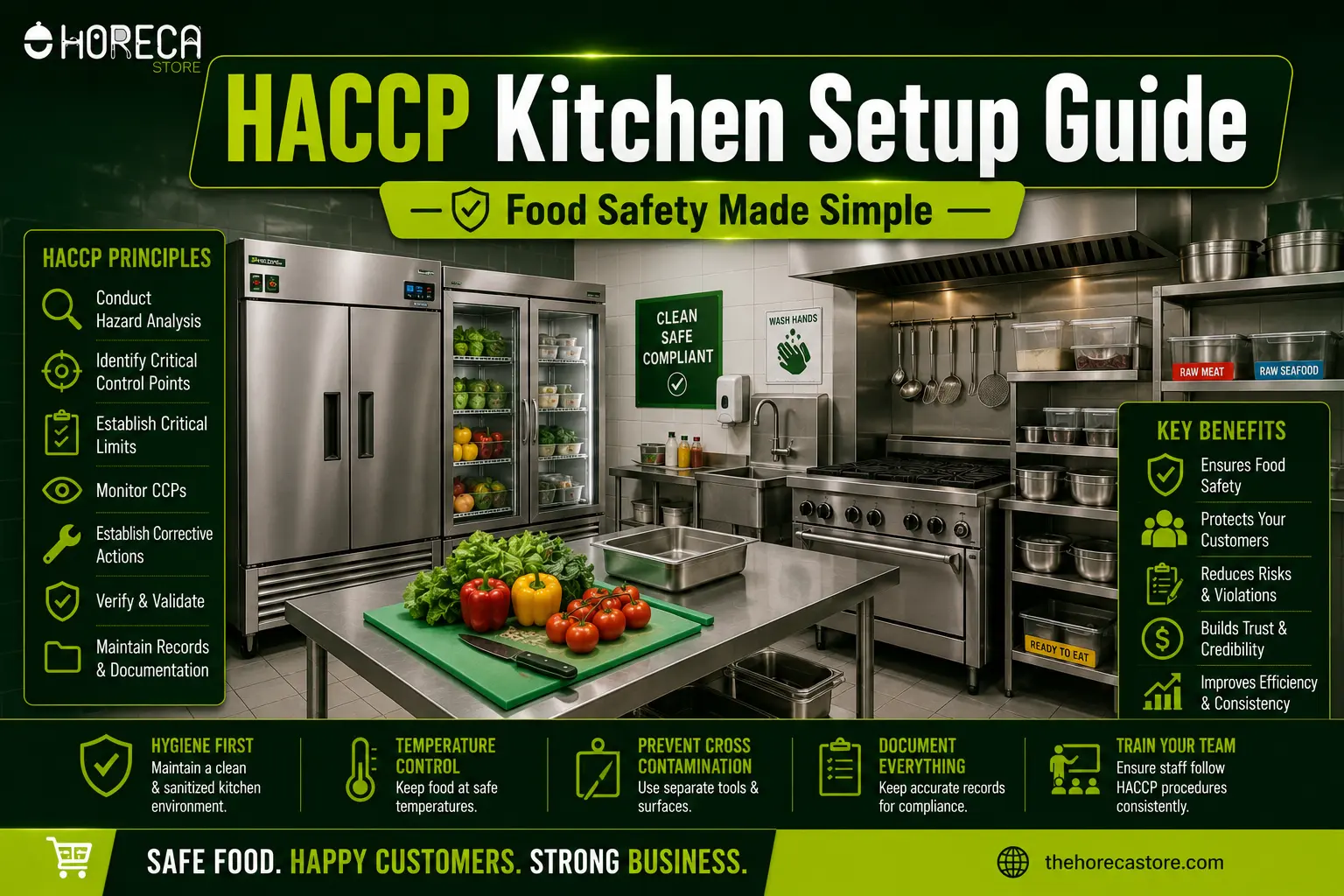
Opening a restaurant is a thrilling venture, but nothing halts your culinary dream faster than a failed health inspection. If you are building out your first commercial space, prioritizing a HACCP-Compliant Kitchen Setup: A Beginner's Guide for New Owners is your ultimate roadmap to success. By laying the groundwork for proactive food safety from day one, you protect your customers, safeguard your brand reputation, and secure your bottom line.
Let’s dive into how you can build a compliant, highly efficient, and impeccably safe kitchen environment.
What is HACCP and Why Does It Matter?
When starting out, many new restaurateurs wonder about HACCP vs traditional food safety methods. Traditional methods historically relied on spot-checking, visual inspections, and reacting to problems after they occurred. HACCP (Hazard Analysis Critical Control Point), on the other hand, is a globally recognized, preventative system. It identifies potential biological, chemical, and physical hazards before they compromise your food.
To build a solid foundation, you need to ask: what are the seven principles of HACCP for beginners?
- Conduct a Hazard Analysis: Identify where hazards might occur in your menu.
- Determine Critical Control Points (CCPs): Pinpoint the exact steps where these hazards can be prevented or eliminated (e.g., cooking raw chicken).
- Establish Critical Limits: Set specific, measurable criteria, like cooking chicken to a minimum internal temperature of 165°F.
- Establish Monitoring Procedures: Decide how and when you will check these limits.
- Establish Corrective Actions: Determine what to do if a critical limit is not met.
- Establish Verification Procedures: Routinely confirm that your HACCP system is working.
Optimizing Your Kitchen’s Layout and Flow
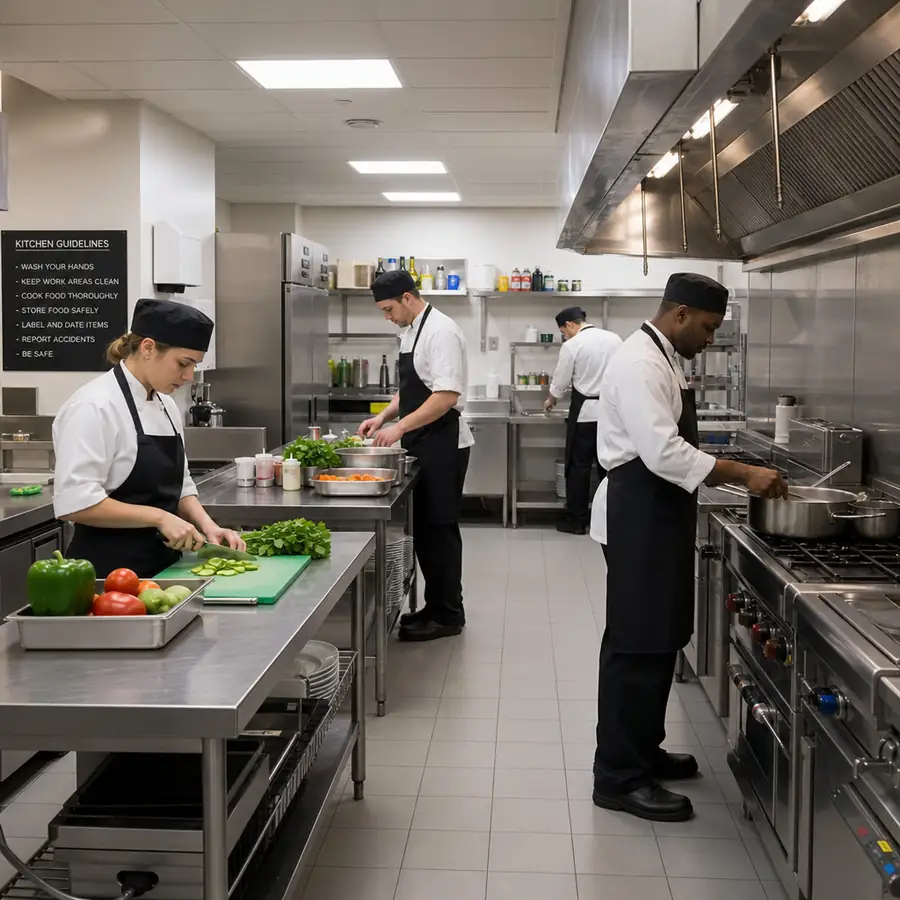
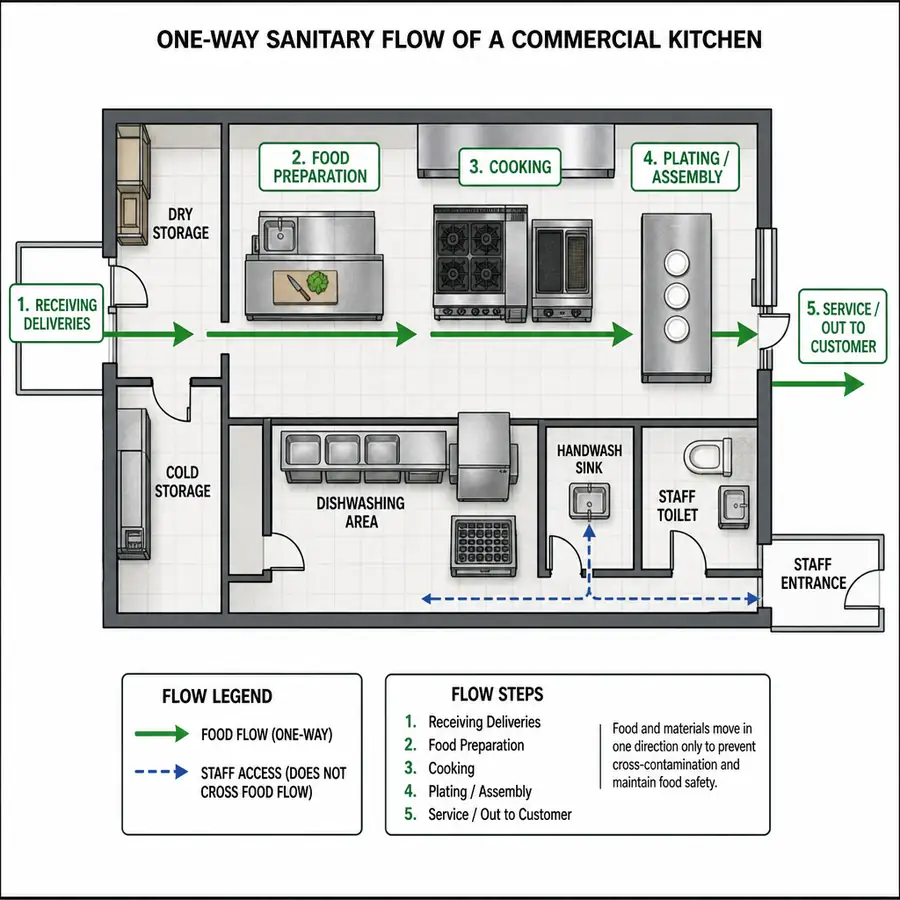
The foundation of food safety begins long before the first ingredient is delivered. The best commercial kitchen layout for food safety naturally separates raw food handling areas from cooked food preparation zones.
When designing a sanitary flow in commercial kitchens, think of your operations in terms of a forward-moving assembly line. Ingredients should transition seamlessly from the receiving dock to storage, to prep, to cooking, and finally to plating, without ever doubling back. This one-way directional flow is an essential strategy for preventing cross-contamination in small commercial kitchens, where tight quarters make accidental contact between raw and cooked foods highly likely.
Furthermore, outfitting your space requires careful purchasing decisions. Always invest in NSF certified equipment for health code compliance. The NSF (National Sanitation Foundation) certification guarantees that your prep tables, mixers, and cutting appliances feature non-porous surfaces, lack hidden crevices where bacteria can hide, and are built to withstand rigorous commercial cleaning.
Safe Storage and Organization Rules
Proper storage protocols are a critical cornerstone of any health-compliant kitchen. You must control temperatures diligently and manage your inventory with precision.
- Inventory Rotation: Implement strict FIFO food storage rotation principles (First In, First Out). Always place newer inventory behind older items on your shelves. This ensures older ingredients are used before they expire, effectively minimizing both food waste and spoilage hazards.
- Temperature Tracking: Place appliance thermometers in the warmest part of every cooler and freezer. More importantly, require staff to maintain daily commercial refrigeration temperature monitoring logs. This paper trail proves to health inspectors that your perishable foods are continuously kept out of the temperature "Danger Zone" (41°F - 135°F).
- Hazardous Liquids: Keep cleaning agents completely isolated from food zones. Adhering to strict chemical storage guidelines for professional kitchens means storing sanitizers, degreasers, and dish detergents in a designated, well-ventilated area on the lowest shelves—or better yet, in a separate closet—to prevent accidental, hazardous drips into food prep areas.
Safe Preparation Protocols
Human error is one of the leading causes of foodborne illness. To combat this, strict hygiene and structured prep protocols are mandatory.
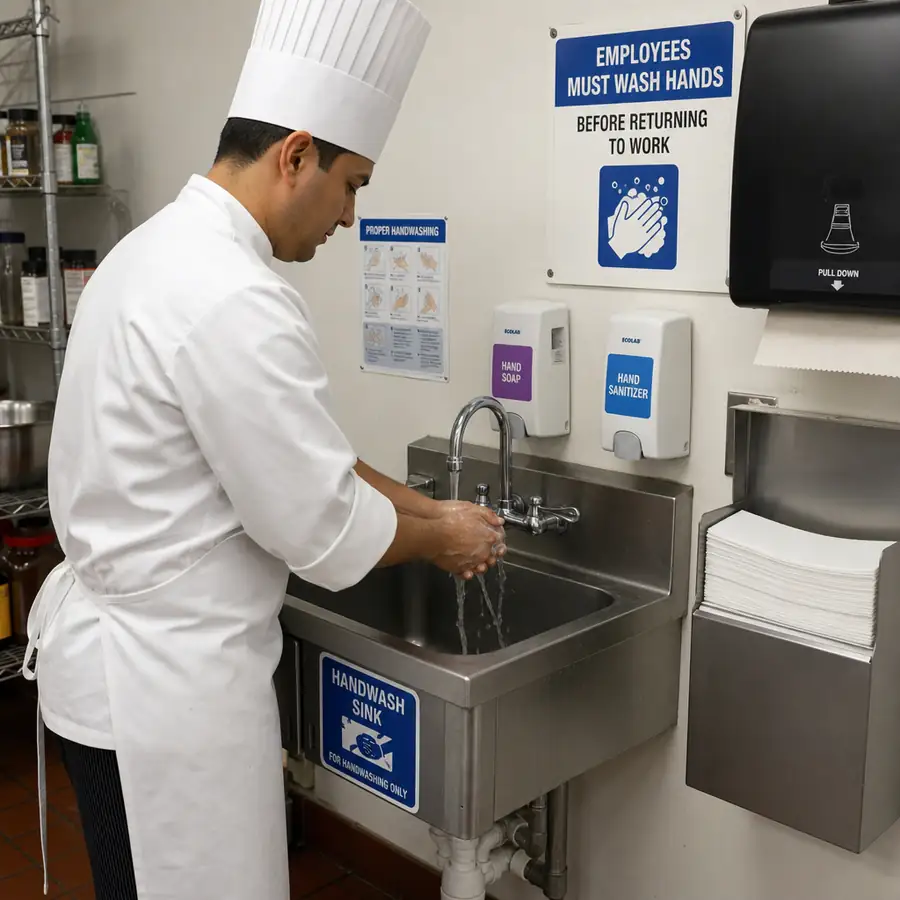
First, familiarize yourself with proper handwashing station requirements for restaurants. Hand sinks must be easily accessible, equipped with splash guards if situated near food prep surfaces, and used strictly for handwashing. They must be consistently stocked with warm running water, antibacterial soap, single-use paper towels, and a trash receptacle.
Next, adopt rigorous separation techniques during prep. Implementing color-coded cutting board system standards is an inexpensive but incredibly effective way to visually enforce food separation. A standard system looks like this:
- Red: Raw meat
- Yellow: Raw poultry
- Blue: Raw seafood
- Green: Washed produce
- White: Dairy and bakery items
- Brown: Cooked meats
This simple visual cue ensures your staff won't accidentally slice tomatoes for a salad on the same board just used to trim raw chicken.
Handling Deviations, Pests, and Inspections
Even with the best plans in place, the realities of a busy kitchen mean that mistakes and equipment malfunctions will happen. When a walk-in cooler fails or a hot-holding unit loses power, you need a pre-planned response. Outlining specific corrective actions for food temperature deviations—such as immediately discarding a batch of soup that has sat below 135°F for more than four hours, or rapidly chilling and reheating it if caught within the safe window—protects your customers' health and shields your business from liability.
Another massive factor in a compliant setup is keeping the outside world out of your kitchen. Professional pest control management for food service establishments is non-negotiable. Partner with a licensed exterminator for regular preventative visits, seal all structural cracks, install door sweeps, and keep dumpsters securely closed to prevent rodents and insects from introducing external contaminants.
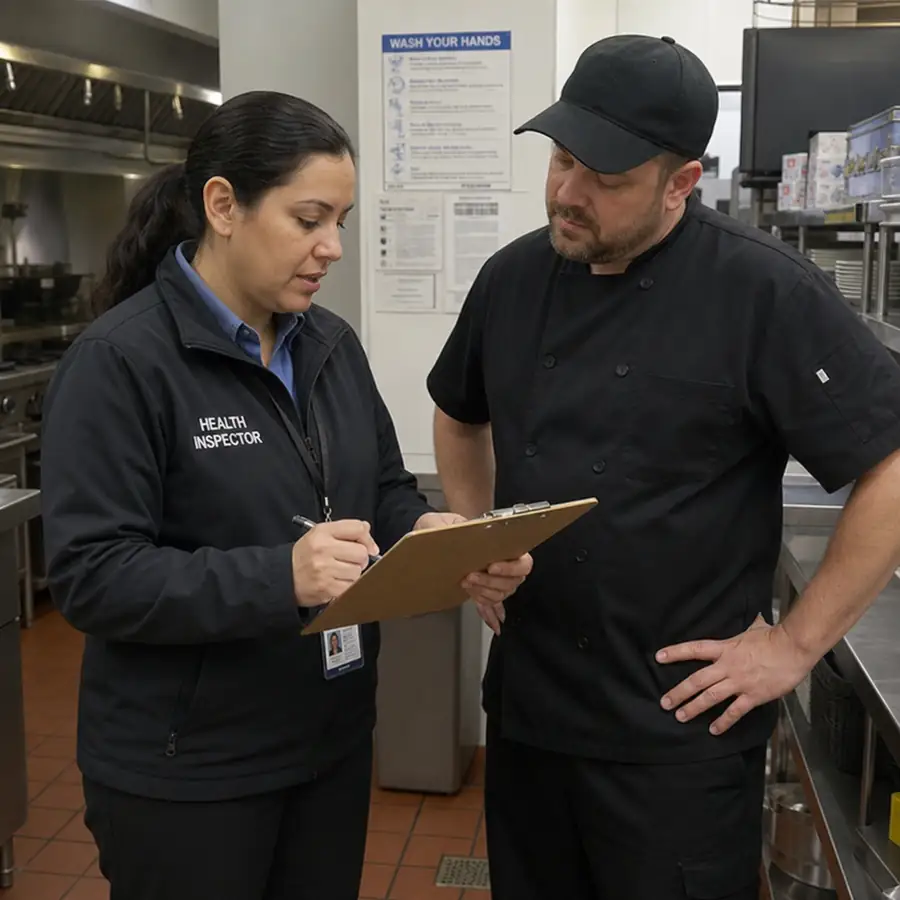
Ultimately, learning how to pass a local health department inspection comes down to demonstrating that you are proactive rather than reactive. Inspectors don't just want to see a clean kitchen.
Bringing It All Together
Building a safe, thriving restaurant doesn't happen by accident. By executing a step by step food safety management system implementation, you transform abstract rules into daily habits. Start with a smart layout, invest in the right certified equipment, train your staff relentlessly on hygiene and color-coded tools, and document every temperature check.
Commit to these best practices, and you won't just survive your health inspections—you will build a culture of safety that allows you to focus on what you do best: serving unforgettable food to your community.