
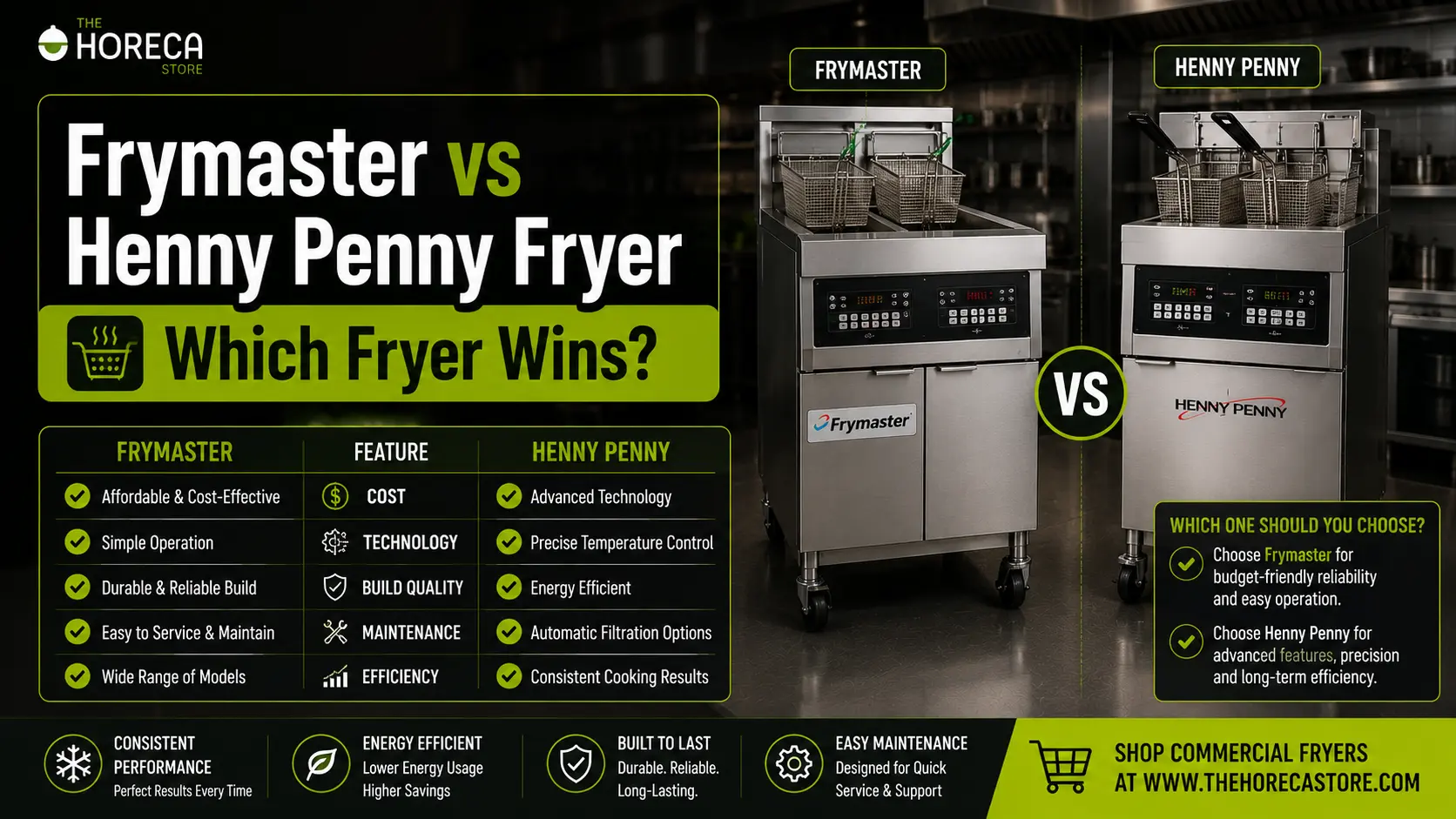
If you run a bustling commercial kitchen, you already know that the deep fryer is the beating heart of your operation. From golden, crispy french fries to perfectly breaded, juicy fried chicken, your fryer dictates not only the quality of your menu but also the speed of your service and the size of your profit margins. When it comes to upgrading or outfitting a new kitchen, two titans consistently dominate the conversation: Frymaster and Henny Penny.
The debate over Frymaster vs Henny Penny Fryers is one of the most common discussions among restaurateurs, fast-food franchisees, and executive chefs. Both brands manufacture some of the best commercial fryers on the market today, but they excel in entirely different ways. One is the undisputed king of pressure frying and programmable precision, while the other is a pioneer in open-vat frying, oil conservation, and automated filtration.
In this comprehensive guide, we will break down everything you need to know about these two industry giants. We will explore their flagship technologies, compare their performance metrics, and help you determine which equipment aligns perfectly with your culinary needs and operational goals.
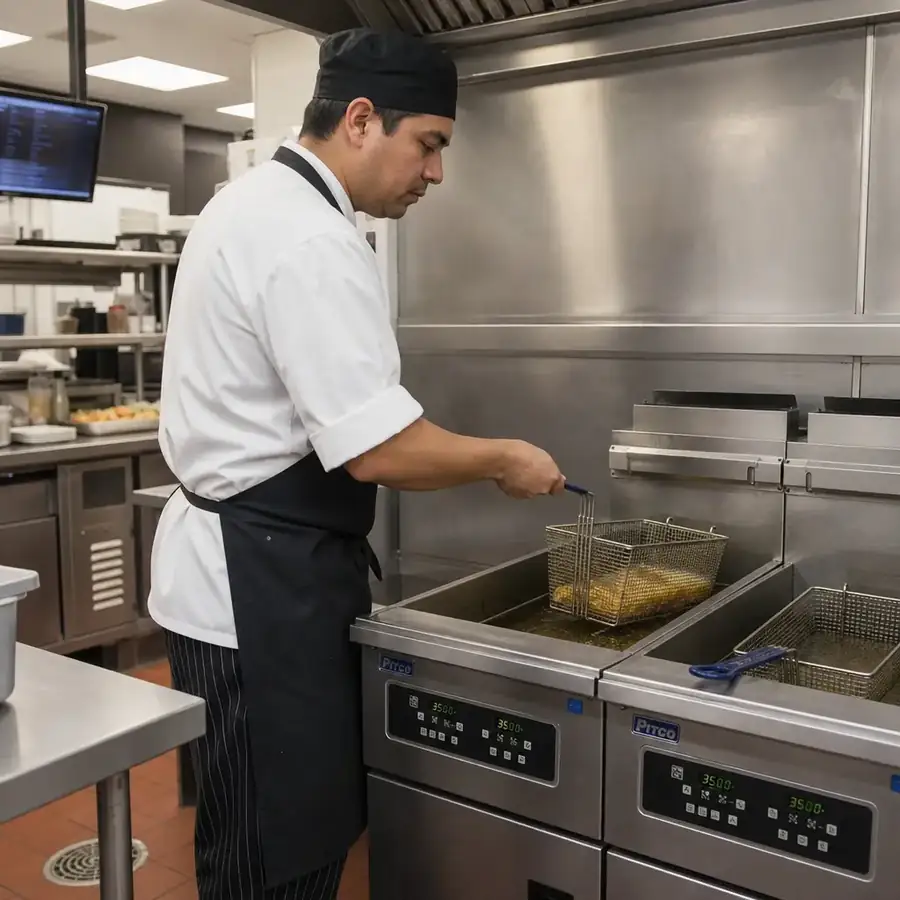
The Heavyweights: Brand Overviews
Before diving into the technical specifications and head-to-head comparisons, it is important to understand the legacy and primary focus of each brand.
Henny Penny: The Innovator of Pressure Frying
Founded in 1957, Henny Penny revolutionized the commercial foodservice industry by introducing the first commercial pressure fryer. If you have ever marveled at the incredibly juicy interior and perfectly crispy exterior of fried chicken from major fast-food chains, there is a very high probability it was cooked in a Henny Penny. The brand is synonymous with high-capacity, heavy-duty cooking, and advanced digital controls that take the guesswork out of complex recipes.
Frymaster: The Master of Oil Management
Frymaster, a Welbilt brand, has been a leading manufacturer of commercial fryers since 1935. They built their reputation on the open-vat fryer design, emphasizing heat transfer efficiency, robust reliability, and, most importantly, cutting-edge oil management. Frymaster understands that cooking oil is one of the highest recurring expenses in a commercial kitchen, and their technology is hyper-focused on extending oil life and reducing waste.
Deep Dive into Henny Penny Fryers
When evaluating Henny Penny specs, you will quickly notice a massive emphasis on intelligent design, programmable cooking cycles, and high-volume output. Let's break down the core components that make this brand a top choice for global foodservice operations.
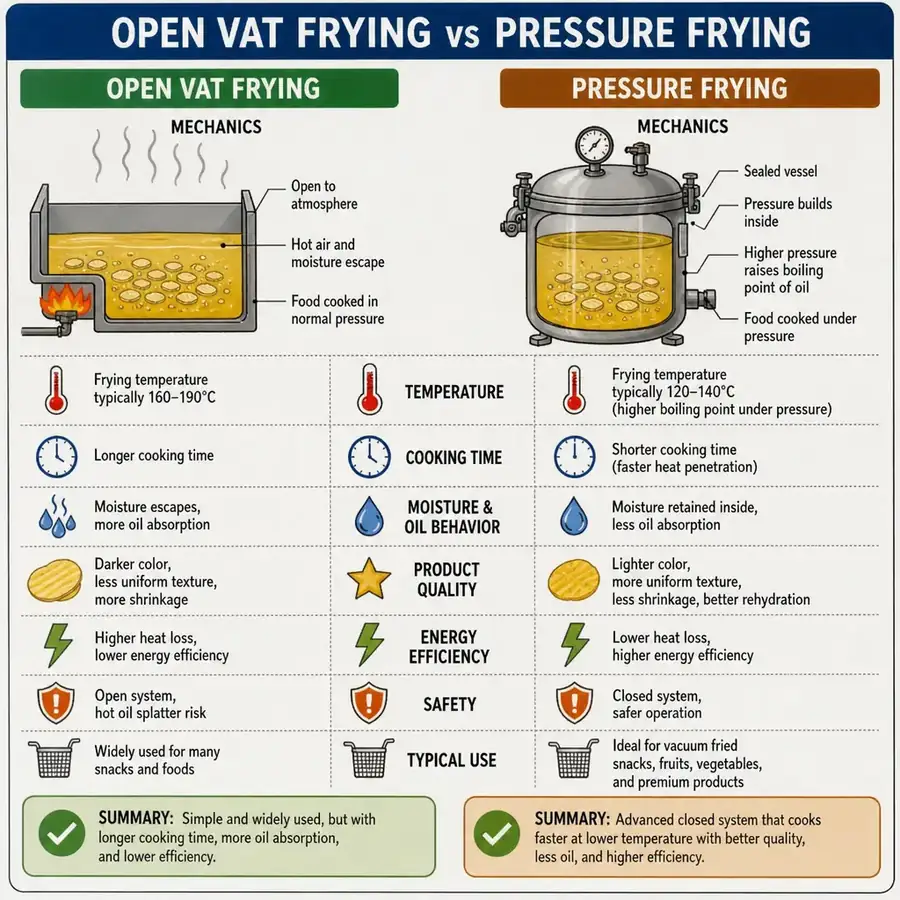
Pressure Frying vs. Open Frying
To understand Henny Penny, you have to understand the pressure fryer vs open fryer comparison. While Henny Penny does manufacture excellent open fryers, their true claim to fame is the Henny Penny pressure fryer.
A pressure fryer features a sealed lid that traps steam emitted from the food as it cooks. This raises the pressure inside the vat, which in turn lowers the boiling point of the oil. What does this mean for your food? It cooks faster, at lower temperatures, and seals the food's natural juices inside while preventing excess oil from penetrating the product. When operators ask which fryer is best for fast food chicken, the answer is almost universally a pressure fryer. Bone-in chicken, thick potato wedges, and dense proteins benefit immensely from this cooking method.
The Flagship Models: Velocity and Evolution Elite
One of the most impressive pieces of high-volume restaurant frying equipment on the market is the Henny Penny velocity pressure fryer. This machine is designed to cook massive quantities of food (up to 8 head of chicken in a single load) while using significantly less oil than traditional models. It automatically filters the oil after every cook cycle, washing food particles down the drain before they have a chance to burn and degrade the oil quality.
On the open-fryer side of the brand, a standard Henny Penny Evolution Elite series review will highlight its low oil volume technology. The Evolution Elite operates with up to 40% less oil than a standard 50 lb fryer but maintains the exact same cooking capacity. It features automatic oil replenishment, drawing fresh oil from a JIB (Jug In Box) stored beneath the fryer to keep the vat at the perfect level.
Smart Controls: Computron 1000 vs. Computron 8000
A significant part of fryer performance comes down to the computer controlling it. Henny Penny offers different tiers of control panels depending on your kitchen's needs.
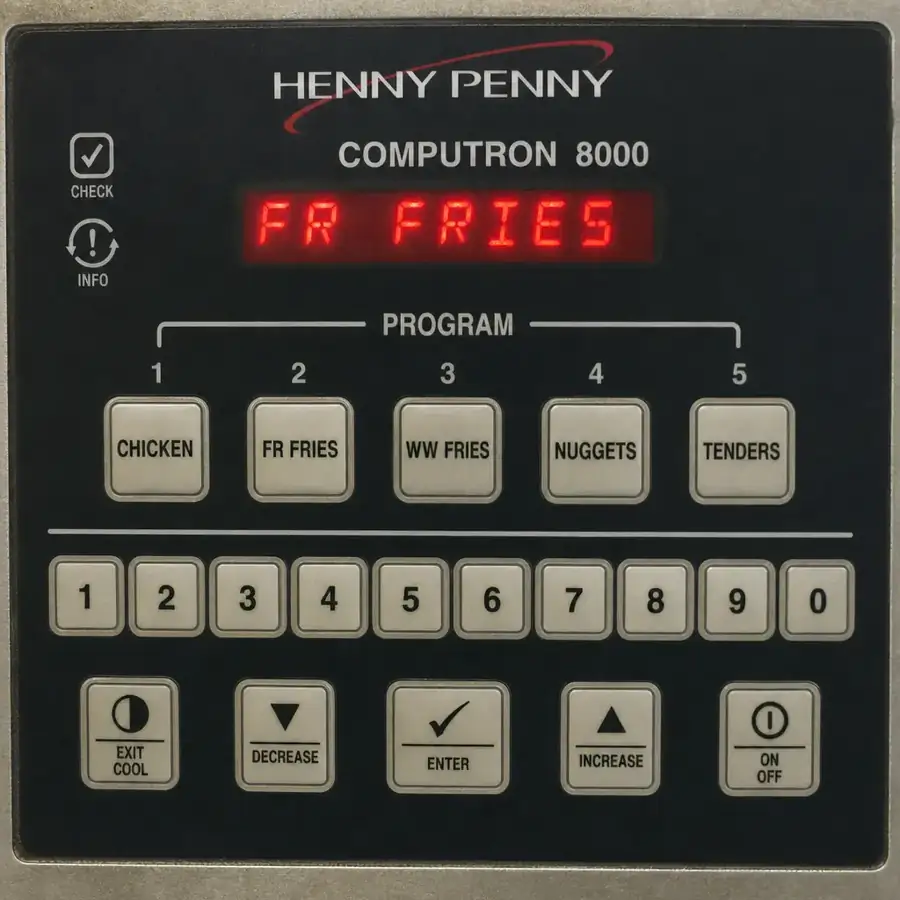
- Henny Penny Computron 1000: This is the brand's standard, easy-to-use digital controller. The Henny Penny Computron 1000 offers simple up/down arrows for temperature and time, an LED display, and basic idle modes. It is perfect for kitchens that need reliability without overly complex programming.
- Henny Penny Computron 8000: For ultimate precision, the Henny Penny Computron 8000 is a game-changer. It features up to 12 programmable cook cycles, load compensation (automatically adjusting cook times based on the size and temperature of the product dropped into the vat), proportional control for precise temperature management, and integrated filtration tracking.
Whether you opt for a gas model or a Henny Penny electric fryer, these controllers ensure consistent food quality regardless of who is operating the machine. Ultimately, any comprehensive Henny Penny review will point to their fryers as incredibly robust, technologically advanced, and tailored for kitchens that demand high-yield output with minimal user error.
Deep Dive into Frymaster Fryers
While Henny Penny dominates the pressure-frying space, Frymaster holds the crown in open-vat frying and automated oil maintenance. For restaurants cooking high volumes of french fries, onion rings, calamari, and battered appetizers, Frymaster provides unparalleled efficiency.
FilterQuick and Automated Oil Management
The standout feature of modern Frymaster equipment is its approach to commercial deep fryer oil filtration systems. Over time, cooking oil breaks down due to heat, water, oxygen, and food particles. Replacing this oil is incredibly expensive.
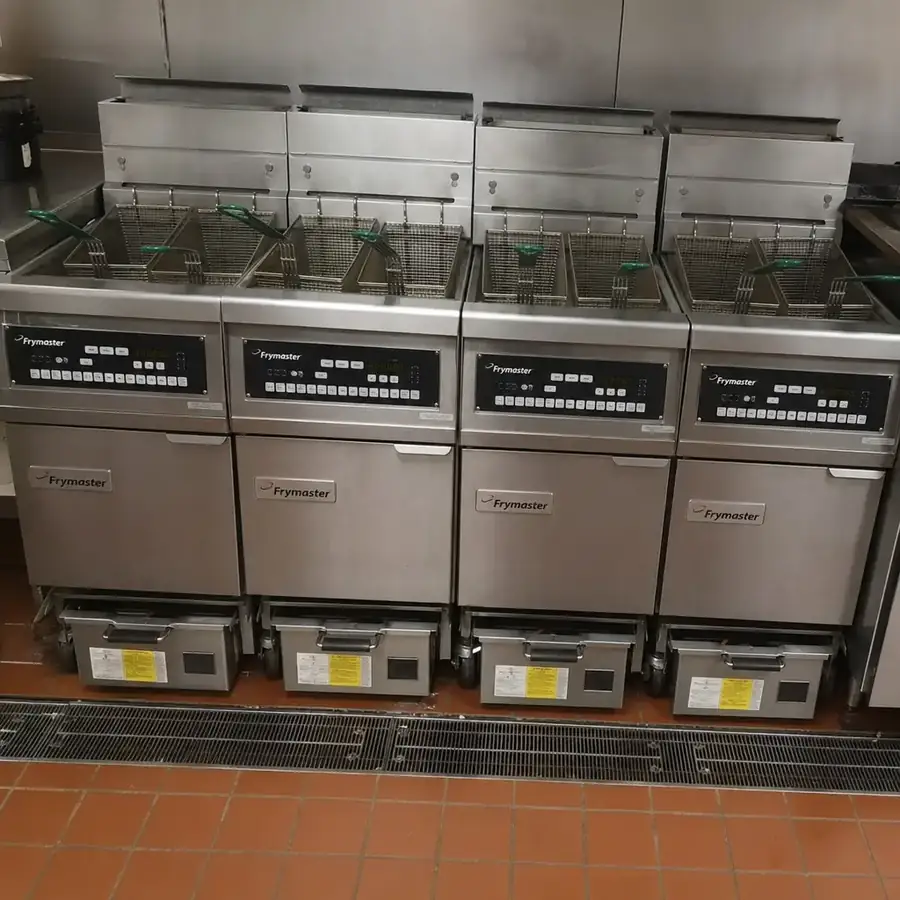
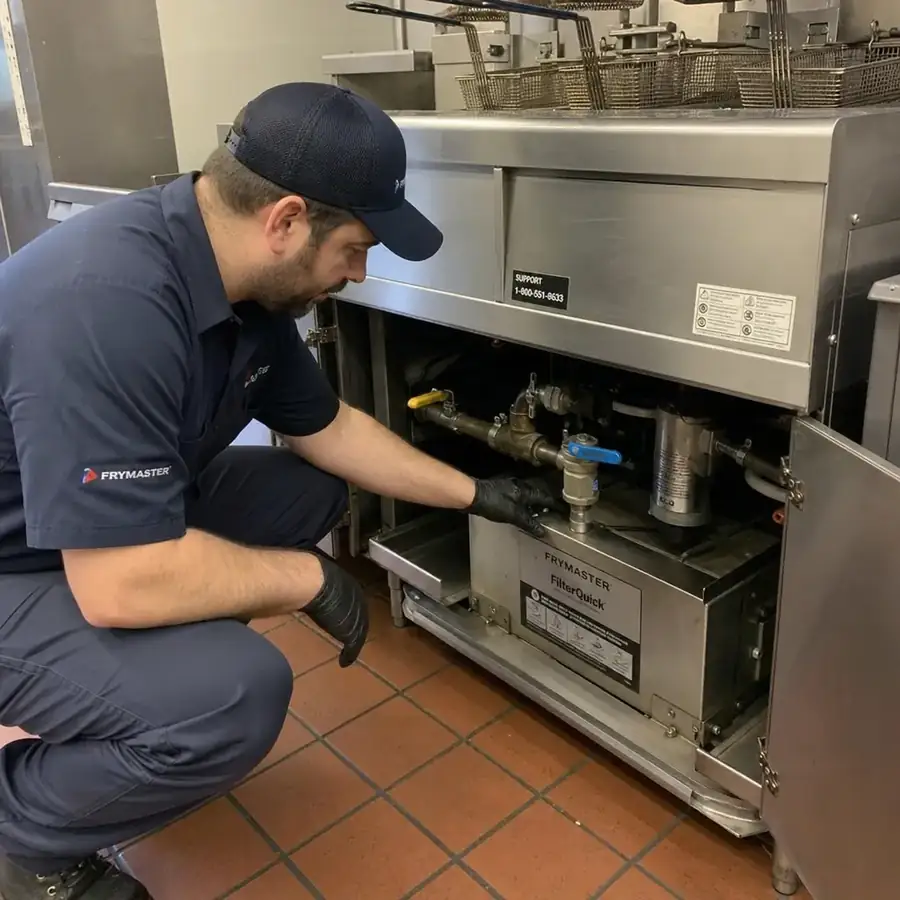
This is where the Frymaster FilterQuick technology benefits shine. FilterQuick is a fully automated, closed-cabinet oil filtration system. With the push of a button, the fryer drains, filters, and pumps the oil back into the vat in under three minutes—all while the fryer next to it continues cooking. Furthermore, many Frymaster models come equipped with an integrated Oil Quality Sensor (OQS). This sensor measures the Total Polar Materials (TPMs) in the oil, alerting staff exactly when the oil needs to be changed, rather than relying on guesswork or visual cues.
By taking human error out of the equation, these automatic oil management systems are the ultimate tool for reducing oil costs in commercial kitchens.
Open Vat Dominance
Unlike pressure fryers, open fryers are ideal for foods that need to float, heavily battered items, and quick-cooking products like french fries. Frymaster's open-vat designs feature a distinct cold zone at the bottom of the frypot. When breading or food particles fall off during cooking, they sink into this cooler area, preventing them from carbonizing and ruining the oil's flavor.
When choosing a deep fryer for high-capacity service, Frymaster's multi-vat battery systems (where two, three, or four fryers are connected together sharing a single filtration system) allow for massive throughput.
Head-to-Head Comparison: Frymaster vs Henny Penny Fryers
Now that we understand what makes each brand special, let's put them head-to-head across the most critical metrics of professional kitchen equipment reliability comparison.
1. The Menu Matchup: What Are You Cooking?
The most important factor in the Frymaster vs Henny Penny Fryers debate is your menu.
- Fast Food Chicken & Thick Proteins: If your signature dish is bone-in fried chicken, thick pork chops, or dense potato wedges, Henny Penny is the winner. Their pressure fryers cook these items faster, retain more moisture, and use less energy per pound of food.
- French Fries, Wings & Battered Goods: If your menu is heavy on french fries, mozzarella sticks, tempura, and traditional buffalo wings, Frymaster's open fryers are likely the better choice. Their superior cold zones and rapid filtration make managing high volumes of starchy, heavily battered items much easier.
2. Heat Recovery Times
When you drop frozen food into a hot fryer, the temperature of the oil plummets. Heat recovery time benchmarks for fryers measure how fast the fryer can bounce back to its set cooking temperature. If a fryer takes too long to recover, the food absorbs excess oil and becomes soggy and greasy.
Both brands are recognized as top-rated industrial deep fryers because of their exceptional recovery times, but they achieve it differently. Frymaster utilizes highly efficient infrared gas burners and flat-bar heating elements that provide a massive surface area for heat transfer. Henny Penny achieves rapid recovery through their high-efficiency burner designs and the inherent physics of pressure frying, which traps heat inside the vat. In open-vat comparisons, both brands boast recovery times of under a minute, but Frymaster often edges out slightly in high-starch, rapid-drop scenarios (like back-to-back fry baskets).
3. Electric vs Gas Fryer Energy Efficiency
When outfitting your kitchen, you will have to choose between gas and electric models. Both Frymaster and Henny Penny offer both, but understanding electric vs gas fryer energy efficiency is crucial.
- Electric Fryers: A Henny Penny electric fryer (or a Frymaster electric equivalent) places the heating elements directly inside the oil. This results in nearly 100% energy transfer efficiency. Electric fryers recover faster, produce less ambient heat in the kitchen (saving on HVAC costs), and are generally easier to clean.
- Gas Fryers: Gas fryers heat the sides or the bottom of the vat. While less energy-efficient than electric (often hovering around 50% to 70% efficiency), natural gas is traditionally cheaper than electricity in many regions, making gas fryers more economical to operate in the long term, despite a slight drop in thermodynamic efficiency.
4. Oil Filtration and Conservation
Both brands have invested millions in helping restaurants save on oil.
- Henny Penny: The Evolution Elite series relies on a low-oil-volume vat (using 30 lbs of oil instead of 50 lbs) and frequent, ultra-fast filtration to keep the oil fresh. The automated top-off feature is brilliant for maintaining the perfect fry level.
- Frymaster: The FilterQuick system with the built-in Oil Quality Sensor is arguably the most advanced oil management system on the market. By physically measuring oil degradation and forcing automatic filtration lockouts (requiring staff to filter before they can cook again), Frymaster provides an unparalleled safety net against oil waste.
If your primary goal is reducing oil costs in commercial kitchens through strict, sensor-based management, Frymaster holds a slight advantage. If your goal is cooking with less oil overall right out of the gate, Henny Penny's low-oil-volume vats are exceptional.
Maintaining Commercial Kitchen Equipment Longevity
Regardless of whether you choose Frymaster or Henny Penny, these are significant financial investments. Maintaining commercial kitchen equipment longevity requires a strict adherence to daily, weekly, and monthly maintenance protocols. Neglecting your fryer will result in poor food quality, increased energy consumption, and premature equipment failure.
Daily Maintenance Tips
- Filter Frequently: Oil should be filtered at least once a day, and ideally after every rush period. In high-volume settings, filtering every 3 to 4 cook cycles is recommended.
- Wipe Down the Elements: When the oil is drained for filtration, use a high-temperature brush to wipe carbon buildup off the heating elements and the sides of the vat. Carbon acts as an insulator, forcing the fryer to work harder to heat the oil.
- Cover the Vats: When the kitchen is closed, place covers over the fry vats. This prevents oxygen and ultraviolet light from degrading the oil overnight, and keeps airborne dust and cleaning chemicals out of the frypot.
Weekly/Monthly Maintenance Tips
- Boil-Out the Vat: Once a month (or concurrent with complete oil changes), perform a "boil-out." Fill the fryer with water and a specialized deep-fryer cleaning chemical, and let it simmer (never boil violently) to lift baked-on grease and carbon from the internal plumbing and vat walls.
Troubleshooting Commercial Deep Fryer Performance Issues
Even the best equipment occasionally runs into hiccups. Knowing how to handle these moments can save you the cost of a service call and prevent kitchen downtime. Here is a guide to troubleshooting commercial deep fryer performance issues for both Frymaster and Henny Penny models.
Issue: The Fryer Won't Turn On or Heat Up
- Check the High-Limit Switch: Commercial fryers have a safety mechanism called a high-limit switch. If the oil gets dangerously hot (usually above 400°F / 204°C), this switch trips to prevent a fire. Often, there is a red reset button located under the control panel or inside the cabinet. Allow the oil to cool, press the reset button, and try again.
- Check the Drain Valve: Most modern fryers have a safety micro-switch on the drain valve. If the drain valve is not 100% closed, the burner or heating elements will not ignite. Ensure the handle is pushed all the way into the closed position.
- Gas/Power Supply: It sounds simple, but check the quick-disconnect gas hose behind the fryer to ensure it hasn't been bumped loose, and verify that the power cord (which powers the digital displays and spark igniters) is plugged in.
Issue: Slow Heat Recovery or Greasy Food
- Thermostat Calibration: If the fryer display says 350°F but the food is cooking slowly and absorbing grease, the thermostat may be out of calibration. Use a high-quality digital probe thermometer to manually check the oil temperature in the center of the vat. If it does not match the display, the thermostat needs to be recalibrated or replaced.
- Carbon Buildup: As mentioned earlier, thick black carbon on the heating tubes prevents heat from transferring to the oil. A thorough boil-out is required.
- Old Oil: Oil that has degraded past its useful life loses its thermal conductivity. If the oil is dark, smoking at normal temperatures, or smells soapy/rancid, it is time for a complete change.
Issue: Filtration System Won't Pump Oil Back
- Clogged Filter Paper: If staff forgot to change the filter paper from the previous day, it is likely saturated with heavy sediment. Change the filter paper and try again.
- Solidified Fat: If you use solid shortening instead of liquid oil, the shortening may have solidified in the filter pump lines overnight. The lines must be gently heated to melt the blockage. (This is why liquid oil is strongly recommended for fryers with automated filtration).
- Air Leaks: Check the filter pan connection. If the pipe is not seated firmly into the receptacle, the pump will draw air instead of pulling the oil through the lines.
Actionable Takeaways for Your Kitchen
When you are ready to make a purchase, keep these actionable tips in mind to ensure you get the best return on your investment:
- Analyze Your Menu: Let the food dictate the equipment. Pressure fryers (Henny Penny) for thick, bone-in proteins and fast-food chicken. Open fryers (Frymaster) for fries, battered appetizers, and high-turnover items.
- Factor in the Cost of Oil: Do not just look at the sticker price of the equipment. A fryer with an automatic oil management system and FilterQuick technology might cost more upfront, but it can save you tens of thousands of dollars in oil costs over its lifespan.
- Choose the Right Controller: Don't overcomplicate your kitchen if you don't need to. If you have a high turnover of untrained staff, a programmable controller like the Henny Penny Computron 8000 prevents user error. If your chefs are experienced and your menu is simple, standard digital controls are highly effective and cheaper to replace.
- Prioritize Preventative Maintenance: The key to maintaining commercial kitchen equipment longevity is routine cleaning and daily filtration. Train your staff thoroughly on the boil-out process and daily wipe-downs.
Frymaster vs Henny Penny Fryers: Which Fryer Wins?
The Horeca Store choosing between Frymaster and Henny Penny fryers depends on your restaurant’s menu, cooking volume, and operational needs. Frymaster fryers are known for durability, advanced oil management systems, and consistent frying performance, making them popular in high-volume restaurants and foodservice operations. Henny Penny fryers are recognized for energy efficiency, reliable temperature control, and innovative features that help improve productivity and reduce oil usage. Comparing factors such as capacity, recovery time, maintenance, and operating costs can help you select the best fryer for your kitchen.
The right commercial fryer can improve food quality, reduce waste, and increase kitchen efficiency during busy service hours. The Horeca Store offers a wide range of commercial cooking equipment, including fryers, ovens, refrigeration units, and restaurant supplies designed for professional kitchens. With quality products, competitive pricing, and dependable support, The Horeca Store helps restaurants choose reliable equipment solutions for long-term success.
Conclusion: Which Fryer Wins?
In the battle of Frymaster vs Henny Penny Fryers, there is no single loser—only the right tool for the right job. Both manufacturers produce the best commercial fryers available to the foodservice industry today, offering incredible durability, advanced digital controls, and innovative oil-saving technologies.
Henny Penny remains the undisputed champion for kitchens specializing in fried chicken and thick proteins, utilizing pressure frying to deliver tender, juicy, and perfectly cooked food at incredible speeds. Their Evolution Elite series also proves they are a formidable force in the open-vat arena.
On the other hand, Frymaster takes the crown for high-volume, open-vat frying operations. Their unparalleled focus on intelligent oil management, integrated quality sensors, and rapid, closed-cabinet filtration makes them the ultimate workhorse for fast-paced kitchens churning out mountains of french fries and battered goods.
Evaluate your menu, calculate your monthly oil expenses, and consider your kitchen's workflow. By aligning your specific culinary needs with the unique strengths of these two legendary brands, you will guarantee flawless fryer performance and perfectly crispy results for years to come.