
A food processor's bowl size determines the batches you can tackle, while its blades and discs determine the preparation tasks it can perform. Small choppers suit dips and quick chopping; larger processors add capacity and, depending on their accessories, slicing, shredding, kneading, or dicing. This guide explains how to match those capabilities to your recipes and kitchen space without buying more machine than you need. The Horeca Store stocks the machines this size and attachment guide compares.
What size food processor do you need?
Choose a food processor around your usual batch size and preparation tasks, not household size alone. A small chopper may suit someone making sauces for family dinners, while a person cooking solo might prefer a larger processor for weekly meal preparation. Start with what you regularly cook, then check the capacity and attachments needed for those recipes.
Use the following food processor comparison as a starting point. These capacity bands are practical shopping categories, not universal definitions; manufacturers may describe similar machines differently.
These ranges reflect common manufacturer guidance, but capacity does not guarantee a particular function. Always check the individual model's accessory list.
For your shortlist, write down three recurring jobs: perhaps chopping onions, shredding carrots, and making hummus. Give those jobs more weight than an occasional holiday recipe. If you rarely prepare large quantities, consider whether working in batches would be an acceptable compromise rather than automatically choosing the largest bowl.
Bowl capacity is not the same as usable capacity
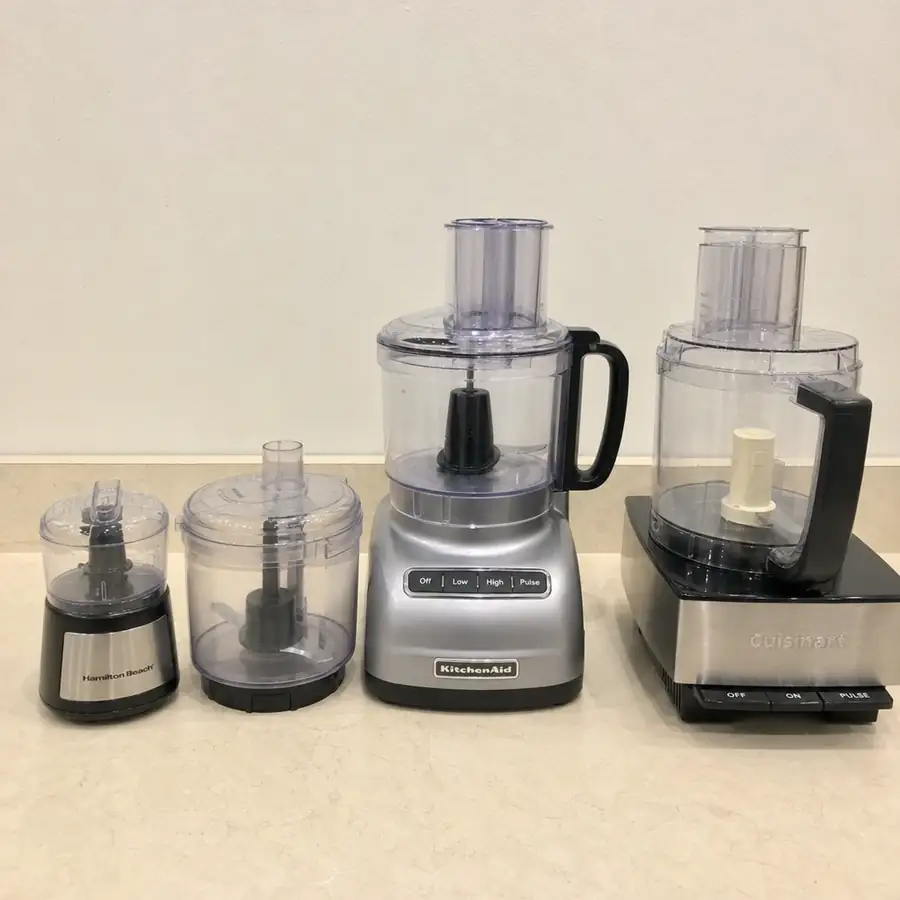
The cup figure on the box does not mean every recipe can fill the bowl to that volume. Manufacturers can specify different limits for chopped vegetables, thin liquids, nuts, and dough. For example, Cuisinart's FP110C instruction booklet provides separate maximum capacities by ingredient and preparation type.
That distinction matters when comparing two machines with similar advertised capacities. If dressing is your main use, look for the liquid limit; if pizza dough is the priority, check the flour or dough allowance. Treat the headline cup figure as an introduction, not the complete specification.
Before buying, find these details in the manual:
- Liquid capacity: Check any maximum liquid line and restrictions on liquid processing.
- Dough allowance: Look for a stated flour quantity, dough weight, or approved recipe rather than assuming bowl volume applies.
- Ingredient-specific limits: Check the quantities permitted for jobs you expect to repeat, such as nut butter or chopped cheese.
Manufacturer manuals may provide both marked liquid limits and task-specific capacity guidance. Follow the instructions for the exact model rather than transferring limits from another processor.
When checking a favorite recipe, compare its full ingredient list with the manual's guidance. Do not assume that a bowl labeled for a certain number of cups can handle the same quantity of dense dough. If you cannot find a relevant limit, ask the manufacturer before making that task central to your buying decision.
Food processor dimensions and kitchen fit
Bowl capacity and exterior size describe different things. Product specifications list physical dimensions separately from cup capacity; for instance, Cuisinart provides length, width, and height measurements for both its seven-cup and fourteen-cup models. Use those measurements rather than estimating fit from a product photograph.
When comparing kitchen appliance sizes, measure the place where the processor will operate and the place where it will live. Include the route between them. A machine that fits a cabinet but is inconvenient to retrieve may not suit your routine.
Measure for use, not just storage
Make a paper template of the listed footprint and place it on your counter. Then imagine loading vegetables, reaching the controls, and setting down a bowl of finished ingredients. This simple exercise helps you evaluate the workspace rather than just whether the base fits.
Use this measurement checklist:
- Counter footprint: Allow room around the machine for ingredients and finished food.
- Overhead clearance: Check the assembled height and allow access to the lid and feed tube.
- Cabinet opening: Measure the doorway as well as the interior shelf space.
- Accessory storage: Reserve space for discs, blades, stems, and any storage case.
- Handling: Consider whether you want to lift the appliance out for every use.
Some models offer in-bowl accessory storage or cord-management features. Confirm what actually fits inside and whether all supplied accessories are covered by the storage arrangement.
Compact does not always mean basic
Do not assume all compact food processors are simple choppers. A compact seven-cup processor may include a feed tube and slicing or shredding accessories, while a smaller chopper may focus on chopping, mixing, and pureeing. Compare functions as well as dimensions.
For a small kitchen, decide which compromise you prefer: less batch capacity, fewer attachments, or a larger storage footprint. There is no need to sacrifice a function you use weekly just to gain an accessory you might never unpack.
Which food processor attachments will you actually use?
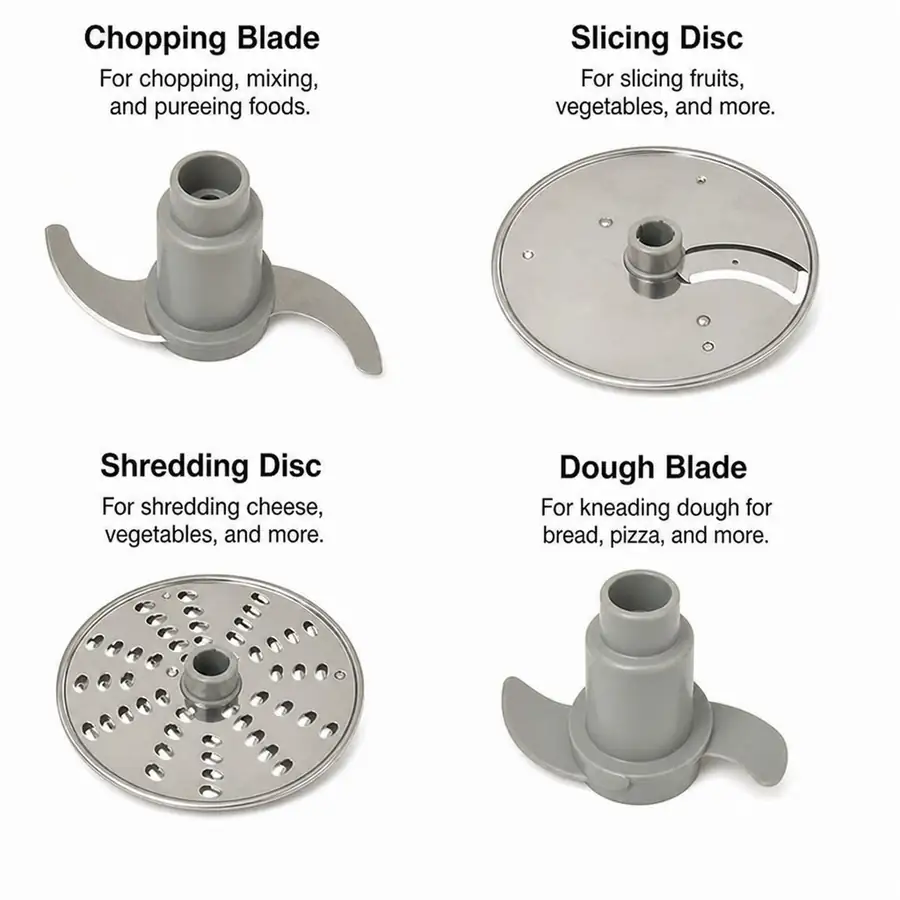
Prioritize a chopping blade for chopped mixtures and purees, a slicing disc for slices, and a shredding disc for grated or shredded ingredients. Consider dough tools, dicing kits, and whisk attachments only when they match recurring recipes. Attachment availability varies by model, so check the supplied contents rather than relying on a general product description.
The key distinction is the finished result you want. Chopped salsa, cucumber slices, and shredded carrots are different jobs; one attachment should not be assumed to produce all three. Build your accessory list around those outcomes.
Multipurpose chopping blade
The main chopping blade handles tasks such as chopping, mincing, mixing, and emulsifying. Pulse control lets you work in short bursts rather than running continuously, providing control over processing time. For a chunky mixture, inspect the texture between bursts instead of waiting until everything looks smooth.
Put this attachment first if your weekly cooking involves chopped vegetables, dips, or mixed fillings. Then check the manual for your particular ingredients and quantities. A familiar-looking blade is not permission to process anything that fits in the bowl.
Slicing and shredding discs
A slicing disc produces slices; a shredding disc produces strands or shreds. Depending on the machine, these may be separate accessories, reversible discs, or adjustable tools. Some models offer adjustable slicing thickness and a reversible shredding disc with different finishes.
Think about your preferred result before comparing accessory counts. For potato gratin, slicing thickness deserves attention; for slaw or grated cheese, investigate the shredding options. Ask whether the supplied finish suits your recipes rather than assuming that more discs necessarily mean more useful choices.
Feed-tube preparation also affects the job. Cuisinart's instructions advise cutting ingredients to fit, packing the tube evenly, and using the supplied pusher. Its guidance also calls for chilled cheese when slicing or shredding. Follow your own model's instructions for pressure, speed, and suitable foods.
Dough blades and approved dough functions
A dedicated dough blade can mix and knead yeast dough, but a separate dough attachment is not universal. Some processors use a multipurpose blade approved for dough preparation. Check the manual's specified tool and capacity instead of judging capability by the presence of a plastic blade.
If baking is a main reason for buying, compare an actual recipe with the machine's allowance before purchase. Note the flour quantity and any operating instructions. Choose around the dough you intend to make, not an undefined promise that the processor "handles baking."
Dicing kits, whisks, and smaller bowls
Specialist accessories deserve a place on your shortlist when they solve a regular problem. Dicing requires a model with that capability; some choppers include whisk accessories, and some larger processors offer a smaller bowl with its own blade for small chopping tasks. These features are not standard across every size category.
Before paying for a larger bundle, assign each extra attachment a realistic use. If you cannot name one, leave it out of your essential list. Also check how it assembles, where it stores, and what cleaning it requires; ownership involves more than the moment the food is processed.
Build a useful food processor comparison
The best food processor for your kitchen is the one that meets your recurring needs within the space and handling effort you will accept. Compare complete setups rather than isolated headline specifications. Give every shortlisted machine the same test: can it handle your usual quantity, produce the result you want, and fit your routine?
Create a short comparison sheet with these fields:
- Three main recipes: Record the batch quantity and preparation task for each.
- Approved capacity: Copy the relevant liquid, dough, or ingredient limit from the manual.
- Included attachments: Separate supplied tools from optional purchases.
- Dimensions and storage: Record assembled measurements and your intended storage location.
- Cleaning instructions: Note which parts permit dishwasher cleaning and any rack restrictions.
- Unanswered questions: Resolve missing information before treating a feature as confirmed.
For a concrete example, imagine you mainly want slaw, sliced vegetables, and occasional dip. Your comparison should emphasize the slicing and shredding tools, feed tube, appropriate bowl capacity, and cleanup instructions. A dough accessory should not decide the purchase unless baking is genuinely part of your plan.
Check the exact model number throughout your research. Similar-looking product packages can have different accessory lists; KitchenAid's compact processor guidance, for example, identifies a dough blade as standard on a particular model. Do not assume every version includes the same bundle.
Cleanup and safe handling belong in the decision
Read cleaning instructions before purchase, not after the first meal. Dishwasher suitability is model-specific: a manufacturer may approve the bowl, lid, and accessories, but you should still follow the exact care directions supplied with your appliance. Also review how sharp tools should be handled and stored.
For operation, use the supplied food pusher rather than your fingers, and wait until the blade or disc stops before opening the machine. Follow the manual's instructions for unplugging, disassembly, and cleaning. Convenient accessories are only useful when you can use and maintain them safely.
Choose for the cooking you do most
Start with your regular recipes, verify usable capacity, measure your kitchen, and shortlist only the attachments those recipes require. Treat extra functions as bonuses rather than reasons to overlook an awkward fit. The right choice should make your normal preparation routine more manageable-not require you to invent a new routine to justify the appliance.