
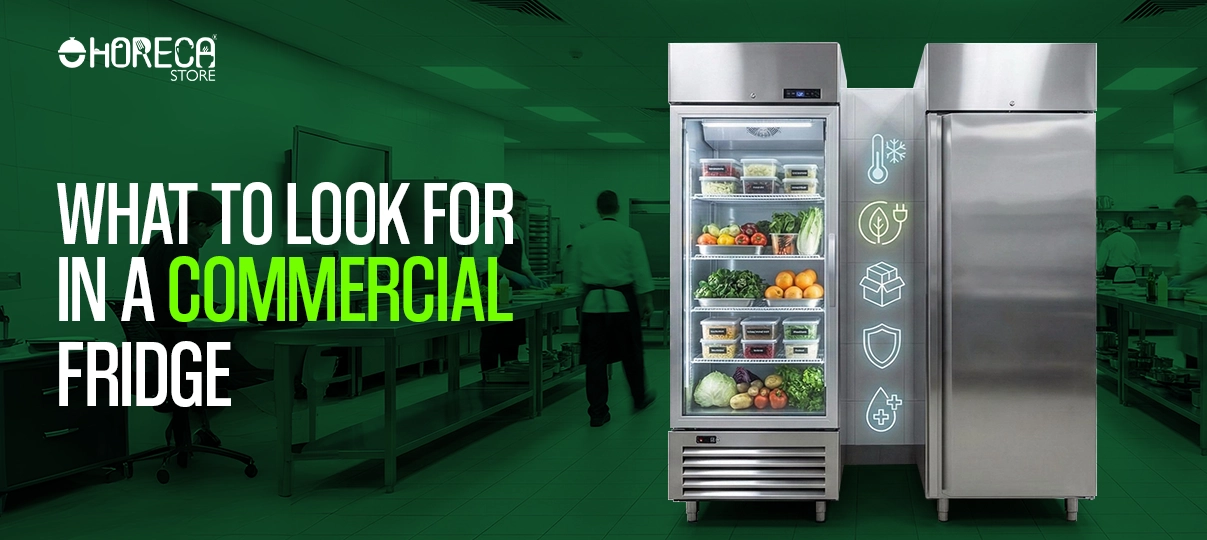
You’ve perfected your menu, designed your space, and are ready to open. But now you’re facing a wall of stainless steel options, all promising to be the “best commercial fridge.” It’s a huge investment, and the wrong choice can lead to spoiled inventory, a failed health inspection, and a major headache you don’t have time for. This guide walks you through what you actually need to know, no engineering degree required.
A commercial refrigerator is more than just a cold box; it’s the heart of your daily operations. It protects your inventory, ensures customer safety, and runs 24/7. Choosing the right one isn't about finding the cheapest option—it's about making a smart investment in your new business equipment that pays you back in reliability and peace of mind. In practice, the most successful owners treat this purchase as seriously as they treat their lease.
This guide cuts through the confusing technical specs and sales pitches, focusing only on what directly impacts your bottom line. You will learn how to confidently answer the five most important questions:
- What type and size is right for my space?
- Where should the 'engine' (compressor) be?
- Which certifications will keep the health inspector happy?
- How do I avoid hidden electricity costs?
- Is a used fridge a smart saving or a future headache?
Step 1: What Type and Size of Fridge Does Your Business Actually Need?
Before you dive into brands or budgets, the first step is answering two fundamental questions: What type of fridge do you need, and what size will actually work in your space? Choosing the wrong one can disrupt your workflow and lead to costly mistakes.
The right type depends entirely on its job. Is it for bulk storage in the back, or quick access on the line? A reach-in refrigerator is the all-purpose workhorse for storing boxes and bins of ingredients. For tasks that require immediate access to cold items, an undercounter unit tucks neatly under your workspace. If you’re assembling pizzas or sandwiches, a refrigerated prep table is a must-have multitasker. Finally, a glass-door display refrigerator acts as your silent salesperson, merchandising drinks or grab-and-go items.
- Coffee Shop: Undercounter unit for milk and a small reach-in for backup supply.
- Pizzeria/Deli: Refrigerated prep table for toppings and a large reach-in for dough and meats.
- Flower Shop: Glass-door display refrigerator to keep bouquets fresh and visible.
- Ghost Kitchen: One or more large reach-in units to handle high-volume ingredient storage.
When calculating size, don't get lost in "cubic feet." Instead, think in practical terms. Ask yourself: "How many full-size sheet pans or milk crates do I need to fit inside?" This focuses on the usable capacity for your daily operations, not just abstract volume. Finally, here’s a tip that has saved countless new owners a major headache: measure your delivery path. Your brand-new fridge is useless if it can't fit through every doorway, hallway, and corner to get to its final spot.
Once you know the type and size that will physically fit, it’s time to consider how its "engine" will perform in your kitchen.
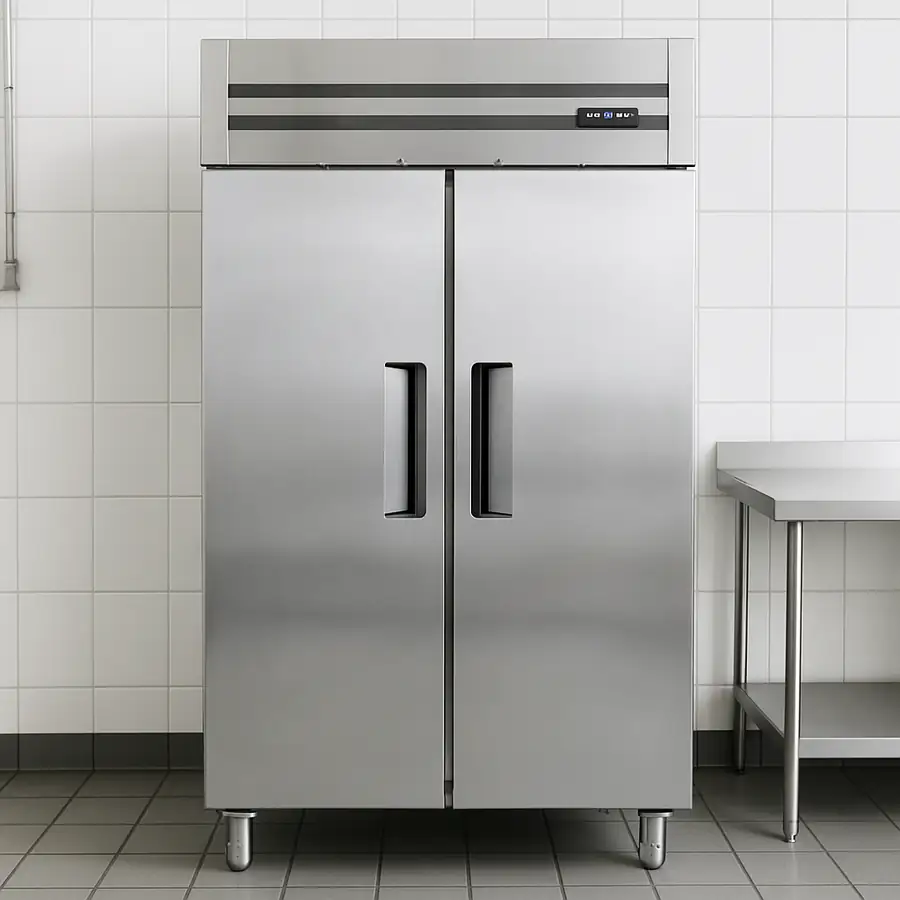
Step 2: Top vs. Bottom—Where Should Your Fridge's 'Engine' Be?
That "engine" is called the compressor, and it's the part of the refrigerator that does the actual work of cooling. It's also a major decision point you might not have considered: where it's located. Commercial refrigerators typically place this unit either on the very top or at the very bottom, and your choice has a direct impact on energy use, cleaning, and the unit’s lifespan. This isn't just a design quirk; it’s about matching the machine to your specific work environment.
With a top-mount model, the compressor is positioned high up, away from the floor. This is a huge advantage in environments where dust, dirt, or flour is common, as it’s far less likely to suck in debris that can clog the system and cause it to overheat. The downside? Hot air rises. In a sweltering kitchen, a top-mount unit pulls in warmer air, forcing it to work harder and use more energy. It also places the lowest shelf very close to the floor, which can be an ergonomic inconvenience.
A bottom-mount compressor, on the other hand, pulls in cooler air from near the floor, making it more energy-efficient in a hot kitchen. This design also raises the bottom shelf to a more comfortable height, giving you easier access to contents without deep bending. The critical trade-off, however, is maintenance. Because it sits on the floor, it will inevitably inhale dust, grease, and anything else that gets kicked around, requiring diligent and frequent cleaning to prevent a catastrophic failure.
So, how do you choose? If your kitchen is hot from cooking and you can commit to a strict cleaning schedule, a bottom-mount offers better ergonomics and efficiency. For general storage away from the main cooking line or in less dusty environments, a top-mount provides more reliable, lower-maintenance operation. Now that you've considered its engine, let's look at the part you'll interact with most: the doors.
Step 3: Glass vs. Solid Doors—Which Choice Saves You More Money?
Choosing between solid and glass doors isn’t just about style; it’s a direct trade-off between your energy bill and your kitchen's workflow. Solid doors are the efficiency champions. Because they're better insulated, they keep cold air locked in and your electricity costs down. The catch? You have to open the door every time you need to find something. Glass doors, on the other hand, let your staff see inventory at a glance, which can speed up service on a busy line. Just know that this convenience comes at a higher energy cost because glass isn't as good at keeping the cold in.
Beyond the door material, look for two critical features. Self-closing doors automatically pull shut, preventing costly mistakes when an employee's hands are full. This simple mechanism keeps food safe from temperature changes and is often a health code requirement. Just as important is the door gasket—the thick rubber seal that creates an airtight lock. A worn-out or damaged gasket means your fridge is constantly leaking cold air and, by extension, money from your bank account.
The smartest strategy, then, is often to match the door to the job. Use an energy-saving solid door unit for bulk ingredients in your stockroom, and invest in a glass door model for the fast-paced cooking line where speed is critical. Getting the physical hardware right is vital, but ensuring it's legally compliant is even more so. In fact, there are two official stickers you absolutely must look for to avoid the headache of a failed health inspection.
Step 4: The Two Stickers That Will Save You from a Failed Health Inspection
When your health inspector arrives, one of the first things they will do is scan your equipment for two small, crucial logos. The first is the NSF certification. This seal from the National Sanitation Foundation confirms your refrigerator meets the commercial fridge health code. In simple terms, it's a guarantee that the unit is built with food-safe materials and designed to be thoroughly cleaned, with no hidden corners where bacteria can grow. If a fridge doesn’t have this sticker, it’s an instant red flag for inspectors.
Equally important is the sticker that proves the refrigerator is electrically safe. You will see a logo from either UL (Underwriter Laboratories) or ETL (Intertek). A UL or ETL certified refrigerator has been rigorously tested to ensure its wiring and electrical components can handle the demands of 24/7 commercial operation without becoming a fire hazard. Using a non-certified appliance is not only a safety risk but could also give your insurance company a reason to deny a claim if an electrical fire occurs.
Think of these certifications as non-negotiable tickets to operating legally. This is exactly why you cannot use a residential fridge in a commercial kitchen; it will lack both NSF and UL/ETL ratings, guaranteeing a failed inspection and putting your entire business investment at risk. Now that you know how to choose a unit that's safe and compliant, you can focus on making sure it’s also affordable to run.
Step 5: How to Avoid a Shockingly High Electricity Bill
A commercial refrigerator is one of the few pieces of equipment that runs 24/7, making it a major driver of your monthly electricity bill. To keep that cost under control, look for the blue ENERGY STAR® logo. You’ve likely seen this on home appliances, and for a commercial unit, the impact is even bigger. An ENERGY STAR certified refrigerator is designed to be far more efficient—often saving you several hundred dollars per year in electricity costs compared to a standard model. It’s a simple way to guarantee long-term savings.
Beyond that official certification, you can check what kind of refrigerant the unit uses. Think of refrigerant as the substance that actually does the cooling, circulating through the system like the coolant in your car. The modern, eco-friendly standard is R290 (a type of propane), which is significantly more energy-efficient than older chemicals. Choosing a fridge that uses R290 not only helps lower your utility bill but also ensures your equipment is up-to-date with current industry technology.
Models with these efficient features might have a slightly higher price tag, but the monthly savings on your power bill mean they quickly pay for themselves. This investment in efficiency protects your operating budget from day one. But what if you see a used unit for a fraction of the price? While a "good deal" can be tempting, it often comes with hidden risks that can cost you far more in the long run.
The Hidden Risks of a "Good Deal": New vs. Used Refrigeration
That secondhand unit you found online might seem like a budget-friendly shortcut, but it introduces a massive risk: the lack of a warranty. A new commercial refrigerator’s warranty is your business's insurance policy against disaster. It covers not just the expensive parts, like the compressor, but also the certified technician’s labor costs. With a used unit, you lose that safety net. When it breaks down—and older equipment eventually does—the entire repair bill lands squarely on you.
The most expensive failure is almost always the compressor, which is the engine of your refrigerator. A brand new compressor, plus the technician's time to install it, can easily run over $800. This single repair can completely wipe out any initial savings from buying used and leave you without a working fridge for days. While a new unit is a bigger initial investment, it protects you from these sudden, catastrophic costs that can cripple a new business.
If your budget absolutely requires you to consider a used model, you have to act as the inspector. Before you even think about buying, be thorough and check these four critical points:
- Door Seals: Check the rubber door seals (gaskets) for any cracks or brittleness. A bad seal wastes energy and overworks the fridge.
- Compressor Noise: Listen to it run. Does the compressor make loud clanking, grinding, or buzzing noises? These are red flags for imminent failure.
- Age and History: Ask for the unit's age and its service history. A five-year-old unit from a small cafe is a world away from a 10-year-old workhorse from a busy 24/7 kitchen.
- Temperature Test: Confirm it actually works. Bring a separate thermometer, place it inside, and let the unit run for at least an hour to see if it reaches and holds a food-safe temperature (below 40°F or 4°C).
Ultimately, buying new gets you factory performance, an active warranty, and peace of mind. A used fridge is a gamble that might save you money upfront but could cost you far more in emergency repairs and spoiled inventory. Whether you choose new or take a chance on used, the job isn’t done once the unit is delivered. Proper installation is just as crucial for performance and longevity.
Don't Let Installation Be Your Downfall: Power and Airflow Requirements
You’ve navigated the purchase, and the new stainless steel unit has just been rolled into your space. The temptation is to plug it in and start stocking. However, two simple installation mistakes can damage your new equipment, spike your energy bills, and even void your warranty before you’ve sold your first product. The first is electrical. A commercial refrigerator’s powerful compressor requires its own dedicated electrical circuit. Think of it as an exclusive power lane; sharing an outlet with a microwave or a blender can trip your breaker, starving the fridge of consistent power and leading to component failure.
Just as critical is giving the unit space to breathe. That hard-working compressor generates significant heat, and it needs to be able to release it into the air. Pushing your refrigerator flush against a wall or boxing it in without ventilation clearance is like forcing an engine to run without radiator. It will overheat, work much harder than necessary, and fail prematurely. As rule, always leave at least three to four inches of open space around the sides and back of the unit.
Failing to provide proper power and ventilation aren't minor oversights; they are often cited by manufacturers as reasons to deny a warranty claim. By taking a few extra minutes to ensure your fridge is installed correctly, you are protecting your investment from the very beginning. Once it's properly set up, your focus can shift to keeping it in peak condition.
How to Protect Your Investment: Simple Maintenance That Prevents 90% of Problems
Your new commercial fridge is the workhorse of your business, and just like a car, a little routine maintenance goes a long way in preventing expensive breakdowns. The single most important task is cleaning the condenser coils once a month. These are the black, radiator-like fins (usually at the top or bottom of your unit) that release heat. In a busy kitchen, they quickly become caked with dust and grease, forcing the compressor to work overtime. A dirty coil system can increase your energy bill by 30% or more and is a leading cause of premature failure. Simply unplug the unit and use a stiff brush to clear away the buildup; this ten-minute task is one of the best commercial fridge maintenance tips for protecting your investment.
Another major source of wasted energy is a bad door seal. Those flexible rubber seals, called gaskets, are all that stands between the cold air inside and the warm air outside. If they become cracked or brittle, cold air escapes, and your fridge runs constantly to keep up. You can easily check their condition with the "dollar bill test." Close the door on a dollar bill; if you can pull it out with no resistance, the seal is weak and it’s time for a replacement. Wiping your gaskets down weekly with warm, soapy water will help keep them pliable and effective.
By combining these steps into a simple monthly routine—brushing the coils, checking the gaskets, and ensuring the small interior drainage line isn't clogged—you can prevent the vast majority of common commercial refrigerator problems. You don’t need to be a technician to perform this basic care, and the effort pays for itself by lowering your utility bills and helping you avoid a costly emergency service call during your busiest hours.
Your Commercial Fridge Purchase Checklist: From Overwhelmed to Confident Buyer
You started this article facing a wall of stainless steel, overwhelmed by technical jargon and a high-stakes decision. Now, you’re no longer just looking at a price tag; you understand the language of commercial refrigeration. You can walk into a supplier's showroom or browse online knowing exactly what to look for, confident that you can separate the essential features from the expensive extras.
To turn that knowledge into action, use this commercial fridge checklist as your guide. Print it out and take it with you. It’s the simple tool you need to evaluate any unit and ensure you cover all your bases before you buy.
Your Commercial Refrigerator Buying Guide Checklist:
- [ ] Business Need: Is this a reach-in, undercounter, prep, or display unit?
- [ ] Size & Path: Have you measured your doorways, hallways, and final placement spot?
- [ ] Compressor: Is a top-mount or bottom-mount compressor better for my kitchen’s heat and dust?
- [ ] Doors: Do I need efficient solid doors or convenient glass doors?
- [ ] Certifications: Can I see the NSF and UL/ETL logos?
- [ ] Efficiency: Does it have an ENERGY STAR® label to save on electricity?
- [ ] Budget: Am I choosing a new unit with a warranty or accepting the risk of a used one?
- [ ] Installation: Do I have a dedicated circuit and proper airflow space ready?
This process has transformed you from a nervous buyer into a smart investor. You now see that the right commercial refrigerator isn’t an expense—it’s the heart of your operation, the silent partner that protects your inventory and your profits 24/7. By choosing wisely, you’re not just buying a machine; you’re building a more resilient and successful business from the ground up.
Why Buy a Commercial Fridge from The Horeca Store?
Choosing the right commercial fridge is essential for maintaining food freshness, ensuring food safety, and supporting the smooth operation of your business. The Horeca Store offers a comprehensive selection of commercial fridges, including reach-in refrigerators, undercounter refrigerators, display fridges, worktop refrigerators, bar refrigerators, and walk-in refrigeration solutions from trusted brands. Whether you run a restaurant, hotel, café, bakery, supermarket, cloud kitchen, catering business, or convenience store, our commercial refrigeration equipment is designed to deliver reliable cooling performance, energy efficiency, and long-lasting durability for demanding foodservice environments.
Whether you're purchasing a commercial fridge for a new kitchen or upgrading your existing refrigeration system, The Horeca Store provides expert guidance to help you choose the ideal model based on your storage needs, available space, and budget. With competitive pricing, trusted commercial refrigeration brands, dependable customer support, and a wide range of professional kitchen equipment, The Horeca Store is your trusted one-stop destination for high-quality commercial fridges that improve food preservation, reduce energy costs, enhance operational efficiency, and support the long-term success of your business.