
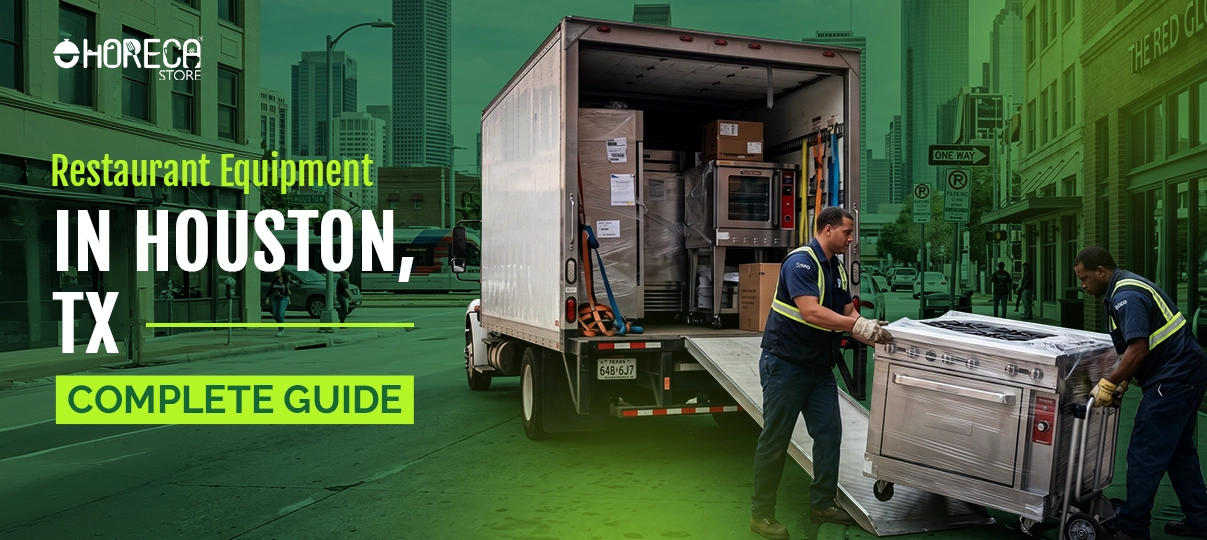
You’ve perfected your signature brisket in your Pearland backyard, but scaling up to a 100-seat dining room requires an entirely different ecosystem of steel. Stepping from a home kitchen into a professional workspace means leaving familiar appliances behind for gear engineered to survive relentless abuse. A standard residential stove might handle a massive Thanksgiving feast once a year, but a commercial six-burner range must deliver that exact same output every single night. This transition from passionate home cooking to a professional operation hinges on recognizing how heavy-duty machinery fundamentally changes your workflow.
Industry data reveals that standard residential appliances simply fail under the physical strain of an eight-hour continuous shift. To survive high-volume environments, you must rely on commercial duty cycles, which measure a machine's ability to operate safely at peak performance without resting periods. You will quickly encounter NSF standards (National Sanitation Foundation certifications), which guarantee that equipment can withstand the aggressive, constant scrubbing demanded by health inspectors. Furthermore, mastering BTU scaling—the measurement of heat energy output—ensures your building's gas lines can actually fuel those massive burners without losing pressure during a Friday lunch rush.
Beyond basic functionality, our unique climate dictates almost every hardware choice you will make. Here, your walk-in cooler is not just a refrigerator; it is the only barrier standing between your inventory and a 100-degree, 90-percent-humidity Tuesday in August. Surviving this environment requires mastering the three pillars of Houston kitchen success: industrial-strength cold storage to fight the humidity, perfectly calibrated heat generation, and non-porous surfaces. According to seasoned local operators, underestimating the brutal strain this weather puts on refrigeration compressors is a fast track to business failure.
Navigating these regional challenges demands a strategic plan rather than a random shopping spree. Creating a reliable equipment checklist for starting a restaurant in Houston serves as your roadmap, preventing costly mistakes at local supply warehouses. From understanding city permits to sourcing the perfect flat-top grill, mastering your Houston restaurant equipment covers the absolute what, where, and why of outfitting your space. The right tools will ultimately transform your culinary dream into an unstoppable, fully permitted reality.
The 'Big Three' Essentials: Heat, Cold, and Stainless Steel Surfaces
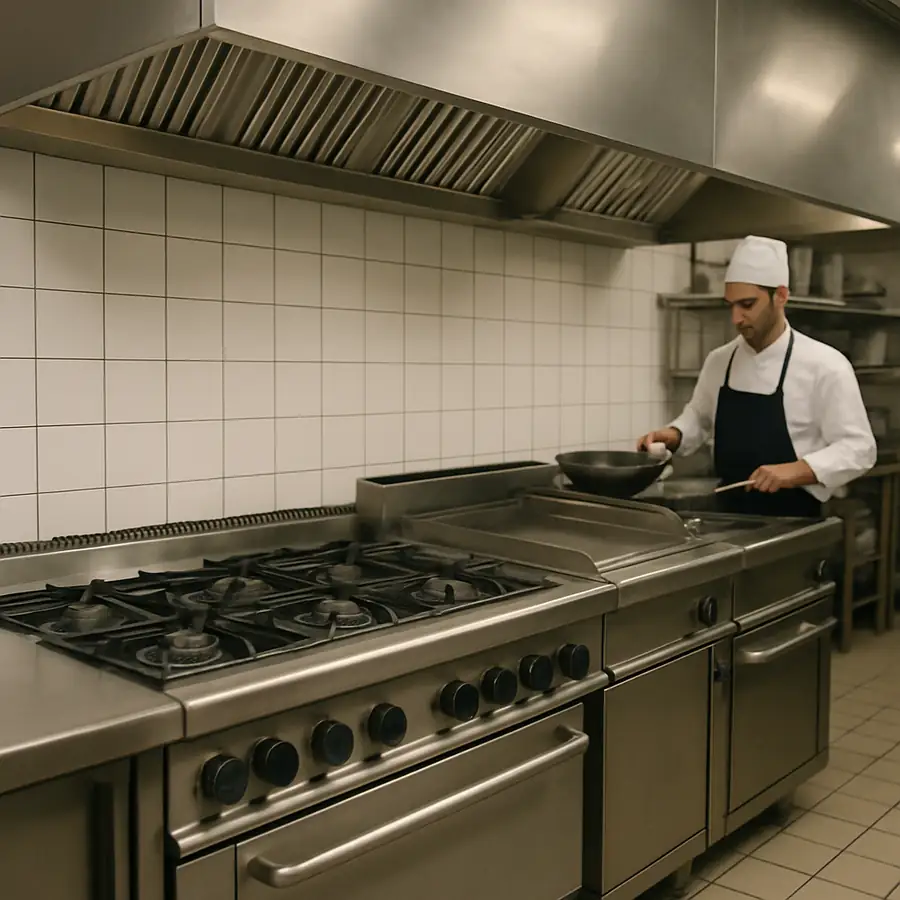
Stepping up from residential appliances requires recognizing that commercial food service equipment measures raw cooking power in BTUs (British Thermal Units). While a good home stove might max out at 15,000 BTUs, a single restaurant burner pumps out 30,000 BTUs to recover heat instantly during a rush. To harness this volume safely, every Houston startup needs a foundation of must-have base equipment:
- A high-output 6-burner range.
- A heavy-duty reach-in cooler.
- Durable prep tables.
Not all metal survives our Gulf Coast climate, which becomes obvious when browsing the best commercial kitchen supply stores in Houston. Buyers must choose between 430-grade stainless steel—a cheaper option that can pit and rust—and 304-grade, which includes nickel for maximum corrosion resistance. This premium 304 steel is essential for your mise en place stations (a culinary term meaning "everything in its place"), representing the specialized prep counters where line cooks keep chopped ingredients perfectly organized for rapid meal assembly.
Even with top-tier steel and massive heating capacity, your operation can still stall if it cannot beat the local weather. Once those powerful ranges start firing, the ambient temperature inside your kitchen will skyrocket, forcing your chilling systems to work overtime against the heat. That constant environmental battle exposes exactly why Houston humidity destroys cheap refrigeration and necessitates a 'tropicalized' unit.
Why Houston Humidity Kills Cheap Refrigeration—And How to Choose a 'Tropicalized' Unit
Picture a packed strip-center pho spot on a 100-degree August afternoon. Every time a cook opens the line’s low-boy—a compact, under-counter refrigerator used to store ingredients right where the chef stands—a wave of 90% Houston humidity rushes inside. A standard commercial fridge cools by absorbing internal heat and pushing it outward through a condenser. But when the kitchen air is already thick and sweltering, standard condenser heat exchange slows to a crawl, forcing the compressor to run constantly. Eventually, the motor burns out, leaving you with thousands of dollars in spoiled inventory and a frantic, premium-priced call for emergency restaurant equipment repair in Houston.
To avoid this financial nightmare, your sourcing strategy must prioritize "tropicalized" refrigeration. Unlike basic models built for climate-controlled northern cities, a tropicalized unit is engineered specifically to breathe in punishing. When budgeting for your industrial refrigeration installation in Houston, protect your food supply by verifying the equipment spec sheet includes these three lifesavers:
- High-Ambient Ratings: Certified to maintain safe food temperatures even when the surrounding kitchen air hits 100°F or higher.
- Oversized Condensers: Larger surface areas that allow the fridge to exhaust internal heat much faster.
- Easy-Clean Filters: Front-facing components that prevent sticky, humid airborne grease from choking the motor.
Surviving the Gulf Coast summer means mastering this brutal thermal math. Pushing all that trapped heat out of tropicalized coolers and away from your 30,000-BTU burners requires massive airflow, making precise ventilation crucial for meeting City of Houston Fire Codes.
The 'Lungs' of the Kitchen: Mastering Ventilation and City of Houston Fire Codes
Opening a new Heights bistro won't happen if your kitchen can't breathe. A ventilation hood is your restaurant's respiratory system and the ultimate gatekeeper for city permits. When figuring out how to design a commercial kitchen layout in Houston, many eager owners fall into the "permit trap": buying a massive cooking range but installing an undersized exhaust. The city requires your hood’s airflow—measured in CFM (Cubic Feet per Minute)—to perfectly match the intense heat output of the equipment beneath it. If your CFM math falls short, the fire marshal will immediately halt your opening.
Matching that critical airflow means choosing the correct canopy for your specific cooking methods. Depending on your menu, you will need one of two distinct setups:
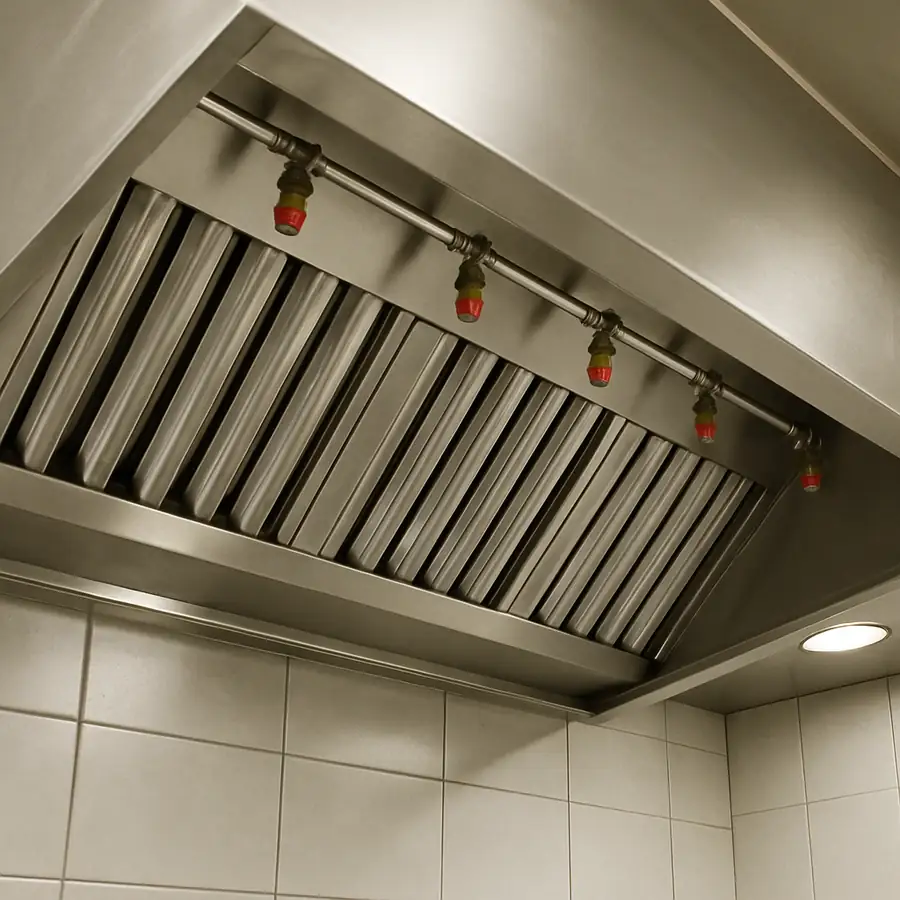
- Type I Hoods: Mandatory for any equipment producing grease or smoke, like fryers and flat-tops. These utilize heavy-duty baffle filters and are strictly regulated to prevent catastrophic grease fires.
- Type II Hoods: Designed solely for heat and moisture, such as over commercial dishwashers or pasta cookers. They lack grease filters but actively extract humid steam before it swamps your workspace.
Beyond the steel canopy itself, prepare for the hidden financial impact of fire suppression. Every Type I hood demands an integrated chemical extinguishing setup (often called an Ansul system) featuring overhead nozzles. Installing and certifying these pressurized pipes easily adds thousands to your build-out, making it a critical factor when exploring Houston restaurant equipment financing options.
Harris County Health Inspections: The Equipment Standards You Must Meet
Surviving the fire marshal is only half the battle; next comes the health inspector. To pass the Harris County equipment inspection on the first try, nearly every surface touching food must be certified by the National Sanitation Foundation (NSF). Before buying used gear, always look for this specific circular mark. It guarantees the metal has no microscopic crevices where Houston's infamous humidity can help bacteria thrive.
Beyond prep tables, your plumbing hardware faces extreme scrutiny to meet Texas food safety equipment requirements. You cannot simply install a standard home sink. The code requires a massive three-compartment sink to break cleaning into distinct, highly regulated stages: washing, rinsing, and chemical sanitization. Washing simply scrubs away visible grease, but sanitization is the invisible step that actually kills lingering pathogens.
Dedicated hand-washing sinks must also be stationed near all prep zones, strictly isolated from your dishwater. Mastering these rigid Harris County restaurant health inspections equipment standards stops you from purchasing non-compliant hardware that could stall your opening day. Sourcing this exact certified stainless steel without breaking the bank requires knowing where local industry veterans shop.
Where the Locals Shop: Navigating Airline Drive and JKS Houston
Armed with your required NSF specifications, head straight for the 77022 zip cde. Airline Drive serves as the unofficial artery for the best commercial kitchen supply stores in Houston, offering a highly rewarding stretch of brick-and-mortar warehouses. Instead of clicking blindly through an online catalog, you can physically measure the depth of a prep table or test the hinge strength of a refrigerator door before making a costly commitment.
Lead-time management will often make or break your grand opening schedule, which is why walking through JKS Houston restaurant equipment supplies beats relying on distant web distributors. Waiting six weeks for a freight delivery means paying commercial rent on an empty kitchen. Local purchasing lets you secure a massive dough mixer the exact same afternoon, while building relationships with Houston-based sales reps ensures you have a reliable local contact when disaster strikes during a humid August lunch rush.
Wandering through this dense equipment district quickly highlights a massive contrast in price tags. Seeing factory-fresh ranges sitting directly beside heavily seasoned, reconditioned fryers forces a practical reality check for your startup budget. Ultimately, you must decide which vital pieces demand premium retail pricing and which ones can be safely purchased pre-owned.
Save Thousands Without Losing Sleep: The High-Stakes Choice Between New and Used Gear
Stretching your budget requires distinguishing between "used" (sold as-is by a closed business) and "refurbished" (rebuilt with new internal components). Every appliance has a natural lifespan, but our grueling humidity accelerates that clock. When deciding where to buy used restaurant equipment in Houston, TX, you must weigh the immediate cash savings against the catastrophic risk of a dying compressor shutting down your Friday dinner rush.
Navigate these choices by dividing your needs based on how water, heat, and grease interact with the machine over its life cycle:
- The Safe Buy List: Stainless steel prep tables, sinks, and gas ranges. These feature nearly indestructible metal pipes and surfaces without sensitive electronics.
- The Never Buy Used List: Commercial ice machines and dishwashers. Invisible mineral scale buildup from hard water silently destroys their internal valves.
Additionally, if you attempt to buy second-hand coolers, watch for three major red flags: cracked door gaskets, rusting condenser coils, or a compressor humming louder than a normal conversation.
Scouring Houston restaurant auctions and liquidators consistently yields incredible deals if you strictly follow those safe categories. Yet, if buying brand-new, warranty-backed refrigeration upfront feels financially impossible, alternative financing avenues can bridge the gap.
Cash Flow Solutions: Leasing vs. Buying in the Texas Market
Protecting your opening capital is vital when evaluating leasing vs. buying restaurant equipment in Texas. Purchasing a $10,000 walk-in cooler drains cash instantly, whereas a five-year lease might total $13,000 overall but keeps your critical emergency funds safely in the bank to survive slow summer months.
The specific contract you choose heavily dictates your long-term flexibility. Lenders typically offer operating leases—effectively long-term rentals where the dealer eventually reclaims the gear—and capital leases, which function like traditional loans ending in your complete ownership. Exploring local Houston restaurant equipment financing options through regional Texas credit unions often secures lower interest rates and more forgiving terms than faceless national banks.
Smart tax strategies further soften these heavy upfront investments. The IRS offers the Section 179 deduction, a powerful rule allowing you to write off the full purchase price of qualifying kitchen gear during your first year of operation, instantly lowering your taxable income. Mastering these financial tools is vital before outfitting a permanent heavy-duty kitchen block or planning a compact mobile setup.
Outfitting the Nomad: Equipment Needs for the Houston Food Truck Scene
Taking recipes on the road means trading a spacious stationary kitchen for a high-intensity box on wheels. You must master generator load-balancing—calculating exactly how much power your equipment draws so you don't trip a breaker during a busy Friday lunch rush. Sourcing energy-efficient commercial appliances that Houston operators trust keeps your generator humming perfectly without burning through expensive fuel or risking a mid-service blackout.
Building this layout requires visiting specialized food truck equipment suppliers that Houston relies on for mobile setups. Your loadout must handle constant street vibration while maximizing your limited square footage. Essential gear for this nomadic ecosystem includes:
- Compact fryers: High-output units designed specifically for narrow aisle spaces.
- Low-profile fridges: Undercounter refrigeration that safely doubles as a stainless steel prep surface.
- Portable gray-water tanks: Heavy-duty containers that hold dirty sink runoff until you reach an approved dumping facility.
Local mobile health codes mandate strict gray-water management, requiring these waste tanks to be significantly larger than your fresh water supplies to prevent illegal street overflows. Operating in a confined metal box also amplifies the surrounding weather, requiring careful selection of cooking appliances built to handle the humidity.
Beating the Heat: The Best Oven Brands for Houston’s Humid Climate
Houston’s relentless humidity doesn’t just make line cooks sweat; it actively alters how food bakes. Opening an oven door on a steamy August afternoon lets dense, wet air rush in, instantly throwing off your timing. Traditional conduction ovens—where heat transfers directly from the heating element to the pan—struggle to compensate for this influx, turning crispy pastries into chewy sponges. Convection ovens fight back using powerful interior fans to circulate hot air, actively stripping away that heavy ambient moisture to ensure an even bake.
Mastering this local atmosphere requires investing in advanced food service equipment like combi-ovens, which automatically inject or extract steam on demand. Think of a combi-oven as a weather-proof box; it allows a local bistro to bake crusty bread or hold smoked briskets perfectly without drying them out, regardless of the external weather. Sourcing the best commercial oven brands for Houston's humid climate ensures daily recipe consistency whenever the local dew point spikes.
Finishing those dishes flawlessly often involves a salamander—a high-powered, open-faced broiler mounted above the stove used exclusively for rapidly melting cheese or blistering steaks. Arranging these powerful heating tools to prevent line bottlenecks requires strategic spatial planning.
Designing for Speed: Layout Secrets of Successful Houston Kitchens
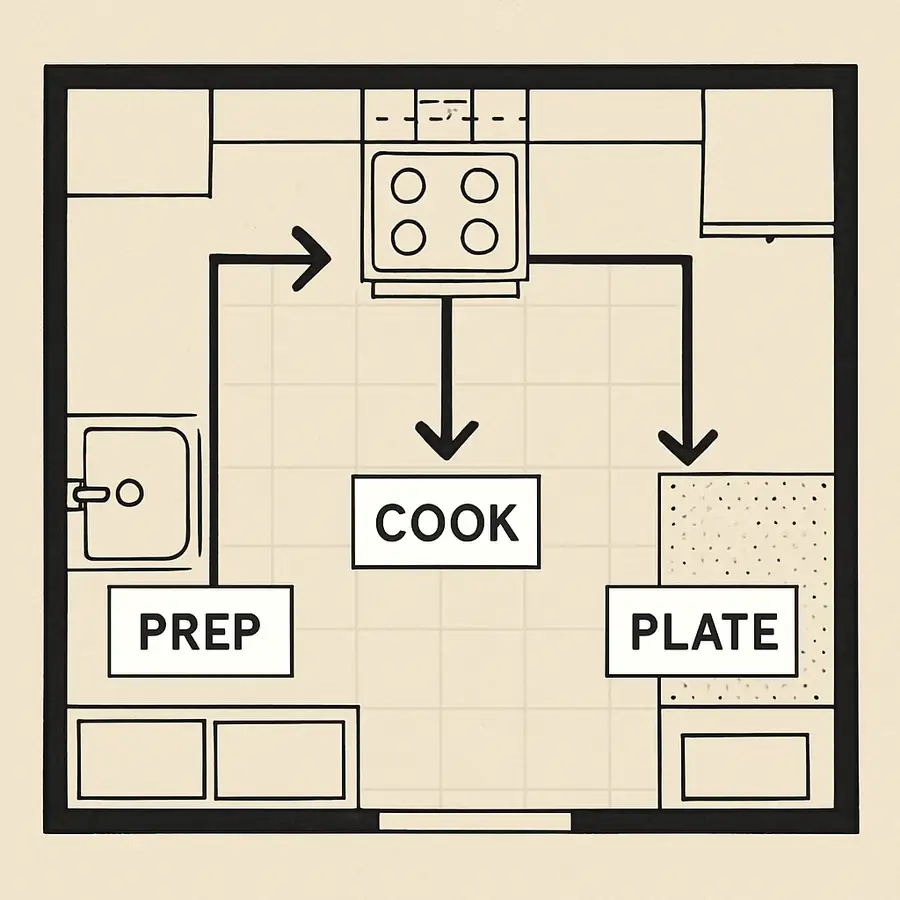
The secret to designing a commercial kitchen layout in Houston starts with understanding the "Work Triangle." This invisible path connects your storage, prep, and cooking stations, keeping your team moving in a continuous forward motion. When this flow breaks, you experience "line-locking"—a frustrating bottleneck where cooks physically trap each other during a rush. By mapping a clear path from raw ingredients to the plating window, you eliminate collisions entirely.
Smart ergonomics do more than just speed up service; they physically save your staff. A thoughtful layout minimizes unnecessary bending and cross-kitchen sprints, drastically reducing fatigue over a brutal twelve-hour shift. If your fry cook has to walk ten steps just to grab frozen potatoes, you are burning valuable time and energy on every single order.
Strategic placement also lowers utility bills through "zoned cooling." When organizing restaurant equipment, Houston owners should group their heavy heat-generating units under one shared ventilation hood, preventing hot air from bleeding into chilled prep areas. This targeted approach stops your AC from overworking. Yet, even with flawless layouts, intense heat eventually pushes hardware to its limit, demanding a solid plan for breakdowns.
When the Line Goes Down: Emergency Repair and Preventive Maintenance
It is a Friday night in August, humidity at 95%, and your walk-in suddenly stops humming. Before panicking and searching for emergency restaurant equipment repair providers in Houston, troubleshoot the basics. Did a tripped breaker cut power? Is a mop bucket blocking the compressor? Simple checks often solve the crisis, saving you a pricey after-hours fee. However, if the issue is mechanical, keeping a pre-vetted contact list of local pros on your office wall is essential.
The best way to avoid panic-inducing breakdowns is through preventive maintenance—treating your gear like a well-oiled car. Houston's relentless climate makes this non-negotiable. Implement a five-minute daily maintenance routine to double the lifespan of your heavy-duty investments:
- Clean air filters: Clogged vents force compressors to overwork in the Texas heat.
- Check gasket seals: These rubber fridge door borders keep cold in; cracked ones bleed money.
- Descale ice machines: Houston’s hard water causes mineral buildup, so regular descaling (removing chalky deposits) keeps ice flowing.
Even with meticulous care, parts eventually wear out. Partnering with reliable Houston commercial kitchen appliance repair services ensures your doors stay open, protecting the large investments you have curated for your launch.
Your 30-Day Houston Equipment Action Plan: From Shopping to Sizzling
You no longer look at a commercial kitchen as just a collection of oversized stoves. You now understand it as the essential steel ecosystem protecting your inventory from the brutal Texas heat. With this foundation, you are officially ready to transition from a hopeful planner to a confident operator.
To optimize your time to permit, execute this 30-day countdown for your equipment checklist:
- Week 1: Permits. Verify all COH permit requirements before buying.
- Week 2: Sourcing. Scout local warehouses for the best deals.
- Week 3: Install. Bring in professionals for utilities and ventilation.
- Week 4: Inspection. Test systems under load before the inspector arrives.
Start with Week 1 to see immediate results and protect your budget. Matching each potential purchase to a specific City of Houston health code ensures you only buy gear with the correct NSF ratings. Every time you verify a utility requirement or local regulation, you build the confidence needed to negotiate effectively with suppliers and prevent costly opening delays.
Equipping a commercial kitchen in Houston is a challenging but highly rewarding process. You now see this hardware for what it truly is: the bedrock of your future success in this city's incredible food scene. Take that exciting first step today by visiting a local showroom, testing the equipment for yourself, and finally bringing your culinary vision to life.
Buy Restaurant Equipment in Houston, TX from The Horeca Store
Setting up a successful restaurant requires reliable and high-quality restaurant equipment in Houston, TX to support daily kitchen operations. The Horeca Store offers a wide range of commercial kitchen equipment, including cooking equipment, refrigeration units, food preparation tools, storage solutions, and more. Our products are designed for restaurants, cafés, hotels, catering businesses, and commercial kitchens looking for durable, efficient, and professional-grade solutions.
At The Horeca Store, we provide premium restaurant equipment that helps businesses improve productivity, maintain food quality, and streamline operations. Whether you are opening a new restaurant or upgrading your existing kitchen, our extensive selection and competitive pricing make it easy to find the right equipment for your needs. Choose The Horeca Store for dependable commercial kitchen solutions built for long-term performance.