

A smart restaurant setup starts with the small items your team touches all day: knives, pans, prep bowls, tongs, ladles, cutting boards, storage containers, and table service pieces. This Essential Restaurant Utensils, Tools, and Smallwares Checklist helps you stock the right kitchen tools without overbuying or missing items that slow down service.
Restaurant utensils, tools, and smallwares are the non-large-equipment items used to prepare, cook, serve, store, and clean food. They support your main restaurant equipment, such as ranges, ovens, fryers, refrigerators, and dishwashers. In simple terms, smallwares are the daily workhorses that keep a commercial kitchen moving.
What should be on a restaurant smallwares checklist?
A commercial oven still needs pans that fit the cavity.
A complete checklist should cover food prep tools, cooking utensils, essential cutlery, cookware, bakeware, measuring tools, storage items, serving utensils, dining essentials, bar tools, cleaning tools, and safety supplies. The exact mix depends on your menu, service style, kitchen size, and daily volume. A prep table is where the boards and bowls stay during service.
A cafe will not need the same setup as a hotel banquet kitchen. A food truck needs compact, multi-use items. A bakery needs more scales, sheet pans, dough tools, and cooling racks. A full-service restaurant needs both back-of-house chef tools and front-of-house serving pieces.
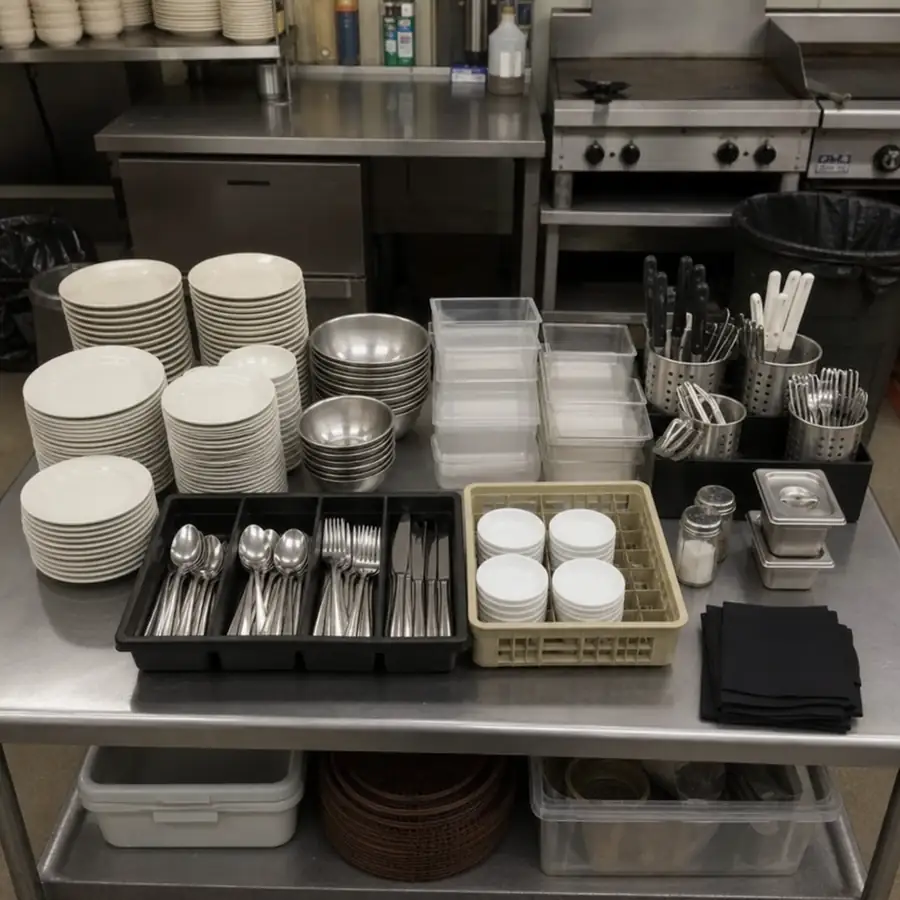
Core categories of restaurant utensils and smallwares
Smallwares are easier to buy when grouped by job. This keeps your list clear and helps you spot gaps before opening day or a busy season.
Food prep tools
Food prep tools help your team wash, cut, mix, portion, and stage ingredients before service. Good prep tools save time and help cooks stay consistent.
Common prep items include:
- Cutting boards in different colors or uses
- Chef knives, paring knives, serrated knives, and boning knives
- Mixing bowls in several sizes
- Colanders and strainers
- Vegetable peelers and corers
- Mandolines and graters
- Whisks, spatulas, and scrapers
- Measuring cups, measuring spoons, and scales
- Portion scoops and ladles
- Food storage containers with lids
Capacity matters here. A small cafe may only need a few mixing bowls and containers. A catering kitchen may need large tubs, high-volume scales, and many sheet pans for batch prep.
Cooking utensils and chef tools
Keep a commercial fryer basket plan and a commercial range set of tools at the hot line.
Cooking utensils are used at the range, oven, fryer, grill, and prep line. They need to stand up to heat, grease, and constant use.
Key items include:
- Tongs in several lengths
- Turners and fish spatulas
- Solid and slotted spoons
- Ladles in measured sizes
- Skimmers and fryer baskets
- Basting brushes
- Thermometers
- Oven mitts and pan grips
- Sauce guns, squeeze bottles, and plating spoons
Length and material affect safety. Long tongs help staff work around grills and fryers. Heat-safe spatulas protect nonstick surfaces. Stainless steel utensils are durable for heavy use, while silicone works well for delicate pans.
Cookware, bakeware, and pans
A reach-in refrigerator holds backup food, not loose pans.
Cookware connects directly to menu output. The wrong pan size can slow service or create uneven results.
Most kitchens need:
- Fry pans and saute pans
- Sauce pans and stock pots
- Braziers and rondeaus
- Sheet pans and hotel pans
- Roasting pans
- Muffin pans, loaf pans, or cake pans if baking
- Wire racks and cooling racks
Size should match burners, oven space, and batch needs. A QSR line may use hotel pans for hot holding. A bakery needs many sheet pans and racks. A hotel kitchen may need large stock pots and deep pans for soups, sauces, and banquets.
Serving utensils and dining essentials
Serving utensils and dining essentials shape the guest experience. They also affect speed at the pass, buffet, bar, or table.
Core items include:
- Serving spoons, forks, and tongs
- Soup ladles and sauce ladles
- Plate covers where needed
- Trays and tray stands
- Flatware and steak knives
- Plates, bowls, cups, and saucers
- Ramekins, sauce cups, and condiment holders
- Bread baskets or share plates
- Water pitchers and carafes
Choose pieces that fit your concept. A fine dining room may need polished flatware and specific glassware. A casual cafe may need durable, easy-stack items. A buffet needs strong serving utensils and backup pieces for quick changeouts.
Important features and specifications to check
A commercial dishwasher sets which pieces can go through the rack.
Smallwares may look simple, but the details matter. The right specs can reduce breakage, improve food safety, and make service smoother.
Material is one of the first choices. Stainless steel is strong, easy to clean, and common in busy kitchens. Plastic is light and useful for storage, but it must be food-safe and suited to temperature needs. Wood can be useful for some tools, but it often needs more care.
Size and capacity affect speed. Large prep bowls help with batch mixing. Small portion scoops help with cost control. Containers should fit your shelves, refrigerators, and prep tables.
Heat resistance matters near ovens, fryers, and grills. Low-grade tools can bend, melt, or become unsafe. Choose high-heat utensils for hot stations.
Grip and comfort affect staff fatigue. Handles should feel secure, even when wet or oily. This is important for tongs, knives, ladles, and turners used through long shifts.
Stackability and storage fit save space. This is vital for food trucks, bars, cafes, and compact kitchens. Stackable pans, bowls, and containers keep shelves neat.
Dishwasher safety reduces labor. If an item needs hand washing, it may not suit a high-volume restaurant. Check this before buying specialty kitchen gadgets or delicate service pieces.
Measurement markings help with speed and accuracy. Marked containers, scoops, ladles, and measuring tools support recipes, portion control, and consistent plating.
Matching tools to different food businesses
Not every business needs every item. Buy for your menu and service model first. Then add backups for your busiest shifts.
This matching step keeps your spend focused. For example, a bakery should not spend heavily on table service pieces before it has enough sheet pans and cooling racks. A bar should not overlook jiggers, strainers, and glassware backups.
Brands, product types, models, and use cases
When comparing restaurant supplies, it helps to think in layers: brand, product category, model or series, key attributes, and use case. A brand may offer basic, mid-range, and heavy-duty lines in the same category. The best choice is the one that fits your workload, not always the most expensive one.
For essential cutlery, compare knife type, blade material, handle grip, balance, and sharpening needs. A chef knife is a core prep tool for most kitchens. A serrated knife suits bread and delicate tomatoes. A boning knife helps meat and fish prep.
For cookware, compare pan material, thickness, handle style, lid fit, and oven safety. Heavy pans may hold heat better, but they can be tiring in a fast saute station. Lighter pans may suit quick service, but they may wear faster under heavy use.
For storage containers, compare shape, lid seal, capacity, temperature range, and visibility. Clear containers help staff see stock at a glance. Square containers often use shelf space better than round ones.
For serving utensils, compare finish, handle comfort, length, portion size, and buffet fit. Long-handled spoons and tongs suit self-service stations. More polished pieces may fit table service or catered events.
A supplier such as the horeca store can help operators compare categories and build a list around real kitchen needs. The goal is not to buy every kitchen gadget available. The goal is to choose tools that support your menu, staff, and service speed.
A practical buying checklist
Use this checklist before you order. It works for a new opening, a remodel, or a restock.
- List every menu item and note the tools needed to prep, cook, plate, and serve it.
- Map tools by station: prep, hot line, cold line, bakery, bar, dish, and service.
- Choose standard sizes for pans, containers, ladles, and scoops.
- Buy enough backups for peak shifts, not just quiet periods.
- Check storage space before ordering large quantities.
- Confirm items are food-safe and suited to hot, cold, or wet use.
- Pick dishwasher-safe items where possible.
- Add cleaning brushes, sanitizer buckets, towels, and gloves to the list.
- Keep a small replacement stock for items that break, bend, or go missing.
Standard sizing is one of the best ways to reduce confusion. If cooks use the same ladle size for a sauce each time, plating becomes more consistent. If containers share lids, staff waste less time searching.
Cleaning, maintenance, parts, and total cost
Smallwares need care, even if they are not powered restaurant equipment. Poor cleaning can create food safety risks. Poor storage can shorten item life.
Set simple cleaning rules. Knives should be washed, dried, and stored safely. Cutting boards should be cleaned and replaced when deeply scored. Utensils used with allergens or raw proteins should be handled with care and kept separate where needed.
Maintenance is also practical. Keep knives sharp. Replace cracked containers and warped lids. Remove melted spatulas or bent tongs from service. Check thermometers often so readings stay useful.
Parts and support matter for items with pieces. This includes food mills, mandolines, scales, dispenser systems, and some kitchen gadgets. If blades, lids, seals, batteries, or replacement parts are hard to find, the item may cost more over time.
Warranty and support are worth checking for higher-cost smallwares. Scales, specialty cutters, and premium chef tools may carry support terms. Keep purchase records so replacements are easier to manage.
Total cost of ownership is not only the purchase price. A cheap utensil that fails during service costs time and creates stress. A durable tool that is easy to clean, easy to store, and easy to replace often gives better long-term value.
Final buying guidance
If your kitchen handles high volume, choose durable stainless steel tools, standard pan sizes, and extra backups for each station. If your space is small, consider stackable containers, nesting bowls, and multi-use utensils.
If your menu depends on prep accuracy, invest in scales, portion scoops, measured ladles, and reliable knives. If your service depends on presentation, prioritize dining essentials, serving utensils, trays, and clean plateware that match your concept.
If your team is building from scratch, start with the core checklist before adding specialty kitchen gadgets. Cover food prep tools, cooking utensils, essential cutlery, cookware, storage, cleaning, and service first. Then add menu-specific items that clearly save time or improve quality.
How many utensils does a new restaurant need?
It depends on menu size, seats, staff count, and service volume. Start by listing each station and each menu item. Then buy enough tools for active use, cleaning cycles, and backup during rush periods.
What is the difference between smallwares and restaurant equipment?
Restaurant equipment usually means larger items such as ovens, ranges, fryers, refrigerators, and dish machines. Smallwares are the smaller tools used with that equipment, such as pans, knives, tongs, bowls, and serving pieces.
Which smallwares should every kitchen buy first?
Start with knives, cutting boards, mixing bowls, pans, tongs, spoons, ladles, thermometers, storage containers, measuring tools, towels, and cleaning supplies. These items support most basic prep and cooking tasks.
Are specialty kitchen gadgets worth buying?
They are worth buying when they solve a real menu or labor problem. If a gadget saves time every day, improves consistency, or replaces slow manual work, it may be useful. If it only has one rare use, wait before buying it.
How often should restaurant utensils be replaced?
Replace items when they are cracked, warped, dull, unsafe, hard to clean, or no longer accurate. Build regular checks into your cleaning and inventory routine so damaged tools do not stay in service.