
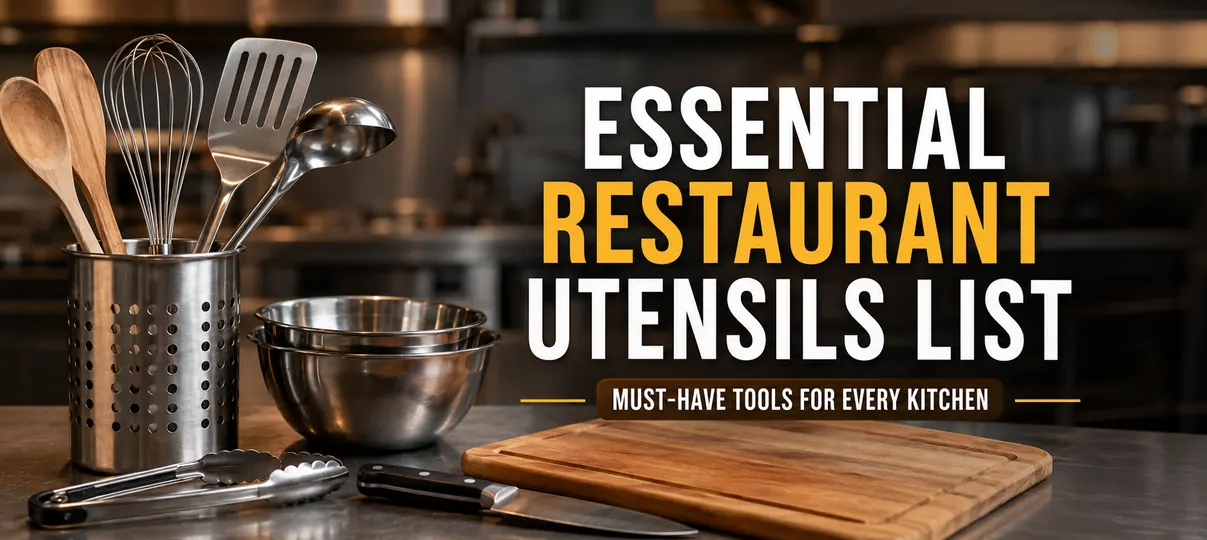
Equipping a restaurant kitchen is no small task. It requires careful planning and attention to detail. A well-stocked kitchen is the backbone of any successful restaurant. The right utensils can make all the difference. They ensure efficiency and consistency in food preparation. This is crucial for maintaining high standards.
Every restaurant needs a comprehensive list of essential kitchen tools. This list should cover everything from basic cooking utensils to specialized equipment. It helps streamline operations and improve workflow.
High-quality chef knives, cutting boards, and measuring tools are just the beginning. Each tool plays a vital role in the kitchen. They contribute to the overall success of the restaurant. Investing in durable, professional-grade utensils is wise. It reduces the need for frequent replacements. This saves money in the long run.
Safety and sanitation are also key considerations. Proper maintenance of utensils ensures food safety. It extends the lifespan of the tools. Understanding the specific needs of your restaurant is important. It guides the selection of essential utensils. This article will provide a detailed restaurant utensils list to help you get started.
Why a Comprehensive Restaurant Utensils List Matters
A complete restaurant utensils list is crucial for a kitchen's efficiency. It helps chefs prepare dishes quickly and maintain consistency. Without the right tools, the kitchen's workflow can suffer.
In restaurants, time is of the essence. A well-organized utensils list ensures that every tool has its place and purpose. This reduces clutter and confusion during busy service hours.
Each utensil has a role that contributes to the overall kitchen operation. From preparation to cooking and plating, the right tools enhance the quality of food. They allow chefs to perform their best work.
Consider these benefits of a comprehensive utensils list:
- Improved kitchen organization
- Enhanced workflow and efficiency
- Consistent dish quality
Core Cooking Utensils Every Restaurant Needs
Having the right restaurant equipment and food prep equipment is essential for any kitchen operation.
Having the core cooking utensils is foundational for any successful restaurant kitchen. These tools are essential for a wide range of cooking tasks.
Start with high-quality chef knives. They are indispensable for precision in cutting and chopping. A set includes a chef's knife, paring knife, and serrated knife.
Cutting boards are just as important. Invest in separate boards for meats, vegetables, and dairy to prevent cross-contamination. Durable materials like wood or plastic are recommended.
Measuring tools are vital for following recipes accurately. This includes measuring cups, spoons, and a reliable kitchen scale. Accurate measurements ensure consistency in taste and texture.
Also, equip the kitchen with mixing bowls in various sizes. These are used for mixing, marinating, and prepping ingredients. Choose bowls made from durable materials like stainless steel.
Consider these essential cooking utensils:
- Chef knives
- Cutting boards
- Measuring cups and spoons
- Kitchen scales
- Mixing bowls
Chef Knives and Cutting Tools
Chef knives are the backbone of most cooking tasks. A sharp chef's knife is crucial for efficiency and safety in food preparation.
Other cutting tools, such as a paring knife and bread knife, complement the chef's knife. Each serves a specific purpose and aids in versatile cooking.
Additional cutting tools like peelers and slicers can speed up prep work. They are vital for efficiently handling vegetables and fruits.
Essentials in chef knives and cutting tools include:
- Chef's knife
- Paring knife
- Bread knife
- Vegetable peeler
- Kitchen shears
Cutting Boards and Food Prep Surfaces
Cutting boards are essential to protect surfaces and prevent cross-contamination. They come in different materials such as wood, plastic, and bamboo.
Restaurants should use different boards for meats, seafood, and vegetables. This practice prevents harmful bacteria from spreading across foods.
Consider investing in color-coded cutting boards. They help kitchen staff quickly identify the right board for each task.
Here are key choices for cutting boards:
- Wooden cutting boards
- Plastic cutting boards
- Bamboo cutting boards
- Color-coded boards
Measuring Cups, Spoons, and Scales
Exact measurements are non-negotiable in a professional kitchen. Measuring cups and spoons are integral for ingredient accuracy, especially in baking.
A kitchen scale provides precision when measuring weight, crucial for portion control. It is invaluable for consistency in serving sizes.
Select durable, easy-to-clean measuring tools. Metal or BPA-free plastic options are often preferred for safety and longevity.
A checklist for measuring tools includes:
- Measuring cups
- Measuring spoons
- Digital kitchen scale
- Liquid measuring cups
Essential Mixing and Preparation Tools
Mixing and preparation tools are the heart of creating delicious dishes. These tools help combine ingredients uniformly and efficiently.
Begin with a diverse set of mixing bowls. They are essential for everything from batter preparation to tossing salads. Opt for sturdy materials like stainless steel or glass.
Whisks and spatulas are critical for blending and stirring. They help achieve the right consistency and integrate ingredients smoothly. Silicone versions are often heat resistant and easy to clean.
No kitchen is complete without serving tools like tongs, turners, and ladles. These tools facilitate serving and transferring food with ease and precision.
Important mixing and preparation tools include:
- Set of mixing bowls
- Variety of whisks
- Heat-resistant spatulas
Mixing Bowls, Whisks, and Spatulas
Mixing bowls are the cornerstone of food prep. They come in different sizes to accommodate various quantities. Choose bowls that nest for compact storage.
Whisks come in handy for emulsifying sauces or whipping eggs. A robust whisk can make the task less tiring and more effective.
Spatulas are invaluable for scraping bowls and blending mixtures thoroughly. Look for ones with flexible yet sturdy heads for diverse kitchen tasks.
Essential items are:
- Stainless steel mixing bowls
- Silicone whisks
- Heat-proof spatulas
Tongs, Turners, and Ladles
Tongs provide excellent control and grip, essential for flipping meats and vegetables. They reduce the risk of burns and ensure even cooking.
Turners, often called spatulas, are perfect for flipping pancakes or turning burgers. A sturdy handle makes the task seamless.
Ladles are ideal for serving soups and stews with precision. Different sizes accommodate varied portions for accurate serving.
Consider these serving essentials:
- Metal or silicone tongs
- Durable turners
- Different-sized ladles
Must-Have Pots, Pans, and Baking Equipment
Every restaurant kitchen needs a robust set of pots, pans, and baking equipment. These essential pieces serve a range of culinary functions.
Pots and pans come in various materials like stainless steel and non-stick. Each serves distinct cooking purposes, from boiling to frying.
Investing in specialty cookware enhances a restaurant's menu. Items like woks and griddles cater to diverse cooking styles and cuisines.
Baking needs specialized equipment such as sheets and pans. These support a variety of tasks, from baking bread to roasting vegetables.
Diverse bakeware is crucial for preparing desserts and savory dishes. Selecting the right material affects cooking quality and ease of cleaning.
Consider crucial baking equipment:
- Assorted baking sheets
- Roasting pans
- High-quality bakeware
Pots, Pans, and Specialty Cookware
A range of pots and pans is vital for all cooking needs. Heavy-duty pots handle soup and sauces, while skillets handle sautéing.
Non-stick pans are indispensable for cooking delicate foods like fish and pancakes. They make cleanup straightforward and cooking efficient.
Specialty cookware expands cooking possibilities in a kitchen. Woks are perfect for stir-frying while cast iron pans retain heat well for even cooking.
Essential cookware includes:
- Stainless steel pots
- Non-stick skillets
- Cast iron pans
Baking Sheets, Roasting Pans, and Bakeware
Baking sheets are vital for cookies, pastries, and more. Opt for sturdy sheets that resist warping at high temperatures.
Roasting pans make preparing large cuts of meat and vegetables manageable. Their depth allows even heat distribution for thorough cooking.
Bakeware, like cake pans and pie dishes, is crucial for creative desserts. Silicone and ceramic options can offer easy release and uniform cooking.
Consider must-have baking essentials:
- Durable baking sheets
- Deep roasting pans
- Varied bakeware sizes
Food Processing and Specialty Kitchen Tools
Food processing tools significantly enhance kitchen efficiency. They streamline preparation tasks that could otherwise be time-consuming. High-power appliances help achieve uniformity, crucial for maintaining quality and presentation.
Equipment like blenders and food processors enable quick mixing, chopping, and pureeing. These tools handle tasks from making smoothies to preparing sauces.
Specialty kitchen tools provide precision in specific tasks. Items such as mandolines and graters save time by speeding up slicing and shredding.
Efficient kitchens depend on versatile and reliable equipment. Investing in high-quality processing tools can lead to consistent and professional culinary results.
Consider key processing and specialty tools:
- High-speed blenders
- Reliable food processors
- Mandolines for easy slicing
Blenders, Food Processors, and Mandolines
Blenders are essential for making soups, smoothies, and purees. Their powerful motors can emulsify ingredients to silky textures.
Food processors are versatile and ideal for chopping, dicing, and shredding. They handle tough and soft foods with ease, saving prep time.
Mandolines are perfect for achieving uniform slices quickly. They allow chefs to adjust thickness settings for precision.
Essential blending and processing tools include:
- High-performance blenders
- Multi-function food processors
- Adjustable mandolines
Graters, Peelers, and Slicers
Graters are indispensable for cheese, zest, and vegetables. A range of grater sizes accommodates different culinary needs.
Peelers ensure quick, efficient removal of fruit and vegetable skins. They reduce prep time while minimizing waste.
Slicers provide precision cuts for items like meats and vegetables. Uniform slices ensure even cooking and professional presentation.
Consider essential slicing and grating tools:
- Varied grater sizes
- Durable peelers
- Efficient slicers
Strainers, Colanders, and Draining Tools
Efficient draining and rinsing are critical for many kitchen operations. Strainers and colanders ensure that liquids are efficiently separated from solids. They're essential in tasks like rinsing vegetables and draining pasta.
Strainers come in various sizes and mesh styles. Fine mesh strainers are perfect for sifting flour or straining sauces. Meanwhile, colanders are great for larger tasks like draining boiled pasta or rinsing rice.
Draining tools keep kitchens clean and organized. They help in preventing excess water and ensuring ingredients are properly prepared.
Consider these key draining tools:
- Fine mesh strainers
- Large capacity colanders
- Versatile sieves
Storage, Organization, and Labeling Essentials
Commercial shelving keeps your kitchen tools organized and accessible during service.
Effective storage and organization are vital in maintaining a streamlined kitchen. They ensure ingredients and tools are accessible and fresh, reducing waste. Proper labeling prevents confusion and helps with food safety compliance.
Storage solutions range from glass containers to vacuum-sealed bags. Using the right containers keeps ingredients fresh longer and minimizes spoilage risks.
Labeling tools can include color-coded labels or digital systems. They aid in identifying contents quickly and tracking expiration dates.
Organization doesn't stop at the tools. It extends to shelving systems and pantry arrangements. A tidy space leads to an efficient workflow.
Consider these essential storage items:
- Airtight glass containers
- Vacuum-sealed storage bags
For labeling and organization:
- Color-coded labels
- Magnetic whiteboard for inventory
A well-organized kitchen saves time and avoids frustration, leading to a more pleasant cooking environment.
Safety, Sanitation, and Maintenance Tools
A commercial dishwasher is critical for maintaining food safety standards in any busy restaurant.
In a bustling restaurant kitchen, safety and sanitation are paramount. Prioritizing these aspects protects your staff and ensures guest satisfaction with hygienic meals. Simple tools can significantly enhance kitchen safety and cleanliness.
Investing in quality safety gear shields staff from common kitchen hazards. Oven mitts and aprons are essential to protect against burns and spills. Consider non-slip mats to prevent falls in slick kitchen environments.
For sanitation, cleaning supplies tailored for food service environments are crucial. Surface sanitizers, brushes, and dish racks help maintain hygiene levels. Regular cleaning reduces the risk of contamination significantly.
Maintenance tools prolong the life of your kitchen equipment, ensuring efficient operations. Routine checks and immediate repairs prevent small issues from becoming larger problems.
Consider these safety items:
- Oven mitts
- Non-slip mats
For sanitation and maintenance:
- Surface sanitizers
- Cleaning brushes
By focusing on these tools, you create a safer, cleaner, and more efficient kitchen environment.
Specialty and Menu-Specific Utensils
Tailoring your utensil list to fit your menu can elevate the dining experience. Specialized tools allow chefs to execute unique dishes with finesse. This customization enhances the authenticity of your culinary offerings.
Consider the cuisine when selecting your tools. If your menu focuses on Italian dishes, pasta makers and pizza stones are invaluable. For Asian-inspired menus, sushi mats and bamboo steamers are essentials for precise preparation.
Incorporating these specialty utensils supports consistency and quality in your dishes. This also enables chefs to showcase their skills effectively and efficiently.
Some specialty utensils to consider include:
- Pasta makers
- Sushi mats
- Pizza stones
By investing in menu-specific utensils, your restaurant can stand out with authentic, expertly crafted dishes.
How to Choose the Right Utensils for Your Restaurant
Selecting the right utensils for your restaurant is vital for smooth operations. Start by assessing your menu and kitchen requirements. This helps identify the most needed tools.
Consider the quality and durability of utensils. High-grade materials ensure longevity, reducing the need for constant replacements. Though initially costly, durable utensils save money over time.
Involve your team in the decision-making process. Chefs and staff who use these tools daily can provide valuable insights. Their input ensures you choose utensils that enhance efficiency.
When selecting utensils, keep the following in mind:
- Menu requirements
- Material quality
- Staff preferences
Tips for Maintaining and Replacing Restaurant Utensils
Proper maintenance of restaurant utensils is crucial for efficiency and safety. Regular cleaning and inspections prevent wear and tear. Establish a routine for checking all kitchen tools.
When a utensil shows signs of damage, replace it promptly. This minimizes risks and keeps operations running smoothly. Damaged utensils can affect food quality and cause accidents.
Train staff on proper handling and care techniques. Well-informed staff can extend the lifespan of utensils through effective use. Maintain a checklist for regularly assessing the condition of tools.
Key maintenance tips include:
- Routine cleaning and inspections
- Prompt replacement of damaged items
- Staff training on care
Eco-Friendly and Ergonomic Kitchen Tools
Sustainable kitchen tools are gaining popularity in the restaurant industry. Investing in eco-friendly utensils reduces environmental impact. These tools often feature renewable materials like bamboo or recycled metal.
Ergonomic kitchen tools improve comfort and reduce strain for staff. They are designed with user-friendly grips and lightweight materials. Such tools can decrease fatigue during long shifts.
Key benefits of eco-friendly and ergonomic tools:
- Reduce environmental impact
- Improve staff comfort
- Decrease fatigue
Restaurant Utensils List: Complete Checklist
To keep a restaurant kitchen efficient and consistent, it's crucial to have a thorough checklist. This ensures every essential tool is accounted for.
Start with the basic cooking and preparation tools. Include chef knives, cutting boards, and measuring cups. Don't forget mixing bowls, whisks, and spatulas for varied preparation needs.
Then, move to specialty items and cookware. Pots and pans, as well as baking equipment like sheets and roasting pans, are vital. Food processors and blenders should also be on the list for speedier prep tasks.
Core Kitchen Tools:
- Chef knives
- Cutting boards
- Measuring cups and spoons
Specialty Cookware and Equipment:
- Pots and pans
- Baking sheets
- Food processors and blenders
Completing this checklist can enhance your kitchen's productivity.
Conclusion: Building a Well-Equipped Restaurant Kitchen
Building a well-equipped restaurant kitchen is essential for success. The right tools boost efficiency, safety, and food quality.
Investing in high-quality utensils and maintaining a comprehensive kitchen is a wise decision. It ensures your chefs create top-notch dishes, satisfying every customer. Prioritize thorough planning and consistent updates to keep your kitchen running smoothly.