
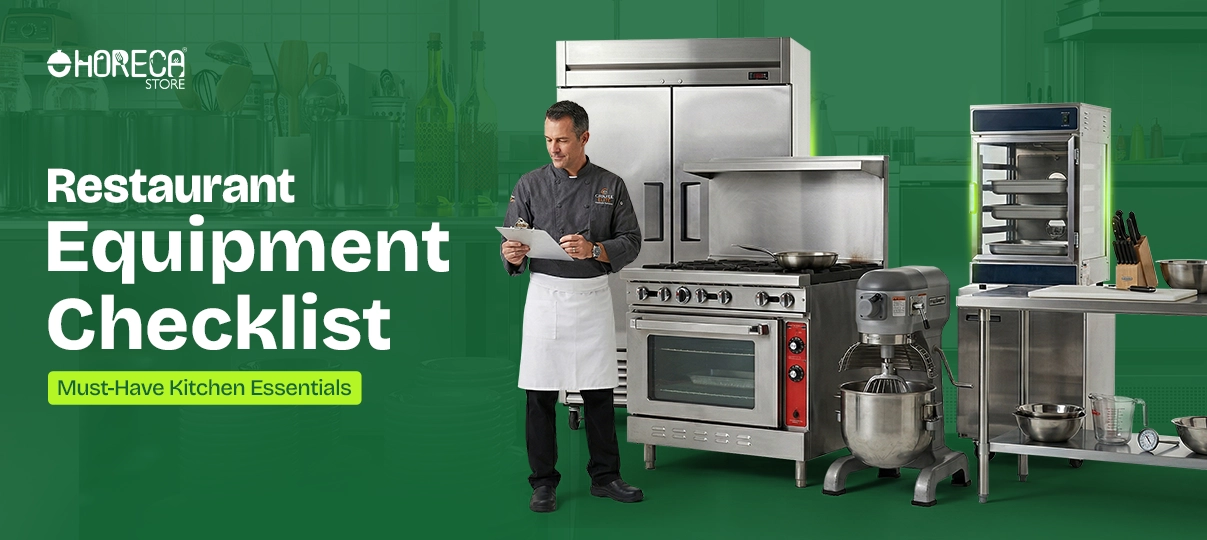
Opening a restaurant is one of the most exciting — and demanding — business ventures a person can undertake. Amongst the many decisions you will face, equipping your kitchen is one of the most consequential. The equipment you choose will determine how efficiently your team can work, what dishes you can prepare, how safely food is handled, and ultimately how much of your investment you can protect over the long term.
A well-equipped professional kitchen is not simply about owning the most expensive tools. It is about having the right equipment for your specific menu, your anticipated volume of service, and the physical constraints of your kitchen space. Getting this balance right from the outset can save you significant time, money, and frustration as your business grows.
This article provides a comprehensive, categorised list of essential restaurant kitchen equipment, along with guidance on what each item does and why it matters. Whether you are setting up a brand-new kitchen from scratch or reviewing what your existing operation is missing, this guide will help you make informed, confident decisions.
Why the Right Equipment Matters
Before we explore the equipment categories, it is worth briefly considering why the right kitchen setup is so important. In a commercial kitchen, every second counts. Staff need to be able to move efficiently from task to task, tools need to be reliable, and the kitchen needs to meet strict health and safety standards at all times.
Investing in quality, appropriate equipment brings several key benefits: it improves kitchen workflow and reduces bottlenecks during peak service periods; it ensures food is prepared, cooked, and stored at the correct temperatures to meet food safety regulations; it reduces physical strain on kitchen staff, improving morale and reducing staff turnover; it minimises waste through accurate portioning, consistent cooking results, and proper food storage; and it reflects positively on the quality and consistency of the food you serve. With these principles in mind, let us work through the essential categories of restaurant kitchen equipment every operator should consider.
1. Cooking Equipment
Cooking equipment forms the heart of any restaurant kitchen. Your choices here will be dictated largely by your menu, your energy supply (gas or electric), and the size of your kitchen.
Commercial Range or Cooker
A commercial range is the centrepiece of most restaurant kitchens. Available in gas or electric formats, ranges typically combine multiple burners on top with one or more ovens beneath. The number of burners you need will depend on your menu complexity and volume. Most medium-sized restaurant kitchens benefit from a six-burner range as a minimum, while high-volume operations may require eight or more burners.
When selecting a range, consider the BTU output per burner for gas models, the oven capacity, the ease of cleaning, and whether you need a salamander or overhead broiler attachment.
Commercial Oven
Depending on your menu, you may require one or more types of commercial oven in addition to or instead of a range oven. Convection ovens use fans to circulate hot air for even, efficient cooking and are suitable for baking, roasting, and general cooking. Combination ovens (combi ovens) offer convection, steam, and combination cooking modes, making them one of the most versatile pieces of equipment in modern kitchens. Pizza and deck ovens are suited to bakeries and pizzerias. Conveyor ovens are ideal for high-volume operations needing consistent results.
Commercial Grill and Griddle
A commercial char grill imparts the characteristic charred flavour and markings associated with grilled meats and fish. A flat griddle or plancha provides an even cooking surface ideal for burgers, pancakes, eggs, and delicate proteins. Many restaurants require both. When choosing, consider the cooking surface area, the heat output, and whether you need a removable plate for cleaning.
Deep Fryer
For restaurants serving fried foods, a commercial deep fryer is essential. These are available in countertop and floor-standing models and are measured by their oil capacity and output in kilograms per hour. Key considerations include the number of baskets, the recovery time between batches, the ease of oil filtering and draining, and the availability of built-in filtration systems that extend oil life and reduce waste.
Microwave Oven (Commercial Grade)
A commercial microwave is significantly more powerful and durable than a domestic model. It is used for reheating, defrosting, and rapid cooking. Even kitchens that do not rely heavily on microwaves benefit from having at least one commercial-grade unit for speed and efficiency during service.
2. Refrigeration and Cold Storage Equipment
Proper refrigeration is non-negotiable in a commercial kitchen. It is the primary safeguard against foodborne illness and product spoilage, and it is a cornerstone of food safety compliance.
Reach-In Refrigerators and Freezers
Reach-in refrigerators provide accessible, organised cold storage for ingredients used throughout the service period. Most kitchens require at least one reach-in fridge and one reach-in freezer, though larger operations may need several. Look for models with solid or glass doors depending on your workflow, adjustable shelving, digital temperature displays, and stainless steel interiors for hygiene.
Walk-In Cooler and Walk-In Freezer
For restaurants with higher volumes of stock or less frequent deliveries, a walk-in cooler and freezer provide bulk cold storage. These custom-built rooms allow staff to physically walk inside to store and retrieve large quantities of food. If your floor space and budget allow, investing in walk-in refrigeration from the outset will give your operation far greater flexibility as it grows.
Undercounter and Prep Table Refrigerators
Undercounter units sit beneath worktops, keeping ingredients chilled and within arm's reach during food preparation. Refrigerated prep tables take this concept further by combining a chilled worktop with a refrigerated base, allowing chefs to prepare dishes directly over the cold storage area. These are particularly popular at pizza, sandwich, and salad stations.
Blast Chiller
A blast chiller rapidly reduces the temperature of cooked food from above 70°C to safe storage temperature within a short window. This is a critical piece of equipment for any kitchen operating under HACCP food safety protocols and for operations that batch-cook in advance. It preserves food quality, texture, and nutritional content while minimising time spent in the temperature danger zone.
3. Food Preparation Equipment
Food preparation equipment accelerates and standardises the prep work that underpins every dish on your menu, from cutting and mixing to shaping and forming.
Commercial Food Processor
A commercial food processor handles slicing, dicing, shredding, chopping, and pureeing at speeds and volumes that would be impossible by hand. Look for models with multiple blade and disc attachments, a powerful motor suitable for continuous use, and a large feed tube that can accommodate whole vegetables.
Commercial Mixer
A commercial stand mixer is essential for any kitchen that makes dough, batter, sauces, or whipped preparations. The planetary mixer is the most common type, with a bowl that rotates in multiple directions for thorough mixing. Key considerations include bowl capacity, motor power, available attachments (dough hook, whisk, paddle), and ease of cleaning.
Commercial Blender
A heavy-duty commercial blender can handle soups, sauces, smoothies, purees, and more. Unlike domestic blenders, commercial models are built for continuous use, with more powerful motors and more durable blades. Consider whether a jug blender, an immersion blender, or both are required for your menu.
4. Cookware, Knives, and Kitchen Tools
Beyond major appliances, a professional kitchen requires a comprehensive set of smaller equipment and hand tools that chefs rely upon during every service.
Commercial Cookware
Your kitchen needs a full complement of professional-grade pots, pans, and trays including saucepans in multiple sizes, saute pans and frying pans, stockpots for stocks, soups, and sauces, roasting trays and sheet pans, hotel pans and gastronorm containers for oven use and storage, and a selection of lids. Always choose heavy-duty stainless steel or cast iron cookware rated for commercial use. Thin domestic cookware will warp and fail quickly under commercial conditions.
Professional Knives and Cutting Boards
A professional knife set is one of the most personal and important investments in a commercial kitchen. At minimum, each chef station should be equipped with a chef's knife, a paring knife, a filleting knife, a bread knife, and a boning knife. Pair these with colour-coded cutting boards — a food safety best practice that prevents cross-contamination between different food categories such as raw meat, fish, vegetables, and ready-to-eat foods.
Kitchen Hand Tools
An essential collection of hand tools includes ladles, tongs, spatulas and fish slices, whisks, peelers, graters, colanders and sieves, measuring jugs and scales, and thermometers. Do not underestimate the importance of quality thermometers — both probe thermometers for checking core temperatures and infrared surface thermometers for monitoring equipment temperatures are essential for food safety compliance.
5. Warewashing and Hygiene Equipment
Maintaining clean equipment, utensils, and crockery is one of the most time-sensitive and labour-intensive tasks in any restaurant kitchen. The right warewashing setup keeps operations running smoothly and meets the strict hygiene standards expected by food safety inspectors.
Commercial Dishwasher
A commercial dishwasher can process a full rack of dishes in as little as two to three minutes, compared to the thirty or more minutes required by a domestic machine. Pass-through dishwashers are ideal for medium to large operations, while undercounter models suit smaller kitchens. Consider the rack size, wash cycle duration, water and energy consumption, and whether a rinse aid and detergent dosing system is included.
Commercial Sinks
Commercial kitchens typically require at least a two or three-compartment sink for manual washing, rinsing, and sanitising of items that cannot go through the dishwasher. A dedicated handwashing sink in the food preparation area is also a legal requirement in most jurisdictions. Choose stainless steel sinks with integrated draining boards for maximum hygiene and durability.
6. Ventilation and Safety Equipment
A commercial kitchen generates significant heat, smoke, steam, and airborne grease particles. Proper ventilation is essential for the comfort and safety of your team, compliance with building regulations, and fire safety.
Extraction Canopy and Ventilation Hood
A commercial extraction canopy installed above cooking equipment captures and removes heat, steam, and grease-laden vapour before it can build up in the kitchen environment. The size and extraction rate of the canopy must be matched to the cooking equipment beneath it. Canopies should be fitted with grease filters that are cleaned or replaced regularly, and the ductwork should be inspected and cleaned periodically to reduce fire risk.
Fire Suppression System
Most commercial kitchens are legally required to have an automatic fire suppression system installed above cooking equipment. These systems detect fires and discharge suppression agents directly onto the source of the fire, controlling it before it can spread. Regular inspection and servicing of fire suppression systems is mandatory in most countries.
First Aid Kit and Safety Equipment
A well-stocked first aid kit, fire extinguishers appropriate to a kitchen environment, clearly marked emergency exits, and non-slip flooring are all essential components of a safe commercial kitchen. Ensure all staff are trained in basic first aid and know the location of all safety equipment.
Quick Reference: Essential Equipment Checklist
Use the table below as a quick reference when planning or auditing your restaurant kitchen equipment.
| Category | Equipment | Priority Level |
| Cooking | Commercial range / cooker | Essential |
| Cooking | Commercial oven (convection / combi) | Essential |
| Cooking | Grill and griddle | Recommended |
| Cooking | Deep fryer | Menu-dependent |
| Cooking | Commercial microwave | Recommended |
| Refrigeration | Reach-in refrigerator & freezer | Essential |
| Refrigeration | Walk-in cooler & freezer | Recommended |
| Refrigeration | Undercounter / prep table fridge | Recommended |
| Refrigeration | Blast chiller | High volume essential |
| Food Prep | Food processor | Essential |
| Food Prep | Commercial mixer | Menu-dependent |
| Food Prep | Commercial blender | Recommended |
| Food Prep | Meat slicer | Menu-dependent |
| Food Prep | Stainless steel prep tables | Essential |
| Cookware & Tools | Pots, pans & trays (commercial grade) | Essential |
| Cookware & Tools | Professional knife set | Essential |
| Cookware & Tools | Colour-coded cutting boards | Essential |
| Cookware & Tools | Hand tools & thermometers | Essential |
| Warewashing | Commercial dishwasher | Essential |
| Warewashing | Multi-compartment & hand sinks | Essential |
| Ventilation & Safety | Extraction canopy | Essential |
| Ventilation & Safety | Fire suppression system | Essential |
Tips for Buying Restaurant Kitchen Equipment
With a comprehensive list in hand, here are some practical tips to help you make the best purchasing decisions for your specific operation.
Always prioritise quality over price for high-use items. Cooking and refrigeration equipment that is used continuously needs to be built to commercial standards. Cutting corners on quality for these items invariably leads to breakdowns, costly repairs, and operational disruption.
Consider new versus used equipment. Quality used equipment from reputable suppliers or restaurant closures can offer significant savings. However, always inspect used equipment carefully, check service histories where possible, and be cautious with refrigeration and cooking equipment that may have hidden issues.
Plan your kitchen layout before buying. Equipment choices and dimensions should be driven by your kitchen's floor plan, the workflow you need to create between stations, and the location of utilities including gas, electricity, water, and drainage.
Check energy ratings and running costs. Energy-efficient equipment has a higher upfront cost but delivers lower running costs over its lifetime. In a kitchen running equipment 12 to 16 hours a day, energy efficiency has a direct and significant impact on profitability.
Confirm service and warranty terms. Before purchasing any major piece of equipment, confirm the warranty period, what it covers, and how quickly a service engineer can be deployed to your location.
Buy from reputable catering equipment suppliers. Established commercial catering equipment suppliers offer product expertise, demonstration facilities, installation services, and ongoing support that general retailers cannot match.
Buy Essential Restaurant Kitchen Equipment Online at The Horeca Store
Setting up a successful commercial kitchen starts with investing in reliable, high-quality equipment. The Horeca Store is your one-stop destination for restaurant kitchen equipment, offering everything from commercial refrigeration and cooking equipment to food preparation machines, stainless steel work tables, storage solutions, and kitchen accessories. Whether you're opening a new restaurant, café, hotel, cloud kitchen, or catering business, our extensive product range is designed to meet the demands of professional foodservice operations.
At The Horeca Store, we provide durable and energy-efficient commercial kitchen equipment that helps improve productivity, maintain food safety, and streamline daily kitchen operations. Our products are available in various sizes and specifications to suit businesses of all scales, from small eateries to large commercial kitchens. With competitive pricing, trusted brands, and dependable customer support, The Horeca Store makes it easy to equip your kitchen with everything you need for long-term success.
Conclusion
Equipping a restaurant kitchen is a significant investment, but it is one that pays dividends in operational efficiency, food quality, staff wellbeing, and long-term profitability. By thinking carefully about each category of equipment — from cooking and refrigeration to food preparation, warewashing, and ventilation — you can build a kitchen that is fit for purpose from day one.
Use this guide as a starting framework and adapt it to the specific demands of your menu, your service model, and your kitchen space. Consult with a reputable catering equipment specialist who can help you match equipment specifications to your exact needs, navigate installation requirements, and plan for future growth.
A great restaurant begins with a great kitchen. Invest wisely, plan thoroughly, and the equipment you choose today will support your team in delivering exceptional food for many years to come.