
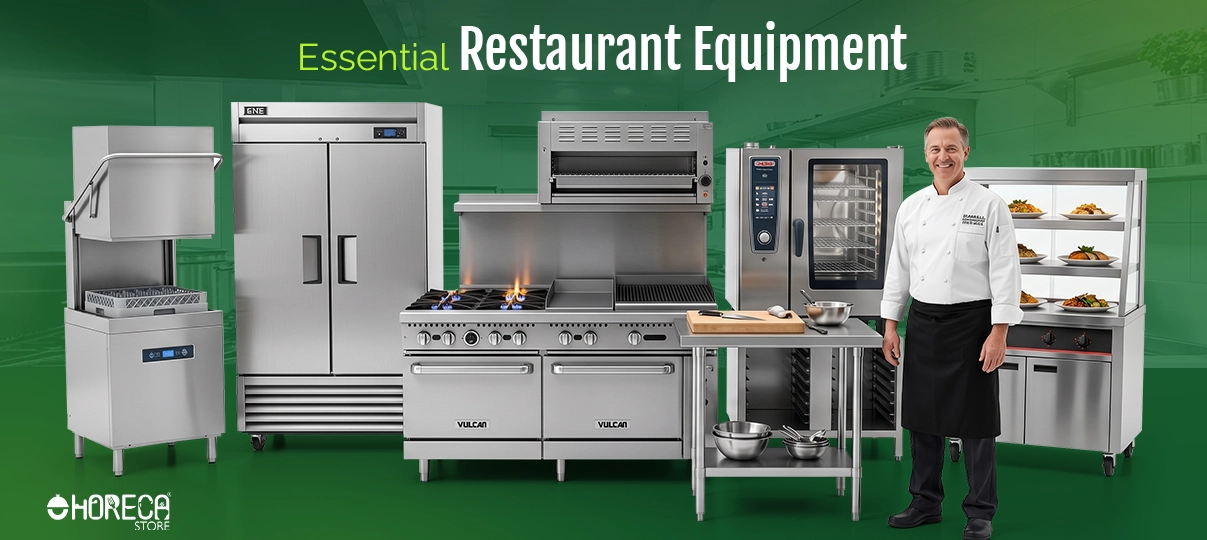
Opening a new restaurant is one of the most exciting ventures an entrepreneur can embark upon. The thrill of designing a menu, hiring a passionate culinary team, and greeting your first guests is unmatched. However, behind the sizzle of the grill and the beautifully plated dishes lies the true engine of your business: your restaurant equipment.
Outfitting a commercial kitchen is a major investment, and the choices you make before opening your doors will dictate your daily operations, staff efficiency, and ultimately, your bottom line. Whether you are launching a cozy neighborhood café or a sprawling fine-dining establishment, understanding exactly what restaurant supplies you need—and how to choose them—is critical to your success.
In this comprehensive guide, we will walk you through the essentials of outfitting your new culinary space, from the heaviest cooking appliances to the smallest hand tools, ensuring you are prepared for opening day and beyond.
Laying the Groundwork: Planning Your Kitchen Space
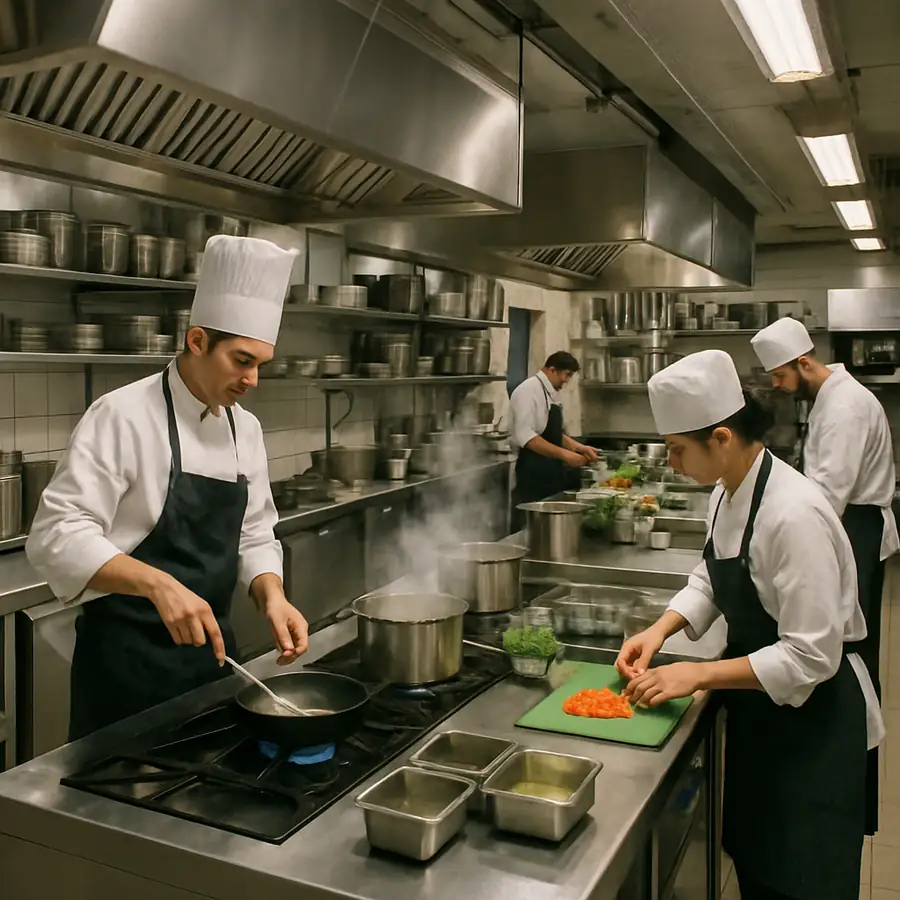
Before you buy a single spatula or sign a lease on an oven, you must have a solid blueprint. Strategic commercial kitchen layout planning is the foundation of a profitable restaurant. A well-designed kitchen prevents bottlenecks, minimizes cross-contamination, and allows your staff to work efficiently during high-volume rushes.
When mapping out your space, you should distinctively define your zones: delivery, storage, food prep, cooking, plating, and dishwashing. The flow between these zones should be logical. For example, the dishwashing station should be near the dining room entrance so servers can drop off dirty plates without crossing paths with line cooks carrying hot pans.
Equally important during this phase is considering ergonomic workspace design for chefs. Culinary professionals spend upwards of ten to twelve hours a day on their feet, performing repetitive motions. Ergonomic design focuses on minimizing physical strain. This includes installing anti-fatigue mats, optimizing the height of prep tables to prevent backaches, and placing frequently used kitchen supplies within arm’s reach to eliminate unnecessary bending and stretching. A comfortable kitchen leads to happier staff, lower turnover, and fewer workplace injuries.
The Heart of the House: Heavy-Duty Cooking Equipment
Your cooking equipment is the workhorse of your restaurant. This is where raw ingredients are transformed into your signature dishes. Because these units will be running constantly, durability and reliability are paramount.
Ovens and Ranges
For most traditional restaurants, a commercial range is the centerpiece of the hot line. When evaluating heavy duty gas range features, look for high-BTU (British Thermal Unit) burners that provide rapid boiling and quick recovery times. Cast-iron grates, stainless steel construction, and easy-to-clean drip trays are essential for longevity. Many chefs prefer ranges with convection ovens built underneath to maximize vertical space.
Fryers, Grills, and Broilers
Depending on your menu, you may also need deep fryers, flat-top griddles, or charbroilers. When sourcing these units, it is highly recommended to seek out energy star certified cooking appliances. While they might carry a slightly higher upfront price tag, Energy Star equipment operates 10% to 30% more efficiently than standard models. Over a piece of equipment’s lifespan, this translates to thousands of dollars in utility bill savings and often qualifies you for local energy rebates.
Maintenance Matters
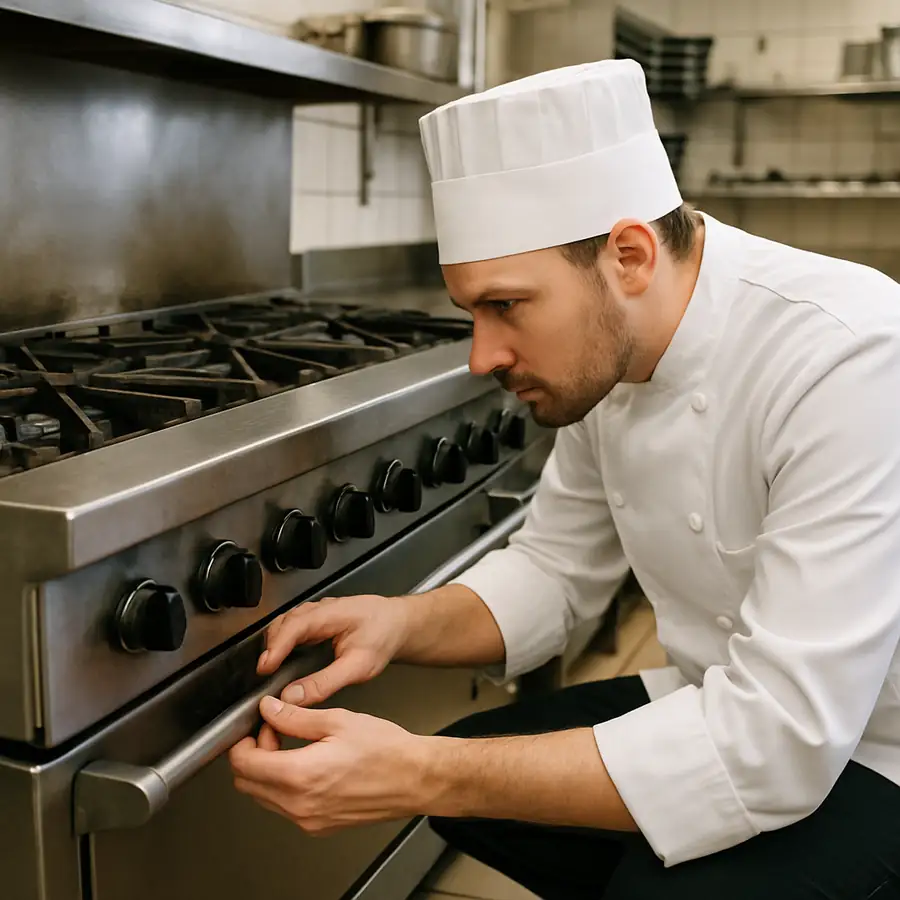
Once your high-dollar cooking equipment is installed, keeping it running is your next priority. Establishing a strict schedule for preventative maintenance for industrial ovens and ranges is non-negotiable. This includes regularly calibrating thermostats, inspecting door gaskets for heat leaks, cleaning pilot lights, and degreasing internal components. A breakdown on a busy Friday night is a restaurateur's worst nightmare; preventative care is your best insurance policy.
Keeping Things Fresh: Commercial Refrigeration
Proper refrigeration is the key to food safety, inventory management, and minimizing expensive food waste. Your cooling needs will likely be split between bulk storage (walk-ins) and line storage (reach-ins and prep coolers).
If you are wondering how to choose a walk-in cooler, start by evaluating your volume. Calculate the amount of perishable food you will need to store between deliveries. A good rule of thumb is allowing roughly one cubic foot of storage space per 28-30 pounds of food. Beyond size, consider the insulation rating (R-value) of the panels, and decide between an indoor or outdoor unit based on your building's footprint. Always ensure the compressor is sized correctly for the dimensions of the box to prevent overworking the system.
Because health inspectors are incredibly stringent about cold holding temperatures, implementing continuous commercial refrigeration temperature monitoring is a smart move. Modern kitchens are moving away from manual clipboard logs and adopting automated IoT (Internet of Things) sensors. These digital sensors monitor the internal temperatures 24/7 and will send an alert directly to your smartphone if a walk-in or reach-in drops below safe holding temperatures, saving you from catastrophic inventory loss overnight.
Safety and Compliance: Ventilation, Plumbing, and Certifications
Navigating health codes and fire safety regulations can be daunting for new owners, but compliance is essential for keeping your doors open and your staff safe.
Ventilation and Fire Safety
Cooking at commercial volumes generates immense amounts of heat, smoke, and grease-laden vapors. Installing a commercial Type 1 hood system is required for any equipment that produces grease (like fryers, griddles, and broilers). More importantly, these hoods must be equipped with integrated ventilation hood fire suppression systems (often referred to by the brand name ANSUL). These systems detect extreme heat flashes and automatically discharge fire-retardant chemicals over the cooking surface while simultaneously shutting off the gas supply, preventing a flare-up from becoming a catastrophic structural fire.
Managing Plumbing and Grease
Another major compliance hurdle is wastewater management. Municipalities require restaurants to trap fats, oils, and greases (FOG) before they enter the public sewer system. When asking yourself, "what size grease trap do I need?", the answer depends on your kitchen's flow rate (Gallons Per Minute) and the number of fixtures draining into it (like 3-compartment sinks, prep sinks, and dishwashers). An undersized grease trap will overflow and lead to costly plumbing emergencies and municipal fines. It is always best to consult with a licensed commercial plumber to calculate the exact formula required for your local codes.
The Importance of NSF Ratings
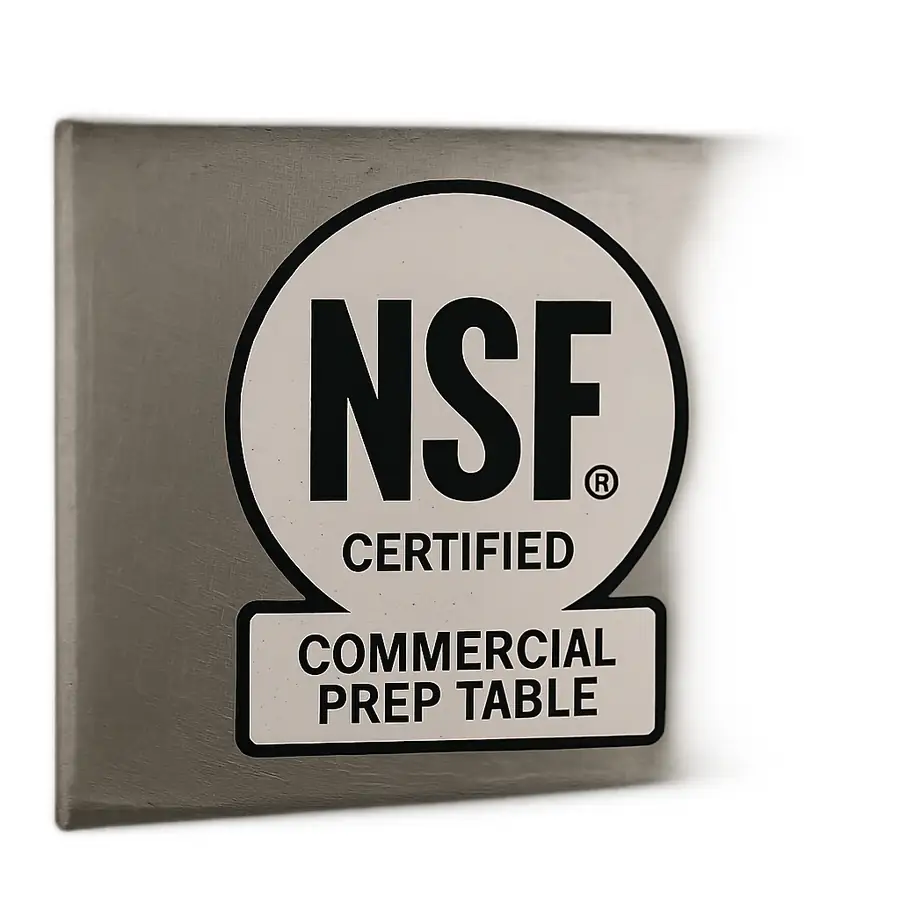
As you source both heavy equipment and smaller restaurant supplies, you will frequently see the NSF logo. Understanding the importance of NSF certification for food service is crucial. The National Sanitation Foundation (NSF) tests and certifies that equipment is constructed from materials that are non-toxic, non-porous, and easy to clean, thereby preventing the harboring of dangerous bacteria. Health inspectors actively look for the NSF sticker on everything from prep tables to cutting boards; purchasing non-certified gear can result in severe health code violations.
Essential Prep Station Tools and Smallwares
While towering ovens and massive walk-in coolers get most of the attention, a kitchen cannot function without the right hand tools and containers. Outfitting your prep zones with high-quality gear speeds up ticket times and ensures consistency in your recipes.
To maximize efficiency, you must arm your staff with essential prep station tools. This includes commercial-grade food processors, immersion blenders, heavy-duty mandolines, and digital portion scales. Digital scales are particularly vital; weighing ingredients rather than using volume measurements guarantees recipe consistency and helps strictly control food costs.
For a new owner, buying the smaller items can easily result in thousands of dollars of unexpected expenses if not budgeted properly. To help you stay organized, here is a foundational smallware inventory checklist for startups:
Cookware and Bakeware:
- Stainless steel and aluminum sauté pans (assorted sizes)
- Stock pots and saucepans
- Cast iron skillets
- Baking sheets (half and full size)
- Roasting pans
Knives and Cutlery:
- Chef’s knives (8-inch and 10-inch)
- Paring knives and serrated bread knives
- Boning knives and meat cleavers
- Honing steels and commercial knife sharpeners
Utensils and Hand Tools:
- High-heat spatulas and rubber scrapers
- Tongs (varying lengths for prep and grill)
- Ladles and portion scoops (dishers)
- Whisks, peelers, and zesters
- Thermometers (probe, meat, and oven)
Storage and Organization:
- Polycarbonate food storage containers (Cambros) with lids
- Color-coded cutting boards (to prevent cross-contamination)
- Stainless steel mixing bowls
- Ingredient bins on casters
- Squeeze bottles and labeling tape
The Cleanup Crew: Washing and Sanitation
The dish pit is often called the backbone of the restaurant. If clean plates, silverware, and pots stop flowing, the entire restaurant grinds to a halt.
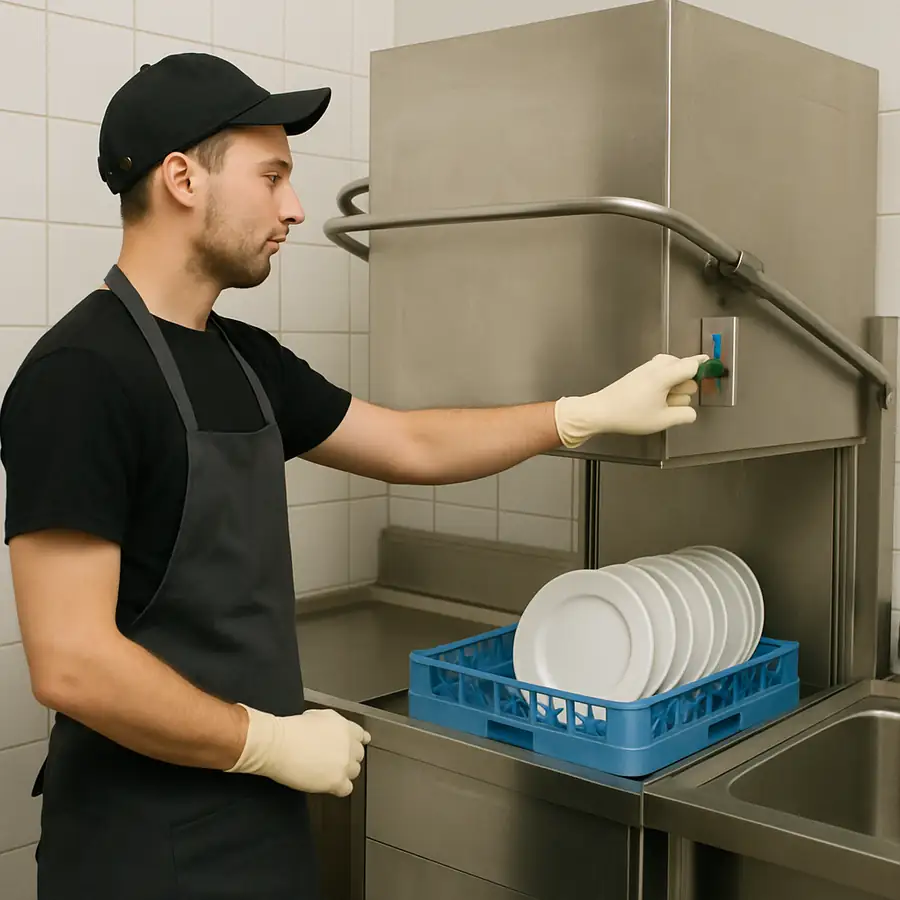
Your dishwashing station will generally require a pre-rinse station with a spray valve, a 3-compartment sink for manual washing and sanitizing of large pots, and a commercial dishwasher.
When selecting a dishwasher—whether it is an under-counter unit for a small café, a door-type machine, or a massive conveyor system for high-volume dining—you must pay close attention to high-volume dishwasher water consumption. Commercial dishwashers consume massive amounts of water and electricity to heat that water. Opting for a machine with built-in energy recovery technology or water recycling features can drastically reduce your monthly utility bills. Furthermore, you will need to choose between a high-temp dishwasher (which relies on 180°F water to sanitize) and a low-temp dishwasher (which uses chemical sanitizers). High-temp machines cost more upfront and require better ventilation, but they clean heavy grease better and allow dishes to air-dry faster.
Financial Considerations: Budgeting for Your Gear
Acquiring all the necessary restaurant equipment is a massive capital expenditure. New owners must carefully manage their startup capital to ensure they have enough operational runway to survive the first few months. Understanding your purchasing options can save your budget.
The Great Debate: New vs. Used
One of the most common dilemmas for restaurateurs is navigating new vs used kitchen supplies.
Buying New: The primary advantages of buying new equipment are reliability and warranty protection. You know exactly what you are getting, the equipment operates at peak efficiency, and if a motor blows in the first year, the manufacturer covers the repair. However, new equipment depreciates rapidly—much like driving a new car off the dealership lot.
Buying Used: The secondhand market for restaurant equipment is vast, largely due to the unfortunately high turnover rate in the hospitality industry. You can often find pristine, slightly used equipment for 40% to 60% of the retail price. If you choose to go the used route, focus on purchasing items without complex moving parts or sensitive electronics, such as stainless steel prep tables, sinks, shelving, and heavy-duty gas ranges. Avoid buying used commercial refrigeration or dishwashers if possible, as their compressors and pumps wear down heavily over time and are expensive to replace.
To Lease or To Buy?
Another vital financial strategy to consider is leasing commercial appliances vs purchasing them outright.
Purchasing equipment means you own the asset, which adds value to your business and allows you to claim substantial tax deductions (such as Section 179 depreciation). Over a period of five to ten years, purchasing is undeniably the most cost-effective route.
However, leasing is an excellent option for startups with limited cash on hand. Leasing preserves your working capital for marketing, payroll, and inventory. Furthermore, leasing often includes routine maintenance and emergency repairs built into the monthly contract. Ice machines, for example, are notoriously finicky and require frequent sanitization and filter changes. For this reason, many seasoned owners prefer to lease their ice machines, passing the headache of maintenance and breakdowns onto the leasing company. Commercial dishwashers are also frequently leased through chemical supply companies, who provide the machine at a low monthly rate as long as you commit to purchasing their proprietary cleaning chemicals.
Essential Restaurant Equipment for New Owners
Starting a restaurant requires planning and the right equipment to create an efficient kitchen and smooth operation. New restaurant owners need essential equipment such as commercial refrigerators, ovens, fryers, cooking appliances, food preparation tools, storage solutions, dishwashing equipment, and serving supplies. The Horeca Store investing in durable, professional-grade equipment helps maintain food quality, improve workflow, and handle daily service demands.
Choosing reliable equipment from a trusted supplier makes the restaurant setup process easier and cost-effective. The Horeca Store offers commercial kitchen equipment, including refrigeration units, cooking equipment, smallwares, stainless steel furniture, tableware, and foodservice essentials. With quality products, competitive pricing, and dependable support, The Horeca Store helps new restaurant owners build efficient kitchens designed for long-term success.
Final Thoughts for the First-Time Owner
Designing, outfitting, and opening a commercial kitchen is a monumental task that requires a blend of culinary vision and strict business acumen. From dialing in your workflow with strategic layout planning to securing the perfect heavy-duty range and ensuring your walk-in coolers are strictly monitored, every decision impacts your daily operations.
Take your time during the planning phase. Consult with local health inspectors, build relationships with reputable restaurant supply dealers, and do not be afraid to mix new, high-tech appliances with reliable, gently used hardware to protect your budget. By investing wisely in the right restaurant equipment, you empower your culinary team to do what they do best: create unforgettable food and exceptional dining experiences for every guest who walks through your doors.