
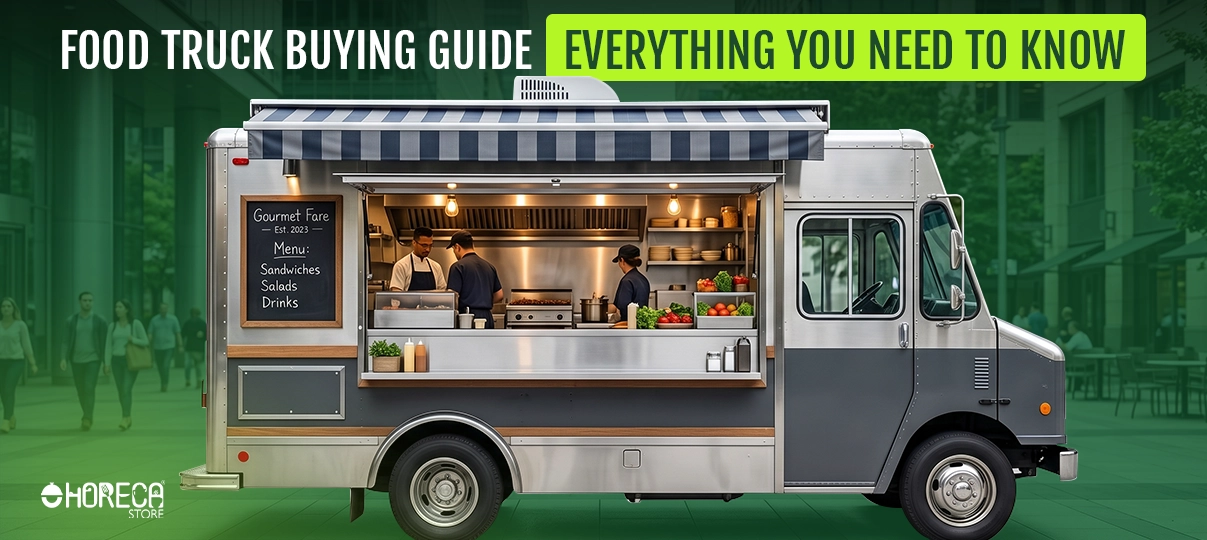
You've perfected your signature recipe, and local crowds are constantly asking where they can buy more. Moving from a beloved home kitchen to a professional mobile business requires much more than simply bolting a stove inside an old delivery van. Starting a food truck means recognizing that your new vehicle isn't just a ride to a festival; it is a high-performance engine for your culinary dreams.
Industry data reveals that the most successful owners treat their vehicles as serious commercial assets from day one. Everything begins with the chassis—the foundational metal "bones" or structural frame of the vehicle that safely carries the massive weight of your kitchen. Without a solid foundation, even the most beautiful exterior hides structural risks that can quickly sideline your new business.
Before you browse listings for fully equipped mobile kitchen builds, it is vital to identify these primary investment risks early. The biggest hurdle usually involves the "build-out," which is the complex process of transforming an empty shell by installing commercial-grade plumbing, ventilation, and gas lines. According to experienced mobile builders, cutting corners during this integration phase often leads to expensive health code violations or crippling power failures during your busiest lunch rushes.
Have you considered how your interior layout directly impacts your hourly profit margins? Imagine reaching for the refrigerator while your partner is stepping back from a hot grill; poor workflow slows down service and limits customer volume. Designing an ergonomic space ensures that every pivot and fry translates into faster service and a thriving business.
From 14 to 24 Feet: Choosing the Right Food Truck Dimensions for Your Menu
Dreaming of a massive mobile kitchen is easy, but bigger isn't always better. Many new owners fall into the "oversized truck" trap, buying a massive vehicle that won't legally fit into lucrative street-side parking spots. Before shopping, consider your crew size. A compact 12-foot space works beautifully for a two-person team, while a four-person crew needs at least 18 feet of floor space to avoid bumping elbows while the grill is hot.
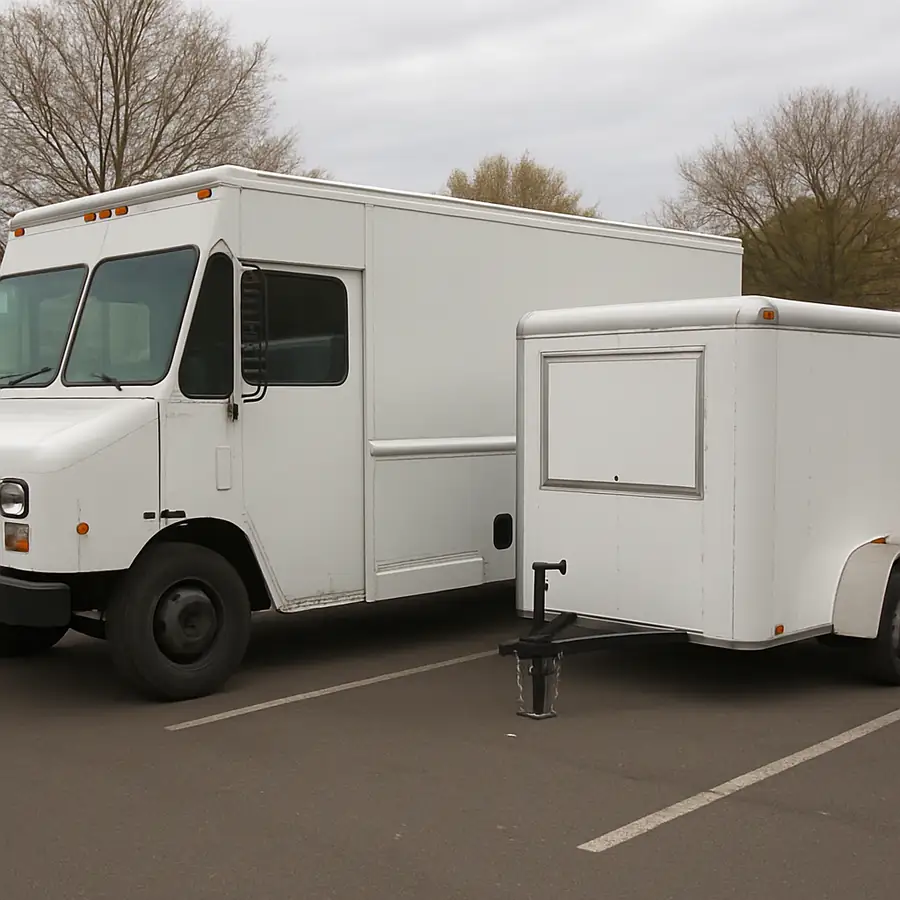
Deciding between a motorized step van (think of a classic delivery truck) and a towed concession trailer is your next major choice. Step vans offer quick mobility for easy parking, while a food truck trailer provides serious cost-savings if you already own a heavy-duty pickup. Whichever you choose, watch the curb weight—the total weight of the empty vehicle—because a heavy kitchen requires a robust suspension.
Your menu's complexity ultimately dictates your ideal food truck dimensions. Evaluating different food truck measurements helps perfectly match your cooking equipment to your physical footprint. Consider these standard food truck size guidelines:
- 10-14 feet: Perfect for simple coffee or shaved ice units.
- 16-18 feet: The sweet spot for taco trucks and burger joints.
- 20-24 feet: Necessary for full-service catering with multiple fryers.
Choosing your exterior shell is like framing a house; it dictates everything inside. Next, you must place your sinks and prep tables efficiently so your team can easily handle a busy rush. This sets the stage for mastering the mobile kitchen layout and understanding how design impacts your speed of service.
Mastering the Mobile Kitchen Layout: How Design Impacts Your Speed of Service
Cooking at home allows you the luxury of taking your time, but in a mobile business, every wasted second costs you money. When considering how to design a food truck, your layout must prioritize workflow ergonomics—the science of minimizing physical effort to maximize speed. A poorly designed interior forces your crew to cross paths constantly, leading to dropped food and a frustrating environment.
To prevent these traffic jams, builders divide the floor plan into distinct workstations. A high-efficiency food truck layout relies on mapping out five essential zones:
- Cold Storage: Where raw ingredients are kept safe.
- Prep: The chopping and mixing station.
- Hot Line: Grills, fryers, and stoves.
- Plating: Where the final dish is assembled.
- Window Service: The point of sale and handoff.
Connecting these zones effectively relies on the "Two-Step" rule, which acts as your mobile work triangle. In a perfect setup, your cook should only need to pivot or take a maximum of two steps to move a burger from the cold station, onto the hot grill, and over to the plating area. Keeping travel distances short drastically reduces cook fatigue and lowers the risk of accidental burns during a massive lunch rush.
Even with a lightning-fast kitchen staff, your truck will stall if you hit a service window bottleneck. This traffic jam happens when the person taking orders is physically blocking the person trying to hand out food. Properly positioning your window—and ensuring you have dedicated counter space for waiting orders—keeps the line moving, though modifying window dimensions to fix this can slightly impact custom food truck fabrication costs.
Mastering this physical flow means starting at the very beginning of your cooking process: keeping ingredients fresh. Before you can grill or plate, you need to effortlessly pull your raw materials from a reliable chiller. This requires selecting the right food truck refrigerator for small spaces.
Commercial Cold Storage: Selecting the Right Food Truck Refrigerator for Small Spaces
Surviving a 90-degree summer rush requires more than just keeping the doors closed. Unlike your home kitchen, a mobile environment subjects your food truck refrigerator to constant rattling and extreme ambient heat. To survive these conditions, you must install NSF certified kitchen hardware—equipment legally approved for commercial sanitation and built with heavy-duty parts specifically designed to resist road vibration.
Choosing the right unit means understanding how it breathes in a tight space. Every commercial fridge uses a compressor to remove warm air, forcing a choice between top-mount or bottom-mount placement. Top-mount compressors sit high above the cabinet, staying clear of floor dust and grease. Conversely, bottom-mount units pull in cooler air near the floor, running highly efficiently but requiring frequent filter cleaning to prevent clogs.
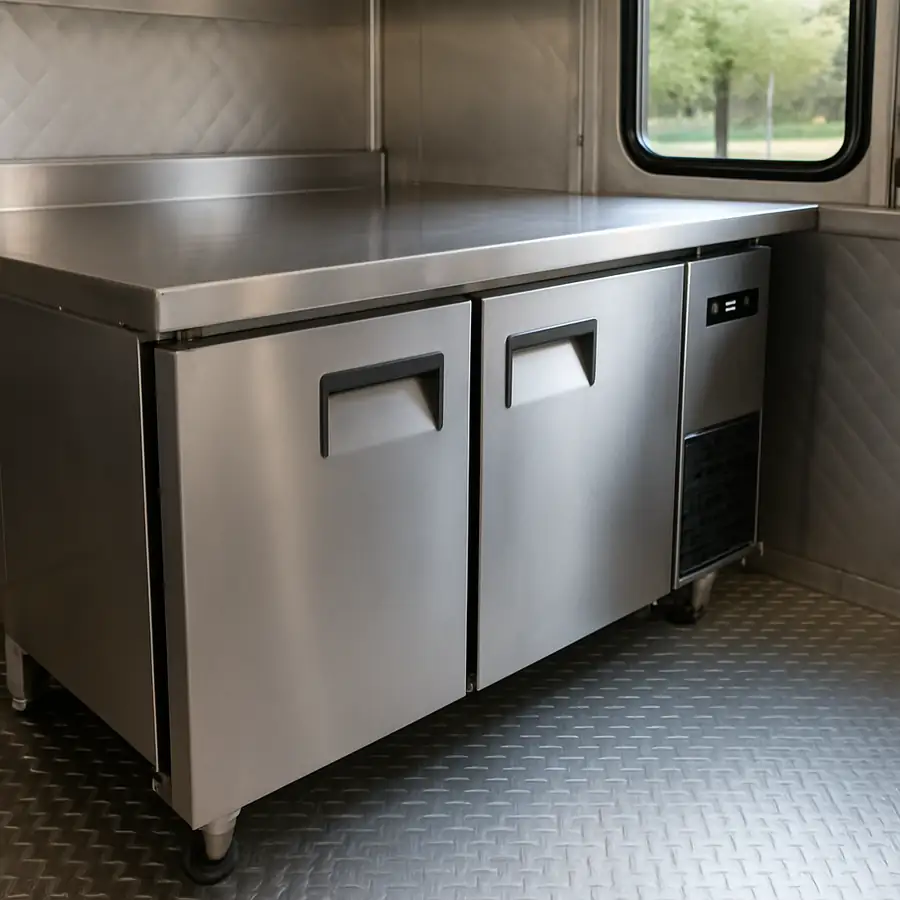
Available floor space dictates your style choices, moving from tall reach-in units for bulk items to under-counter and prep-table models that double as workspaces. Whatever physical shape you choose, a critical feature to check is "recovery time," which measures how fast the food truck fridge cools back down after you open the door. When you are constantly grabbing cheese for burgers or salsa for tacos, a fast recovery time prevents your ingredients from entering the food safety danger zone.
Reliable cold storage protects your expensive food truck supplies from spoiling before you even make a single sale. However, powering these heavy-duty cooling machines requires serious energy planning. Once your refrigeration choices are securely locked in, it is time to shift focus toward the invisible utility systems keeping your operation running smoothly.
Watts and Water: Calculating Your Mobile Kitchen's Plumbing and Electrical Needs
Flipping the switch in your mobile kitchen should feel exactly like turning on the lights at home. Achieving this consistency requires calculating your total electrical demand, known as your amperage load. This simply means adding up the power needs of every appliance running simultaneously so you never trip a breaker during a massive dinner rush.
Electrical independence involves choosing between a portable generator and "shore power"—plugging your truck directly into a building's grid like a giant extension cord. To accurately calculate your generator wattage requirements, build a power budget using typical equipment draws:
- Electric fryers: High draw (4,000+ watts)
- Commercial espresso machines: High draw (6,000+ watts)
- LED lighting and registers: Low draw (under 200 watts)
Beyond electricity, your daily workflow relies entirely on proper liquid management. Trucks require a potable water tank (clean, drinkable water for cooking) and a grey water tank (dirty wastewater draining from sinks). To comfortably handle a full day of service, proper wastewater and plumbing system specifications dictate that your grey tank must be at least 15% larger than your fresh tank to safely prevent overflows.
Safety becomes the immediate priority when packing high-voltage power, gas lines, and hot oil into a small metal box. Because of this intense heat, an integrated fire suppression system installation above your cooking line is a non-negotiable necessity. Unlike a basic handheld home extinguisher, these built-in systems automatically detect dangerous temperatures, instantly shutting off fuel lines and smothering flames before they spread.
Every wire, pipe, and safety nozzle you install serves a dual purpose: keeping your business operational and legal. Once these hidden utilities are confidently mapped out, local inspectors will evaluate how they support safe food handling.
The Health Department Blueprint: Meeting Mobile Kitchen Health Code Requirements
Translating your recipe into a thriving enterprise means building a food truck business that is legally compliant. While you already understand keeping ingredients cold, regulations dictate exactly how your interior is built to support safe habits. Think of mobile kitchen health code requirements not as annoying restrictions, but as your layout's foundational blueprint.
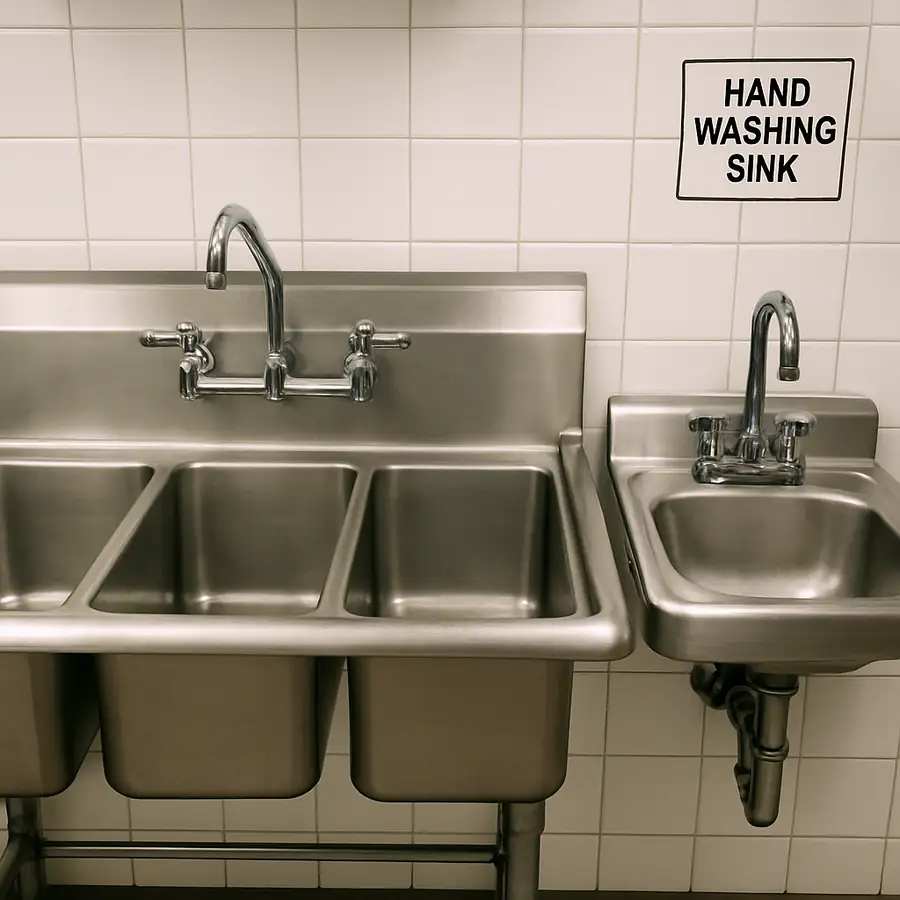
Water management inside tight spaces strictly revolves around the "four-sink rule." First, a dedicated handwashing station must be immediately accessible to your cooks. Next is the 3-compartment sink rule: a mandatory setup requiring three connected basins to wash, rinse, and sanitize your largest pots. You cannot wash hands in the dish sink, just as you wouldn't wash dishes in your home bathroom.
Since spills are inevitable during service, inspectors scrutinize your surfaces. Everything must meet "wash-down" standards, meaning materials are smooth and non-absorbent. To confidently prepare for your walk-through, verify this pre-inspection checklist:
- Hand Sink: Plumbed independently with hot water and soap.
- 3-Compartment Sink: Deep enough to completely submerge your largest cooking equipment.
- Radius Cove Flooring: A curved baseboard where the floor meets the wall, preventing grime from trapping in sharp corners.
- Washable Walls: Stainless steel installed directly behind all hot cooking zones.
Passing that initial inspection is the ultimate green light for your business. However, modifying a non-compliant layout later is an expensive nightmare. Before buying a pre-built rig, you must recognize regulatory red flags.
Smart Shopping: A Used Food Truck Inspection Checklist to Avoid Buying a Lemon
Browsing food trucks for sale is exciting, but a fresh paint job can easily hide a mechanical nightmare. Whether you are figuring out where to buy a vehicle or comparing a pristine new build to a budget-friendly used rig, protecting your investment is crucial. Relying on a thorough used food truck inspection checklist is your best defense against buying a financial drain.
Never hand over your cash without verifying both the vehicle's bones and the kitchen equipment. Bring this strict 7-point checklist to your walk-through:
- Legal Ownership: Demand the official Title, not just a handwritten Bill of Sale, to prove rightful ownership.
- Engine Service Records: Request paperwork proving consistent vehicle maintenance like oil and transmission fluid changes.
- Appliance Service Records: Confirm that commercial fryers and refrigerators received professional upkeep.
- Gas Line Pressure Test: Require a mechanic to perform this test to expose invisible, highly dangerous propane leaks before you sign.
- Generator Lifespan: Check the total operating hours to gauge the remaining life of this expensive power system.
- Suspension Health: Ensure the truck's frame doesn't visibly sag under the heavy kitchen layout.
- Ventilation Systems: Run the exhaust hood to check for abnormal, loud rattling.
Passing these mechanical hurdles means you have found a reliable foundation for your culinary operations. With a solid vehicle secured and your equipment safely verified, you are ready to launch.
Your Mobile Launch Roadmap: Turning the Key on Your New Business
You now possess the practical blueprint to turn an empty chassis into the high-performance engine of your culinary success.
The secret to starting a food truck without getting overwhelmed is structured execution. Follow this four-step plan for your first 30 days of ownership:
- Final Build Check: Create a completion punch-list verifying your plumbing, shore power, and ventilation systems function perfectly.
- Licensing: Secure your final health department permits, financing paperwork, and commercial insurance.
- Staff Training: Practice your exact cooking workflow in the new space.
- Soft Opening: Host a small, controlled event to test layout efficiency and speed with real customers.
The initial stress of startup costs and planning fades when you invest strategically in a compliant, well-designed build. Your fully equipped truck isn't just a kitchen tool; it is the vital foundation driving your business independence. Secure your permits, trust your menu, and take your culinary enterprise to the streets.
Find the Right Food Truck Equipment at The Horeca Store
Launching a successful food truck starts with choosing the right commercial kitchen equipment. The Horeca Store offers a comprehensive range of space-saving, high-performance equipment designed specifically for mobile food businesses. From compact refrigeration units and countertop cooking equipment to food preparation tools, sinks, storage solutions, cookware, and serving essentials, our products help you maximize efficiency while making the most of your available space.
Whether you're starting a new food truck or upgrading your existing mobile kitchen, The Horeca Store provides reliable commercial equipment from trusted brands to suit your menu, budget, and operational needs. Our knowledgeable team can help you select durable, energy-efficient equipment that supports food safety, improves workflow, and delivers consistent performance on the go. With competitive pricing and exceptional customer support, The Horeca Store is your trusted partner for equipping a successful food truck business.