
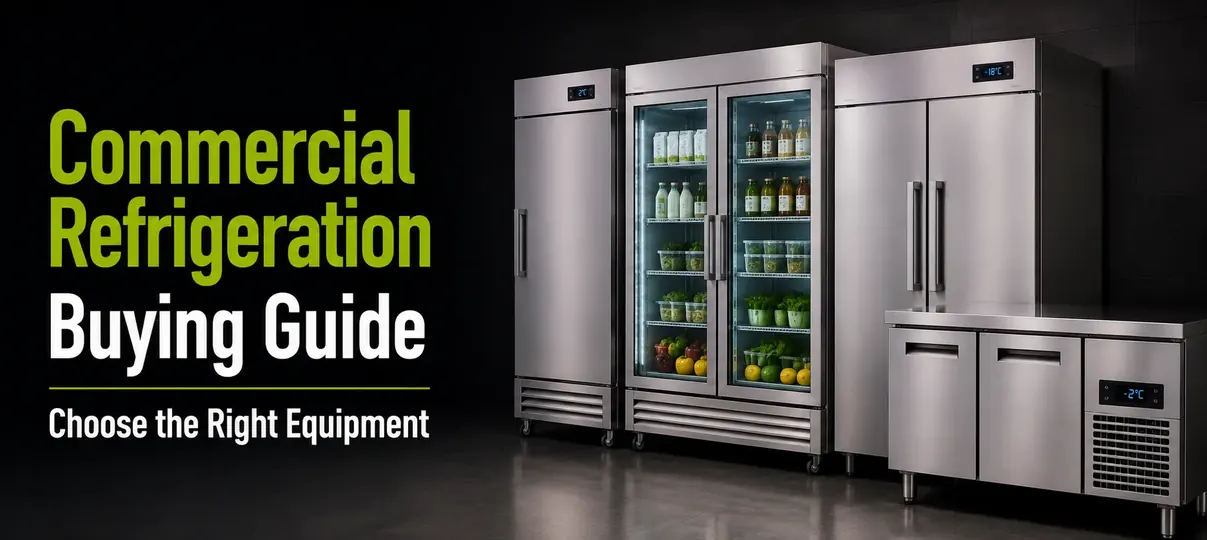
If you are running a restaurant, bakery, cafe, or grocery store, the heartbeat of your daily operation is undoubtedly your kitchen's cooling setup. When the time comes to Buy Commercial Refrigeration Equipment, you are not just purchasing an appliance; you are investing in food safety, product longevity, and operational efficiency. A single breakdown during a busy dinner rush can lead to thousands of dollars in spoiled inventory and lost revenue.
Navigating the vast market of refrigeration equipment can be overwhelming. From specialized commercial coolers to heavy-duty commercial freezers, the options are endless. This comprehensive guide will walk you through everything you need to know-from sizing and layout to energy efficiency and financing-ensuring you make the most informed decision for your business.
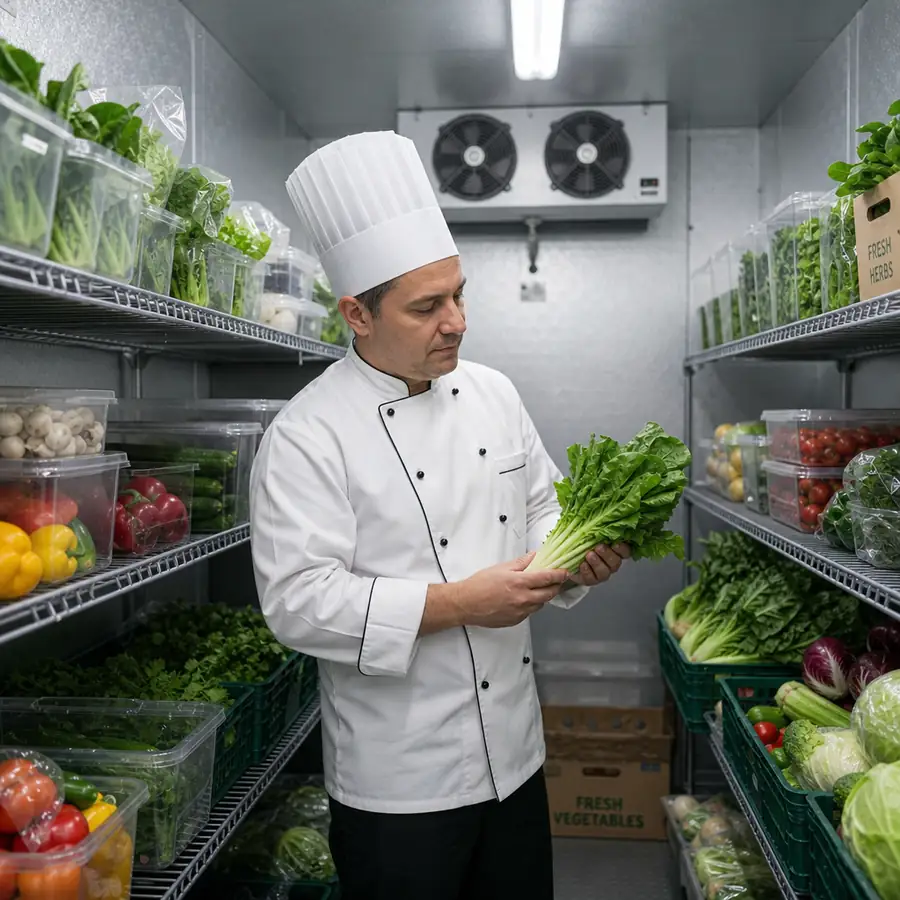
Understanding Your Core Cooling Needs
Before you even start browsing catalogs or visiting showrooms to buy fridges, you must take a step back and analyze your specific business requirements. The type of food service operation you run will drastically influence the refrigeration units you need.
A high-volume steakhouse requires different refrigeration systems than a boutique vegan bakery. Are you storing bulk ingredients, prepping items on the line, or displaying grab-and-go beverages for customers? Answering these questions is the first step toward a successful purchase.
How to Choose Commercial Refrigerator Size
One of the most critical questions operators ask is how to choose commercial refrigerator size. Buying a unit that is too small means you will constantly battle for storage space, potentially compromising air circulation and food safety. Conversely, buying an oversized unit means you will waste money on the initial purchase price and ongoing energy costs to cool empty space.
Follow these practical steps to determine the right size:
Calculate Your Usable Interior Space: Commercial sizing is usually measured in cubic feet. As a general rule of thumb, plan for about 1.5 to 2 cubic feet of refrigeration space for every meal served per day.
Consider Packaging and Shelving: Don't just think about raw ingredients. Think about how those ingredients are stored. Bulk boxes take up more room than neatly stacked food pans. Ensure the internal dimensions can accommodate your standard sheet pans or hotel pans.
Measure Your Exterior Constraints: Measure the doorways, hallways, and ceiling heights of your building. A massive four-door unit does you no good if it cannot fit through your front door or kitchen threshold.
Account for Airflow: Refrigerators need breathing room. If you buy a unit that perfectly squeezes into a space without leaving a few inches for exterior airflow (especially for back-breathing units), the compressor will overheat and fail prematurely.
Navigating the Types of Refrigeration Equipment
When you decide to buy refrigeration, you will encounter several distinct types of industrial refrigerators and freezers. Let's break down the primary categories and their best use cases.
Reach-In vs Walk-In Cooler Pros and Cons
The ultimate debate for growing food service businesses is whether to invest in reach-in units or a large walk-in cooler. Here is a breakdown of the reach-in vs walk-in cooler pros and cons.
Reach-In Coolers
Pros: Highly convenient for line cooks. They can be placed directly in the prep area, keeping essential ingredients at arm's reach. They are relatively easy to install (often plug-and-play), easy to relocate, and come in various sizes (one, two, or three doors).
Cons: Limited storage capacity. Storing bulky boxes or kegs is difficult or impossible. They also lose cold air rapidly when doors are constantly opened during a rush.
Walk-In Coolers
Pros: Massive storage capacity. Walk-ins are ideal for receiving large vendor deliveries, storing bulk produce, and aging meats. They offer excellent cost-per-cubic-foot value and can be customized to fit specific room dimensions.
Cons: High initial installation cost. They require dedicated space, often require professional assembly, and are permanent fixtures. If the cooling unit fails, a massive amount of inventory is at risk.
Undercounter Refrigeration for Tight Kitchen Spaces
Space is a luxury in modern commercial kitchens. If you are operating a food truck, a small cafe, or a bar, utilizing undercounter refrigeration for tight kitchen spaces is a game-changer. These compact commercial fridges slide seamlessly beneath standard countertops, allowing you to maximize vertical space. They keep high-use items exactly where staff need them, reducing unnecessary walking and speeding up service times.
Prep Tables and Worktop Refrigerators
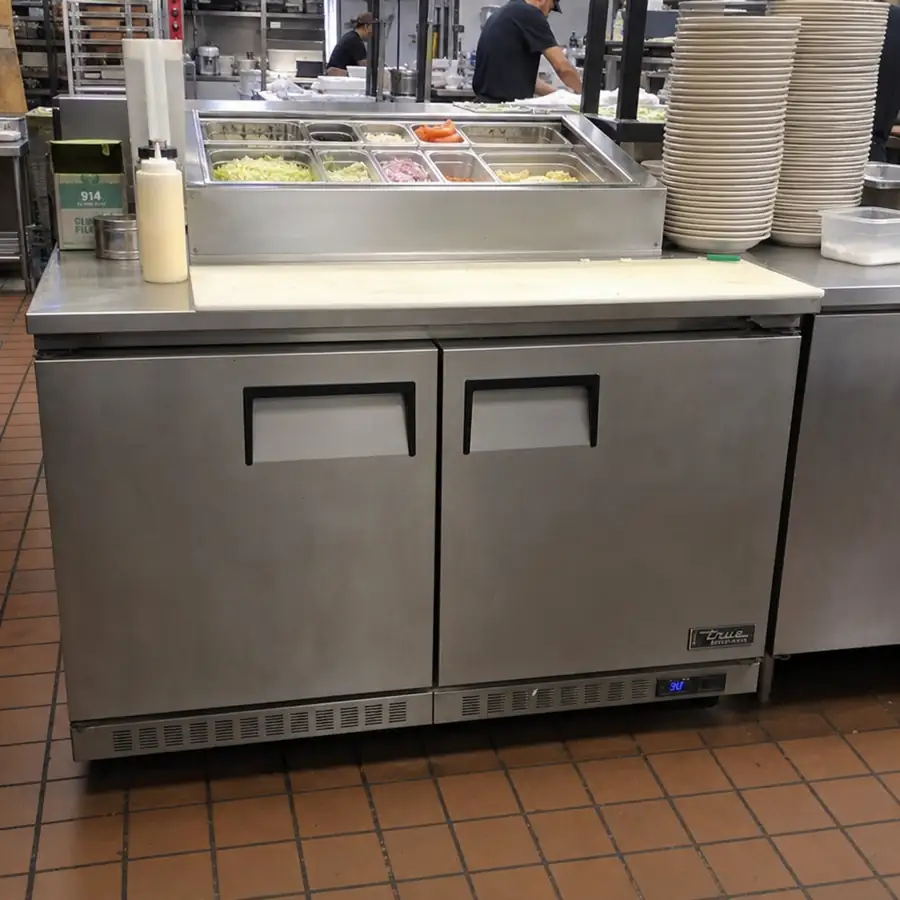
For pizza shops, sandwich delis, and salad bars, refrigerated prep tables are non-negotiable. These units feature a refrigerated top rail for holding ingredient pans, a cutting board for assembly, and enclosed refrigerated storage underneath. They streamline the assembly process and ensure ingredients remain at safe holding temperatures during the busiest hours of the day.
Blast Chiller Benefits for Food Prep Safety
If you run a catering business, banquet hall, or prepare meals in large batches, you should strongly consider a blast chiller. The blast chiller benefits for food prep safety cannot be overstated.
When hot food cools down, it passes through the "Danger Zone" (40°F to 140°F)-the temperature range where harmful bacteria multiply most rapidly. Standard refrigerators are designed to hold cold food, not cool down hot food. Placing hot food in a standard fridge overworks the compressor and dangerously raises the ambient temperature of the whole unit.
A blast chiller uses high-velocity cold air to rapidly drop the core temperature of hot foods through the Danger Zone in a fraction of the time. This not only ensures strict food safety compliance but also preserves the cellular structure, moisture, and flavor of the food.
Strategic Kitchen Design and Setup
Buying the right equipment is only half the battle; where you put it matters just as much.
Restaurant Kitchen Equipment Layout Guide
A highly functional kitchen relies on an intelligent restaurant kitchen equipment layout guide. When placing your new cooling units, keep the following principles in mind:
Zone Separation: Keep your hot zones (ovens, fryers, grills) as far away from your cold zones (refrigerators, ice machines) as possible. Placing a reach-in cooler directly next to a deep fryer will cause the cooler's compressor to work overtime to maintain internal temperatures, leading to sky-high energy bills and early equipment failure.
Ergonomic Workflow: Position reach-in units and prep tables in a way that minimizes steps for your kitchen staff. Ingredients should flow logically from bulk storage (walk-in) to prep (undercounter/prep tables) to the cooking line.
Ventilation Clearance: Pay close attention to where the refrigerator's compressor breathes. Top-mounted compressors are great for dusty environments (like bakeries) because they pull air from higher up, but they need adequate ceiling clearance. Bottom-mounted compressors are easier to clean and better for hot kitchens, but they require floor clearance.
Installing Commercial Walk-In Coolers
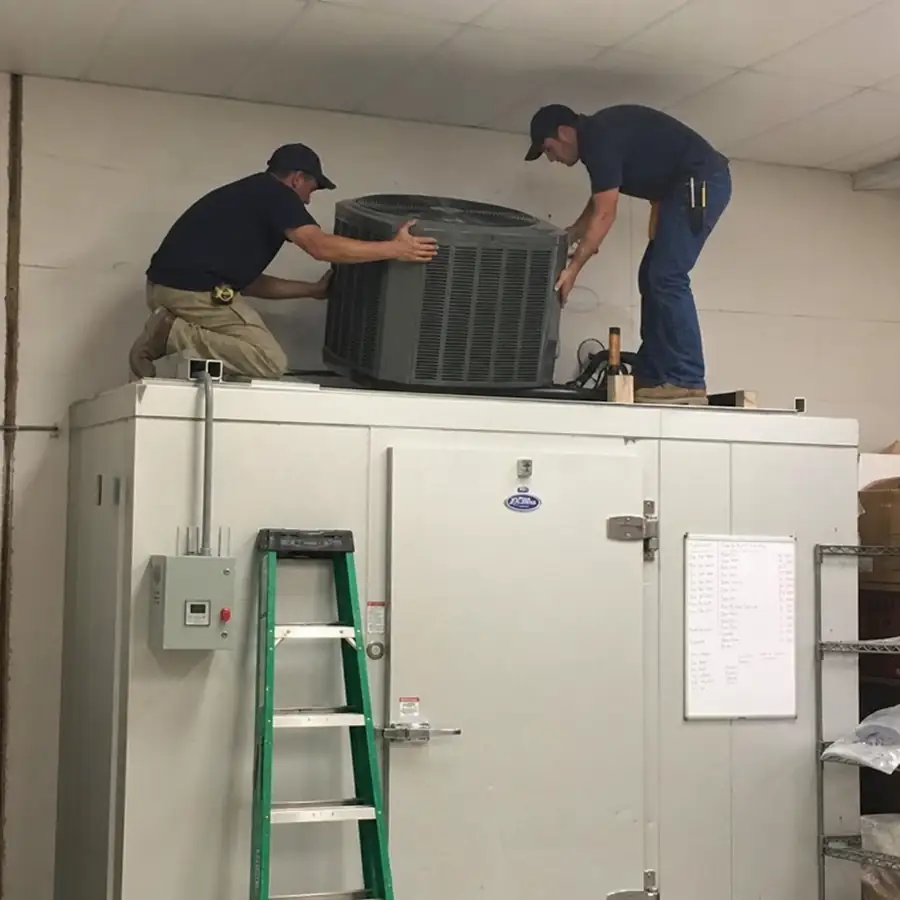
If you decide a walk-in is right for you, the installation process requires careful planning. Installing commercial walk-in coolers is generally not a DIY project.
It involves assembling insulated panels perfectly tight to prevent thermal leaks. You must ensure the flooring is completely level; an uneven floor will prevent the heavy door from sealing correctly, leading to massive energy waste and ice buildup. Additionally, the refrigeration system (the condenser and evaporator coils) must be properly piped, charged with refrigerant, and wired by licensed HVAC/R professionals to validate the manufacturer's warranty.
Navigating Compliance, Safety, and Efficiency
Commercial kitchens are heavily regulated environments. Your equipment must meet strict standards to pass health inspections and operate legally.
NSF Certified Refrigeration Requirements
When you Buy Commercial Refrigeration Equipment, you must look for the blue NSF (National Sanitation Foundation) sticker. Health inspectors actively look for this.
NSF certified refrigeration requirements dictate that the equipment is designed and constructed in a way that promotes food safety and easy sanitation. This means:
Materials used must be non-toxic, non-absorbent, and corrosion-resistant (which is why high-grade stainless steel is the industry standard).
Interior corners must be coved (rounded) to prevent food debris and bacteria from getting trapped in sharp crevices.
Seams must be smooth and easily cleanable.
The unit must be capable of maintaining safe temperatures consistently, even in extreme kitchen environments.
Commercial Refrigeration Energy Efficiency Ratings
Refrigeration accounts for a massive chunk of a restaurant's utility bills, as these machines run 24 hours a day, 7 days a week, 365 days a year. Paying attention to commercial refrigeration energy efficiency ratings is crucial for your long-term bottom line.
Look for equipment bearing the ENERGY STAR® label. ENERGY STAR certified commercial refrigerators and freezers are, on average, 20% more energy-efficient than standard models. They achieve this through high-efficiency compressors, improved insulation (often using high-density polyurethane), and smart electronic controls that optimize defrost cycles. While an energy-efficient model might have a higher upfront sticker price, the utility savings will quickly pay for the difference over the lifespan of the equipment.
Eco-Friendly Natural Refrigerants for Business
The commercial refrigeration industry is currently undergoing a massive shift regarding the chemical refrigerants used to cool equipment. Older refrigerants, like R-404A, are being phased out globally due to their exceptionally high Global Warming Potential (GWP).
Forward-thinking operators are now looking for eco-friendly natural refrigerants for business. Hydrocarbon refrigerants, such as R-290 (propane), are becoming the new standard. R-290 has a GWP of just 3 (compared to R-404A's GWP of nearly 4,000). Furthermore, R-290 has excellent thermodynamic properties, meaning units equipped with this natural refrigerant often cool down faster and consume less electricity. When you buy new refrigeration equipment, prioritizing natural refrigerants protects both the environment and your future compliance with local regulations.
Making the Purchase: Brands, Budgets, and Financing
Once you know exactly what you need, it's time to talk about money and manufacturers.
Best Commercial Refrigerator Brands for Small Business
While there are dozens of manufacturers, choosing a reputable brand ensures reliability, easy access to replacement parts, and robust customer service. Some of the best commercial refrigerator brands for small business include:
True Refrigeration: Often considered the industry gold standard. They are known for their incredibly durable build quality, long lifespans, and excellent resale value.
Turbo Air: A fantastic brand known for innovation, particularly their patented self-cleaning condenser systems, which drastically reduce maintenance requirements.
Beverage-Air (Bev-Air): Highly respected for their reach-in units and undercounter equipment, offering strong warranties and reliable performance.
Atosa: A rapidly growing brand that offers an excellent balance of budget-friendly pricing, solid reliability, and generous warranty terms.
New vs Refurbished Kitchen Cooling Units
A major dilemma for startups on a tight budget is deciding between new vs refurbished kitchen cooling units.
Buying new provides peace of mind. You get the latest technology, better energy efficiency, pristine sanitation, and-most importantly-a manufacturer’s warranty that covers parts and labor for the first few years.
However, refurbished equipment can save you 30% to 50% off the retail price. If you choose to go this route, never buy "used as-is" off an online marketplace without a professional inspection. Only buy refurbished units from certified commercial kitchen dealers who have replaced worn compressors, installed new door gaskets, flushed the lines, and provide a dealer-backed warranty.
Financing Options for Food Service Equipment
If out-of-pocket capital is tight, you don't necessarily have to settle for cheaper, inferior equipment. There are multiple financing options for food service equipment designed specifically for the restaurant industry.
Equipment Leasing: Many dealers offer lease-to-own programs. This allows you to get top-tier equipment into your kitchen immediately with a low monthly payment. The equipment itself serves as the collateral.
SBA Loans: The Small Business Administration offers loans (like the SBA 504 loan) specifically geared toward purchasing heavy machinery and equipment for businesses.
Section 179 Tax Deduction: While not a financing method per se, utilizing the Section 179 tax code allows businesses in the US to deduct the full purchase price of qualifying equipment (including commercial refrigeration) financed or purchased during the tax year, drastically easing the financial burden.
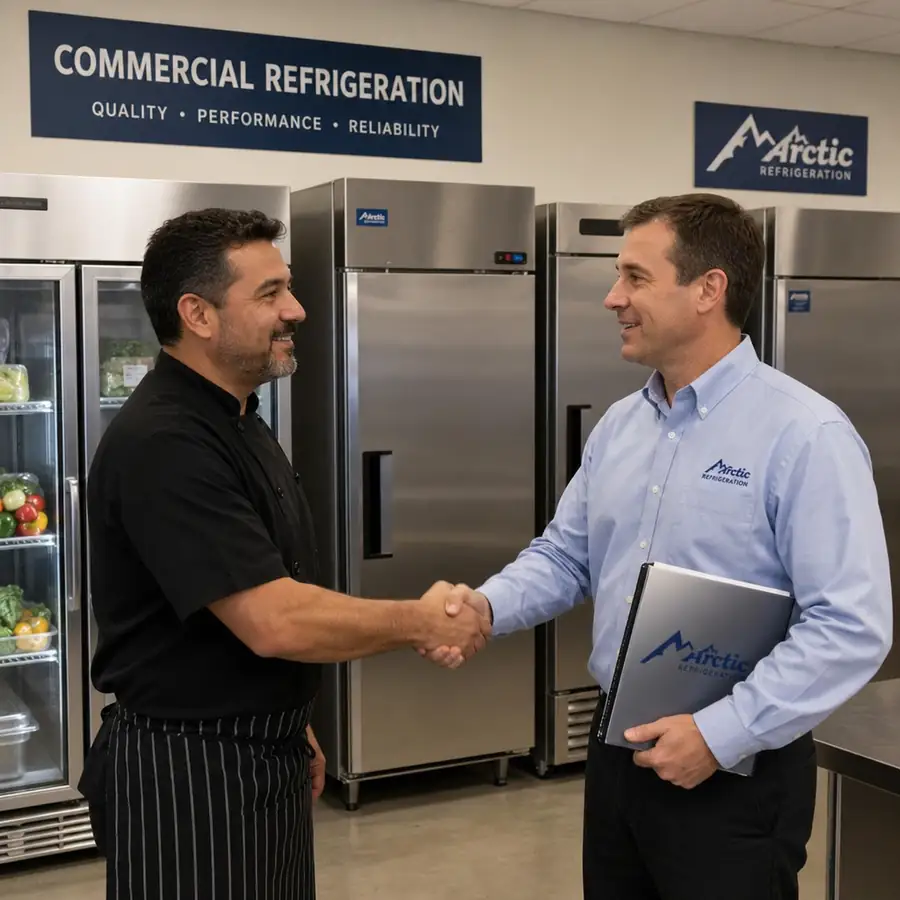
Protecting Your Investment: Maintenance and Technology
After you Buy Commercial Refrigeration Equipment, your focus must immediately shift to protecting that investment. Neglecting a commercial fridge is a recipe for disaster.
Common Commercial Refrigeration Maintenance Issues
Being proactive can save you from catastrophic breakdowns. You should familiarize your staff with common commercial refrigeration maintenance issues:
Dirty Condenser Coils: This is the #1 cause of commercial refrigeration failure. The condenser coil pulls heat out of the unit. If it becomes clogged with dust, grease, and flour, the compressor has to work twice as hard, eventually overheating and dying.
Torn Door Gaskets: The rubber seal around the refrigerator door is called a gasket. Over time, these crack or tear. A damaged gasket allows warm kitchen air to constantly seep into the unit, causing the temperature to rise and the evaporator coils to freeze over.
Blocked Evaporator Fans: Stacking food boxes too high inside the unit can block the internal fans, preventing cold air from circulating properly. This leads to warm spots in the fridge where food can spoil.
Clogged Drain Lines: Condensation inside the fridge is routed out through a drain line. If slime or debris clogs this line, water will back up and flood the interior of your cooler.
Reducing Commercial Refrigeration Operating Costs
Aside from keeping your equipment running, regular maintenance is the key to reducing commercial refrigeration operating costs.
Implement a strict maintenance schedule:
Daily: Check and record internal temperatures. Wipe down door gaskets with warm, soapy water. Ensure doors are shutting completely.
Monthly: Inspect the condenser coils. Use a stiff brush and a commercial shop vacuum to remove dust and debris from the coil fins.
Bi-Annually: Have a licensed refrigeration technician perform a comprehensive inspection. They will check refrigerant levels, calibrate thermostats, inspect electrical connections, and clear drain lines.
Commercial Freezer Temperature Monitoring Systems
The modern kitchen is becoming increasingly automated, and refrigeration is no exception. Investing in commercial freezer temperature monitoring systems is one of the smartest operational decisions you can make.
These smart sensors are installed directly inside your walk-ins, reach-ins, and freezers. They connect to your restaurant's Wi-Fi and continuously log temperature data to the cloud.
If a cooler door is accidentally left propped open by a staff member overnight, or if a compressor suddenly fails during a power surge, the monitoring system will instantly send a text message or email alert to your smartphone. This allows you to race to the restaurant and move your expensive inventory before it hits the Danger Zone and spoils. Furthermore, these systems automatically generate the continuous temperature logs required by local health departments, entirely eliminating the need for staff to manually write down temperatures on a clipboard every few hours.
Shop Commercial Refrigeration at The Horeca Store
Looking for dependable commercial refrigeration equipment for your restaurant or foodservice business? The Horeca Store offers a wide selection of professional refrigeration solutions, including commercial refrigerators, freezers, prep tables, undercounter refrigeration, backbar coolers, and other foodservice equipment. Explore The Horeca Store to find refrigeration equipment that matches your kitchen space, storage requirements, and daily operational needs.
Conclusion
Making the decision to Buy Commercial Refrigeration Equipment is a significant milestone for any food service operator. It requires careful planning, a deep understanding of your menu's needs, and an eye for long-term efficiency.
From understanding how to choose commercial refrigerator size to navigating the complexities of installing commercial walk-in coolers, every step of the process matters. Remember to prioritize NSF certified refrigeration requirements to ensure food safety, and look for units utilizing eco-friendly natural refrigerants for business to secure a sustainable future.
Whether you are debating between new vs refurbished kitchen cooling units, or exploring financing options for food service equipment, never compromise on the reliability of your core cooling setup. By investing in high-quality units, implementing strict maintenance protocols, and utilizing modern temperature monitoring technology, you will ensure your ingredients stay fresh, your utility bills stay low, and your business continues to thrive for years to come.