
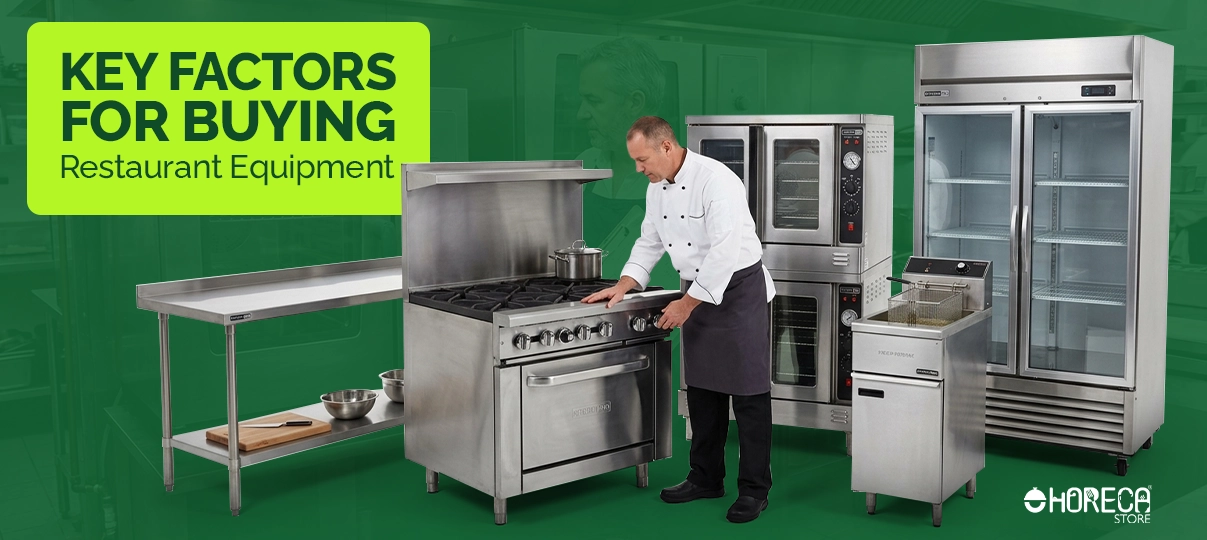
Imagine pouring your savings into a dream café, only to have your blender smoke during the grand opening rush. While a high-end home appliance handles daily family smoothies, surviving hundreds of orders requires commercial-grade muscle. Your menu gets the glory, but your appliances form the engine room keeping the business alive. Accepting that domestic tools cannot survive professional demands is the first step toward building a resilient kitchen.
Industry data reveals that many new owners blow their budgets by staring solely at initial price tags. Calculating the "True Cost of Ownership" requires looking past the sticker to include daily energy consumption, ongoing maintenance, and emergency repair bills. Snagging a bargain-bin oven might save money today, but if it constantly leaks heat and breaks down, those upfront savings instantly vanish.
Surviving the current hospitality landscape demands strategic planning around utility bills and strict regulations. According to recent restaurant association reports, new 2026 energy standards are pushing operators toward high-efficiency hardware like induction cooktops. Every tool in a commercial kitchen must endure grueling shifts while minimizing expensive electricity usage, making rugged durability non-negotiable for protecting your profit margins.
Cooking spaces today have evolved far beyond basic metal boxes. Connected technology actively monitors temperatures and prevents costly food spoilage, making smart equipment just as crucial as perfecting your signature dish. Building a resilient business foundation starts right here, by selecting machinery that works just as tirelessly as you do.
Designing for Flow: How to Stop Your Staff from Colliding During the Friday Rush
While your menu dictates what you cook, your physical equipment strategy determines whether you actually survive the Friday night rush. Optimizing commercial kitchen layout for workflow relies on mastering the "Work Triangle"—the invisible path connecting your prep stations, cooking lines, and plating areas. By minimizing the steps your staff takes between these zones, you drastically reduce physical fatigue and can increase your hourly meal production (known as throughput) by up to 15%.
Physical dimensions on a spec sheet won't reveal how an appliance operates in motion. You must calculate "swing space"—the room a door occupies when fully opened—and overhead clearances to prevent severe safety hazards and costly fire code violations. Before buying large equipment, use this spatial checklist:
- Tape the unit's exact floor footprint using bright painter's tape.
- Add 36 inches of clearance in front of ovens for safely removing hot pans.
- Measure refrigerator door arcs to guarantee they won't trap staff or block aisles.
- Verify exhaust hoods will extend at least 6 inches past the cooking equipment's edges.
Implementing smart space-saving solutions for small commercial kitchens demands respecting these invisible functional zones. A new combi-oven might fit a corner perfectly on paper, but if its door swings into your primary prep lane, your entire system halts every time a cook pulls a tray.
Getting your spatial logic right is just the first victory. Next, you must ensure your carefully placed equipment is legally compliant.
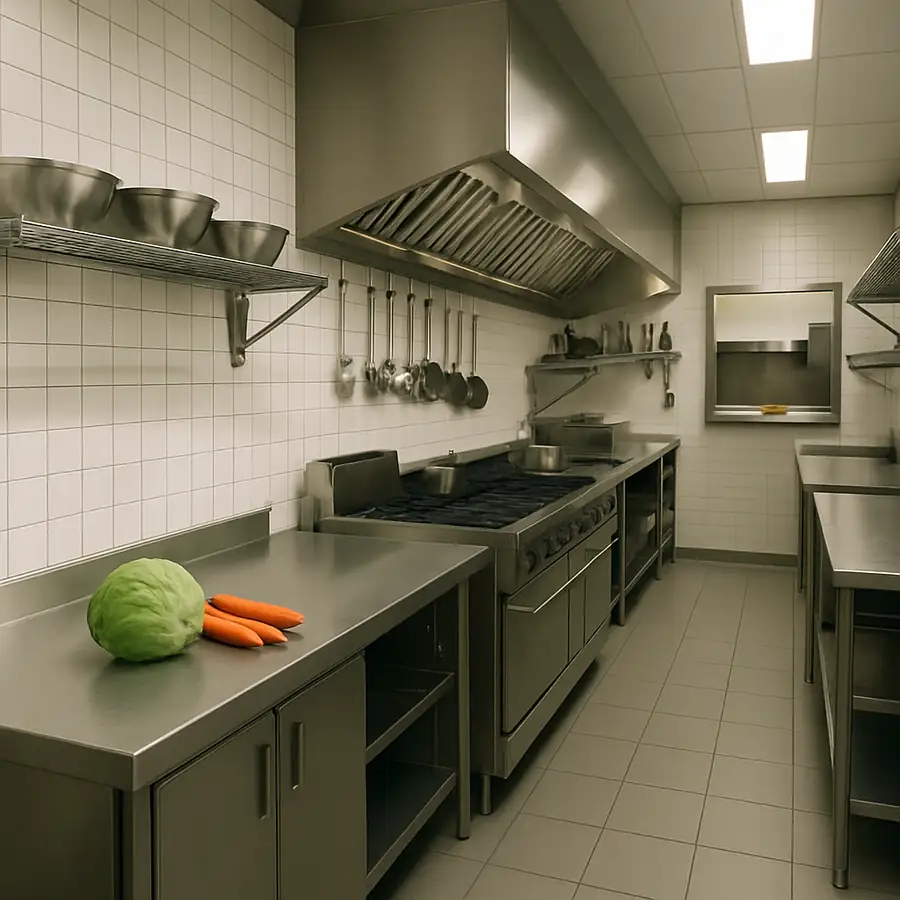
The 'Hidden' Label That Saves Your License: Navigating NSF and 2026 Energy Standards
Falling into the "Compliance Trap" is a fast way to ruin your grand opening. You might find a budget-friendly prep table online, but if the local health inspector doesn't see the right stamps of approval, it must be replaced immediately. Because health departments strictly regulate restaurants, cheap domestic appliances will never pass. Buying NSF certified food prep tables guarantees you have non-porous surfaces specifically designed to eliminate bacteria-harboring crevices.
Beyond food safety, your physical space demands strict electrical validation. Before finalizing any major purchase, verify these three essential certifications:
- NSF/ANSI: Ensures the equipment's design is safe for commercial food contact and rapid sanitation.
- UL (Underwriters Laboratories): Confirms the appliance safely handles continuous, high-volume electrical draw without catching fire.
- Energy Star 2026: Indicates the unit meets the stringent newest baselines for modern power conservation.
Profit margins also depend heavily on this utility strategy. Energy efficiency directly impacts your wallet, not just the environment. Choosing modern high-efficiency units can slash future utility bills by up to 20%. These machines automatically throttle power during idle hours to prevent waste. Ultimately, how you power your cookline dictates your highest ongoing expenses.
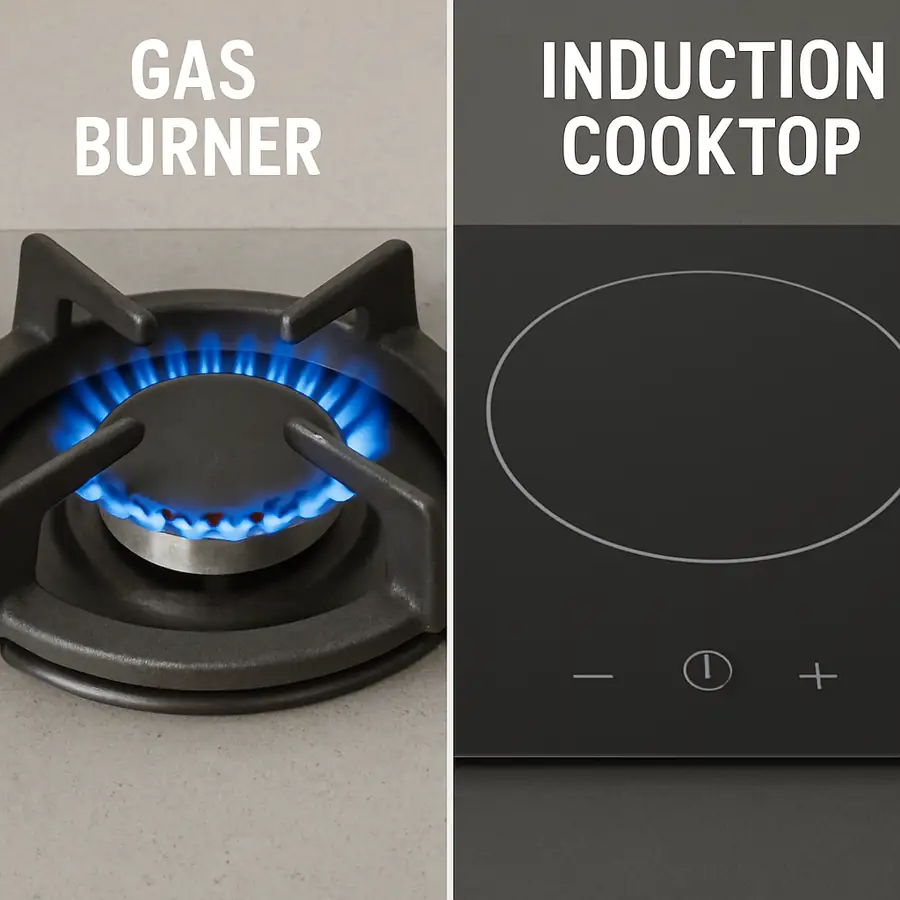
Gas vs. Induction: Why Your Choice Affects Both Your Utility Bill and Your Kitchen’s Heat
Choosing between a roaring flame and a smooth glass cooktop is a critical financial decision in 2026. While your signature charred peppers might strictly demand an open flame, assessing stovetops for high-volume kitchens requires looking beyond just the menu. Gas offers classic culinary techniques, but it constantly blasts raw heat into your workspace, forcing your air conditioning to work overtime during every dinner rush.
Unlike traditional burners, induction technology uses magnetic friction to turn the pan itself into the heat source. Because 90% of the energy goes directly into the food rather than warming the surrounding air, this creates a massive HVAC cooling load reduction. Your cooks stay comfortable during long shifts, and you immediately stop paying utility companies to cool down the ambient heat your own stoves just generated.
This operational shift dramatically improves your dining atmosphere, especially when your layout exposes the kitchen directly to customers. Just as you would install low-noise industrial dishwashers for open kitchens so guests can easily converse, induction burners eliminate the aggressive roar of open flames and heavy exhaust fans. Over a standard 24-month period, these combined energy savings and slashed air conditioning bills typically cover the higher upfront cost of the equipment.
Mastering these daily thermal and electrical costs keeps your operating budget firmly in the green. However, saving money on your cookline won't matter if your walk-in cooler fails overnight.
Preventing $5,000 Disasters with IoT Refrigeration and Smart Monitoring
Losing a walk-in cooler full of prime inventory overnight is a nightmare no new owner wants to experience. Today's standard involves technology that actively protects your investment. Think of IoT enabled commercial refrigeration monitoring systems like an electronic sous-chef that never sleeps; they track temperatures and instantly text you if a compressor struggles. By catching these issues early, this instant notification system routinely reduces food waste by 10%, ensuring a minor power blip doesn't ruin your Monday prep.
Beyond saving your steaks, this connectivity revolutionizes your daily management workflow. The ROI for smart kitchen equipment becomes incredibly obvious when viewing the top benefits of IoT monitoring:
- Real-time alerts: Receive instant smartphone notifications before temperature drops compromise your expensive inventory.
- Automated temperature logs: Generate compliant digital records for mandatory health inspections (HACCP), eliminating tedious manual clipboard tracking.
- Energy surge protection: Utilize predictive maintenance alerts to identify failing parts before the entire machine breaks down during a rush.
Catching these mechanical issues early stops a $200 fan replacement from escalating into a $5,000 emergency compressor rebuild. Because outfitting your kitchen with this advanced technology requires strategic funding, you must decide how to acquire these digital upgrades while protecting your startup capital.
Lease or Buy? The Math Behind Protecting Your Startup Capital in 2026
Budgeting for restaurant appliances forces new owners to balance preserving cash against owning assets outright. Buying is a Capital Expenditure (CapEx)—a heavy upfront cost subject to equipment depreciation over time. Leasing shifts this to an Operating Expenditure (OpEx), treating the machinery like a predictable monthly utility bill. To protect your limited startup cash flow, consider leasing high-ticket, complex items like a $15,000 combi-oven rather than draining your initial operating capital.
When deciding between leasing and buying, successful operators analyze the "Maintenance-to-Cost" ratio of each specific appliance. If a machine has a high upfront cost and requires frequent, expensive servicing—like a commercial ice machine—leasing is safer because routine repairs are usually covered by the contract. Conversely, highly durable items like stainless steel prep tables or basic gas ranges are better to buy outright since their lifetime maintenance remains minimal.
Smart planning also involves leveraging financing options to maximize available tax incentives. Current regulations often let you deduct the full lease or purchase price of energy-efficient appliances immediately, significantly lowering your first-year tax burden. If neither buying new nor leasing fits your strategy, the secondhand market offers another viable path.
The Used Equipment Gamble: When to Save $2,000 and When to Run Away
Navigating the secondary market is where smart operators stretch their startup budgets. When sourcing used commercial cooking gear, the golden rule is to buy heavy metal secondhand and complex machinery fresh out of the box. You can easily save up to 50% on stainless steel prep tables and shelving by sourcing from restaurant auctions. Since these assets have no moving parts, equipment refurbishment usually just requires a deep sanitizing clean.
Drawing a hard line on risk protects your kitchen from catastrophic Friday night failures. Keep this purchasing guide handy:
- The 'Buy Used' Green List: Stainless steel tables, racks, and basic gas ranges (always inspect used gas equipment for safe connection points and valve integrity before purchasing).
- The 'Buy New' Red List: Refrigeration units, ice machines, and anything with digital electronics.
You must avoid the hidden costs of used refrigeration that lacks modern energy certifications, as the daily electrical drain will quickly erase your upfront bargain. Once refurbished gear passes your physical inspection, its true value relies on what happens when it inevitably breaks.
Beyond the Price Tag: Evaluating Warranty Terms and 2026 Service Realities
Securing a bargain means nothing if it takes weeks to ship an oven back to the manufacturer for repairs. When evaluating commercial appliance warranty terms, always negotiate for "On-Site" coverage backed by a strict Service Level Agreement (SLA). An SLA is simply a contract promising a repair technician's arrival within a specific timeframe, preventing a minor glitch from becoming a weekend revenue disaster.
Modern technology introduces another layer to this vital safety net. While smart-tech appliances offer incredible efficiency, they require specialized diagnostic tools to fix. Before finalizing any purchase, verify that local technicians are actually certified to work on your specific smart models so you aren't forced to pay premium travel fees for an out-of-state specialist.
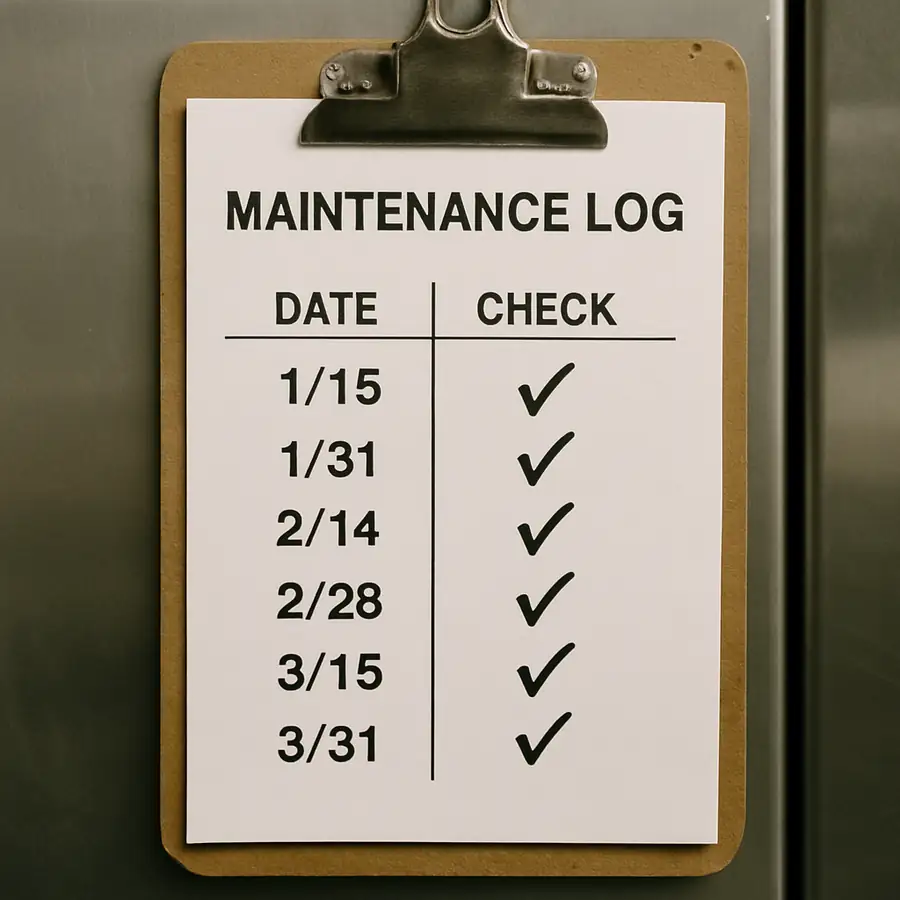
Even the best warranties cannot replace consistent daily care. Building 12-month equipment maintenance schedules to prevent downtime is the cheapest insurance your business can buy. By proactively cleaning condenser coils and calibrating thermostats, operators routinely extend their equipment's lifespan by up to 30 percent.
Beyond simply buying gear, mastering this lifecycle ensures your kitchen never misses a beat.
Your 30-Day Equipment Procurement Roadmap
You have shifted from merely envisioning your dream menu to understanding the mechanical heartbeat required to execute it. Procuring restaurant equipment means you no longer look at a commercial oven and just see a price tag; you now see throughput, utility limits, and long-term profitability.
To turn this foundation into a functional kitchen, follow this 30-day action plan:
- Finalize your menu before signing any equipment leases to ensure the tools match the food.
- Conduct a "Utility Audit" 3 weeks before delivery to confirm phase power and gas line compatibility.
- Map your floor plan to guarantee door swing clearance and efficient workflow.
- Verify all NSF/ANSI certifications align with your local health department codes.
- Perform a "Dry Run" of all equipment to calibrate temperatures before your first official health inspection.
Start with this checklist to build your confidence and ensure operational readiness. When that first Friday night rush hits and the tickets start piling up, you won't be worrying about whether your infrastructure can handle the pressure. Instead, you will be doing exactly what you set out to do—flawlessly feeding a packed house.
Buy Commercial Restaurant Equipment from The Horeca Store
Choosing the right restaurant equipment is one of the most important investments for any foodservice business. The Horeca Store offers a comprehensive range of commercial restaurant equipment, including refrigerators, freezers, ovens, fryers, grills, prep tables, mixers, dishwashers, stainless steel worktables, and food storage solutions. Our commercial-grade equipment is designed to deliver outstanding performance, energy efficiency, and durability for restaurants, cafés, hotels, bakeries, cloud kitchens, and catering businesses.
At The Horeca Store, we are committed to helping foodservice professionals find the best equipment for their operational needs and budget. Our team provides expert guidance to help you select reliable products from trusted brands that maximize productivity and support long-term business growth. With competitive pricing, dependable customer service, and high-quality commercial kitchen solutions, The Horeca Store is your trusted partner for equipping a successful restaurant.