
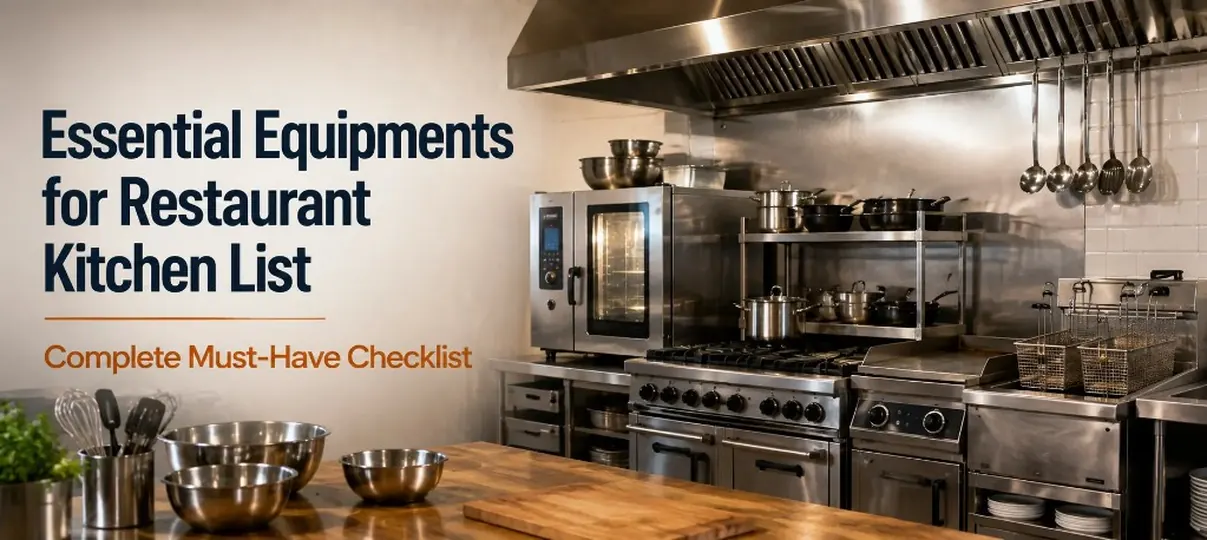
Opening a restaurant kitchen means building a workspace that can prep, cook, hold, plate, clean, and store food safely under pressure. The right restaurant kitchen equipment supports consistency, speed, food safety, and a smoother service for both back-of-house and front-of-house teams. Use this restaurant equipment list as a practical starting point, then adapt it to your menu, space, service model, and local code requirements.
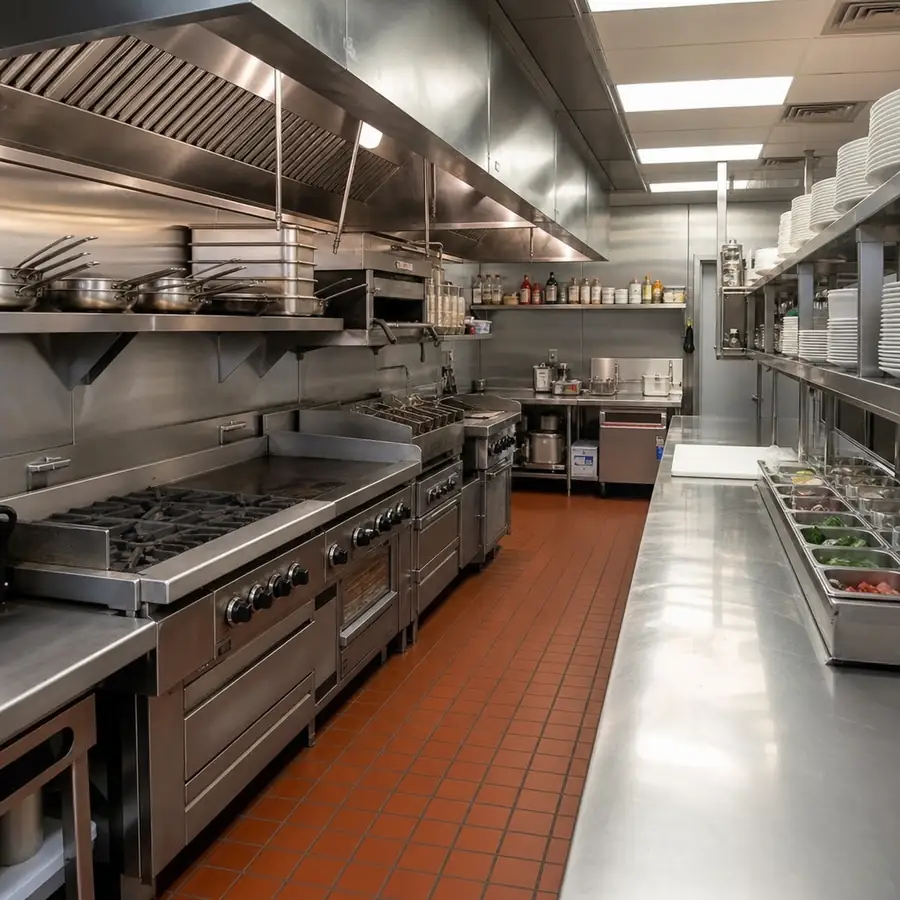
What equipment does a restaurant kitchen need first?
A restaurant kitchen needs equipment that supports the full food flow: receiving, storage, preparation, cooking, holding, service, dishwashing, and sanitation. Start with the items that are essential to your menu and required for safe operations, then add specialty foodservice equipment once your core workflow is covered. A breakfast café, pizza shop, food truck, and full-service bistro will not need the exact same setup, but every kitchen should be built around safe storage, efficient prep, reliable commercial cooking equipment, and proper cleaning.
Before buying, map your menu against your kitchen tasks. Ask what ingredients arrive daily, what must be refrigerated or frozen, what gets prepped in bulk, what cooks to order, and what must be held hot or cold. This prevents expensive equipment from taking up space without improving production.
A strong starter checklist includes:
- Cold storage for perishable ingredients
- Dry storage for shelf-stable goods and disposables
- Prep tables, cutting boards, knives, and smallwares
- Cooking equipment matched to the menu
- Ventilation and fire suppression where required
- Holding and warming equipment for service flow
- Dishwashing, sinks, and sanitation supplies
- Shelving, carts, containers, and labeling tools
- Safety equipment and cleaning systems
1. Commercial refrigeration keeps ingredients safe and service-ready
Investing in reliable commercial refrigeration from a trusted supplier ensures food safety and service consistency.
Refrigeration is one of the most important categories of commercial kitchen equipment because it protects inventory, supports food safety, and keeps the line moving during service. Most restaurants need a combination of reach-in refrigerators, undercounter units, prep refrigerators, and possibly a walk-in cooler depending on volume. The best mix depends on how much fresh product you hold, how often vendors deliver, and how quickly ingredients move through the kitchen.
Place refrigeration where it supports workflow. A prep cook should not have to cross the hot line to grab produce, and a line cook should not lose time searching for proteins during a rush. Temperature visibility, easy cleaning, durable shelving, and correct capacity all matter more than simply buying the largest unit available.
Common refrigeration needs include:
- Reach-in refrigerators for daily ingredients
- Undercounter refrigerators near cook stations
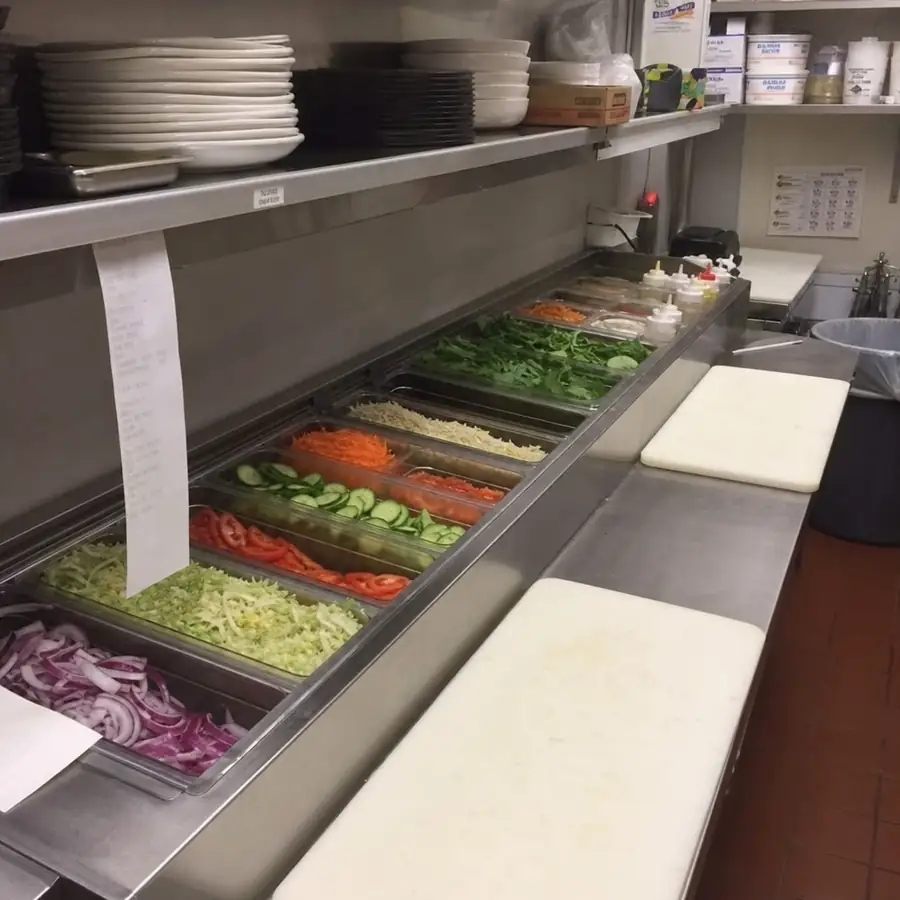
- Sandwich or salad prep units with ingredient wells
- Walk-in coolers for higher-volume operations
- Display refrigeration for grab-and-go concepts
- Thermometers and temperature logs for monitoring
2. Freezers protect inventory and extend purchasing flexibility
Freezers help restaurants manage backup inventory, frozen desserts, prepared components, meats, seafood, and items purchased in bulk. Even kitchens that cook mostly fresh food often need frozen storage for consistency and emergency coverage. The key is choosing freezer space that matches your actual storage habits, not using the freezer as a place for forgotten ingredients.
A reach-in freezer may be enough for a small café or low-volume kitchen, while a busy restaurant may need a walk-in freezer. Chest freezers can hold volume, but they can also slow staff down if products are stacked without a clear system. Whatever style you choose, organization matters: label everything, rotate stock, and keep frequently used items easy to reach.
3. Ranges, ovens, and cooktops form the heart of production
Choosing the right commercial cooking equipment like convection ovens and ranges is essential for menu execution.
Most restaurant kitchens need a dependable cooking battery. This may include a range with burners and an oven base, a convection oven, a deck oven, a combi oven, or specialized units depending on the menu. The goal is not to own every type of cooking equipment; it is to give cooks the right heat source for the food they prepare most often.
A range is flexible for sautéing, simmering, boiling, and sauce work. Convection ovens are useful for roasting, baking, and batch cooking because fans move heat around the oven cavity. Deck ovens are common for breads and pizzas, while combi ovens can support kitchens that need steam, convection, or combination cooking in one unit.
When evaluating cooking equipment, consider:
- Menu items cooked at peak volume
- Gas or electric utility access
- Ventilation requirements
- Recovery time and temperature control
- Ease of cleaning between services
- Space for sheet pans, pots, and hotel pans
4. Griddles, grills, and charbroilers expand menu capability
Flat-top griddles, grills, and charbroilers are essential for many menus because they provide direct cooking surfaces that handle high-volume service. A griddle is ideal for burgers, eggs, pancakes, sandwiches, tortillas, and seared proteins. A charbroiler or grill adds marks, smoke-forward flavor, and high-heat cooking for steaks, chicken, vegetables, and seafood.
Choose the surface based on your menu rather than appearance. A small café may benefit from a compact countertop griddle, while a burger concept may need a large flat-top with enough width for rush periods. Grills and charbroilers also require attention to ventilation, grease management, cleaning time, and fire safety.
5. Fryers support speed, consistency, and popular menu items
Commercial fryers are common in restaurants that serve fries, wings, fried seafood, chicken, appetizers, or desserts. They offer fast cook times and consistent results when oil temperature is managed properly. A fryer that is too small can bottleneck service, while one that is too large may waste oil and space.
Think about fry volume, basket size, oil filtration, and whether foods need separate vats to avoid flavor transfer or allergen concerns. A kitchen frying fish, chicken, and fries may need more than one fryer or a clear separation plan. Staff should also be trained on oil quality, safe filtering, burn prevention, and end-of-day cleaning.
6. Prep tables and workstations create an efficient kitchen flow
A well-planned prep area with quality food preparation equipment and prep tables streamlines every shift.
Prep space is where raw ingredients become service-ready components. Stainless steel prep tables, refrigerated prep stations, cutting boards, ingredient bins, and organized tool storage help cooks work cleanly and quickly. Without enough prep space, even a well-equipped kitchen can feel chaotic.
Plan prep zones around task type. A vegetable prep area may need sinks, cutting boards, and storage containers nearby. A pastry or dough station may need a larger uninterrupted surface. A line station may need a refrigerated rail, undercounter storage, squeeze bottles, pans, and utensils within arm’s reach.
Useful prep station components include:
- Stainless steel worktables
- Color-coded cutting boards where appropriate
- Food pans and lids
- Ingredient bins and scoops
- Knife racks or magnetic strips
- Disposable gloves and deli tissue
- Scales, thermometers, and timers
7. Food processors, mixers, and slicers save labor on repetitive tasks
Mechanical prep equipment can reduce repetitive manual work and improve consistency. Food processors chop, slice, shred, and puree ingredients more quickly than hand tools. Mixers support doughs, batters, whipped items, mashed foods, and sauces. Slicers help with meats, cheeses, vegetables, and sandwich production.
The right equipment depends on what your team repeats every day. A pizzeria may need a heavy-duty dough mixer. A deli may prioritize a reliable slicer. A scratch kitchen may benefit from a food processor that handles sauces, dressings, vegetables, and prep batches.
These machines require training and maintenance. Blades must stay sharp, guards should be used, and parts need to be cleaned correctly. If cleaning is difficult, staff may avoid using the equipment or fail to sanitize it properly.
8. Sinks and dishwashing equipment keep the operation compliant and clean
A reliable commercial dishwasher and properly configured sinks are non-negotiable for health compliance.
Every restaurant needs a system for handwashing, food preparation, warewashing, and cleaning. Local requirements vary, but kitchens commonly need hand sinks, prep sinks, mop sinks, and a three-compartment sink or commercial dishwasher. These are not optional conveniences; they are central to sanitation and safe operations.
A dishwasher can speed turnaround for plates, glasses, utensils, pans, and smallwares, especially in full-service restaurants. However, a dishwasher still needs landing space, racks, chemicals or sanitizer, and trained staff. A three-compartment sink remains important for washing, rinsing, and sanitizing items that cannot go through a machine.
Key sanitation setup items include:
- Clearly accessible hand sinks
- Soap and paper towel dispensers
- Three-compartment sink
- Commercial dishwasher if volume requires it
- Dish racks and drying areas
- Sanitizer test strips
- Mop sink and cleaning supply storage
9. Ventilation and fire safety equipment protect staff and the building
Hot-side equipment often requires proper ventilation to remove heat, smoke, grease-laden vapors, and odors. A hood system, exhaust fan, make-up air, grease filters, and fire suppression equipment may be required depending on the cooking methods used. This is one area where professional planning is essential because mistakes can be expensive and unsafe.
Ventilation affects comfort as well as compliance. A kitchen that traps heat and smoke can slow cooks down, increase fatigue, and create unpleasant conditions for the entire operation. Fire extinguishers, suppression systems, emergency shutoffs, and staff training should be considered part of the same safety plan.
Do not guess on hood size or suppression needs. Work with qualified professionals and follow local code requirements before finalizing your commercial kitchen equipment layout.
10. Hot holding and warming equipment protect quality during service
Not every item can be cooked from scratch at the exact second it is ordered. Hot holding equipment helps maintain food at safe serving temperatures while preserving quality as much as possible. Common options include steam tables, holding cabinets, heat lamps, soup warmers, drawer warmers, and heated shelves.
The wrong hot holding setup can dry out food, soften crispy items, or create inconsistent portions. Match the holding method to the product. Soups and sauces may work well in warmers, while roasted proteins may need controlled cabinets. Fried foods often need careful airflow rather than simple heat.
Use hot holding intentionally. It should support service speed without becoming a place where food quality declines unnoticed.
11. Storage shelving, racks, and containers keep inventory under control
Good storage equipment makes a kitchen safer, faster, and easier to manage. Wire shelving, wall shelves, dunnage racks, ingredient bins, sheet pan racks, bus tubs, food-grade containers, and labels all help staff find what they need. Storage also supports food rotation, allergen separation, and cleaner floors.
Think vertically. Most restaurants have limited square footage, so wall-mounted shelves, rolling racks, and organized dry storage can free up valuable prep space. Keep heavy items low, frequently used items easy to reach, and chemicals away from food and food-contact items.
A simple storage system should cover:
- Dry goods and bulk ingredients
- Refrigerated and frozen foods
- Clean dishes and smallwares
- Disposable packaging
- Cleaning chemicals and tools
- Labeled prepped ingredients
- Backup utensils and service items
12. Smallwares turn equipment into a working kitchen
Stocking the right kitchen smallwares and food pans ensures every station is ready for service.
Smallwares are the everyday tools cooks use constantly. They may seem minor compared with ovens and refrigerators, but missing smallwares can slow service immediately. A kitchen with the right pans, knives, spoons, tongs, bowls, whisks, ladles, measuring tools, and storage containers is easier to run than one that forces staff to improvise. These day-to-day restaurant supplies are the glue that makes your bigger equipment usable.
Build your smallwares list from your menu and prep methods. If you portion sauces, you need ladles, squeeze bottles, portion cups, and labels. If you roast, you need sheet pans, racks, oven mitts, and timers. If you plate fine dining dishes, you may need plating spoons, tweezers, and specific servingware.
Essential smallwares often include:
- Chef’s knives, paring knives, and serrated knives
- Tongs, spatulas, spoons, whisks, and ladles
- Mixing bowls and measuring cups
- Sheet pans, hotel pans, and saucepans
- Cutting boards and bench scrapers
- Thermometers and timers
- Can openers, peelers, strainers, and colanders
13. Serving, plating, and front-of-house support equipment complete the guest experience
Restaurant kitchen planning should include the tools that move food from the line to the guest. Plates, bowls, ramekins, glassware, flatware, trays, bussing bins, expo tools, ticket rails, and heat lamps all affect service quality. Even strong cooking can suffer if the pass is disorganized or the servingware does not fit the menu.
The expo area deserves special attention. It should give staff room to finish plates, check tickets, garnish dishes, and coordinate servers or runners. A cluttered pass creates errors, slows communication, and makes it harder to maintain presentation standards.
Choose serving equipment that works operationally. Oversized plates may look appealing but strain storage and dishwashing space. Specialty pieces should be durable enough for daily restaurant use.
14. Beverage equipment depends on the concept
Matching beverage equipment to your concept keeps drink service fast and consistent during rush hours.
Beverage service can range from simple water and soft drinks to espresso, cocktails, smoothies, draft beer, or fresh juices. The equipment needed will vary widely, so this category should be planned around revenue potential, staff skill, and space. A coffee-focused café may invest heavily in espresso equipment, grinders, water filtration, refrigeration, and barista tools, while a casual restaurant may only need an ice machine, beverage dispenser, and glassware storage.
Common beverage equipment includes:
- Ice machines and ice bins
- Coffee brewers and espresso machines
- Grinders and water filtration
- Beverage dispensers
- Blenders for smoothies or frozen drinks
- Bar sinks and glass washers
- Refrigerated storage for milk, garnishes, and bottled drinks
Ice is especially important because it supports both beverages and some prep tasks. Plan capacity carefully so service does not run short during peak periods.
15. Cleaning, waste, and safety supplies support daily discipline
A restaurant kitchen is only as strong as its cleaning routine. Cleaning tools, chemicals, waste containers, floor mats, gloves, aprons, first-aid supplies, and safety signage help staff maintain the space during and after service. These items should be easy to access, clearly stored, and separated from food and clean equipment.
Waste handling is part of kitchen efficiency. Trash cans, recycling bins, compost containers where used, and grease disposal systems should fit the workflow without blocking prep or cook stations. Floor drains, mats, and wet-floor signage also help reduce slip risks in busy areas.
A practical closing supply checklist includes:
- Degreaser and food-safe sanitizers
- Towels, buckets, brushes, and scrub pads
- Brooms, mops, and floor squeegees
- Trash cans and liners
- Grease handling supplies
- Gloves, aprons, and protective gear
- First-aid kit and burn care supplies
Restaurant kitchen equipment list recommendations by restaurant format
Below are separate recommendations to help you tailor your restaurant kitchen equipment list to your service style. Use the sections that match your concept, then cross-check utilities, ventilation, and space. The goal is to invest in essential restaurant equipment you will actually use at peak volume.
Full-service restaurants (FSR)
Full-service kitchens typically need a broad set of equipment to support varied tickets, multiple cooking techniques, and plated service.
- Cooking: range with oven base, convection oven, griddle, charbroiler or grill, fryer
- Holding: hot holding cabinet, heat lamps at the pass
- Prep: multiple stainless worktables, food processor, slicer, immersion blender
- Cold storage: reach-ins plus a walk-in cooler for higher volume
- Warewashing: commercial dishwasher, three-compartment sink, glass racks, landing tables
Quick-service restaurants (QSR)
QSR concepts are built around speed and repeatable output, so equipment should be optimized for throughput and easy cleanup.
- High-output cooking equipment: large griddle, dedicated fryers, rapid-cook oven (menu dependent)
- Assembly: refrigerated prep rails, portioning tools, heated holding where appropriate
- Efficiency: undercounter refrigeration at stations, pass-through or reach-in freezers
- Packaging: shelving for disposables and a clear staging area for takeout
Cafés
Cafés often balance light food with coffee service, so beverage equipment and compact prep are priorities.
- Coffee: espresso machine, grinders, brewer, water filtration
- Cold: undercounter refrigerator, milk fridge, display case if offering grab-and-go
- Light cooking: countertop convection oven or panini press, small griddle if needed
- Support: ice machine, blender (if smoothies), smallwares for barista workflow
Bakeries
Bakeries rely on consistent baking performance and dough handling, so plan around ovens, proofing, and mixing capacity.
- Baking: deck or convection ovens (or both, depending on product mix)
- Dough production: commercial mixer, dough sheeter (if needed), scales, proofing cabinet
- Storage: speed racks, sheet pan racks, ingredient bins, reach-in refrigeration for butter, cream, and fillings
- Front-of-house: display cases and packaging supplies
Pizzerias
Pizzerias are equipment-driven: oven choice affects product style, speed, and output more than almost anything else.
- Oven: deck, conveyor, or wood/stone-style oven (based on concept and volume)
- Prep: dough mixer, dough boxes, pizza prep table with refrigerated rails
- Finishing: heat lamps or warming cabinet for slices (if selling by the slice)
- Support: pizza screens/peels, cutters, proofing space, flour storage
Food trucks
Food trucks have tight square footage, limited utilities, and higher vibration/heat constraints, so every piece must earn its footprint.
- Compact cooking: countertop griddle, small fryer, charbroiler, or induction units (menu dependent)
- Refrigeration: undercounter refrigerator/freezer combo and a clear labeling system
- Safety: hood/ventilation where required, fire suppression, secured shelving, slip-resistant mats
- Workflow: stainless worktable, hand sink, three-compartment sink (per local requirements)
Cloud kitchens (delivery-only)
Delivery-only kitchens tend to prioritize batch prep, holding, and packaging workflow. Equipment choices should support speed while protecting quality in a to-go container.
- Production: combi oven or convection ovens for batch cooking, ranges as needed
- Holding: hot holding cabinets and heated shelves to stage orders without quality drop
- Packaging: dedicated packing tables, label printers, shelving for bags and containers
- Cold chain: adequate commercial refrigeration for prepped components and sauces
Bars (with food, or beverage-first operations)
Bars depend heavily on ice, cold storage, speed behind the bar, and glassware turnover. If food is offered, keep the kitchen compact and focused.
- Beverage: ice machine, bar refrigerator, blender, glass washer, bottle storage
- Back bar: speed rails, dump sink, garnish station, drip trays
- Food (if applicable): small fryer, countertop oven, flat-top or panini press for a tight menu
Catering operations
Catering needs equipment that supports bulk prep, safe transport, and on-site service flexibility.
- Batch cooking: convection ovens, large stock pots, tilt skillet or braising pan (if volume supports it)
- Transport: insulated carriers, cambros, rolling racks, hot boxes
- Cold prep: ample commercial refrigeration and dedicated prep tables
- Service: chafing dishes, carving stations, beverage dispensers, portable handwashing solutions (as required)
Where to buy commercial kitchen equipment (and how to shop smarter)
Once you’ve defined your format and must-have categories, keep purchasing practical: verify dimensions, utility requirements, clearance needs, and cleaning access before you commit. Many operators find it easier to shop when a supplier offers a broad range of commercial kitchen equipment in one place, so you can compare compatible options for your line.
For example, The Horeca Store can be a convenient destination when you’re building out a kitchen or replacing key items, because you can explore commercial refrigerators, freezers, ovens, ranges, fryers, grills, food preparation equipment, ice machines, beverage equipment, dishwashers, stainless steel worktables, shelving, storage equipment, and other commercial kitchen essentials while keeping your checklist organized.
How to choose the right equipment for your restaurant kitchen?
Choose equipment by starting with your menu, then working backward through volume, workflow, utilities, safety requirements, and maintenance. The best equipment is not always the biggest, most expensive, or most advanced option. It is the option that helps your team produce the right food consistently in the space you actually have.
Use this decision checklist before buying:
- Define the menu tasks. List what must be stored, prepped, cooked, held, plated, and cleaned every day.
- Estimate peak volume. Equipment should handle your busiest realistic service, not just quiet periods.
- Check utilities. Confirm gas, electric, water, drainage, ventilation, and space requirements before purchasing.
- Plan the workflow. Arrange receiving, storage, prep, cooking, expo, dishwashing, and waste so staff do not cross paths unnecessarily.
- Prioritize durability. Restaurant equipment should withstand daily use, frequent cleaning, and rushed service.
- Consider service and parts. A bargain unit is less useful if repairs are difficult or downtime is long.
- Leave room to work. Clearances, landing areas, aisle space, and storage matter as much as the equipment itself.
When you’re narrowing choices, it can help to build your final restaurant equipment list by station (prep, hot line, garde manger, dish, bar) and then source items category-by-category. Many operators use The Horeca Store as a reference point during this step because it keeps a wide range of restaurant kitchen equipment and foodservice equipment options in view while you compare sizes, layouts, and features.
A complete kitchen starts with the essentials, then grows with the menu Browse the full restaurant equipment collection at The Horeca Store to build your kitchen with confidence.
Buying foodservice equipment is easier when you separate essentials from nice-to-have upgrades. Refrigeration, cooking equipment, prep stations, sinks, storage, smallwares, sanitation, and safety systems create the foundation. Specialty items should come after you know they support your concept, speed, consistency, or revenue.
A thoughtful equipment plan also protects your budget. Instead of filling the kitchen with impressive machines, focus on the tools your team will use every service. When every piece has a job, your restaurant kitchen becomes cleaner, faster, safer, and easier to manage from prep to closing. If you’re still refining what’s truly essential, reviewing category options through a supplier like The Horeca Store can help you spot gaps in your lineup without overbuying.