
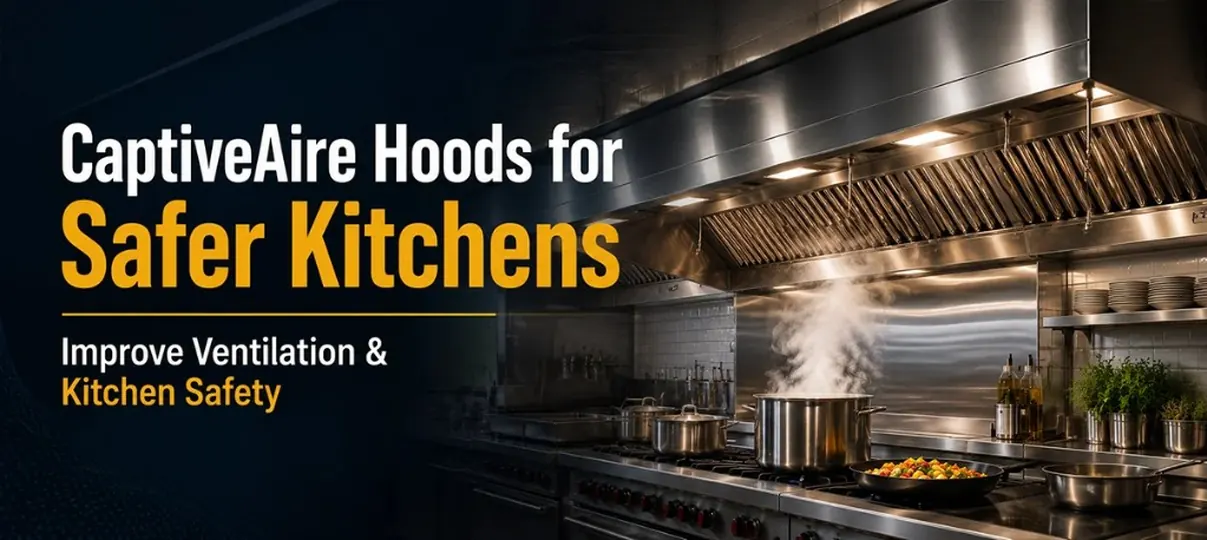
Enhance Kitchen Safety with CaptiveAire Hoods
A safer commercial kitchen starts with controlling heat, smoke, grease-laden vapors, and daily workflow risks before they become problems. CaptiveAire hoods can be an important part of that plan, but they are only one piece of a complete safety approach that also includes proper design, installation, inspection, cleaning, fire protection, and staff training. This guide explains how to think about ventilation alongside safe food handling, cooking safety rules, and practical habits that support a cleaner, more controlled kitchen.
How do CaptiveAire hoods support kitchen safety?
Pairing CaptiveAire hoods with the right commercial kitchen equipment and fire suppression planning improves day-to-day kitchen safety.
CaptiveAire hoods support kitchen safety by helping remove smoke, steam, heat, odors, and grease-laden vapors from cooking areas when they are selected, installed, and operated as part of a properly designed kitchen ventilation system. Several CaptiveAire restaurant hood models are described by the manufacturer as ETL Listed, ETL Sanitation Listed, and built in accordance with NFPA 96, but the exact listing and application depend on the model and project requirements.
That distinction matters. A commercial kitchen hood is not a stand-alone guarantee of safety. The hood must match the cooking equipment below it, the exhaust fan must be sized correctly, the ductwork must be appropriate, make-up air must be considered, and cleaning schedules must be followed. When these pieces work together, the hood becomes part of a practical risk-reduction system rather than just a metal canopy over the line.
For operators comparing kitchen hoods, the name CaptiveAire often comes up because the company offers a range of ventilation products for commercial cooking environments. Some buyers also search for “captive air” when they mean CaptiveAire, so it helps to confirm the correct brand and model details before making purchasing or specification decisions.
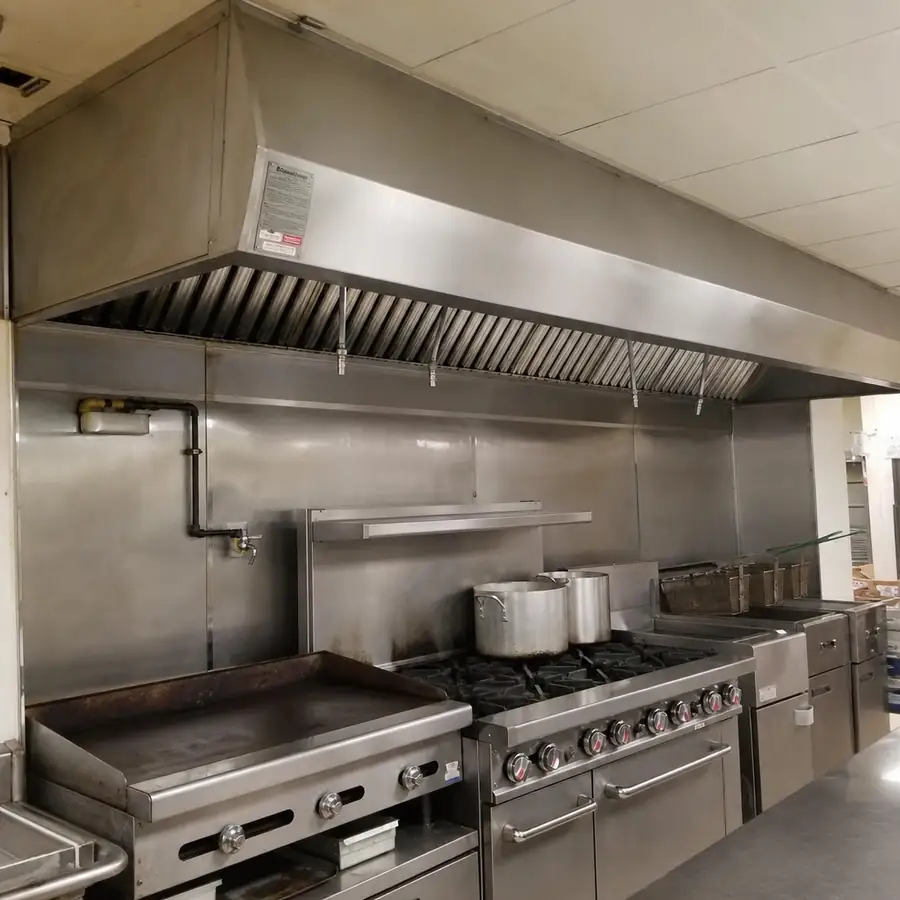
Ventilation is only one part of a safer kitchen
A restaurant hood works best when make-up air, filters, and staff habits support the full kitchen ventilation system.
Good ventilation improves the work environment, but kitchen safety depends on layers of protection. Even a high-quality restaurant exhaust hood cannot compensate for blocked filters, overloaded cooking stations, poor staff habits, or missed service appointments. A safe kitchen is built through equipment choices and daily discipline.
Think of your restaurant hood system as part of a larger operating plan. The hood captures contaminants at the cooking surface, the fan moves exhaust away from the building, filters collect grease particles, and make-up air helps replace exhausted air. If any part of that system is neglected, performance can suffer and risks can increase.
A practical safety plan should include:
- Correct system design: The hood, fan, ductwork, make-up air, and fire suppression components should be planned around the actual cooking equipment and menu.
- Professional installation: Installation should follow applicable codes, manufacturer documentation, and local authority requirements.
- Routine inspection: Filters, duct connections, fans, belts, controls, and clearances should be checked on a defined schedule.
- Cleaning and grease management: Grease accumulation can create serious hazards, especially in filters, plenums, and ducts.
- Fire protection readiness: Fire suppression systems must be inspected and maintained by qualified professionals.
- Proper operation: Staff should know when to turn the system on, how to avoid blocking airflow, and when to report unusual noise, smoke, odor, or heat.
This is where professional planning pays off. During a restaurant kitchen setup, operators often focus on ranges, fryers, refrigeration, and prep space first. Ventilation deserves the same attention because it affects comfort, cleanliness, fire risk, and the long-term usability of the cooking line. The Horeca Store can be a convenient destination for exploring commercial kitchen equipment and related restaurant essentials while you are mapping out the full kitchen environment.
Type 1 and Type II hoods serve different jobs
Match Type 1 and Type II hoods to your cooking line, including fryers, a gas range, charbroiler, or commercial griddle.
A Type 1 hood is generally used over cooking equipment that produces grease-laden vapors, while a Type II hood is commonly used for heat, steam, condensation, and odor applications that do not involve grease-producing cooking. Choosing between them is not just a product preference; it is a safety and code-related decision that should be confirmed for the specific equipment, menu, and local requirements.
A Type 1 hood may be used above fryers, griddles, charbroilers, ranges, and similar equipment where grease capture is a concern. A Type II hood may be used for dish machines, ovens, or other applications where the main issue is heat or moisture rather than grease. The wrong hood type can create maintenance problems and may fail to address the actual hazard in the space.
Before selecting a commercial exhaust hood, review:
- The cooking equipment list and the heat, steam, smoke, and grease each item produces.
- The menu and cooking volume, because heavy production can change ventilation needs.
- The hood placement, including overhang, height, wall location, and line layout.
- The building conditions, such as ceiling height, duct routing, roof access, and make-up air options.
- Local code expectations, including review by the authority having jurisdiction when required.
CaptiveAire commercial hoods are available in different configurations, so the useful question is not simply “Which hood is best?” It is “Which hood is appropriate for this cooking line, building, and operating plan?” That answer often requires coordination between the operator, designer, installer, and local inspector.
Practical kitchen safety tips for daily operation
Simple kitchen safety routines around the exhaust hood and cooking line prevent grease buildup and service disruptions.
The best safety programs are easy for staff to understand and repeat. Complicated rules that live only in a binder rarely survive the lunch rush. Practical kitchen safety tips should be visible, trainable, and connected to the real movement of people, food, heat, tools, and equipment.
Start with the cooking line. Staff should turn on the kitchen ventilation system before cooking begins, keep filters in place, avoid storing items near hood openings, and report weak capture, unusual vibration, or smoke spilling into the room. They should also avoid pushing appliances out of position if that changes how vapors rise into the hood.
Daily habits should include:
- Check hood filters before service. Filters should be seated correctly and not visibly overloaded with grease.
- Keep the cooking line organized. Clutter near hot equipment increases burn, spill, and trip risks.
- Wipe grease-prone surfaces frequently. Small deposits can become bigger cleaning and fire concerns.
- Use dry towels and proper tools. Wet towels conduct heat and increase burn risk.
- Maintain clear walking paths. A busy line needs predictable movement and unobstructed exits.
- Separate raw and ready-to-eat foods. Ventilation helps the environment, but safe food handling depends on disciplined storage, prep, and sanitation.
- Document issues promptly. A noisy fan, missing filter, or recurring smoke problem should be handled before it becomes normal.
Safe cooking practices also include using equipment as intended. Overloading fryers, leaving burners unattended, ignoring grease spills, or bypassing operating procedures can undermine even a well-designed hood system. Good equipment reduces risk best when people use it correctly.
Food safety and ventilation work together
Clean air supports food safety, but prep stations and handling habits still matter as much as ventilation equipment.
Food safety guidelines often focus on temperatures, handwashing, cross-contamination, storage, cleaning, and labeling. Those basics remain essential. Ventilation does not replace safe food handling, but it can support a cleaner and more comfortable environment where staff can follow procedures more consistently.
For example, excess heat can make a kitchen harder to work in, especially during peak periods. Smoke and steam can reduce visibility. Grease residue can settle on nearby surfaces when capture is poor or maintenance is neglected. A properly planned commercial ventilation hood helps control these conditions, while food safety procedures address the handling of ingredients and finished dishes.
A strong kitchen safety equipment plan may include hoods, fire suppression, thermometers, cut-resistant gloves, floor mats, proper lighting, first-aid supplies, refrigeration monitoring, and cleaning tools. The point is not to buy equipment randomly, but to match each item to a specific risk. When purchasing professional kitchen equipment, The Horeca Store can be used as a practical place to explore categories across cooking, storage, prep, and ventilation-related needs as part of a broader setup plan.
Cleaning and maintenance protect performance
A hood that looked perfect on installation day can become a problem if grease, dust, or damage is ignored. Filters, hood interiors, ducts, fans, and surrounding surfaces all need attention. The right cleaning frequency depends on cooking volume, equipment type, grease production, and local requirements.
Operators should build a maintenance routine around both daily staff tasks and scheduled professional service. Staff can handle visible wipe-downs, filter checks, and basic reporting. Qualified service providers may be needed for deeper exhaust system cleaning, fan service, fire suppression inspection, and code-related documentation.
A useful maintenance checklist includes:
- Confirm filters are installed correctly before cooking starts.
- Look for grease dripping, heavy buildup, or damaged filter edges.
- Listen for unusual fan noise or vibration.
- Watch for smoke roll-out during peak cooking.
- Keep records of cleaning, inspection, and service visits.
- Verify that fire suppression components are not blocked or tampered with.
- Train new staff on what normal hood operation looks and sounds like.
CaptiveAire hoods, like any professional ventilation equipment, should be maintained according to the applicable manufacturer guidance and local requirements. If a model includes specific components, accessories, or integrated options, use the correct documentation rather than relying on assumptions from a different hood.
Fire protection requires planning, not guesswork
Commercial cooking creates fire risks because heat, fuel, grease, airflow, and human activity meet in a confined workspace. A restaurant exhaust hood helps manage airborne grease and heat, but fire protection also depends on suppression systems, clearances, duct design, cleaning, inspection, and staff response. No single product removes the need for a complete safety plan.
Some CaptiveAire hood documentation notes models built in accordance with NFPA 96, which is associated with ventilation control and fire protection for commercial cooking operations. That does not mean every installation is automatically compliant; the final system still depends on the selected model, full design, installation conditions, maintenance, and approval by the appropriate local authority.
Staff should know how to respond if a fire occurs. That includes shutting down equipment when safe to do so, using the correct extinguisher only when trained and appropriate, keeping exits clear, and never improvising around an active suppression system. Fire drills and written procedures may feel basic, but they help reduce hesitation during an emergency.
Buying ventilation equipment with the full kitchen in mind
Shop ventilation equipment alongside restaurant equipment and refrigeration so the whole commercial kitchen works as one system.
A restaurant hood system should be selected as part of the full kitchen, not as an isolated purchase. The cooking battery, ceiling height, building structure, roof conditions, make-up air strategy, electrical needs, and service access all influence the final plan. A hood that fits the budget but not the building can create expensive complications later.
When comparing CaptiveAire hoods or any commercial kitchen hood, ask practical questions before ordering:
- What equipment will sit under the hood now and in the near future?
- Is the application grease-producing, heat-producing, steam-producing, or a combination?
- Who is responsible for design calculations, permitting, installation, and inspection?
- How will make-up air be handled so the kitchen does not become uncomfortable or negatively pressurized?
- Where will filters be cleaned and stored?
- Can staff safely access the hood area for routine tasks?
- What documentation will be kept for inspections, cleaning, and service?
For commercial ventilation planning, The Horeca Store can be a convenient resource for exploring commercial kitchen equipment and related restaurant essentials while you coordinate technical decisions with qualified professionals. It should not replace project-specific design advice, but it can help operators understand the broader equipment categories involved in a professional kitchen.
A safer kitchen is built through systems and habits
Explore commercial kitchen equipment at The Horeca Store to build a safer cooking line with the right hood and support gear.
The goal is not simply to Enhance Kitchen Safety with CaptiveAire Hoods as a one-time purchase. The better goal is to build a kitchen where ventilation, fire protection, cleaning, safe cooking practices, and food safety guidelines all reinforce one another. That approach gives staff a clearer, safer place to work and gives operators a stronger foundation for consistent service.
CaptiveAire hoods can play an important role in that environment when they are chosen for the right application and supported by proper design, installation, inspection, cleaning, and operation. Pair the right kitchen safety equipment with clear training and everyday accountability, and your ventilation system becomes part of a safer, more professional kitchen-not just hardware above the cooking line.