
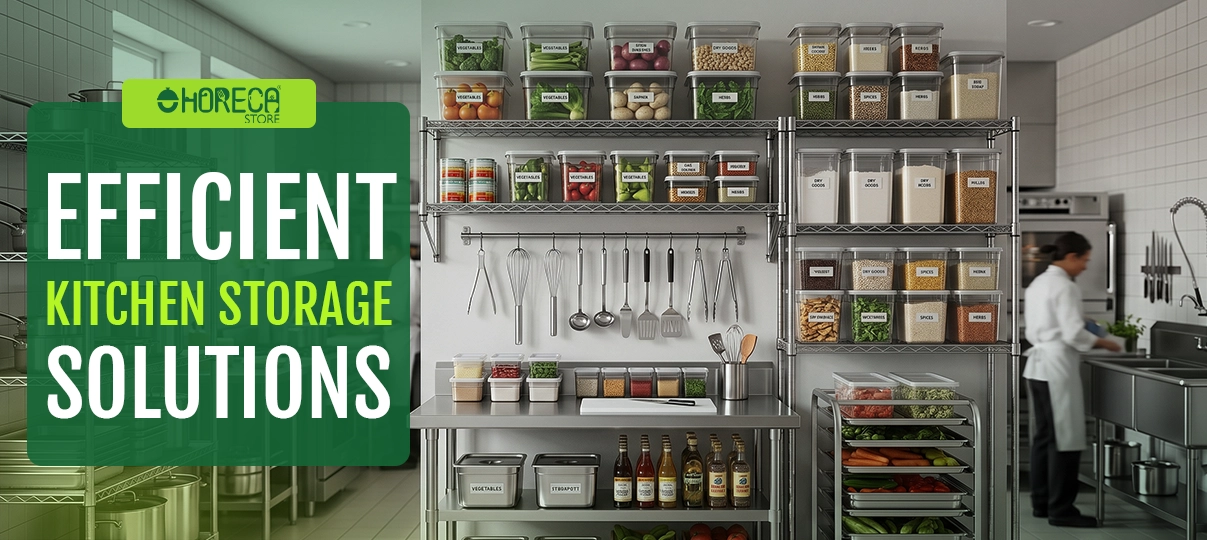
Running a successful culinary operation extends far beyond crafting the perfect menu. Behind every flawless dinner service, massive catering event, and piping-hot delivery order lies an invisible backbone of organization and logistics. If your ingredients aren’t properly stored, and your prepared dishes cannot safely make it to the customer, even the highest-quality food will fall flat.
Mastering Shop Storage & Transport – For Kitchen, Catering & Delivery is the key to maintaining food quality, ensuring safety compliance, and protecting your bottom line. Whether you are running a bustling ghost kitchen, a high-end restaurant, or a mobile catering company, investing in the right logistical framework can drastically reduce waste and elevate your staff’s efficiency.
In this comprehensive guide, we will explore the essential strategies and equipment needed to optimize your culinary space, from bulk ingredient bins to high-tech delivery carriers.
Laying the Groundwork: The Professional Kitchen Pantry
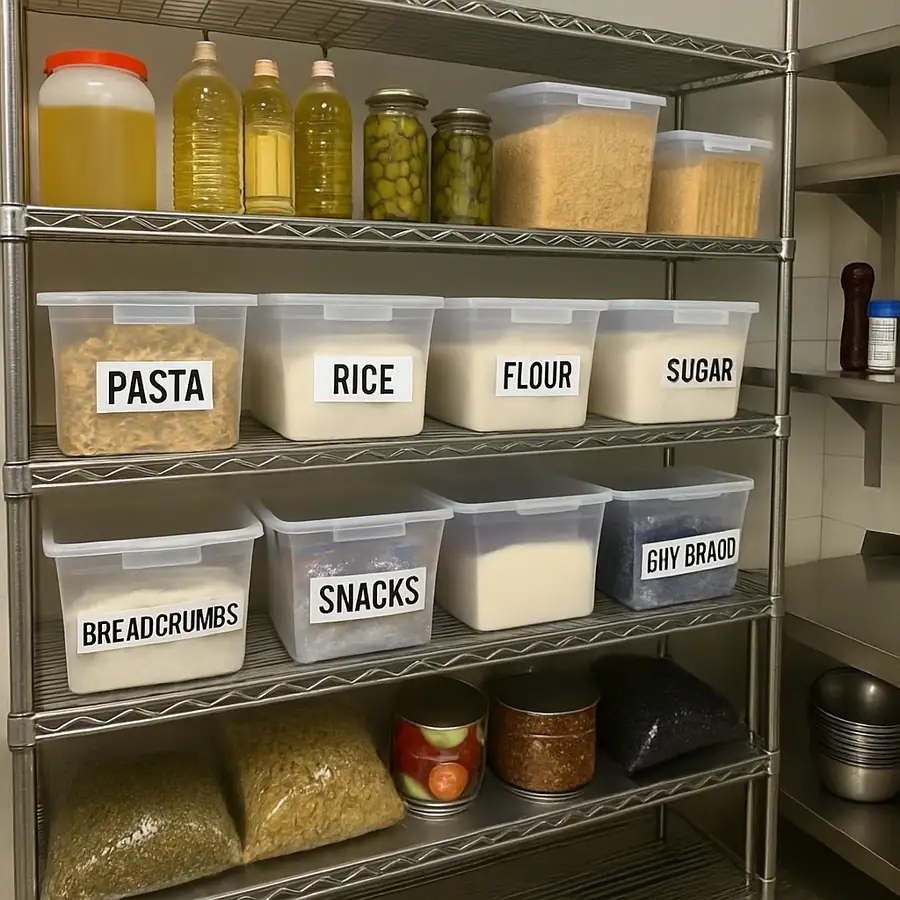
The heart of any commercial kitchen is its dry storage. A chaotic pantry leads to wasted time, expired ingredients, and compromised safety. Knowing how to organize a professional kitchen pantry is the first step toward a highly functional back-of-house environment.
Bulk Ingredient Storage
Dry goods require specialized attention to prevent moisture buildup and pest infestations. For large-scale operations, standard retail packaging simply won't cut it.
- Mobile Solutions: Utilizing mobile ingredient bins for commercial kitchens allows staff to roll hundreds of pounds of flour or sugar directly to the prep station, minimizing heavy lifting and speeding up production.
- Dedicated Staples Containers: Every kitchen needs a robust flour storage container system. Depending on your volume, having dedicated sugar and flour containers with built-in scoops and sliding lids ensures quick access while keeping airborne contaminants out. Similarly, utilizing specialized containers for storing rice, grains, and legumes keeps these staples dry and visible.
- Medium-to-Small Goods: For smaller volumes, upgrading to dedicated flour food storage containers that fit neatly onto standard prep tables is vital. You should also consider airtight cereal containers for breakfast buffets, and tightly sealed snack containers for garnishes, nuts, and croutons.
When evaluating your back-of-house storage, food storage protocols must prioritize visibility. Clear, impact-resistant polycarbonate bins allow staff to monitor inventory levels at a glance without breaking the airtight seal.
Shelving Systems: Building the Backbone of Kitchen Storage
You cannot organize your ingredients without a solid foundation. The type of shelving you choose dictates how safely and efficiently your kitchen operates.
Selecting the Right Shelving Material
One of the most frequent debates among restaurant operators revolves around the durability of stainless steel vs plastic shelving.
- Stainless Steel: Known for its incredible load-bearing capacity and resistance to high temperatures, stainless steel is ideal for hot environments and heavy equipment. However, it can be prone to rust in highly humid environments like walk-in coolers if not properly coated.
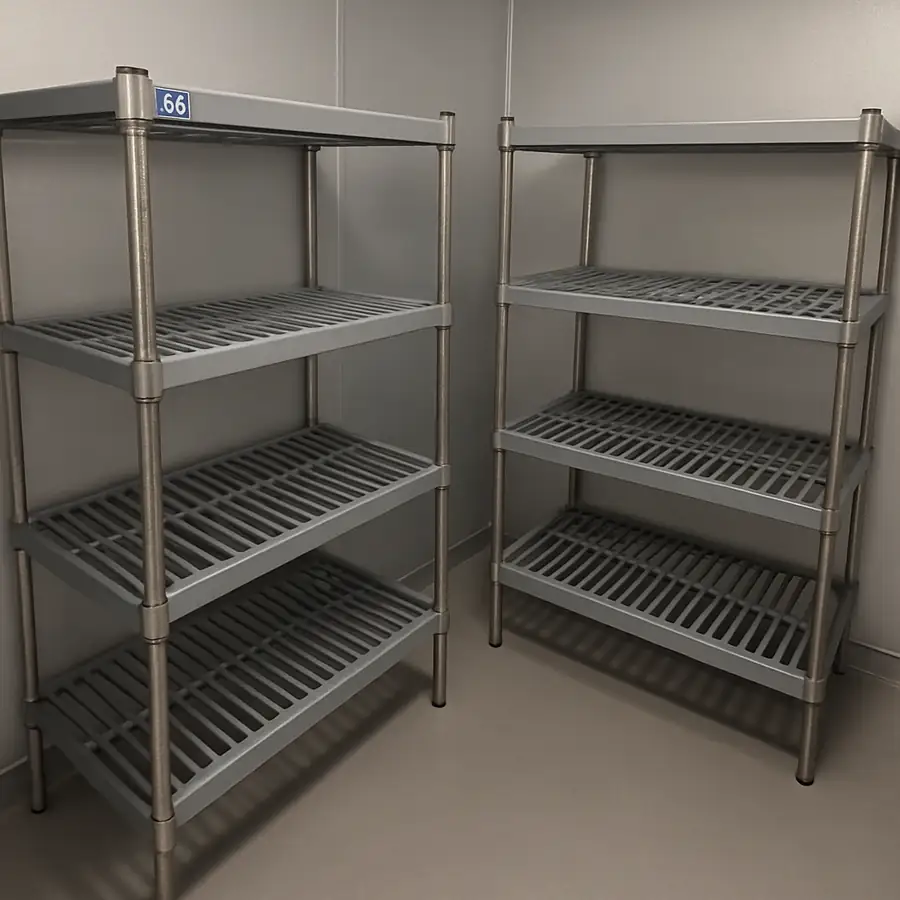
- High-Density Plastic/Polymer: Modern polymer shelving is completely rust-proof, making it the superior choice for walk-in refrigerators and freezers. Many feature removable, dishwasher-safe shelf plates, allowing for effortless sanitization.
Regardless of the material, you must strictly use NSF certified shelving units for restaurants. The National Sanitation Foundation certification guarantees that the shelving is designed for commercial food environments, featuring smooth surfaces that are easy to clean and resist bacterial growth.
Specialized Storage Racks
- Canned Goods: First-In, First-Out (FIFO) is a golden rule in food service. Utilizing gravity-fed can food storage racks ensures that older stock is automatically cycled to the front, eliminating the risk of expired inventory.
- Supplies and Non-Foods: Not all storage is for ingredients. For front-of-house supplies, uniforms, or catering tools, implementing systems similar to container store closets or heavy-duty container store drawers keeps non-food items impeccably organized and away from potential grease or food splatter.
Mastering Container Chaos: Choosing the Right Food Storage
A common question among new operators looking to upgrade their kitchens is: "Where can I buy food storage containers that will actually survive a commercial dish pit?" Or simply, "Where can I buy food containers that won't crack after a week?"
The answer is to skip consumer-grade big-box stores and source directly from restaurant supply distributors. You must invest in heavy-duty, commercial food storage containers for catering and restaurant use.
Container Shapes and Sizes
When choosing a food container, container shape dictates how well it performs in specific environments.
- Round vs. Square: Round plastic containers are exceptionally good for liquid storage and cooling. Their shape allows cold air to circulate evenly around the container in a refrigerator, dropping the temperature of hot soups and sauces much faster than square containers. However, square containers are generally better for maximizing shelf space.
- Stackability: Vertical space is your best friend. Utilizing stacking storage bins, stackable containers, and nesting stackable bins prevents avalanches in your walk-in cooler.
Material and Grade
Always verify that you are purchasing food grade storage containers. Using generic hardware buckets or unverified industrial storage containers can lead to chemical leaching.
- Freezer Storage: For long-term preservation, you need specialized airtight freezer containers. These are formulated to withstand sub-zero temperatures without becoming brittle.
- Organizing the Clutter: It is easy to end up with an unorganized mountain of mismatched lids and random containers of food. Standardizing your kitchen with a unified brand or color-coded system ensures lids always match the bases.
Commercial Transport: Taking Your Food on the Road
For catering companies and delivery-focused restaurants, the kitchen is only half the battle. Once the food is cooked, maintaining its integrity during transit is paramount. So, which food container is suitable for transporting food? The answer depends on what you are moving, how far it’s going, and how long it needs to stay there.
Mastering Temperature Control
When transporting hot or cold items, standard plastic tubs are inadequate. You need professional-grade insulation.
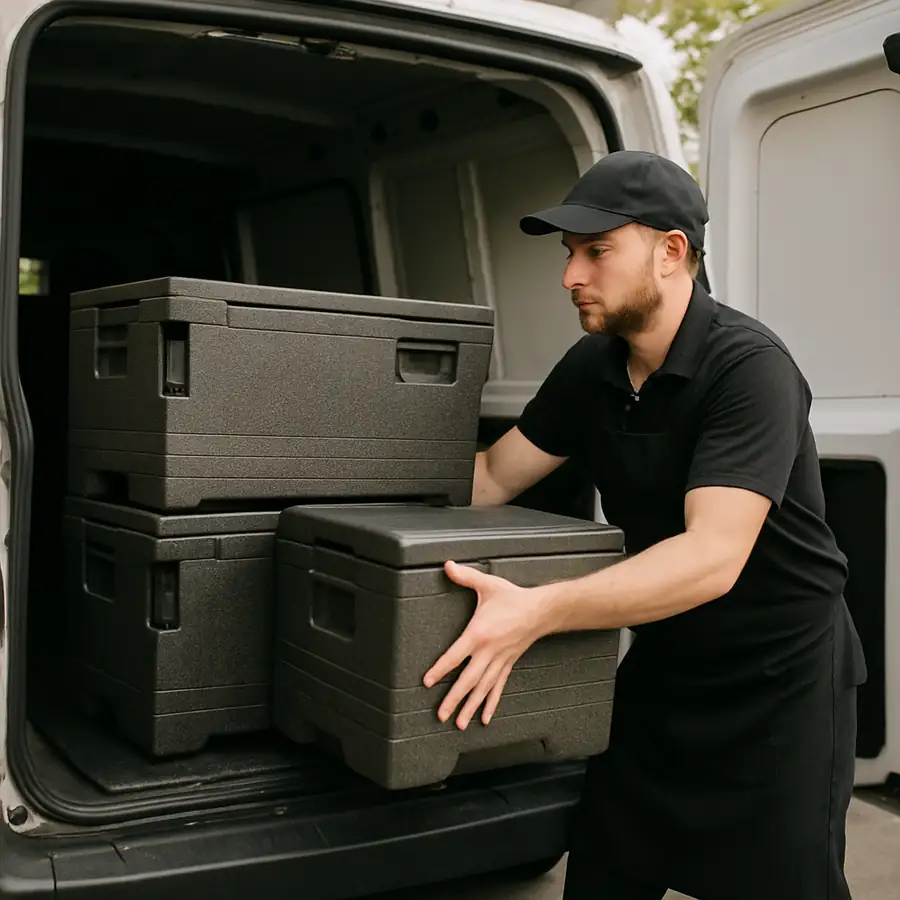
- Insulated Carriers: An insulated food carrier (often called a "hot box" or Cambro) is non-negotiable for caterers. The best insulated food carriers for delivery feature thick, polyurethane foam insulation that can hold hot or cold temperatures safely for 4 to 6 hours without electricity.
- Temperature Maintenance: What are the most effective ways to maintain food temperature during transport? Pre-heating or pre-chilling your carriers before loading them makes a massive difference. Additionally, filling empty space inside the carrier with hot water pans or specialized chilling blocks minimizes the air volume, helping food retain its temperature longer.
Logistics of Delivery
Delivery operations face unique challenges, especially when handling liquids or maintaining cold items.
- Liquid Transport: Spilling a gallon of marinara sauce in a delivery vehicle is a disaster. Using heavily sealed cambros and leak-proof delivery bags for liquid food ensures your vehicle stays clean and the customer receives their full order.
- Cold Delivery Management: Cold chain logistics for restaurant delivery is a complex but necessary process. This involves maintaining a seamless chain of temperature-controlled environments from the moment a cold ingredient leaves the supplier, through prep, until the final meal reaches the customer. Using insulated cooler bags with frozen gel packs is critical for items like sushi, salads, and raw meats.
Equipment & Ergonomics for Catering Logistics
Moving hundreds of pounds of food, plates, and chafing dishes from a kitchen to a truck, and then to a venue, takes a physical toll on your staff.
Prioritizing Ergonomics
Investing in ergonomic kitchen transport equipment for staff reduces workplace injuries, decreases fatigue, and speeds up the loading process. Look for carriers with molded-in handles and carts that sit at a comfortable waist height to prevent unnecessary bending and lifting.
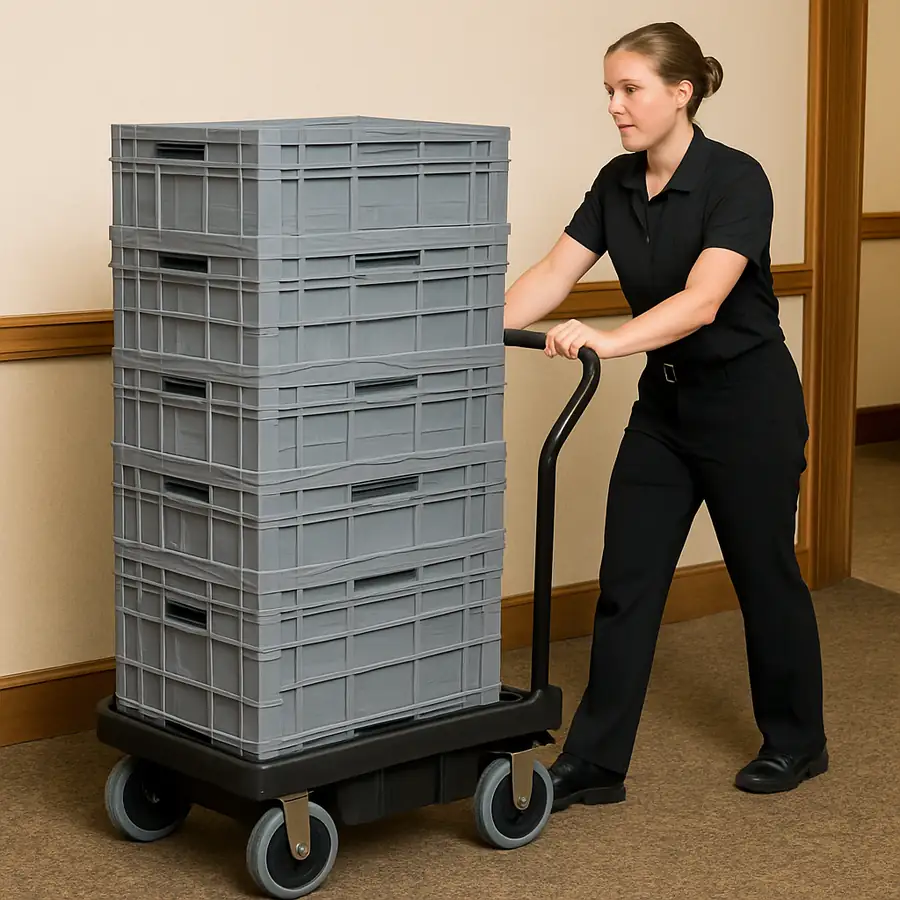
- Utility Carts: Heavy duty utility carts for hospitality are the workhorses of the catering world. Choose carts with non-marking, multi-directional swivel casters. The ability to smoothly pivot a cart loaded with 300 pounds of food around a tight venue corner is a game-changer.
Smart Packing and Storage Solutions
How you pack your vehicles matters just as much as how you pack your food.
- Crates vs. Boxes: When comparing stackable catering crates vs cardboard boxes, crates win effortlessly. Cardboard boxes absorb moisture, harbor bacteria, and inevitably collapse when stacked high. Heavy-duty, high-density polyethylene catering crates are waterproof, easy to sanitize, and feature interlocking bases for secure, towering stacks in the back of a van.
- Maximizing Small Footprints: For operators working out of ghost kitchens or compact prep spaces, space saving solutions for small catering businesses are vital. Consider collapsible utility carts, nesting storage crates, and foldable insulated delivery bags that can be tucked away when not in active use.
Safety, Efficiency, and Compliance
Underpinning all of these logistical choices is the absolute necessity of food safety. No amount of efficiency is worth a foodborne illness outbreak.
Meeting Health Department Standards
Following HACCP compliant storage guidelines for food (Hazard Analysis Critical Control Point) is not just best practice; it is mandated by law in most jurisdictions.
- Off the Floor: All food items, including bulk bins and delivery carriers, must be stored at least 6 inches off the floor to allow for easy cleaning and to deter pests.
- Cross-Contamination Prevention: Raw meats must always be stored in leak-proof containers on the bottom shelves of your walk-in cooler, beneath prepared foods and fresh produce.
- Clear Labeling: Every container, whether sitting in the pantry or actively being transported to a catering venue, must be clearly labeled with its contents, the date of preparation, and the use-by date. Use dissolvable labels that won't leave a sticky residue on your premium containers.
By implementing strict FIFO protocols and ensuring all raw and cooked items are housed in distinctly separated, appropriately colored containers, you naturally optimize the workflow of your staff. When everyone knows exactly where an item is, what container it belongs in, and how to safely move it, the kitchen operates like a well-oiled machine.
Optimize Kitchen Storage with Solutions from The Horeca Store
Efficient storage plays a vital role in maintaining an organized, safe, and productive commercial kitchen. The Horeca Store offers a wide range of shop storage solutions designed for restaurants, hotels, cafés, bakeries, catering businesses, and other foodservice operations. From stainless steel shelving and storage racks to ingredient bins, utility carts, cabinets, and organization accessories, our products help maximize available space while keeping kitchen essentials easily accessible.
At The Horeca Store, we understand the importance of durable and practical storage solutions in busy kitchen environments. Our commercial-grade storage equipment is designed for strength, hygiene, and long-term performance, helping businesses improve workflow and maintain a clutter-free workspace. With quality products, competitive pricing, and expert support, The Horeca Store is your trusted partner for creating efficient kitchen storage systems that enhance productivity and organization.
Conclusion
Elevating your operation's Shop Storage & Transport – For Kitchen, Catering & Delivery is one of the most profitable investments you can make. By replacing flimsy consumer goods with rugged, NSF-certified shelving, airtight polycarbonate bins, and premium insulated carriers, you dramatically extend the shelf life of your ingredients. Furthermore, empowering your staff with ergonomic carts and stackable transport solutions ensures that every dish you meticulously prepare in the kitchen arrives at its final destination looking—and tasting—absolutely perfect. Optimize your storage today, and watch your culinary logistics transform from chaotic to seamless.