
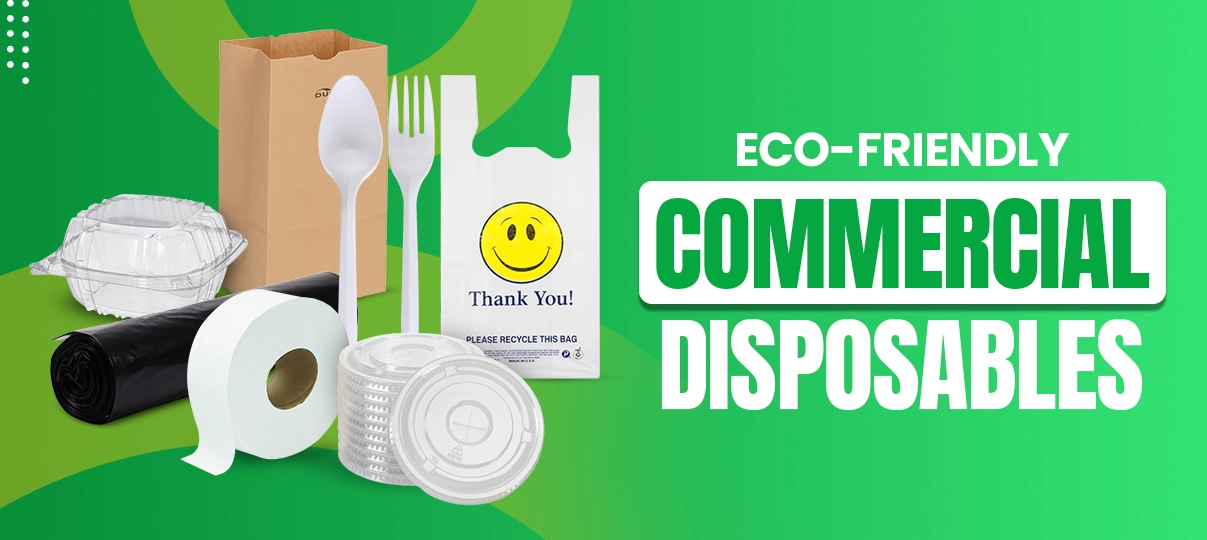
Let’s be honest for a second. Most restaurants didn’t wake up one morning and decide to “go eco-friendly.” They were pushed there. By costs. By customers. By rules changing faster than expected. That’s the reality of 2026.
Eco-friendly disposables aren’t about perfection. They’re about doing better than before without breaking service flow.
Why Disposables Are Getting a Second Look
For years, disposables were just… there.
- You ordered them.
- You used them.
- You reordered when stock ran low.
- Now people are actually paying attention.
Not because disposables suddenly became exciting, but because waste became visible. Overflowing bins. Half-used items. Extra packaging no one asked for. That’s why disposables are no longer treated as background supplies.
Eco-Friendly Disposable Cutlery Isn’t About Optics
Here’s something most operators won’t admit. Cutlery is one of the most wasted items in foodservice. It goes into bags untouched. It ends up in trash cans still wrapped.
That’s why eco friendly disposable cutlery matters, but only when it’s paired with better habits. Some kitchens now include it only when asked. Others match it to menu items instead of tossing it into every order. Used that way, eco friendly disposable cutlery actually reduces waste instead of just shifting materials.
Disposable Bags: Small Detail, Big Difference
Customers remember when bags fail.
- Handles tear.
- Food tips over.
- Sauce leaks.
That’s when disposable bags become part of the experience, in a bad way.
In 2026, more restaurants are right-sizing disposable bags instead of defaulting to one option. It sounds minor. It isn’t.
- Fewer double bags.
- Less wasted material.
- Cleaner handoff.
That’s what eco-friendly looks like in real service.
Trash Bags Don’t Get Credit Until They Fail
No one praises good Trash Bags. They only notice when something leaks.
Behind the scenes, reliable Trash Bags reduce:
- Mess during rush hours
- Extra cleaning
- Unnecessary liner changes
That matters more than it sounds. Less mess usually means less waste overall.
Paper Towels Are Easy to Overuse
Every kitchen relies on Paper Towels. That’s not changing. What is changing is awareness. When rolls are placed everywhere, usage spikes. When they’re placed thoughtfully, nothing slows down but waste drops. Managing Paper Towels isn’t about restriction. It’s about intention.
Paper Napkins and Guest Perception
Guests rarely talk about napkins. They notice when tables feel messy. Or when napkins run out. Or when there are way too many. That’s why Paper Napkins still deserve attention. Controlled distribution keeps tables clean without sending stacks straight to the bin. It’s a small fix with a visible payoff.
Regulations Are No Longer a “Later” Problem
This isn’t just about preference anymore. States like California and New York have already restricted certain foam food containers. More regions are following. These rules affect everyday disposables, not just specialty packaging. Waiting usually costs more than adjusting early.
What Eco-Friendly Really Looks Like in 2026
It’s not dramatic. It’s fewer extras per order.
- Better sizing.
- Cleaner waste handling.
- More intentional use of disposables.
That’s it. No big speeches. No perfect system. Just better daily decisions that add up fast.
Final Thought
Eco-friendly disposable options aren’t about doing everything at once. They’re about doing one thing better than yesterday. In commercial foodservice, that’s usually enough to make a real difference.