
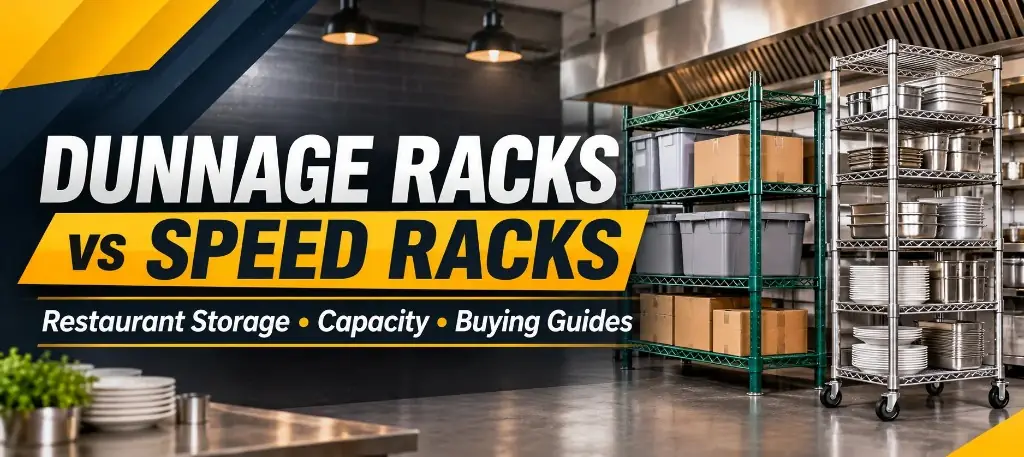
Dunnage racks keep bulky restaurant inventory off the floor, while speed racks organize pans and trays for storage and movement around the kitchen. Choosing between them starts with what you store, how much it weighs, and where staff need to move it. This restaurant storage buying guide explains how to compare materials, capacity, dimensions, and everyday usability before ordering.
What is the difference between dunnage racks and speed racks?
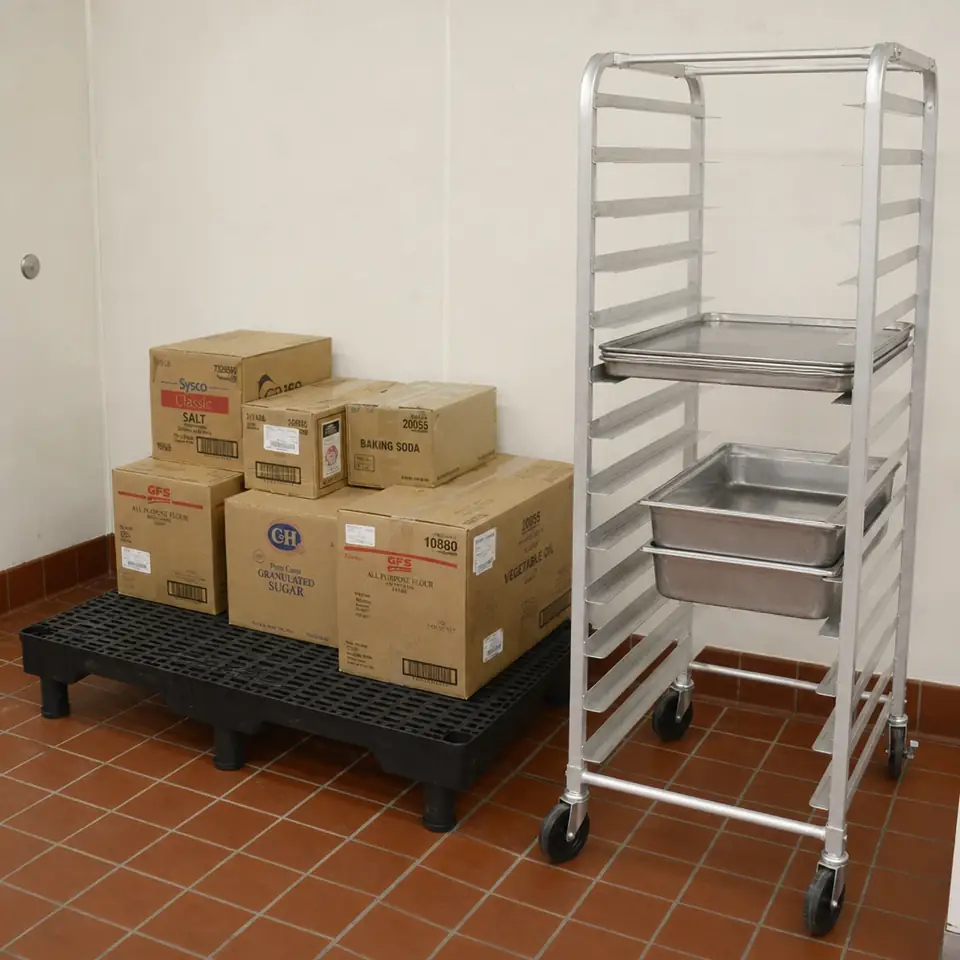
A dunnage rack is a low platform designed to support bulky supplies above the floor. A speed rack is a multi-level rack that holds compatible pans, trays, or food boxes on individual ledges, often with casters for transport. Choose dunnage for bulk storage and a speed rack for organized pan handling; neither is a direct substitute for the other.
Think about the task rather than the product name. For a storeroom holding ingredient sacks and cases, start with dunnage. For a prep team moving loaded trays between workstations, start with a pan rack. Manufacturer categories vary, so check the actual container compatibility instead of relying on the words "speed rack" alone.
| Buying consideration | Dunnage rack | Speed rack |
|---|---|---|
| Main purpose | Support bulky inventory above the floor | Separate and organize compatible pans or containers |
| Storage arrangement | One low platform | Multiple ledge levels |
| Critical fit check | Package footprint and load distribution | Pan dimensions, ledge type, and vertical spacing |
| Mobility | Stationary and mobile models exist | Check caster configuration on the selected model |
| First specification to verify | Rated load for the exact size | Compatible containers and usable pan capacity |
These distinctions reflect the different platform, pan-rack, and transport configurations offered by equipment manufacturers.
Start with an inventory and a floor plan
Before comparing dunnage racks for sale, write down exactly what the rack must hold. Include the largest package, heaviest delivery-day load, and containers that staff handle most often. For speed racks, record the pans already in use rather than buying first and hoping they fit.
Build a short purchasing worksheet:
- Contents: Ingredient sacks, beverage cases, sheet pans, food boxes, or another defined load.
- Peak demand: Maximum stored weight or the number of loaded pans needed during the busiest production period.
- Location: Dry storage, a cooler, a freezer, or a prep area.
- Available space: Width, depth, overhead clearance, doorway openings, and turning space.
- Handling pattern: Stationary storage, occasional repositioning, or repeated movement during service.
- Cleaning access: How staff will reach the rack surface and surrounding floor.
Measure the route as carefully as the parking space. Include door hardware, corners, and the area needed to load or unload without blocking another workstation. Ask the supplier for overall assembled dimensions, not just the size of the storage surface.
When comparing options through The Horeca Store, use this worksheet to keep the conversation specific. Request confirmation of the exact model, dimensions, and intended application before deciding on price.
Which dunnage rack material suits your kitchen?
The right material is the one approved for your storage environment, cleaning routine, and load - not simply the one that looks strongest. Commercial dunnage options include polymer and metal constructions, with model-specific finishes and capacities. Compare the complete specification because material alone does not establish suitability.
Plastic and polymer dunnage racks
Plastic dunnage racks deserve consideration where corrosion resistance and cleaning access matter. Metro identifies polymer options for coolers and freezers, while Cambro offers dunnage models intended for cold and dry storage. Those examples support considering plastic, but they do not make every plastic rack suitable for every location.
Check the operating temperature range and approved cleaning products for the exact model. Look closely at the top surface, support layout, and spaces where spills could collect. If a listing describes dunnage racks as plastic, treat that as a starting point - not a substitute for the technical sheet.
Metal dunnage racks
Metal racks are another option for bulky inventory, and construction details deserve close attention. Metro, for example, offers wire dunnage platforms in several finishes and a heavy-duty design with a removable top mat for cleaning. Compare finish suitability, joints, and access beneath the platform rather than assuming all metal racks perform alike.
Ask what cleaning methods the manufacturer permits and whether replacement components are available. For a damp location, get written confirmation that the specified finish is appropriate. Avoid accepting a general material description as evidence of compatibility with your kitchen's conditions.
Solid and open tops
Top design affects how inventory rests on the rack and how you approach cleanup. Cambro offers both solid and slotted dunnage models, describing its solid tops as a stable surface that protects against spills. Metro also offers open-wire platforms designed to allow air circulation.
Compare the openings with the smallest package you plan to store. Ask whether sacks, cartons, and container feet will receive adequate support. Choose the surface around your actual packaging rather than appearance alone.
Read load ratings before choosing heavy-duty equipment
Heavy duty dunnage racks should be evaluated by their published load rating and its conditions. A distributed static load rating describes a particular loading arrangement; it should not be treated as permission to concentrate the entire load in one spot. Metro explicitly specifies distributed static capacities for its Super Erecta heavy-duty dunnage racks.
Size also matters. Within that Metro range, the published capacity differs between shorter and longer units, showing why a larger footprint does not automatically mean a higher rating. Compare the exact model and dimensions rather than applying one product's capacity to an entire category.
Before ordering, ask the supplier to clarify:
- Whether the rating applies to the whole rack, one shelf, or one pan position.
- Whether the load must be evenly distributed.
- Whether stationary and mobile versions have different limits.
- Whether your proposed sacks, cases, or containers create concentrated loading.
- Whether accessories or configuration changes affect the approved capacity.
Calculate your expected maximum using actual package weights. If future inventory is uncertain, discuss that uncertainty with the supplier instead of selecting a rack exactly at an estimated limit. Keep the confirmed rating with your equipment records for staff reference.
How do you choose the right speed rack?
Choose a speed rack by matching its ledges to your exact pans or containers, then checking vertical clearance, overall dimensions, construction, and casters. Capacity must work for your loaded products, not just empty trays. Manufacturers offer distinct racks for sheet pans, steam-table pans, trays, and food boxes, so compatibility comes first.
Match pans and usable spacing
Do not assume every restaurant pan fits every speed rack. Lakeside lists separate sheet-pan and steam-table-pan designs, and its sheet-pan specifications identify compatible dimensions and ledge styles. Check pan length, width, rim profile, and loading direction against the selected rack.
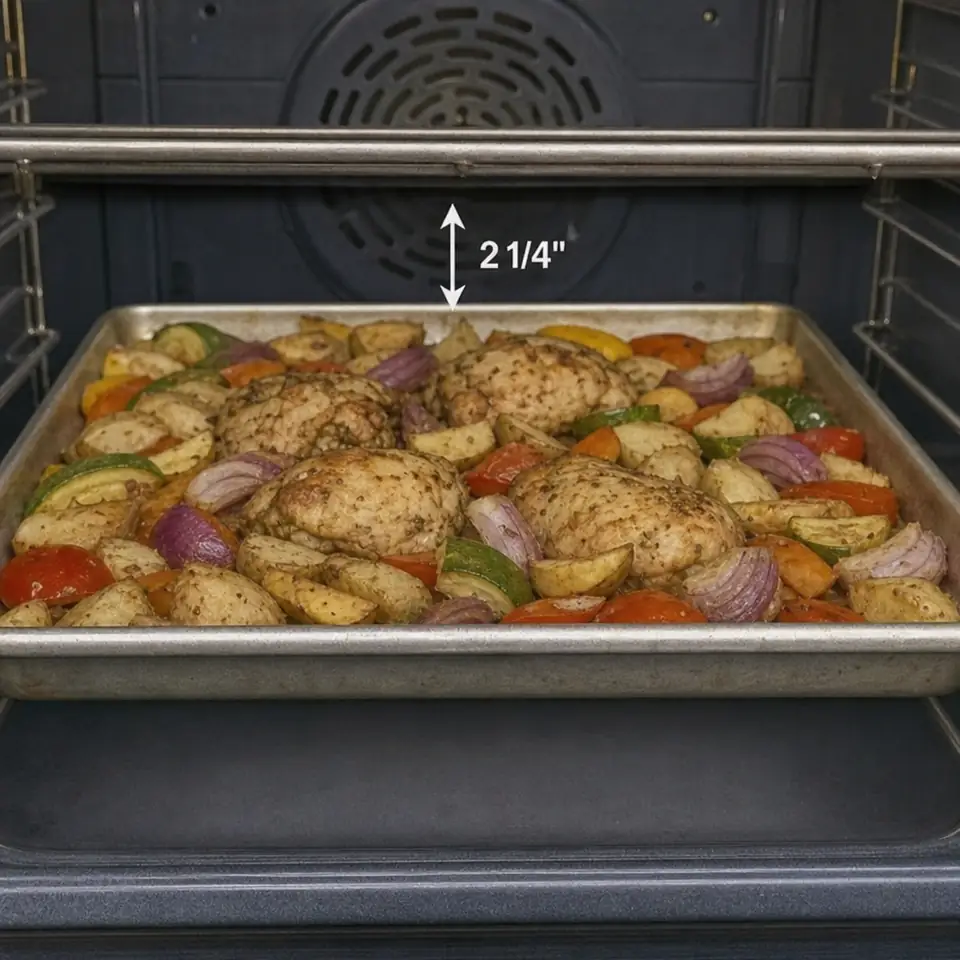
Next, compare ledge spacing with the height of your loaded pans. Lakeside offers models with different spacing, including three-inch and five-inch configurations. For purchasing purposes, count only positions that accommodate your product and handling clearance; a nominal pan count may not represent your usable capacity.
For example, assess a tray of tall baked goods differently from a tray of flat portions. Measure the loaded tray, including any lid, before choosing close spacing. If you must skip levels, reflect that in your capacity calculation.
Compare construction and assembly
Speed racks may use stainless steel or aluminum, and assembly requirements vary. Lakeside offers fully welded stainless models as well as an aluminum model with welded ledge panels that bolt into cross members. Read the construction description carefully rather than treating "welded" and "ships assembled" as interchangeable claims.
Include assembly labor in your comparison. Ask who will inspect fasteners, what tools are required, and whether the rack arrives ready for use. Request maintenance instructions before purchase, especially when the rack will move repeatedly throughout the day.
Evaluate casters and movement
Compare caster configuration, mounting style, wheel material, and brake availability. These details vary: Lakeside lists recessed swivel casters on one sheet-pan model and an optional brake arrangement on another. Metro also offers mobile dunnage racks, so wheels are not exclusive to speed racks.
Describe your floor surfaces and thresholds when requesting advice. Ask how the loaded rack should be moved and parked, and verify whether brakes are included or optional. If possible, assess a comparable rack with representative pans before committing to multiple units.
Consider custom dunnage racks only after checking standard sizes
Custom dunnage racks are worth investigating when a defined storage requirement cannot be met by standard equipment. Before requesting fabrication, compare several standard footprints and ask about approved connectors or modular arrangements. Metro, for instance, offers accessories for joining compatible dunnage racks into a storage system.
Prepare a dimensioned sketch showing obstructions, access points, package sizes, and expected loading. Explain what a standard rack fails to solve: an awkward recess, a specific container footprint, or another measurable constraint. That gives a supplier a practical design problem rather than a vague request for something "stronger."
Request written confirmation of capacity, cleaning access, lead time, warranty terms, and replacement-part availability. Do not assume that modifying a standard unit preserves its original rating. Ask the manufacturer to approve the proposed configuration before placing the order.
Compare total cost and confirm the details
Use a like-for-like comparison rather than sorting listings by purchase price alone. Request a delivered quote that identifies the model, material, dimensions, accessories, assembly requirements, and any receiving services you need. Keep optional features separate so you can see what each proposal actually includes.
Before checkout, use this final checklist:
- Fit: Confirm assembled dimensions, loading clearance, and the complete delivery route.
- Capacity: Obtain the rating and loading conditions for the exact configuration.
- Compatibility: Verify package support or pan fit using measurements, not category names.
- Environment: Confirm suitability for the intended location and cleaning process.
- Mobility: Identify included casters, brakes, and any movement restrictions.
- Documentation: Save specifications, assembly instructions, maintenance guidance, and warranty terms.
- Receiving: Clarify delivery arrangements, inspection procedures, and how to report damage.
If two racks still look equivalent, ask which unresolved detail could change your decision. It may be usable pan spacing, replacement casters, or access for cleaning - not another advertised feature. Resolve that point before paying.
Buy for the work your kitchen actually does
Start with the load, measure the space, and confirm the specifications that matter during a real shift. Use dunnage to solve bulk-storage needs and a compatible speed rack to organize pan handling. Treat material, capacity, and mobility as separate checks rather than shortcuts for one another.
Before ordering from The Horeca Store, have your measurements, peak load, and container details ready. Request confirmation of the selected model's fit and intended use. A clear purchasing brief is the best foundation for a storage decision you will not need to revisit immediately.