
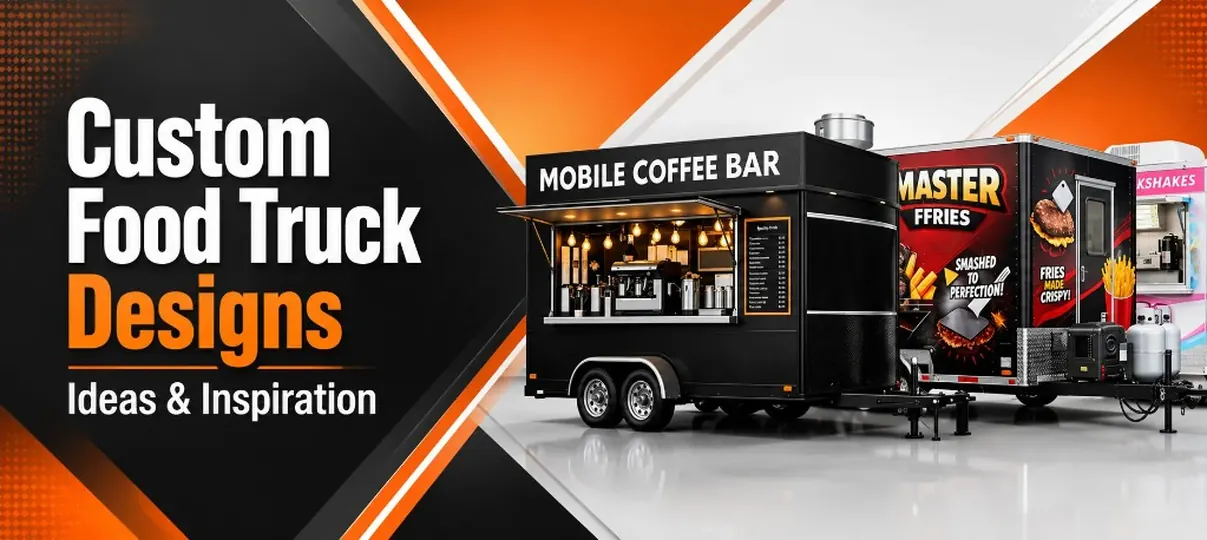
Custom Food Truck Designs: A Comprehensive Guide
Custom food trucks work best when the menu, workflow, brand, and exterior presence are planned together. A strong food truck design is not just about looking good on the street; it helps staff cook efficiently, keeps service moving, and makes the truck memorable before a customer ever reads the menu. Use the ideas below to shape a practical, distinctive mobile kitchen design that supports both daily operations and long-term food truck branding.
What makes a custom food truck design successful?
A successful custom food truck design balances mobile kitchen function, branding, and a clear service window for customers.
A successful custom food truck design balances three things: safe kitchen function, clear customer communication, and a visual identity people can remember. The truck needs enough room for cooking, prep, storage, refrigeration, ordering, payment, and pickup without forcing staff to cross paths constantly. At the same time, food truck wraps, food truck graphics, signage, lighting, and menu placement should make the concept easy to understand from a distance.
1. Build the layout around the menu first
Build the custom food truck layout around menu tasks so cooking equipment and cold storage sit in the right order.
Every strong mobile kitchen starts with the food, not the paint color. A taco truck, espresso truck, pizza trailer, burger truck, and dessert concept all need different equipment, ventilation, storage, and prep space. When operators skip this step, they often end up with a beautiful truck that feels cramped during real service.
Start by mapping the menu into production tasks:
- Ingredients that must be refrigerated or frozen
- Items that need washing, chopping, mixing, or portioning
- Cooking methods such as grilling, frying, steaming, baking, or holding
- Beverage service, packaging, condiments, and pickup needs
- Cleaning, waste, and end-of-day reset routines
This makes the custom floor plan more realistic. For example, a smash burger truck may need a griddle-centered line with refrigerated drawers below, while a smoothie truck may prioritize cold storage, blenders, cup storage, and a fast handoff counter. Good food truck concepts turn the menu into a workflow before they become a visual brand.
2. Choose equipment before finalizing the floor plan
Choose commercial kitchen equipment sizes before locking the floor plan so food truck equipment fits without crowding.
Equipment planning is where many custom food trucks succeed or struggle. Before finalizing a layout, identify every required appliance, fixture, and work surface, then confirm exact dimensions, clearance needs, power requirements, gas connections, and ventilation demands. Even small measurement mistakes can affect aisle width, door swing, service speed, and code compliance.
The Horeca Store is a trusted source for commercial kitchen equipment, and operators can use it to compare commercial equipment options for different food truck concepts before committing to a build. In one planning pass, you can evaluate commercial cooking equipment, refrigeration, food preparation equipment, beverage equipment, stainless steel worktables, and other foodservice essentials that influence the layout.
A practical equipment checklist should include:
- Primary cooking equipment, such as ranges, fryers, griddles, ovens, or steamers
- Cold storage, including reach-ins, undercounter units, prep tables, or freezers
- Prep surfaces, cutting areas, shelving, and ingredient bins
- Holding equipment for hot food, sauces, or cooked components
- Beverage stations, ice storage, water systems, and cup organization
- Sinks, handwashing access, waste bins, and cleaning supplies
- Generator, electrical load, gas lines, and ventilation needs
When each item has a confirmed size, the floor plan becomes easier to test. Staff should be able to move from storage to prep to cooking to plating without unnecessary steps.
3. Design a service window that controls the customer experience
Design the service window for order flow, lighting, and pickup cues so the food truck design guides guests clearly.
The service window is the customer’s main point of contact, so it should be planned with the same care as the cooking line. A small, confusing window can create bottlenecks, while a well-placed ordering and pickup area can make the truck feel organized even during rush periods.
Think about whether customers order and receive food at the same window or at separate points. Separate ordering and pickup zones may help busy trucks reduce crowding, especially at festivals or lunch events. If space is limited, clear signage and a simple queue direction can still keep traffic moving.
Useful service-window details include:
- Menu placement that is readable before customers reach the counter
- Lighting for evening service
- A protected ledge for payment devices or order handoff
- Weather-aware awnings or covers
- Clear pickup cues for online, event, or walk-up orders
A strong food truck design makes the customer feel guided, not confused.
4. Use food truck wraps to make the concept recognizable
Food truck wraps turn the vehicle into mobile advertising and should match the brand of your custom food trucks.
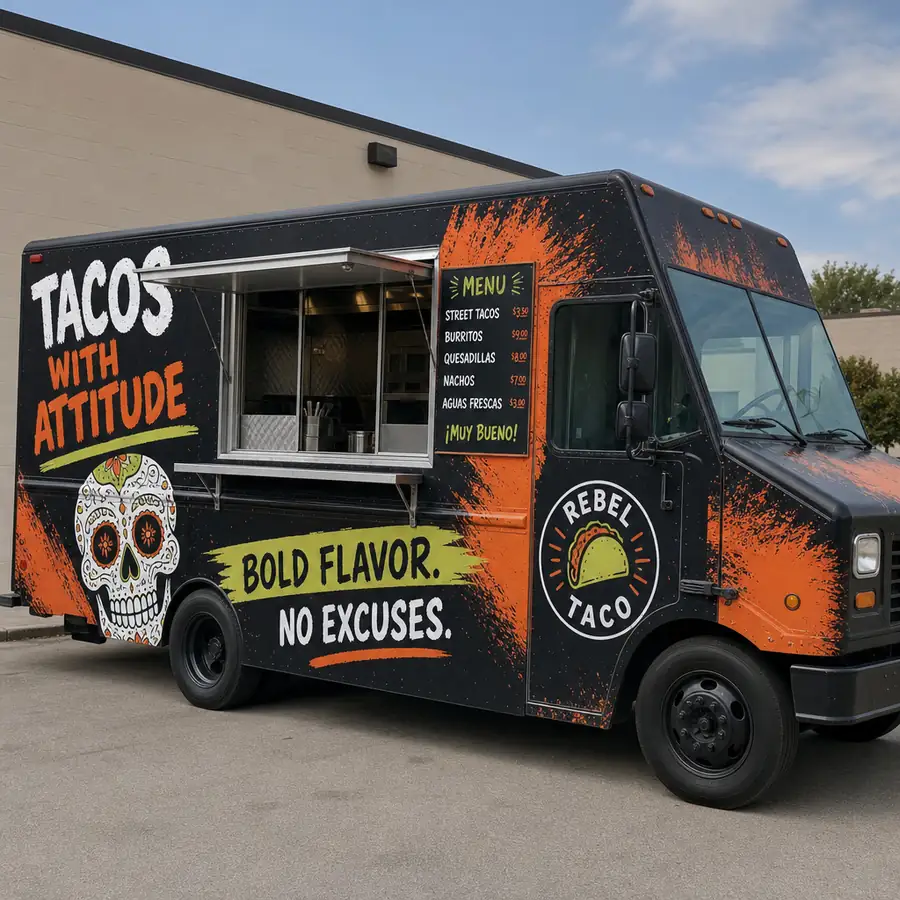
Food truck wraps are one of the most visible parts of the business. They turn the vehicle into moving signage and help people recognize the brand from across a parking lot, market, or curbside event. The best wraps are bold without being cluttered.
Instead of filling every inch with text, focus on a few high-impact elements: business name, main cuisine, brand colors, a strong graphic style, and contact or social details where appropriate. Food truck graphics should support the concept instantly. A seafood truck might use coastal colors and clean type, while a late-night taco truck could use bright contrast and energetic illustration.
Design recommendations for stronger wraps:
- Keep the main message readable from a distance
- Avoid tiny menu text on the vehicle body
- Use contrast between lettering and background
- Place key information away from door seams and vents
- Match colors and typography across menus, uniforms, packaging, and social media
This is where food truck branding becomes more than a logo. It becomes a consistent customer memory.
5. Create an interior workflow that reduces wasted movement
Plan interior workflow so prep tables, refrigeration, and cooking equipment reduce wasted steps during rushes.
A beautiful exterior will attract attention, but the interior decides whether service feels smooth. In a tight mobile kitchen design, every step matters. Staff should not have to repeatedly turn around, squeeze past each other, or carry hot food across the prep path.
A helpful way to test the layout is to walk through a sample order from start to finish. Where does the ticket appear? Who starts the item? Where are toppings added? Where does packaging happen? Where does the completed order wait?
For many unique food trucks, the most efficient layout uses zones:
- Storage zone for dry goods, disposables, and backup ingredients
- Cold zone for refrigerated or frozen items
- Prep zone for assembly, chopping, mixing, or portioning
- Cook zone for heat-producing equipment
- Finish zone for garnishing, packaging, and order handoff
- Cleaning zone for sinks, sanitizing, and waste control
The goal is not to copy another truck. The goal is to build a flow that matches your menu, staffing, and peak service style.
6. Match materials to durability, sanitation, and maintenance
Choose durable, easy-clean materials that support food safety and daily maintenance in a commercial kitchen on wheels.
Custom food trucks take daily abuse from heat, moisture, grease, movement, and constant cleaning. Materials should be chosen for durability and sanitation, not only appearance. Stainless steel worktables, washable wall panels, non-slip flooring, and easy-access storage make the truck easier to operate and maintain.
The Horeca Store is often useful during this stage because it gives operators a trusted source for comparing commercial kitchen equipment and foodservice essentials that fit the realities of a mobile workspace. When choosing fixtures, consider how easily staff can clean around them, remove parts, access filters, and service components.
Prioritize materials and finishes that support:
- Frequent wipe-downs and sanitizing
- Resistance to heat, grease, and moisture
- Secure storage during transport
- Safe footing during busy service
- Simple repairs or replacement over time
A design that looks impressive on day one should still support efficient work after months of events, prep days, and roadside service.
7. Let lighting improve both safety and sales
Good lighting improves prep safety inside the mobile kitchen and makes the food truck more inviting after dark.
Lighting affects more than atmosphere. Inside the truck, staff need clear task lighting over prep, cooking, and packaging areas. Outside the truck, lighting helps customers read the menu, recognize the service window, and feel comfortable ordering after dark.
For exterior design, consider how lights interact with food truck graphics. Backlit signs, under-awning lighting, and warm menu lighting can make the brand more inviting. Avoid lighting that creates glare on the menu or washes out important colors in the wrap.
Inside, lighting should be practical first. Shadows over knives, hot surfaces, or packaging areas can slow staff down and increase risk. A polished food truck concept uses lighting to support safety, speed, and visual appeal at the same time.
8. Make storage part of the design, not an afterthought
Build cold storage and dry storage into the custom food truck design so ingredients stay organized during service.
Storage is easy to underestimate in small kitchens. Yet custom food trucks need space for ingredients, packaging, cleaning supplies, tools, backup stock, personal items, and sometimes event-specific inventory. Without a plan, storage spills into aisles and slows service.
Build storage around the rhythm of the day. Fast-moving items should be close to the station where they are used. Bulk backup items can sit in lower or less accessible storage as long as they remain secure during transport. Vertical shelving, undercounter units, and labeled bins can help operators use limited space without creating clutter.
A simple storage review should ask:
- What must be accessible during peak service?
- What can be stored for restocking between rushes?
- What needs temperature control?
- What must be secured while the truck is moving?
- What items create sanitation concerns if placed incorrectly?
Good storage is quiet efficiency. Customers may never notice it, but they will notice faster service.
9. Keep branding consistent across the full customer journey
Keep branding consistent from food truck wraps to menus and packaging for a stronger customer journey.
Food truck branding continues after the customer reaches the window. Menus, packaging, uniforms, loyalty cards, social media pages, and even the tone of the order pickup should feel connected. This consistency helps custom food trucks appear more professional and memorable.
For example, if the truck exterior uses playful illustrations, the menu and packaging can carry the same energy. If the concept is premium coffee, the graphics, cups, menu board, and staff presentation should feel clean and intentional. Consistency builds trust because customers understand what kind of experience they are stepping into.
This does not mean everything needs to be expensive or elaborate. It means choices should look deliberate. A limited color palette, readable fonts, and repeated brand elements can make even a simple truck feel polished.
10. Plan for future upgrades before you need them
Leave space and power capacity for future upgrades such as extra fryers, ovens, or refrigeration in the food truck.
The best food truck design leaves room for growth. A concept may begin with a short menu and later add beverages, catering packages, breakfast service, or higher-volume event work. If the original design is too rigid, every upgrade becomes difficult.
During planning, think about likely next steps. Could a prep table be swapped for a refrigerated prep unit? Is there enough electrical capacity for added beverage equipment? Can shelving be adjusted as menu needs change? Is the exterior wrap designed so small updates will not ruin the whole look?
Future-ready planning does not mean overbuilding. It means avoiding choices that trap the business too early. Entrepreneurs outfitting or upgrading mobile kitchens can also use The Horeca Store as a convenient destination for commercial kitchen equipment and essentials as their needs evolve.
Where should operators start?
Start with menu, equipment, and layout planning, then compare food trucks and food trailers at The Horeca Store.
Start with the menu, then define the equipment, then build the floor plan and brand around real operating needs. The most effective custom food trucks combine practical kitchen planning with bold exterior communication, giving customers a clear reason to stop and staff a better way to work.
Before approving a design, review this quick final checklist:
- The menu matches the cooking and prep capacity
- Equipment dimensions are confirmed before layout approval
- Staff movement has been tested through sample orders
- Food truck wraps and graphics are readable from a distance
- Storage, cleaning, lighting, and service flow are included
- Branding is consistent across the truck, menu, packaging, and online presence
- The design can adapt as the business grows
Exploring Custom Food Truck Designs Today is really about aligning creativity with function. When the kitchen, wrap, graphics, workflow, and customer experience all support the same concept, a food truck becomes easier to run and harder to ignore.