
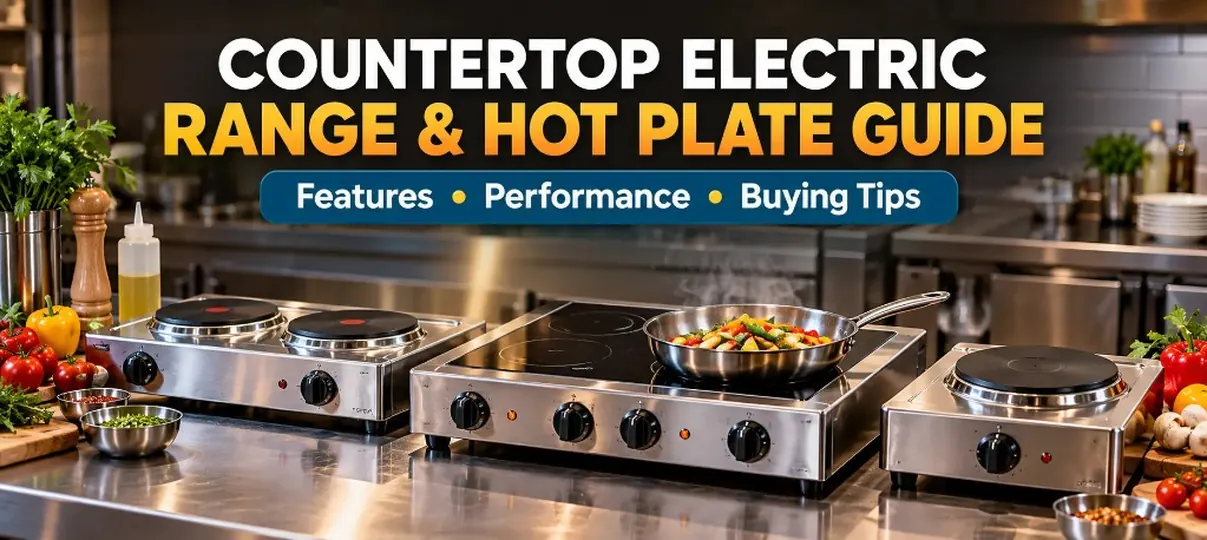
A countertop electric range or hot plate is a compact cooking appliance that gives you one or more heated cooking zones without a full-size stove. The right choice depends on how often you cook, what you cook, how much space you have, and whether you need light-duty warming or steady commercial use.
This Countertop Electric Range & Hot Plate Buying Guide explains the main types, key specs, useful features, and best-fit use cases for homes, restaurants, cafes, catering teams, food trucks, bars, and hotels. Use it as a practical kitchen appliance guide before you compare models, prices, warranties, and support.
What is a countertop electric range or hot plate?
A countertop electric range is a portable or semi-portable cooking unit that sits on a worktop and plugs into an electrical outlet. A hot plate is usually a simpler version with one or two burners, often used for boiling, simmering, sauteing, or keeping food warm.
Unlike a built-in cooktop, this equipment does not need a cutout in the counter. Unlike a gas burner, it does not need a gas line. That makes it useful where flexibility, backup cooking, or small-space cooking matters.
These units are common in small kitchens, office pantries, buffet areas, food trucks, hotel suites, pop-ups, and catering setups. Commercial kitchens may also use them as an extra cooking station during peak hours.
The main types and how they differ
Countertop electric ranges and hot plates look similar at first. The heating technology makes a big difference in speed, control, cleaning, cookware needs, and energy use.
Coil burner hot plates
Coil units use an exposed metal coil that heats the pan. They are simple and often budget-friendly. They work with most flat-bottom cookware.
They can take longer to heat up and cool down. Spills can also be harder to clean because food can fall around the coil. Choose coil burners for basic boiling, light prep, staff meals, or low-cost backup cooking.
Solid plate electric ranges
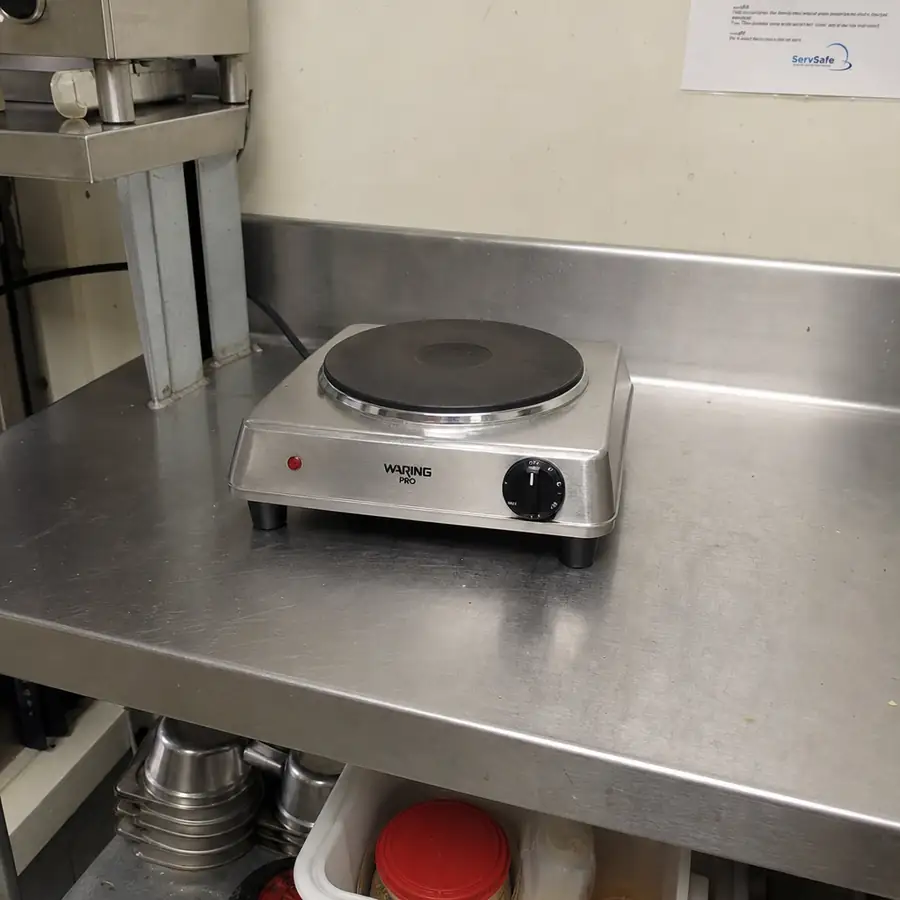
Solid plate units have a flat metal heating plate. They are strong, stable, and easier to wipe than coils. They are common in commercial settings because they handle repeated use well.
The tradeoff is slower heat response. Once hot, the plate holds heat for a while. This helps with steady simmering but can make fast temperature changes harder.
Ceramic glass electric cooktops
Ceramic glass units have a smooth top with electric heating below the surface. They look clean and wipe down easily when cooled.
They suit visible spaces such as demo kitchens, hotel suites, and front-of-house stations. They may need more careful handling because the surface can scratch or crack if misused.
Induction countertop ranges
Induction units heat compatible cookware through a magnetic field. The surface itself stays cooler than traditional electric tops, though it can still get hot from the pan.
Induction is known for fast heat response and accurate control. It needs magnetic cookware, such as many stainless steel and cast iron pans. It is a strong option for chefs who need speed, safety, and repeatable results.
Important specifications to compare
An electric range guide should go beyond appearance. Specs tell you how the appliance will work during daily use.
- Number of burners: One burner suits small prep, sauces, or limited menus. Two burners allow a pot and pan at the same time. Larger countertop ranges may support more cooking tasks but need more counter space.
- Power rating: Higher wattage usually means faster heating and stronger recovery after adding cold food. Light-duty units may suit occasional warming. Higher-power units are better for boiling large pots or busy service.
- Voltage and plug type: Some units work with standard outlets, while heavier-duty units may need higher voltage or a dedicated circuit. This affects installation cost and where the unit can be placed.
- Burner diameter: A small burner works for saucepans. A larger burner supports stock pots and saute pans better. Pan size should match the cooking zone for even heating.
- Temperature controls: Simple dial controls are easy to use. Digital controls give more exact settings. Preset programs can help keep cooking consistent.
- Housing material: Stainless steel is common in commercial kitchens because it is easy to clean and resists daily wear. Plastic housings may be lighter but less suited to heavy use.
- Weight and footprint: A compact unit saves space and is easier to move. A heavier unit may feel more stable under larger pots.
- Safety features: Look for overheat protection, non-slip feet, indicator lights, pan detection on induction models, and automatic shutoff where available.
Each spec has an operational impact. Power affects speed. Burner size affects pan fit. Controls affect consistency. Build quality affects cleaning, durability, and long-term cost.
Which type fits your kitchen best?
A commercial range is the floor unit when the counter cannot carry the line.
The best option is the one that matches your cooking volume, available power, cookware, and cleaning routine. A home user may only need a single burner hot plate, while a cafe or food truck may need a stronger commercial countertop electric range with safer controls and better recovery.
Think about the food first. Boiling pasta, frying eggs, warming soup, searing meat, and holding sauces all place different demands on a burner. Then match the appliance to that task.
This is where a supplier such as the horeca store can help buyers compare product category, power level, size, and intended use before choosing a model.
Features that matter in daily operation
Small details can decide whether a unit feels helpful or frustrating after a few weeks.
Heat control and recovery
Heat control is how well the burner reaches and holds the setting you choose. Recovery is how quickly it returns to temperature after you add cold food or a large pot.
For light simmering, basic controls may be enough. For a restaurant sauce station, poor recovery can slow service and affect food quality. Induction often gives the fastest response, while solid plates give steady retained heat.
Cookware compatibility
Coil, solid plate, and ceramic electric units work with most flat-bottom pans. Induction needs magnetic cookware. A simple magnet test can help: if a magnet sticks firmly to the pan base, it will often work on induction.
Cookware shape also matters. Warped pans reduce contact with the heating surface. That can cause slow cooking and uneven heat.
Cleaning and surface design
Smooth tops wipe quickly. Coil burners need more care around the coil and drip area. Stainless steel bodies are easier to keep clean in busy kitchens.
For commercial use, choose a design with fewer dirt traps. Removable drip trays, sealed controls, and flat surfaces save labor over time.
Controls and user safety
Large knobs are easy to adjust with gloved hands. Digital panels can be more precise but may be harder for temporary staff if the layout is not clear.
Safety lights show when a burner is on or still hot. Non-slip feet help keep the unit stable. For shared spaces, automatic shutoff and overheat protection are valuable.
Matching equipment to business needs
A good Countertop Electric Range & Hot Plate Buying Guide should connect real kitchen needs to the right appliance type.
Restaurants often use countertop electric ranges as extra stations. A double solid plate range can support sauces, small pots, or prep during peak periods. If fast heat changes are important, induction may be a better fit.
Cafes may need a compact burner for soup, chai, hot chocolate, or small-batch prep. A single solid plate can be enough if output is low. A double unit gives more flexibility when the menu grows.
Food trucks and kiosks need compact gear that heats fast and does not waste space. Induction can be useful because it is efficient and has less open heat around the cooking area. The key is checking generator or outlet capacity before buying.
Hotels and serviced apartments may prefer ceramic or induction units with a clean appearance. Simple controls matter because guests may not be trained users. Clear cleaning and safety notes should be included.
Catering teams need portability. A single induction hob or double hot plate can support finishing, warming, or small cooking tasks at an event. Durability, cord length, weight, and easy cleaning become more important than looks.
Bakeries, bars, and dessert shops may use hot plates for melting chocolate, warming glazes, preparing fillings, or small prep tasks. In these cases, precise low heat is more useful than maximum power.
Brand, model, and marketplace comparisons
Specific models change over time, so compare current options by category and listed specifications instead of buying on brand name alone. A strong brand may still offer light-duty and heavy-duty models, so always check the model's intended use.
A useful comparison should connect five points:
- Brand: Does the brand offer parts, manuals, and support in your region?
- Category: Is it a coil hot plate, solid plate range, ceramic cooktop, or induction hob?
- Model rating: Is it light-duty, medium-duty, or commercial-duty?
- Key attributes: What are the wattage, voltage, burner size, housing material, and controls?
- Use case: Is it built for home use, guest rooms, catering, food trucks, or restaurant prep?
For example, two double-burner units may look alike online. One may be a low-cost home hot plate with basic coils. The other may be a commercial stainless steel solid plate range with higher power and heavier construction. The second may cost more upfront, but it may be the better fit for repeated foodservice use.
Installation, cleaning, and maintenance
A commercial gas range belongs on a gas line, not on this plug-in counter.
Most countertop electric units are easier to install than built-in equipment, but you still need to plan the setup. Place the appliance on a stable, heat-safe, level surface. Keep it away from water splashes, paper goods, and crowded edges.
Check the electrical requirements before purchase. Do not assume every unit fits a standard outlet. Commercial units may need a dedicated circuit, correct plug, or local electrical approval.
For cleaning, unplug the unit and let it cool first. Wipe spills early so they do not bake onto the surface. Use non-abrasive tools on ceramic glass. For coils and solid plates, follow the maker's care instructions to avoid rust, damage, or electrical risk.
Maintenance is usually simple, but it still matters. Inspect cords, plugs, feet, controls, and surfaces often. Stop using the unit if the cord is damaged or if controls act oddly.
Parts availability and warranty support affect total cost of ownership. A cheaper unit can become expensive if replacement parts are hard to find or downtime disrupts service. For business use, ask about spare parts, service terms, return rules, and warranty coverage before buying. A countertop gas range is the compact gas option when the site already has gas.
Total cost of ownership
The purchase price is only one part of the decision. The real cost includes energy use, cleaning time, repairs, downtime, replacement parts, and staff ease of use.
A simple hot plate may be the lowest-cost option for occasional cooking. For daily commercial service, a stronger unit may save money over time because it performs better and lasts longer under heavier use.
Consider these cost factors:
- Electrical setup or circuit upgrades
- Cookware changes, especially for induction
- Cleaning supplies and labor time
- Replacement parts and service access
- Warranty length and support quality
- Expected daily use and wear
- Downtime risk during busy service
Buying too small can slow your team. Buying too large can waste space and money. The best value is the unit that fits the job with a little room for growth.
Quick buyer checklist
Before you choose, answer these questions with your actual kitchen in mind:
- How many pans do you need to use at once?
- Do you need fast boiling, gentle warming, or both?
- What outlet and voltage are available?
- Will the unit be used daily or only as backup?
- Do your pans work with induction?
- How much counter space can you spare?
- Who will clean the appliance, and how often?
- Is service, warranty, and parts support easy to access?
- Will the appliance be moved between locations?
- Is the unit rated for the level of use you expect?
This checklist helps turn a broad electric range guide into a clear buying decision.
Frequently asked questions
Can a hot plate replace a full stove?
A commercial oven still covers the baking a hot plate cannot.
A hot plate can replace a stove for simple cooking, small spaces, or backup use. It is not ideal if you cook many dishes at once or need an oven.
Is induction better than a regular electric hot plate?
Induction is usually faster and more responsive, but it needs compatible cookware. A regular electric hot plate may be cheaper and works with more pans.
How many burners do I need?
Choose one burner for simple tasks or backup cooking. Choose two or more if you need to cook a pot and pan at the same time.
Are countertop electric ranges safe for commercial kitchens?
They can be, if the unit is suitable for commercial use and installed correctly. Always check electrical needs, ventilation rules, and local safety requirements.
What is easiest to clean?
Ceramic glass and induction tops are usually easiest to wipe. Coil burners often need more time because spills can collect around the heating coil.
Final buying guidance
If you need a low-cost unit for light cooking, choose a simple single or double hot plate. If you need steady heat for soups, sauces, or daily prep, choose a solid plate countertop electric range with a durable body.
If you need fast response, precise control, and a cooler cooking area, choose induction and confirm your cookware works with it. If the unit will sit in a guest area or visible service space, choose a smooth ceramic or induction model with clear controls.
If you run a restaurant, cafe, food truck, hotel, bakery, bar, QSR, or catering business, buy for workload first. Match burner count, wattage, voltage, surface type, cleaning needs, support, and warranty to real service conditions. That is the safest way to turn this Countertop Electric Range & Hot Plate Buying Guide into a confident purchase.