
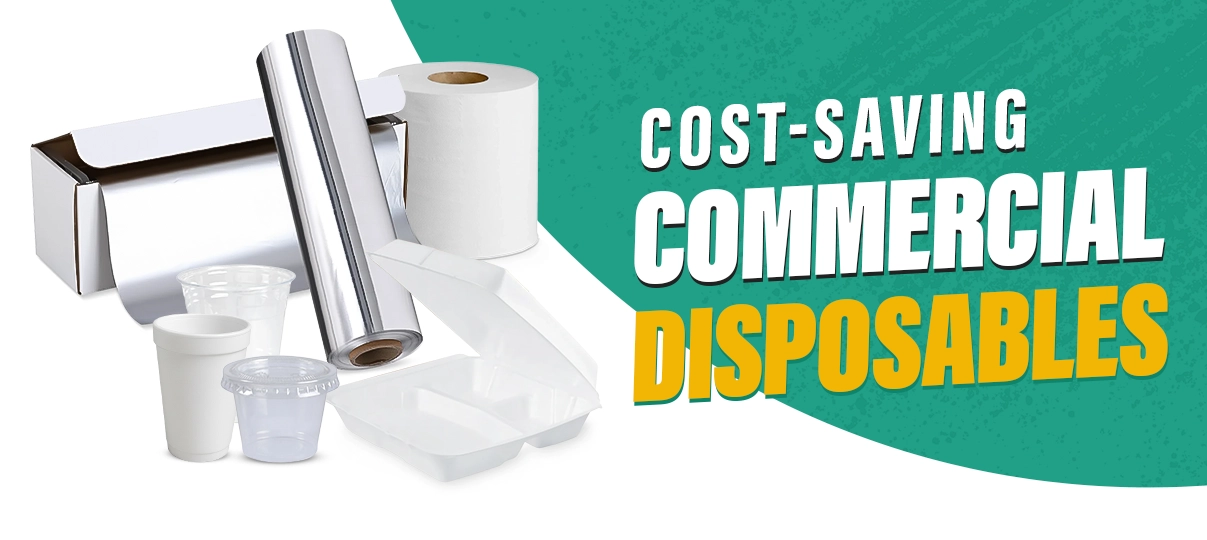
Most restaurant owners lose sleep over food costs. They'll spend hours negotiating with suppliers to shave 10 cents off every pound of chicken. Meanwhile, they're wasting thousands monthly on something way more fixable: their dishwashing operation and storage systems that could be streamlined with disposable food containers.
Here's what that looks like in actual dollars. Your dishwasher makes $15 an hour. It works three hours daily just washing containers and cookware. That's over $16,000 yearly before you factor in water bills, industrial detergent, equipment breakdowns, and the premium commercial space your washing station occupies. And for what? So, you can wash the same metal pan 500 times before it warps, and you replace it anyway?
The Math That Changes Everything
Small cafes serving 50 customers daily can make reusables work. The numbers hold up. But cross that 200-meal threshold and something shifts. Some operations report when comparing volume pricing against buying individual units. That's not a marketing claim. That's actual accounting data from businesses tracking every cent.
When you buy disposable food containers in volume, the per-unit cost drops fast. Same goes for Disposable Bags and Disposable Cutlery. But here's the twist: the purchase price barely matters. The real savings hide in places most operators never look.
Where Money Actually Disappears (And How to Stop It)
Walk through any high-volume kitchen during lunch rush. Orders flying, tickets backing up, and somewhere in the chaos, three people are cycling through dish duty. That's three bodies not prepping food, not serving customers, not doing anything that generates revenue.
Disposable Cutlery eliminates the entire labor category. Not reduces it. Eliminates it. The staff hours you spent on dishwashing? They're now available for tasks that actually make you money. Your line cook isn't elbow-deep in suds when orders are piling up.
The same logic applies to Disposable Cups and Disposable Food Trays. Use once, dispose properly, and move on. No washing cycles. No drying racks. No "who forgot to run the dishwasher again" conversations at closing time.
One catering operation calculated they were spending tens of thousands annually just managing reusable containers, washing, storing, replacing broken items, hauling them to events and back. They switched to disposables and cut that expense by over two-thirds. The savings went straight into equipment upgrades they'd been postponing.
Breakage Costs Add Up Faster Than You Think
Track your breakage for one month. Actually, write it down. Dropped plates, cracked containers, dented pans, and warped baking sheets. Each incident feels minor until you add them up. A mid-sized operation might lose several hundred dollars monthly to breakage. That's thousands of years just replacing stuff that broke. Disposable food containers sidestep this completely.
Nothing to break. Nothing to replace. Zero surprise expenses when temperature changes crack half your storage containers overnight. Plus, there's a safety angle. Broken ceramic or glass in a busy kitchen creates liability. Cut hands mean worker's comp claims. Disposable food trays made from sturdy materials don't shatter into dangerous shards when dropped.
Buying Smart Beats Buying Cheap
keeping packaging costs between 3 to 4 percent of net sales for limited-service operations. That benchmark seems tight until you realize disposables help you hit it easier than managing reusables. Volume matters enormously. Ordering 1,000 to 5,000 units unlocks discount rates of 5 to 10 percent, with net savings between 3 to 8 percent after storage costs. Scale up further and discounts improve.
Buy Disposable Cups quarterly instead of monthly. Order aluminum foil and containers based on projected needs rather than reactive purchasing. Stock up on disposable food trays when suppliers run promotions. Consolidate orders to reduce shipping frequency. Fewer deliveries mean lower freight costs. Less receiving time. Reduced administrative overhead. The savings compound beyond just unit pricing.
Portion Control Saves More Than Packaging Ever Costs
Food waste destroys profit margins faster than almost anything else. A cook having a generous day can blow your food costs without meaning to. Standardized disposable food containers force consistency. You can't overfill a sealed container the same way you might pile extra protein on a reusable plate. This subtle shift prevents waste that costs way more than packaging.
One restaurant chain calculated they were losing thousands monthly to inconsistent portioning. Switched to standard disposable containers and cut that waste by more than half. The packaging cost increase was minimal compared to the food waste savings. Net result: substantial monthly savings that added up to tens of thousands yearly. Your food costs stabilize. Pricing stays consistent. Customer expectations align with what they receive every time. And your margins stop fluctuating based on who's working that shift.
Temperature Flexibility Solves Multiple Headaches
Modern disposables handle freezer to microwave without issues. One container type serves multiple purposes. This versatility kills the need for separate inventory systems.
Instead of tracking hot containers, cold containers, and ambient storage options, you stock one versatile solution. Fewer product codes to manage. Simpler ordering processes. Less inventory complexity eating up your time and mental bandwidth. Your prep team doesn't need to remember which containers go where. Fewer mistakes. Faster training for new staff. Less time wasted explaining storage protocols.
Food Safety Compliance Gets Ridiculously Simple
Health inspectors keep raising standards. Compliance with reusables means proper sanitization systems, detailed cleaning logs, and documented washing procedures that meet specific temperature requirements. Disposable food containers arrive certified and ready. Use once, dispose correctly, done. No sanitization documentation. No questions during inspections about whether your dishwasher hit 180 degrees. No worries about cross-contamination from inadequate cleaning. One food safety incident can obliterate a business. Legal fees, lost revenue, reputation damage the costs spiral fast. Disposables reduce that risk substantially because single use eliminates the recontamination vector entirely.
When Eco-Friendly Actually Makes Business Sense
Aluminum containers are completely recyclable. That environmental angle translates to lower waste hauling fees in many cities. Municipalities offering recycling incentives reduce disposal costs for businesses participating in those programs. eco-friendly materials might cost 5 to 15 percent more upfront but can generate 10 to 30 percent long-term savings through customer loyalty and regulatory benefits. Customers notice sustainable packaging. Some actively seek it out. Others will pay premium prices for businesses demonstrating environmental responsibility. That brand value offsets packaging investment quickly, particularly in competitive markets where differentiation drives sales.
Running Your Actual Numbers (Not Theoretical Ones)
Stop guessing. Track everything for 30 days:
What Reusables Actually Cost:
- Dishwashing labor (hours times hourly rate)
- Water and sewer bills
- Detergent and chemicals
- Equipment maintenance calls
- Replacement purchases for damaged items
- Storage space (square footage times rent per square foot)
- Training time for cleaning procedures
What Disposables Would Cost:
- Bulk pricing for your volume
- Shipping expenses
- Minimal storage needs
- Zero cleaning or maintenance
- No replacement cycle
- Simplified training
Operations serving 300+ meals daily usually see disposables winning decisively. The gap widens with volume. At 500 meals daily, savings become substantial. At 1,000 meals daily, the difference becomes dramatic.
Quality Matters More Than Price Per Unit
Bargain-basement disposables create expensive disasters. A leaking container ruins a customer's meal and your reputation. Torn disposable bags spill inventory everywhere. Collapsing disposable food trays cause safety issues and angry customers. Better quality costs maybe 10 to 15 percent more but prevents failures that cost way more than that price difference. Historical pricing analysis suggests keeping cup and lid combinations within 7 to 9 percent of beverage pricing maintains healthy margins while ensuring reliability.
Think about protecting food quality and customer satisfaction, not just saving pennies per container. Those factors drive repeat business worth exponentially more than minor unit cost differences.
Supplier Relationships That Actually Pay Off
Long-term purchasing agreements create mutual benefit. Suppliers reward consistent volume with better pricing, priority service during shortages, and flexible payment terms.
These relationships unlock advantages beyond unit costs. Need emergency delivery for an unexpected event? Your established supplier makes it happen. Want early access to new products with better economics? You're on the priority list. Facing temporary cash flow constraints? Payment terms become negotiable.
Treat suppliers as strategic partners instead of interchangeable vendors. That mindset shift transforms purchasing from transactional busy work into a competitive advantage.
Putting It All Together
The disposable versus reusable debate isn't about convenience versus environmental responsibility. It's about understanding where operational efficiency creates profit advantages. Disposable bags, disposable cutlery, disposable food containers, disposable cups, disposable plastic bags & wraps, aluminum foil and containers, and disposable food trays each solve specific operational challenges while cutting costs. Strategy comes from smart implementation. Buy in volume to maximize savings. Build supplier partnerships for long-term value. Choose quality that prevents costly failures. Calculate the total cost of ownership, not just sticker price.
Operations recognizing this shift and adapting their purchasing strategies position themselves for sustainable profitability. The real question isn't whether disposables save money. The question is whether your operation has reached the volume where those savings become significant enough to matter. For most operations above 200 daily meals, the math works decisively in favor of disposables.
Calculate your actual costs honestly. Track everything for one month. Run the numbers yourself. Then make the switch that improves your bottom line while simplifying operations.
The savings are waiting. You just need to stop washing dishes and start counting money instead.
Buy High-Quality Disposable Food Storage Items from The Horeca Store
Efficient food storage starts with reliable packaging, and The Horeca Store offers a comprehensive range of disposable food storage items for restaurants, hotels, cafés, cloud kitchens, catering businesses, bakeries, and food manufacturers. Our collection includes durable food containers, takeaway boxes, deli containers, bowls, cups, lids, and other disposable storage solutions designed to keep food fresh, prevent leaks, and simplify food handling. Made from high-quality, food-safe materials, our products help maintain hygiene while supporting smooth day-to-day kitchen operations.
Whether you're storing prepared ingredients, packaging takeaway meals, or organizing large-scale food production, The Horeca Store has disposable food storage solutions to suit every requirement. Available in a variety of sizes, shapes, and materials, our products combine convenience, durability, and affordability for commercial foodservice businesses. Browse our collection today to find disposable food storage items that improve efficiency, reduce cleanup time, and deliver a safe, professional food storage solution for your business.