
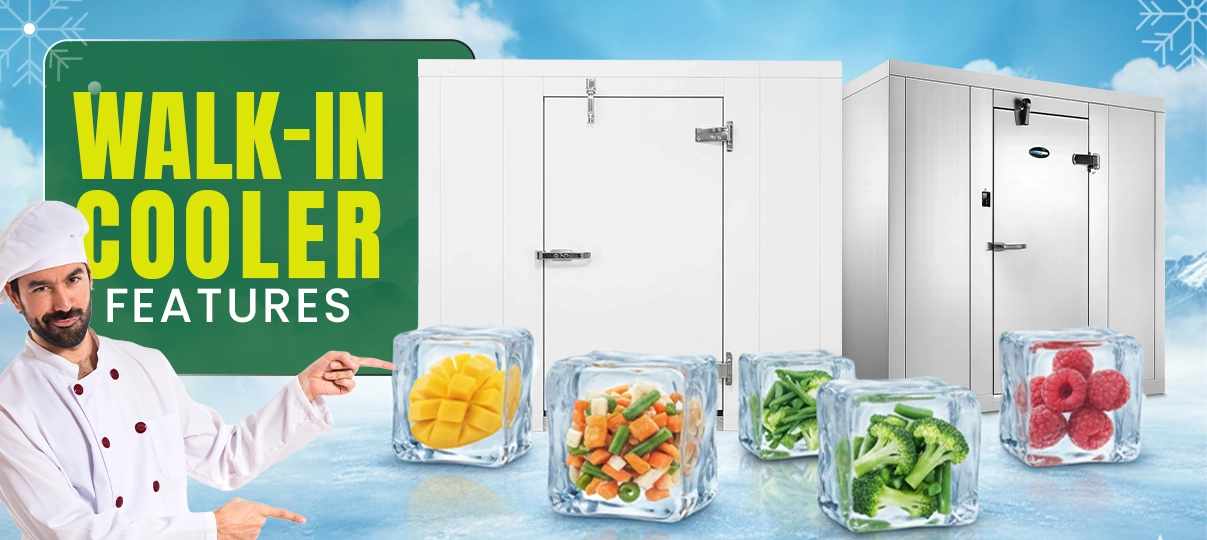
Running a restaurant gets hectic fast. Orders pile up. Prep never stops. In the middle of it all, the walk-in cooler does the quiet work. It’s more than cold storage. It supports freshness. It maintains consistency. It helps control food costs.
But the truth is simple: The right walk-in keeps your kitchen steady. The wrong one creates problems you don’t have time for. So, before you buy, here’s what really matters in a walk-in cooler.
Types of Walk-In Coolers
There are two main types. Prefabricated and built-in.
Prefabricated Walk-In Coolers
These are ready-to-install units. They work well when time matters.
- Fast installation. Less downtime.
- Standard sizes. Lower upfront cost.
- Multiple size and layout options.
They come fully insulated. Controls are simple to use. A solid choice for busy kitchens.
Built-In Walk-In Coolers
These are custom-built. They match your exact space and workflow.
- Designed around your layout.
- Supports multi-temperature zones.
- Handles heavy commercial use.
Key Factors to Consider When Choosing Your Walk-In Cooler
A few details matter before buying. These affect performance, efficiency, and cost.
Space Requirements
Start by checking your available space. A standard unit may fit. You might need a compact option. Outdoor setups add extra challenges. Fences, low branches, and narrow entryways can affect installation. Walk-ins store more than chilled items. Bulk ingredients take up room. Dry goods and backup stock add up fast. A smart layout helps staff find items quickly during busy hours.
High-volume kitchens? The Amerikooler walk in cooler unit handles a lot of stock.
Tight on space? The Amerikooler restaurant walk in cooler still gives reliable cooling without crowding your kitchen.
Temperature Range
Temperature decides how long your food stays safe. Most walk-ins work best between 35 and 38°F. Anything above 41°F can cause spoilage.
Different ingredients need slightly different temperatures:
• Dairy likes cooler spots
• Greens need gentle cooling
• Seafood needs careful handling
A quality restaurant walk-in cooler keeps the temperature consistent across shelves, preventing food waste and keeping meals safe.
Insulation Quality and Energy Consumption
Good insulation is crucial. A well-insulated restaurant walk-in cooler keeps energy bills down and protects your food. Look for units with high-quality foam panels and durable steel or aluminum walls.
Floor vs. Floorless Models
Choosing between a floor or a floorless model depends on your needs:
- Floorless models: Easier to install, often cheaper, but may need extra prep work.
- Models with floors: More self-contained, but installation can be more complex.
Consider your restaurant’s layout and daily workflow.
Maintenance Requirements and Service Support
Maintenance is key to a long-lasting walk-in cooler unit. Look for a good service network, warranty coverage, and parts availability. Quick, reliable service can save you from downtime.
Check for:
- Easy access to refrigeration components
- Supports preventative maintenance programs
- Backed by responsive local service teams
Why Walk-In Coolers Make Kitchen Life Easier
Restaurant walk-in coolers aren’t just “big fridges.” Open layouts and wire shelves help air circulate, keeping temperatures even and reducing spoilage. Wire shelves are strong, adjustable, and make it easy for staff to reach high-use items quickly.
If you want a compact, budget-friendly walk-in cooler unit for daily operations or a first outlet, this walk-in cooler gives dependable performance and easy access for fast inventory rotation.