
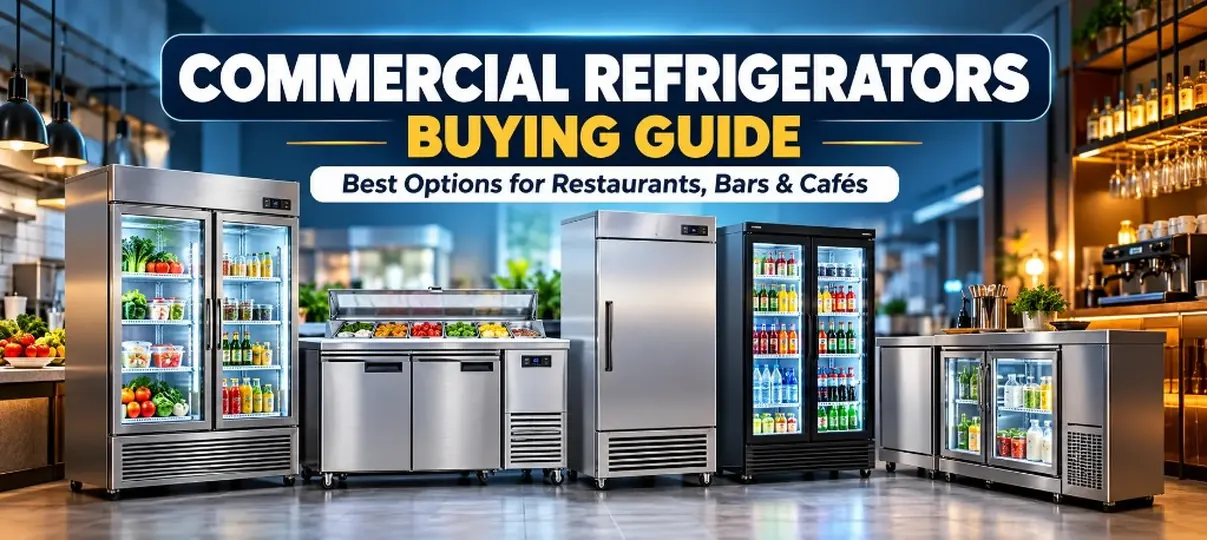
Commercial refrigerators are essential restaurant equipment for any business that stores chilled food, drinks, ingredients, or prepared items. The right unit keeps products at safe holding temperatures, supports faster service, protects stock, and helps your team work with less stress during busy hours.
In simple terms, a commercial refrigerator is a heavy-duty cooling appliance built for daily foodservice use. Unlike home fridges, commercial fridges are designed for frequent door opening, larger loads, stronger components, and easier cleaning. Whether you run a restaurant, bar, cafe, bakery, hotel kitchen, food truck, catering company, or quick-service counter, choosing the right restaurant refrigeration setup affects food safety, workflow, energy use, and long-term cost.
What type of commercial refrigerator does your business need?
The best commercial refrigerator depends on what you store, how often staff need access, how much space you have, and where the unit will sit in your workflow. A bar may need undercounter bottle coolers near the service area, while a restaurant kitchen may need upright reach-in refrigerators, prep tables, and commercial freezers for backup stock.
Commercial Refrigerators for Restaurants, Bars, Cafes & Foodservice include several common formats. Each one solves a different problem.
Reach-in refrigerators
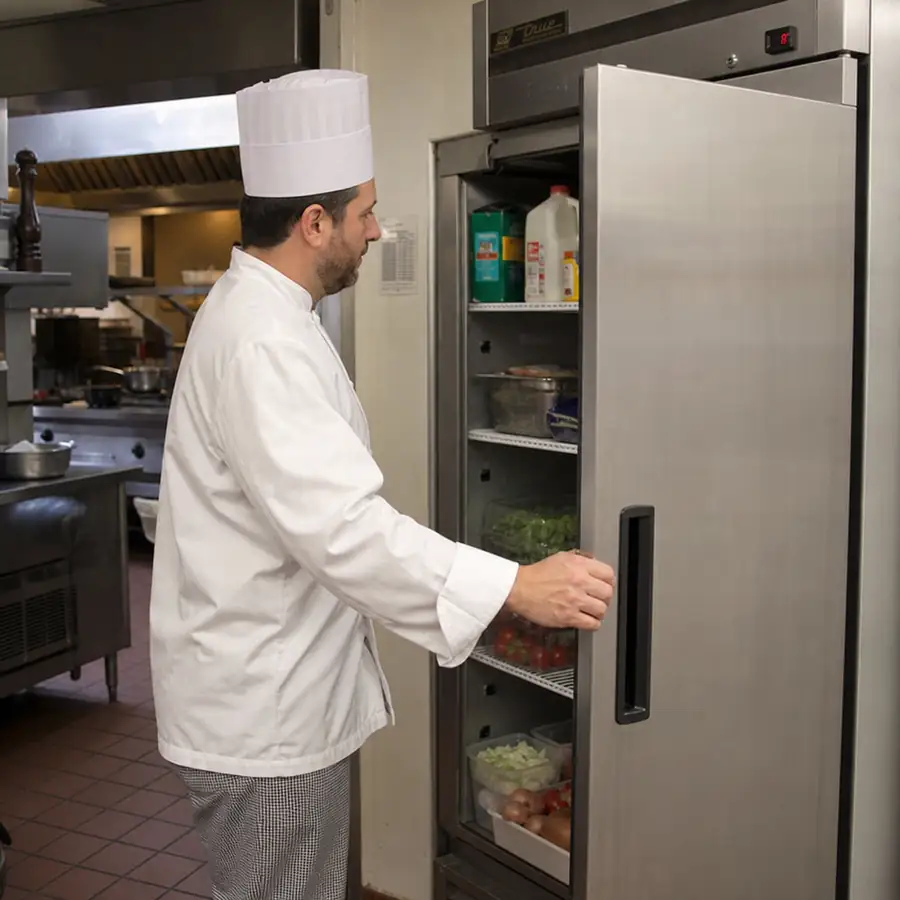
Reach-in refrigerators are upright units with one, two, or three doors. They are common in restaurant kitchens, cafes, bakeries, and hotels because they offer strong storage capacity without taking over the whole room.
They work well for dairy, sauces, produce, proteins, desserts, and prepared food. Full-door models make it easy to move large pans and containers. Half-door models reduce cold air loss because staff can open only one section at a time.
Choose a reach-in refrigerator if your team needs fast access to many ingredients during prep or service.
Undercounter refrigerators
Undercounter commercial fridges fit below worktops or counters. They are useful when floor space is tight or when chilled items must stay close to the point of use.
Bars use them for mixers, garnishes, and bottled drinks. Cafes use them for milk, cream, syrups, and sandwich ingredients. Food trucks and small kitchens often use undercounter models to save space.
They usually hold less than upright models, but they improve speed because staff do not need to walk across the kitchen.
Prep table refrigerators
Prep table refrigerators combine cold storage with a work surface. Sandwich prep tables, pizza prep tables, and salad prep units keep ingredients close while staff assemble orders.
These are ideal for delis, cafes, pizzerias, QSRs, and restaurants with high-volume menu assembly. They reduce movement, speed up production, and help keep toppings or fillings organized.
Look for pan capacity, cutting board size, lid style, and base storage when comparing prep tables.
Bar coolers and back bar refrigerators
Back bar refrigerators are built for drinks. They often have glass doors, internal lighting, and adjustable shelves. This makes them a strong fit for bars, pubs, clubs, cafes, hotel lounges, and event spaces.
They keep bottles and cans visible for staff and guests. Sliding-door models help in narrow service areas. Solid-door models can be better when display is not needed and the priority is storage.
Display refrigerators
Display refrigerators show products while keeping them chilled. They are common in cafes, bakeries, convenience stores, dessert shops, and grab-and-go foodservice areas.
Glass doors or glass panels help customers see drinks, cakes, sandwiches, salads, and packaged meals. This can support impulse sales and make service faster.
For display units, check lighting, shelf layout, visibility, temperature control, and how easy the unit is to clean.
Walk-in refrigerators and freezers
Walk-in units are best for large storage needs. Restaurants, hotels, catering kitchens, supermarkets, and central production kitchens use them for bulk ingredients and high-volume stock.
They require more planning than standalone restaurant appliances. You need space, proper installation, ventilation, flooring, shelving, and service access.
A walk-in can reduce pressure on smaller kitchen units, but it should match your stock level. Oversizing can waste space and energy.
Commercial freezers
Commercial freezers are used when ingredients, prepared meals, ice cream, meats, seafood, bakery items, or backup stock must stay frozen. Common options include upright freezers, undercounter freezers, chest freezers, and walk-in freezers.
Freezers are often paired with restaurant coolers to create a full cold storage system. The right mix depends on menu size, delivery schedule, and how much frozen stock the business keeps on hand.
Key features and specifications that matter
A commercial refrigerator is not just a cold box. Its size, power, layout, controls, and build quality all affect how well it supports daily service. A cheaper unit may cost more over time if it slows your team down, uses more energy, or needs frequent repairs.
When comparing restaurant refrigeration, focus on these factors.
Capacity and usable storage
Capacity is often shown in cubic feet or by the number of doors, shelves, pans, or sections. But usable space matters more than the headline number.
Ask what the unit needs to hold on a busy day. A cafe may need room for milk, cold brew, pastries, and sandwich fillings. A full-service restaurant may need space for proteins, sauces, produce, and prepped items.
Too little capacity leads to crowding. Crowding can block airflow and make it harder for the unit to hold temperature. Too much capacity can waste floor space and increase running cost.
Size and footprint
Measure the space before choosing equipment. Include width, depth, height, door swing, ventilation space, and the route through the building.
A unit that fits on paper may still be hard to install if it cannot pass through doors or around corners. Also think about how staff move around it. A refrigerator placed in the wrong spot can slow down prep and service.
For tight kitchens, undercounter models, sliding doors, narrow reach-ins, or worktop refrigerators may be better than large upright units.
Temperature range and control
Commercial refrigerators should hold chilled products at safe, steady temperatures. Freezers must hold frozen items reliably, even during busy use.
Digital controls make it easier to check and adjust settings. Some units may include alarms or displays that help staff notice problems sooner.
Good temperature control protects stock quality. It also reduces waste from food that gets too warm, dries out, freezes by mistake, or loses texture.
Door style and access
Door choice affects speed, energy use, and space.
- Solid doors are strong and often used in kitchens where display is not needed.
- Glass doors help staff or customers see products before opening the unit.
- Sliding doors work well in bars and narrow spaces.
- Half doors reduce cold air loss when staff only need one section.
- Drawers are useful below prep lines and cooking stations.
The right access style saves time. It can also reduce repeated opening and closing during peak service.
Shelving and internal layout
Adjustable shelves help you store different container sizes. Strong shelves are important for heavy pans, bottles, produce boxes, or bulk ingredients.
Look for layouts that match your menu. A bakery may need tray slides. A bar may need bottle storage. A prep kitchen may need pan-friendly shelves.
Easy organization helps staff find items faster and lowers the chance of product being forgotten at the back.
Cooling system and ventilation
Commercial refrigerators need airflow around the cabinet and condenser area. Poor ventilation can make the unit work harder, increase energy use, and shorten component life.
Some units are better suited to hot kitchens than others. If the refrigerator will sit near ovens, fryers, sunlight, or a busy cookline, cooling performance becomes even more important.
Always follow installation guidance for clearance and airflow.
Build quality and cleaning access
Foodservice equipment must handle spills, knocks, grease, and constant use. Stainless steel surfaces are popular because they are durable and easy to wipe down.
Rounded corners, removable shelves, smooth interiors, and accessible gaskets make cleaning faster. That matters because clean refrigerators support food safety and reduce odors.
Door gaskets should seal well and be simple to inspect. Damaged gaskets let cold air escape and make the compressor work harder.
Energy use and total cost
The purchase price is only one part of the cost. Total cost of ownership includes energy use, cleaning time, maintenance, parts, downtime, and possible food loss.
An efficient unit with the right capacity can save money over time. A poorly matched unit may cost less upfront but slow service, use more power, or fail sooner.
When buying, balance budget with fit, performance, and support.
Matching equipment to foodservice use cases
Different businesses need different cold storage. The right choice depends on menu, space, service model, and stock flow.
This is also where a supplier such as the horeca store can be useful. A good equipment source helps buyers compare sizes, layouts, and cooling options instead of choosing only by price.
How do you compare commercial fridges, restaurant coolers, and freezers?
Compare them by purpose first, then by capacity, access, temperature needs, and location. Commercial fridges are for chilled food and drinks, restaurant coolers often refer to beverage or storage cooling units, and commercial freezers are for frozen stock that needs lower holding temperatures.
The main difference is what the unit must protect. A prep fridge supports speed and ingredient access. A display fridge supports product visibility. A freezer supports long-term frozen storage. A walk-in supports bulk stock.
Here is a simple way to compare options:
- For daily prep: choose prep tables or reach-in refrigerators with easy access and strong organization.
- For drinks: choose back bar coolers, bottle coolers, or display refrigerators with the right shelf layout.
- For customer-facing sales: choose glass display units with good lighting and easy product access.
- For bulk storage: choose walk-in refrigerators or large reach-ins with enough shelf strength.
- For frozen inventory: choose upright, chest, undercounter, or walk-in commercial freezers based on space and stock volume.
- For small spaces: choose undercounter, narrow, or sliding-door models.
The best setup often uses more than one unit. For example, a restaurant may use a walk-in for deliveries, reach-ins for prep, a refrigerated prep table on the line, and a freezer for long-term storage.
Installation, cleaning, and maintenance are part of the purchase
Buying commercial refrigeration is not finished when the unit arrives. Installation and daily care affect performance from day one.
Before installation, confirm the electrical needs, floor strength, door access, ventilation space, and drainage needs if relevant. Place the unit where staff can use it easily without blocking traffic.
Cleaning should be simple and regular. Wipe spills quickly, clean shelves, check door gaskets, and keep food covered and labeled. Do not overload shelves because airflow needs room to move.
Basic maintenance can reduce downtime. Staff should watch for warm temperatures, strange noises, ice buildup, water leaks, damaged gaskets, or doors that do not close fully. Condenser areas may need cleaning, depending on the model and environment.
Parts and support also matter. Before buying, ask about warranty coverage, service access, replacement parts, and who handles repairs. A low-cost unit with poor support can become expensive if it fails during service.
A practical buying checklist
Use this checklist before choosing restaurant appliances for cold storage:
- List the products you need to chill or freeze.
- Estimate peak-day storage, not just average storage.
- Measure the space and delivery path.
- Decide if the unit is for storage, prep, display, drinks, or frozen stock.
- Check door style, shelf layout, and access needs.
- Confirm power, ventilation, and installation requirements.
- Choose capacity that allows airflow without wasting space.
- Look for easy cleaning features and strong gaskets.
- Consider energy use and total cost, not only purchase price.
- Review warranty, parts, and service support.
This process helps you avoid common mistakes, such as buying a unit that is too small, too large, hard to clean, or poorly placed for the way your team works.
Final buying guidance
If you run a busy restaurant with heavy prep needs, choose reach-in refrigerators, prep tables, and commercial freezers that match your menu and delivery schedule. If you run a bar, choose back bar coolers or bottle coolers that keep drinks close, visible, and easy to restock.
If you operate a cafe or bakery, use display refrigerators for customer-facing items and undercounter units for milk, fillings, and ingredients near the work area. If your business stores bulk stock, consider a walk-in cooler or freezer, but only if you have the space, installation plan, and volume to justify it.
If space is tight, choose compact commercial fridges, sliding doors, or undercounter models. If speed matters most, place cold storage where staff use the items. If long-term cost matters most, compare energy use, build quality, cleaning time, parts, and support before you buy.
Commercial Refrigerators for Restaurants, Bars, Cafes & Foodservice are not one-size-fits-all. The right choice is the unit that protects your products, fits your space, supports your team, and makes daily service easier.
Frequently asked questions
1. What is the difference between a commercial refrigerator and a home refrigerator? A commercial refrigerator is built for business use. It handles frequent door opening, larger loads, and tougher daily conditions. A home refrigerator is not designed for the same level of use in a foodservice setting.
2. What size commercial fridge do I need for a restaurant? Choose size based on your menu, delivery schedule, prep volume, and available space. A small cafe may need undercounter storage, while a busy restaurant may need reach-ins, prep tables, and a walk-in cooler.
3. Are glass-door refrigerators better than solid-door refrigerators? Glass doors are better when staff or customers need to see products quickly. Solid doors are often better for kitchen storage where display is not important. The right choice depends on access, visibility, and location.
4. Do I need both commercial refrigerators and commercial freezers? Many foodservice businesses need both. Refrigerators hold chilled items for daily use, while freezers store frozen stock, backup ingredients, and items with longer storage needs.
5. How can I reduce the total cost of restaurant refrigeration? Choose the right size, keep airflow clear, clean the unit regularly, inspect gaskets, avoid overloading shelves, and buy equipment with reliable parts and support. Good daily habits can reduce waste, downtime, and energy use.