
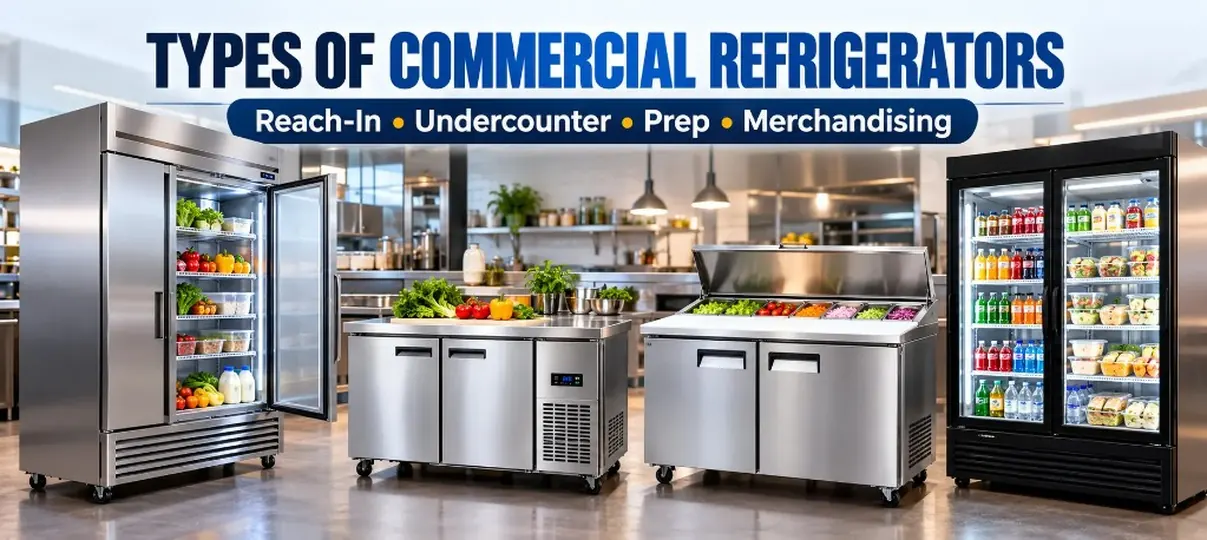
Commercial refrigeration keeps food, drinks, and ingredients at safe cold holding temperatures in busy foodservice settings. The main commercial refrigerator types include reach-in units, undercounter fridges, prep refrigerators, and merchandising refrigerators, each built for a different workflow, space, and display need. Choosing the right unit helps protect stock, speed up service, and make better use of your kitchen or sales floor.
What are the main types of commercial refrigerators?
The main types of commercial refrigerators are reach-in refrigerators, undercounter refrigerators, refrigerated prep tables, and merchandising refrigerators. These refrigerator types all keep products cold, but they differ in size, layout, access, storage style, and where they work best. A restaurant kitchen may use all four, while a cafe, deli, bar, or convenience store may need only one or two.
Commercial Refrigerator Types: Reach-In, Undercounter, Prep & Merchandising is a practical way to group the most common fridge styles. It separates storage units from worktop units and customer-facing display units.
These categories also help buyers compare capacity, door style, shelving, power needs, and placement. That matters because a fridge that works well in a prep line may not work well in a retail area.
Reach-in refrigerators for daily back-of-house storage
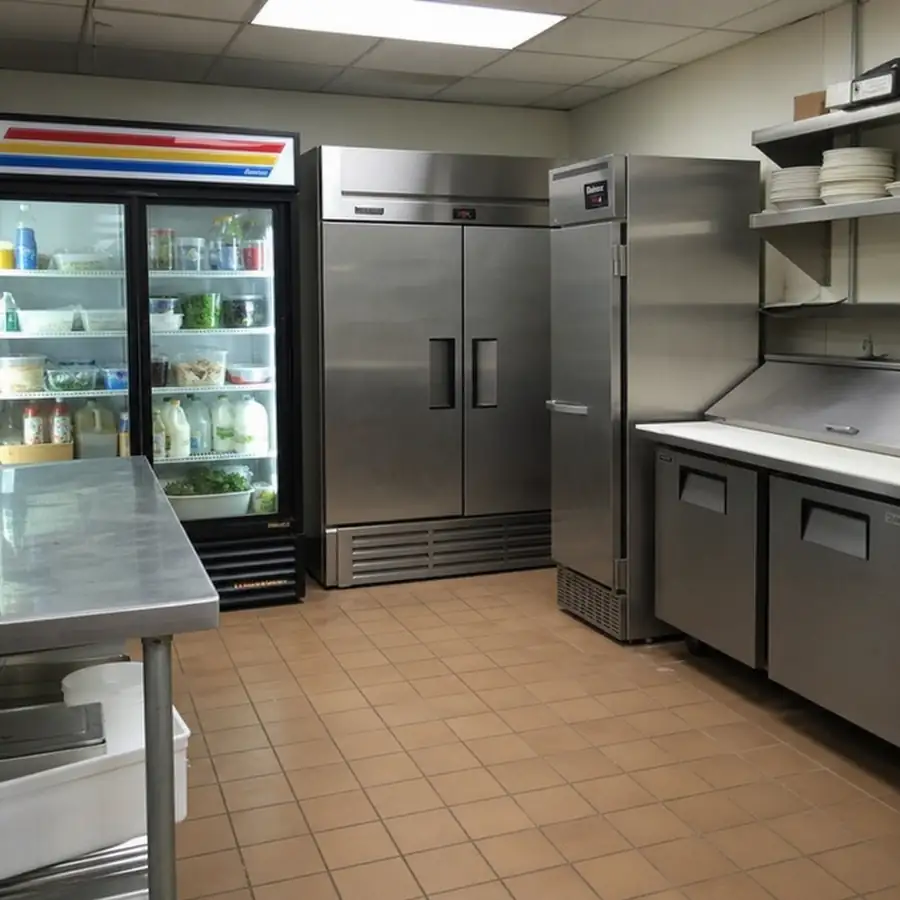
Reach-in refrigerators are the classic upright units found in restaurant kitchens, bakeries, cafes, catering sites, and institutional foodservice areas. They look like tall cabinets and are made for fast access to chilled items during service.
Most reach-ins come with one, two, or three sections. Each section usually has a full-height door or half doors. More sections mean more storage, but they also need more floor space.
Common reach-in options include:
- Solid doors: Best for back-of-house storage where display is not needed.
- Glass doors: Useful when staff need to see stock quickly.
- Half doors: Help reduce cold air loss because only one part opens at a time.
- Pass-through models: Allow loading from one side and access from the other.
- Roll-in or roll-through units: Made for racks, carts, or high-volume kitchens.
Reach-ins are strong all-purpose refrigeration solutions. They work well for dairy, produce, sauces, prepared foods, and packaged items.
Key points to check include interior capacity, shelf strength, door swing, caster height, and clearance for airflow. You should also check if the unit uses top-mounted or bottom-mounted refrigeration.
Top-mounted systems can work well in hot kitchens because they keep the compressor away from floor dust and spills. Bottom-mounted systems may be easier to clean and service, and they can lift the lowest shelf to a more comfortable height.
Undercounter refrigerators save space near the point of use
Undercounter refrigerators are short units that fit below a counter or work surface. They are common in bars, coffee shops, sandwich stations, food trucks, small kitchens, and server areas.
Their main benefit is reach. Staff can keep cold items close to the station where they are used. This cuts extra steps and keeps the main kitchen fridge from being opened too often.
Undercounter fridge styles include:
- Single-door units for small stations.
- Two-door units for larger prep or service areas.
- Drawer refrigerators for portioned items or fast access.
- Back bar coolers for bottled and canned drinks.
- Worktop units with a strong top surface for light prep.
Capacity is smaller than a reach-in, so planning matters. Undercounter units are best for daily working stock, not bulk storage. They should support the station, not replace the main cooler.
Before choosing one, measure the space carefully. Include door or drawer clearance, ventilation space, and floor slope. Some undercounter units need side, back, or front breathing room to work well.
Power is another factor. Many models use standard electrical connections, but needs vary by size and design. Always confirm the unit's power requirements before buying or installing it.
Prep refrigerators keep ingredients close and organized
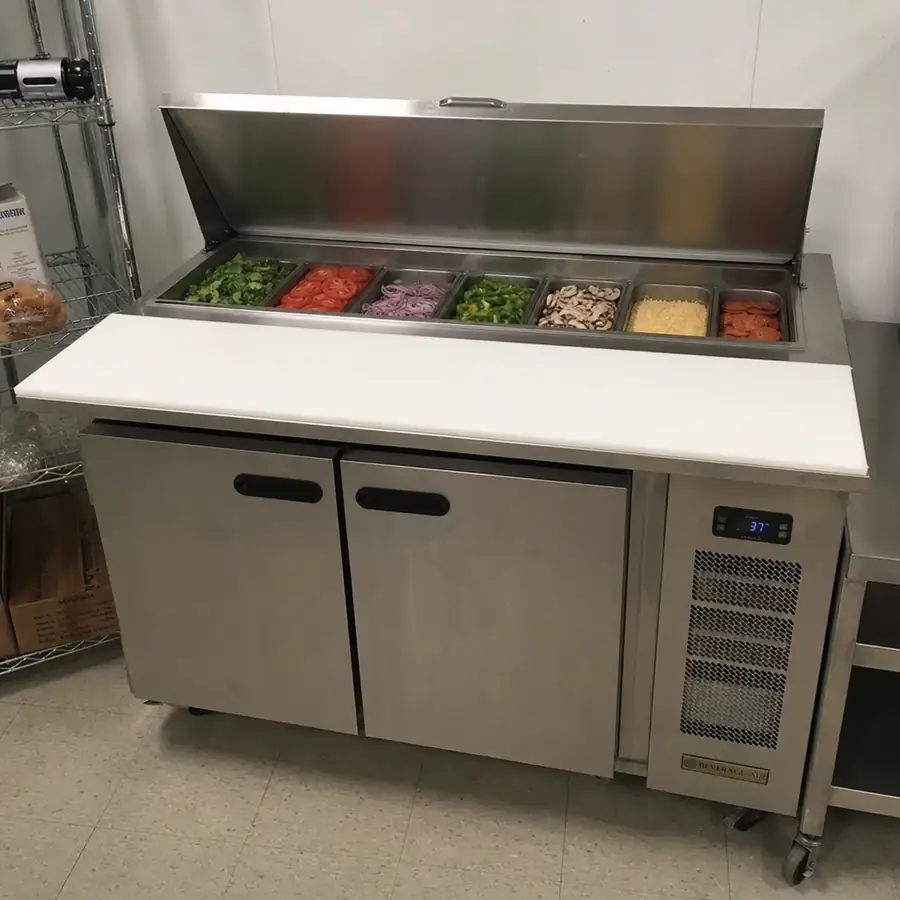
Prep refrigerators combine cold storage with a work surface and ingredient pans. They are made for assembly lines where speed and food safety both matter.
You will often see them in pizza shops, sandwich shops, salad bars, delis, cafes, and quick-service kitchens. The top holds chilled pans, while the base stores extra stock.
The two most common prep refrigeration types are:
Sandwich and salad prep tables
A sandwich prep table keeps the pans at the cutting board.
These units usually have a cutting board across the front and rows of ingredient pans at the back. They are made for quick assembly of sandwiches, wraps, salads, bowls, and cold plates.
They often have doors or drawers below. Drawers can be helpful when staff need to reach pans without bending much. Doors may offer more flexible shelf storage.
Pizza prep tables
Pizza prep tables are usually wider and deeper. They often have a larger cutting board and more pan space for toppings.
They are built for high-volume topping work. The extra surface area helps staff stretch, top, cut, and box pizzas with fewer steps.
Prep units need good lids, proper pan depth, and steady cold holding. Open pans can warm up if the lid stays open too long or if the station is near heat. Staff habits matter as much as the machine.
A good prep refrigerator should make it easy to rotate stock. It should also support clear ingredient labels, clean pan changes, and safe closing during slow periods.
Merchandising refrigerators display products while keeping them cold
Merchandising refrigerators are customer-facing display units. They keep drinks, packaged meals, desserts, salads, grab-and-go items, and retail foods cold while making them easy to see.
They are common in convenience stores, cafes, bakeries, markets, hotel lobbies, gyms, and quick-service areas. Their job is part storage and part sales support.
Common merchandising fridge styles include:
- Glass door merchandisers for bottled drinks and packaged foods.
- Open-air merchandisers for fast grab-and-go areas.
- Countertop display fridges for small items, desserts, and drinks.
- Display cases for deli, bakery, sushi, or prepared foods.
- Sliding door coolers for tight spaces or high-traffic areas.
Visibility is the key feature. Bright lighting, clear glass, adjustable shelves, and clean product layout can help customers choose quickly.
Still, display should not come at the cost of performance. Merchandising units need to hold safe temperatures even when doors open often. Open-air units can be convenient, but they may need more care with placement, airflow, and energy use.
Comparison of commercial refrigerator types
Different types of fridges fit different jobs. The table below gives a simple view of where each option works best and what to check before buying.
This comparison shows why there is no single best unit for every business. The best choice depends on how the fridge will be used during real service.
A busy line may need prep refrigeration more than extra storage. A retail cafe may gain more from a clean display case. A full-service restaurant may need a mix of reach-in and undercounter refrigeration solutions.
Features and specifications that matter most
When comparing commercial refrigeration types, look beyond the outside shape. Two units that look similar may perform very differently.
Capacity and interior layout
Capacity is not only about total volume. It is also about usable space.
Check shelf count, shelf depth, pan layout, and door or drawer access. A narrow unit with smart shelving may serve better than a larger unit with poor layout.
Think about what you store most often:
- Sheet pans
- Ingredient bins
- Bottles and cans
- Wrapped prep items
- Produce boxes
- Portion cups
- Grab-and-go containers
If the items do not fit well, staff may stack products badly. That can block airflow and slow service.
Size, clearance, and placement
Measure width, depth, and height before choosing a unit. Then measure the path to the final location.
Doorways, ramps, counters, and corners can all affect delivery. Also check ceiling height for tall reach-ins and lid clearance for prep tables.
Placement affects performance too. Avoid putting refrigeration next to ovens, fryers, direct sun, or hot dish areas when possible. Heat makes the unit work harder.
Doors, drawers, and access style
Doors are simple and flexible. Drawers can be faster for portioned items and pans.
Glass doors help staff or customers see products. Solid doors can help hide clutter and may suit back-of-house use better.
Half doors can reduce cold air loss in busy kitchens. Sliding doors can help in tight spaces, especially in bars and retail areas.
Temperature control and airflow
Good airflow helps keep products evenly cold. Blocked vents can create warm spots.
Digital controls can make temperature checks easier. Some units may also include alarms, auto defrost, or self-closing doors.
For any model, staff should follow safe loading practices. Do not overfill shelves. Leave space for air to move.
Power and energy use
Commercial refrigerators run for long hours, so power use matters. Larger units, glass doors, open displays, and warm room conditions can all raise energy demand.
Check the electrical requirements before buying. Make sure the location has the right outlet and circuit. If unsure, ask a qualified electrician or service technician.
Energy-saving features may include LED lighting, efficient compressors, improved insulation, magnetic gaskets, and self-closing doors.
Cleaning and service access
A refrigerator that is hard to clean will not stay in good shape. Look for removable shelves, easy-access gaskets, smooth interiors, and clear drain areas.
Condenser access also matters. Dust and grease can reduce performance over time. A unit that is easier to maintain is more likely to be maintained.
How to choose the right refrigeration solution
Start with your menu, workflow, and space. Then match the unit to the job it must perform every day.
Use this checklist before you buy:
- Define the role: Bulk storage, line prep, drink display, or station support.
- Map the workflow: Place cold items where staff need them most.
- Measure the space: Include clearance, door swing, and delivery path.
- Check capacity needs: Plan for normal stock levels, not just quiet days.
- Review access style: Choose doors, drawers, glass, or sliding doors based on use.
- Confirm power needs: Match the unit to available electrical service.
- Plan cleaning: Choose a design your team can clean often and well.
- Think about growth: Leave room for menu changes or higher volume.
If you are comparing options through the horeca store or another equipment supplier, bring your measurements, menu needs, and service flow notes. That makes it easier to narrow choices and avoid buying a unit that looks right but works poorly.
Common buying mistakes to avoid
One common mistake is buying only by outside size. A fridge may fit the room but fail to fit the products you need to store.
Another mistake is choosing the cheapest unit without thinking about use. A low-cost model may work for light storage, but it may struggle in a hot, busy kitchen.
Avoid these issues:
- Picking glass doors for a hot kitchen only because they look good.
- Using an undercounter unit for bulk storage.
- Buying a prep table without enough pan space.
- Placing a merchandiser where sun or heat hits it all day.
- Forgetting about service access and cleaning needs.
- Blocking vents with boxes, pans, or containers.
The right choice should support staff, protect food, and fit the space. It should not make daily work harder.
Frequently asked questions
1. What is the most common commercial refrigerator type?
Reach-in refrigerators are among the most common because they suit many kitchens. They offer upright storage, adjustable shelves, and easy access to daily stock.
They are often used with other units. For example, a kitchen may use a reach-in for storage and a prep table for service.
2. What is the difference between a reach-in and an undercounter refrigerator?
A reach-in is taller and holds more product. It is usually used for main storage.
An undercounter refrigerator is shorter and fits near a workstation. It is best for smaller amounts of items that staff need close at hand.
3. Are prep refrigerators only for sandwiches and pizza?
No. Prep refrigerators can support many menu types. They work for salads, wraps, bowls, cold plates, tacos, desserts, and other assembly tasks.
The right model depends on pan layout, work surface size, and base storage.
4. When should I choose a merchandising refrigerator?
Choose a merchandising refrigerator when customers need to see and pick chilled products. It is a good fit for drinks, packaged meals, desserts, and grab-and-go items.
It should be placed where customers can access it easily. It also needs steady cold holding during frequent use.
5. How do I know what capacity I need?
List the items you store, their container sizes, and how often you restock. Then choose a unit that holds normal working stock without blocking airflow.
Do not plan only for your slowest day. Think about busy periods, delivery schedules, and menu changes.
Final takeaway
The best commercial refrigerator is the one that fits the task, space, and workflow. Reach-ins offer strong general storage. Undercounter units save steps. Prep refrigerators speed up assembly. Merchandising refrigerators keep products visible for customers.
When comparing fridge styles, look at capacity, size, access, power, airflow, cleaning, and placement. These details have a direct effect on daily use. Choose with the real workday in mind, and your refrigeration setup will support safer food storage, faster service, and a smoother operation.