
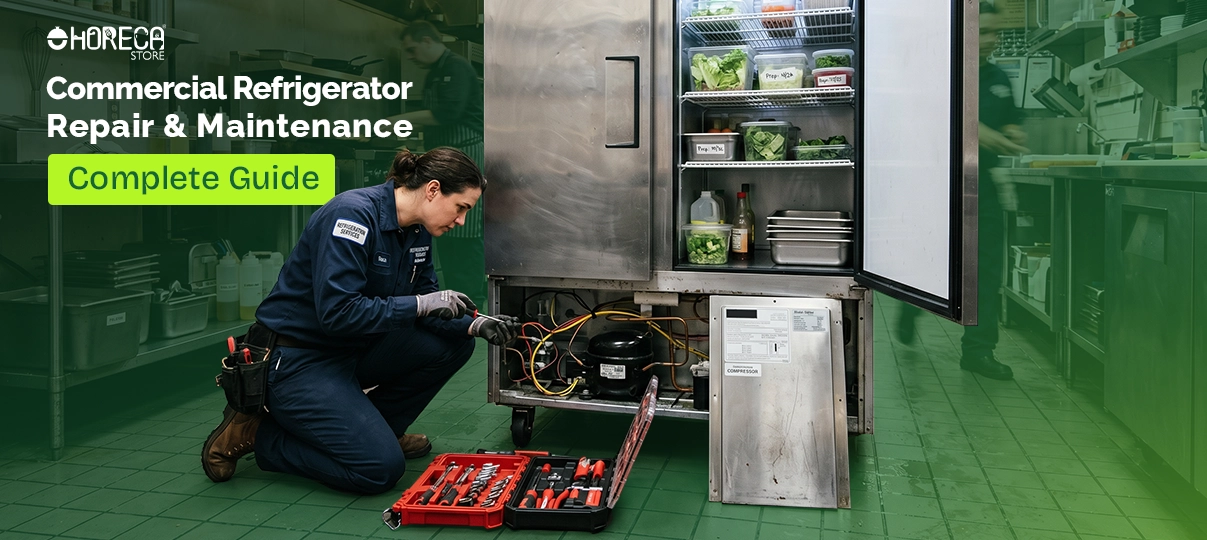
A commercial refrigerator is not just a larger version of your kitchen appliance at home; it is the absolute heartbeat of your business. When this high-performance machine suddenly goes quiet during a busy shift, the clock instantly starts ticking on thousands of dollars in spoiled food. This immediate threat to your bottom line requires proactive inventory risk management, which means recognizing subtle warning signs before the box gets warm. Unlike a residential fridge that opens a dozen times a day, your commercial unit constantly battles temperature shifts and heavily taxed components to keep your ingredients safe.
You certainly do not need a mechanical engineering degree to keep this equipment running at peak efficiency. According to restaurant industry data, just twenty minutes of basic monthly care can prevent over $2,000 in sudden emergency repair bills and lost product. The secret to this savings lies in understanding the functional cooling lifecycle, which relies entirely on the golden rule of airflow. Think of your unit like a marathon runner: if the working parts are caked in kitchen grease and dust, the system simply cannot breathe out the heat it naturally soaks up from inside the cabinet.
Navigating these daily challenges is exactly why we created this definitive Commercial Refrigerator Repair & Maintenance Guide. Our goal is to empower you to perform essential preventative maintenance for reach-in coolers without feeling overwhelmed by technical jargon. You will soon know exactly where to draw the line between a quick user-level fix—like cleaning a rubber door gasket.
The 'Heat Sponge' Concept: Identifying Your Fridge's Core Components Without the Engineering Degree
Finding spoiled inventory is a nightmare that often stems from a simple misunderstanding of cooling. Rather than magically creating winter air, your equipment's refrigerant acts as a powerful heat sponge. It soaks up warmth from your ingredients and squeezes it out into the room. If your kitchen is sweltering, that sponge struggles to release its heat, forcing the entire system to work overtime.
Locating the three major failure points takes seconds once you map the mechanics. Think of the thermostat as the brain, commanding the compressor—the heavy, vibrating heart—to pump the sponge. Catching signs of a failing commercial thermostat, like erratic internal temperatures, prevents you from replacing a healthy compressor. Standard reach-ins bundle these parts at the top or bottom, while walk-in layouts keep the noisy compressor completely outside.
Adding a visual inspection of these zones to your commercial refrigeration troubleshooting checklist prevents unnecessary and expensive service calls. The most critical spot to check is where the system breathes that trapped heat out into your kitchen.

Why Dirty Condenser Coils Kill Your Compressor—And How to Clean Them Like a Pro
Imagine running a lunch rush while wearing a thick winter coat. That is exactly what happens when dust smothers your condenser, destroying its heat exchange efficiency and trapping warmth inside the cabinet. Overworking this vital component is one of the most common causes of commercial fridge compressor failure, but learning how to clean commercial refrigerator condenser coils requires only a simple brush and a shop vacuum.
- Disconnect power: Unplug the unit completely to prevent accidental shocks.
- Locate the coil: Remove the protective metal grill to expose the internal parts.
- Vacuum loose dust: Pull away heavy surface debris using a hose attachment.
- Brush between fins: Sweep vertically along the ridges to dislodge trapped kitchen grease.
- Straighten bent fins: Restore coil fin integrity using a fin comb so air flows freely.
Paying close attention to the grime's texture during this maintenance can save your inventory. If you uncover a stubborn, oily residue on the copper pipes instead of dry dust, stop immediately. This slick coating is a classic warning sign of an active refrigerant leak, meaning you must close the panel and contact a certified technician.
Committing to a recurring 30-day cleaning schedule for this hardware drastically lowers utility bills and prevents catastrophic breakdowns. However, a perfectly breathing compressor cannot compensate if your cabinet cannot hold its chill.
Stopping the Air Leak: How to Inspect and Replace Door Gaskets in 15 Minutes
Have you noticed condensation sweating on the exterior of your cabinet? This happens due to thermal bridging, where warm kitchen air bleeds directly into your cold box. The door gasket—the rubber seal framing the door—relies on tight gasket compression to maintain a vacuum seal, which is critical for extending compressor life. When this seal weakens, the motor runs endlessly just to maintain energy efficient commercial refrigeration settings. You can quickly diagnose this using the "Dollar Bill Test." Simply shut a dollar bill in the door and pull; if it slides out with zero resistance, you have an expensive air leak.
Fortunately, replacing commercial refrigerator door gaskets is a 15-minute push-in job you can source and install yourself without calling a professional. Inspect your equipment today for these signs of a failing gasket:
- Cracks
- Mold/slime
- Hard rubber
- Visible light gaps
- Cold air 'drafts'
Stopping this warm air intrusion eliminates exterior sweating and interior icing. If you already have a puddle forming on the floor, however, you are likely dealing with a drainage issue.
Why is My Fridge Leaking Water? 3 Quick Fixes for Common Drainage Issues
Discovering a slippery puddle during a busy shift prompts an immediate question: why is my commercial fridge leaking water? Fortunately, this is usually a basic plumbing issue involving your condensate management system rather than a catastrophic cooling failure. Like a cold glass sweating on a hot day, your refrigerator constantly pulls moisture from warm kitchen air and directs it into a specific drain line.
When debris blocks this internal pathway, trapped water overflows directly onto your floor. You can easily clear a clogged tube by gently routing a long plastic zip-tie through the opening to break up sludge, or by using low-pressure compressed air to blow the line completely clear into the bottom evaporator pan. Always inspect this drain pan, as a cracked tray will leak even with perfectly clear plumbing.
Leaving doors open during heavy lunch rushes forces the system to swallow excessive humidity, causing severe evaporator icing. This solid ice block prevents draining and stresses internal parts, often forcing you to consult an evaporator fan motor replacement guide instead of performing routine maintenance. If clearing the drain and managing door-open times doesn't fix your warm refrigerator, you may face a different mechanical issue entirely.

Diagnosing Cooling Failure: Is it a Failing Thermostat or an Airflow Obstruction?
Finding a warm refrigerator during a lunch rush triggers panic, but the solution is often free. Before assuming the worst, examine your shelving. Cold air requires space to circulate around product. If staff cram boxes against the walls, the system suffocates. Implementing the "2-Inch Rule"—maintaining a two-inch gap between inventory and interior panels—ensures proper airflow dynamics and instantly resolves most temperature complaints.
When the unit stays warm despite perfect organization, check the "command center" to spot signs of a failing commercial thermostat. Think of this component as the brain telling the compressor to work. Verify its accuracy by leaving a standard thermometer inside overnight. If this analog reading mismatches the digital display, your sensor is confused. This unreliability is why upgrading to dedicated commercial refrigerator temperature monitoring systems saves inventory.
Listening closely to the cabinet interior offers a final diagnostic trick. You should always hear the gentle hum of the evaporator fan circulating chilled air. A dead-silent box or loud grinding noise indicates this fan motor has died. While rearranging shelves is perfectly safe, replacing internal electrical parts crosses a dangerous line requiring professional intervention.
Knowing Your Limits: When to Call an EPA-Certified Tech to Avoid Legal and Safety Risks
While replacing a door gasket saves money, understanding the line between DIY vs professional commercial refrigeration repair prevents costly disasters. The absolute "Do Not Touch" boundary is the sealed system—the closed loop of copper pipes holding the chemical refrigerant. Think of this network as the unit’s circulatory system.
Federal law actually dictates who can handle these sensitive components. Under EPA regulations for commercial refrigerants, only certified technicians are legally allowed to open or repair this sealed cooling loop under Section 608 guidelines. When vetting a repair company, always verify their EPA certification before allowing them to work. Unqualified tampering can trigger massive federal fines and instantly void your equipment warranty.
How do you recognize when you’ve crossed into professional territory? Step back and call a certified expert if you observe these four red flags:
- Hissing sounds indicating a gas leak (a vital warning sign used in early refrigerant leak detection methods).
- An electrical burning smell near the back panel.
- A compressor that loudly clicks but fails to start.
- Oily residue collecting on any copper pipes.
Spotting these issues early prevents catastrophic failure and sets the foundation for daily preventative care.
The Commercial Refrigeration Survival Checklist: Your Action Plan for 99% Uptime
You no longer have to fear the dreaded "Monday Morning Surprise"—arriving for your shift to find a massive puddle and thousands of dollars in spoiled inventory. By shifting from reactive panic to proactive care, you have taken control of your kitchen's heartbeat. The ROI of this approach is undeniable: investing just minutes a day translates directly into lower energy bills, longer equipment life, and zero lost revenue from unexpected breakdowns.
To keep your units running at peak efficiency, implement this simple walk-in cooler maintenance schedule for your team:
- Daily: Monitor temperature displays and inspect rubber door gaskets for tears.
- Weekly: Sanitize interior shelves and clear floor debris so the unit can "breathe."
- Monthly: Vacuum dust off the condenser coils and check drain lines for clogs.
- Semi-Annually: Schedule a professional audit for complex internal components.
Hang a visible maintenance log right next to the fridge—not only does this keep your team accountable, but health inspectors love to see it. Most importantly, empower your frontline staff to report weird noises or slow cooling immediately, rather than waiting for total equipment failure. While knowing commercial kitchen equipment emergency repair tips is always helpful for extreme situations, your new preventative habits ensure you will rarely ever need to use them.